Cast Iron Weight For Floor Scales
Floor scales serve as foundational weighing equipment across a vast range of industrial, commercial, and logistics operations, tasked with measuring heavy loads reliably and consistently for daily production, goods circulation, inventory management, and operational record keeping. To maintain the steady performance and dependable measuring capability of these floor scales over years of continuous use, regular calibration and routine verification stand as indispensable operational steps, and cast iron weights have long been the core supporting tool dedicated to this essential work. Unlike temporary weighing accessories or lightweight auxiliary tools, cast iron weights designed specifically for floor scale use are engineered to match the heavy-load working characteristics of floor scales, featuring stable physical properties, solid structural design, and strong adaptability to complex on-site working environments, making them a fundamental guarantee for keeping floor scale weighing data consistent and trustworthy in all application scenarios. Every industrial site that relies on floor scales for daily weight measurement depends on well-maintained and properly selected cast iron weights to avoid inaccurate weighing results that could lead to operational discrepancies, production losses, or inefficient inventory and logistics management.
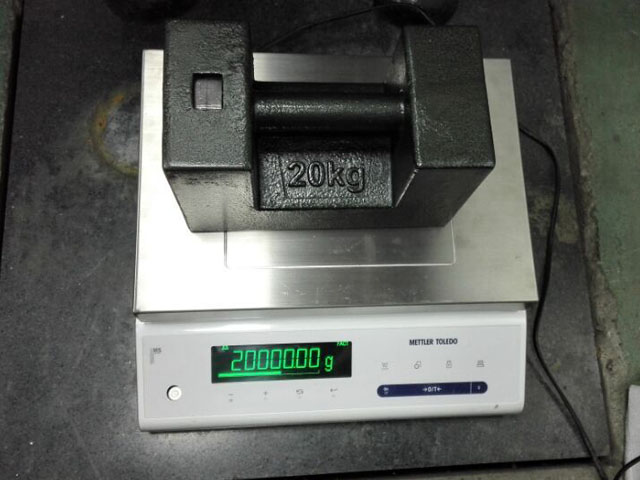
The inherent material advantages of cast iron lay a solid foundation for its widespread application in manufacturing weights for floor scale calibration and testing. The cast iron used for producing these professional weights is mainly fine-grained gray cast iron with a reasonable carbon content range, which delivers excellent compressive strength, stable internal density distribution, and outstanding resistance to physical impact and long-term wear. This type of cast iron material features a compact internal organizational structure with uniform density throughout the entire weight body, avoiding the internal hollowing, density deviation, or structural looseness that often appear in lower-quality metal materials. Uniform density is critical for floor scale weights because it ensures that the actual mass of each weight remains consistent with its marked value, and the weight will not experience uneven stress or local deformation when placed on the platform of floor scales during calibration work. In daily industrial working environments, floor scales often bear frequent loading and unloading of heavy goods, and the surrounding areas usually have heavy mechanical operation, frequent personnel movement, and inevitable minor collisions and vibrations. Cast iron weights can effectively withstand these external physical influences, maintaining their original shape and mass stability without permanent deformation or structural damage even after long-term repeated use. Compared with other metal materials used for making standard weights, cast iron also has good shock absorption performance, which can buffer the impact generated during handling and placement, further extending the service life of the weights and keeping their mass parameters stable for a long time.
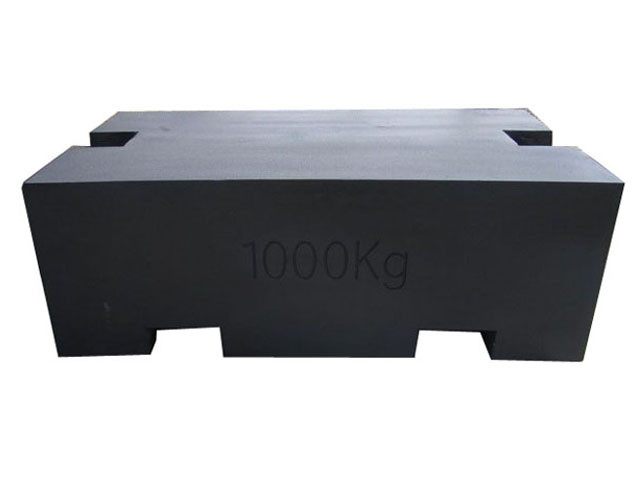
The structural design of cast iron weights for floor scales is professionally optimized around the actual use needs of on-site calibration and daily scale verification work. Most of these weights adopt regular geometric shapes such as square, rectangular block, and cylindrical forms, with smooth and flat bearing bottoms to ensure full and stable contact with the flat platform surface of floor scales during use. The flat bottom design prevents tilting or shaking when the weights are placed, which ensures that the pressure generated by the weights acts vertically on the floor scale sensing components, thus ensuring the accuracy of calibration and testing work. Many cast iron weights are also equipped with integrated lifting structures or reserved grip positions, which facilitate convenient manual handling or mechanical hoisting during on-site operation. Considering that floor scale calibration often requires the combined use of multiple weights of different specifications to complete the full-range detection of the scale, some cast iron weights are designed with nesting and stacking structures, allowing multiple weights to be stacked stably without sliding or shifting. This stacking design not only saves storage space when the weights are not in use but also ensures overall stability when multiple weights are stacked on the floor scale platform for large-load calibration. In addition, each cast iron weight is manufactured with a reserved adjustment cavity inside the structure, which allows for fine mass adjustment through filling auxiliary materials during the production and later maintenance stages. This reasonable structural design enables each weight to maintain precise mass matching requirements, adapting to different accuracy needs of various floor scales in different industrial production and commercial weighing scenarios.
Surface treatment of cast iron weights for floor scales is a key link to enhance their environmental adaptability and extend their service cycle, directly affecting the long-term stability of weight mass and appearance integrity. Cast iron materials themselves have certain natural metal characteristics that require effective surface protection to resist external environmental corrosion and oxidation. Professional cast iron weights for floor scales will undergo standardized surface anti-rust treatment and uniform coating spraying, forming a protective isolation layer on the entire outer surface of the weight body. This protective layer can effectively isolate moisture, dust, industrial corrosive gas, and other harmful substances in the on-site working environment from contacting the cast iron matrix, preventing rust, corrosion, and surface oxidation wear that would otherwise cause changes in the weight’s actual mass and damage to the surface flatness. In industrial production workshops, warehouse storage areas, and outdoor logistics yards where floor scales are placed, the ambient humidity often changes greatly, and there are often chemical volatile substances, dust accumulation, and frequent temperature differences. Without proper surface protection measures, cast iron weights are prone to surface rust and internal material corrosion over time, which will not only affect the appearance but also lead to subtle changes in mass, reducing the accuracy of floor scale calibration. The uniform surface coating also keeps the outer surface of the weights smooth and tidy, avoiding rough surface wear during handling and stacking, and making daily cleaning and maintenance work more convenient and efficient.
The core application value of cast iron weights for floor scales lies in realizing regular calibration, daily performance testing, and long-term accuracy maintenance of floor scales in various practical scenarios. Floor scales are used to measure heavy goods, raw materials, finished products, and logistics cargo in various industries, and their internal sensing components and mechanical structures will gradually produce slight performance changes after long-term heavy-load pressure, frequent use, and external environmental influence. These subtle changes will gradually lead to deviation in weighing data if not corrected in a timely manner, affecting the accuracy of enterprise production statistics, cargo transaction settlement, inventory quantity counting, and production process quality control. Cast iron weights provide a unified and stable mass standard for detecting these subtle changes of floor scales. Workers can place cast iron weights of different fixed specifications on different positions of the floor scale platform to test whether the weighing display data of the scale is consistent with the standard mass of the weights, and check whether there is position deviation, data fluctuation, or delayed response in the weighing process. Through this regular calibration and testing work, staff can timely find potential hidden problems of floor scales, adjust the scale parameters in time, and ensure that every weighing operation of the floor scale is within a reasonable and accurate range. Whether it is small and medium-sized floor scales for warehouse inventory weighing or heavy-duty floor scales for factory production line raw material and finished product weighing, cast iron weights can match the corresponding load range to complete comprehensive and effective calibration work.
Different from precision weighing tools used in laboratory environments, cast iron weights for floor scales are designed to adapt to harsh industrial on-site use conditions, with outstanding durability and low daily maintenance cost advantages. Laboratory weighing equipment and supporting weights usually need to be placed in constant temperature and dry environments with strict protection, while cast iron floor scale weights can work normally in open workshops, outdoor yards, humid warehouses, and other complex environments without special constant temperature and humidity storage conditions. Their sturdy cast iron main body structure can withstand frequent handling, stacking, and moving, and occasional minor collisions and friction in daily use will not cause obvious damage or mass change. In the daily management of industrial enterprises, the use and maintenance of these cast iron weights do not require complex professional operations or expensive maintenance supplies. Daily work only needs simple cleaning and regular surface condition inspection to keep the weights in good working condition for a long time. This low maintenance requirement and strong environmental adaptability make cast iron weights a practical and reliable choice for long-term use in industrial and commercial sites, avoiding the frequent replacement and high later maintenance costs caused by poor material adaptability or fragile structural design of other types of calibration weights.
Standardized selection and correct use of cast iron weights play a vital role in giving full play to the weighing performance of floor scales and maintaining the orderly progress of enterprise production and operation. When choosing cast iron weights for floor scale matching use, it is necessary to select weights with appropriate specifications and load ranges according to the maximum weighing capacity and actual use frequency of the floor scales. Matching the weight specification with the floor scale range can ensure that the calibration work covers the full working interval of the scale, effectively detecting the weighing accuracy of the floor scale under light load, medium load, and heavy load states. In the actual operation process, staff need to place the cast iron weights gently and stably on the floor scale platform, avoiding violent throwing and impact placement, so as to prevent instantaneous impact force from affecting the internal structure of the floor scale and also avoiding unnecessary structural damage to the weights themselves. After the completion of each calibration and testing work, the cast iron weights should be stacked and stored in a fixed dry and ventilated area, avoiding long-term direct exposure to humid and corrosive environments, which can further prolong the service life of the weights and keep their mass parameters stable for a long time. Correct use and standardized management habits can not only ensure the long-term accuracy of floor scale weighing work but also maximize the service life of cast iron weights, creating stable and reliable weighing guarantee for enterprise production and operation management.
With the continuous development of industrial production and modern logistics industry, the frequency of use and application scope of floor scales in various industries are constantly expanding, and the demand for stable and reliable calibration supporting tools such as cast iron weights is also increasing day by day. All production and operation links that rely on floor scale weighing data need accurate and consistent weighing results to support decision-making and daily management, and cast iron weights are the most basic and essential mass standard tool to ensure this accuracy. With stable material performance, scientific and reasonable structural design, strong environmental adaptability, and simple and convenient later maintenance, cast iron weights have become an indispensable matching product for all floor scale supporting use. In the long-term industrial production and commercial operation process, adhering to the regular calibration of floor scales with qualified cast iron weights can effectively avoid various operational risks and economic losses caused by inaccurate weighing, ensure the standardized and orderly development of enterprise weighing management work, and provide solid and reliable basic guarantee for the stable operation and efficient development of various industrial and commercial industries.
Cast Iron Weight For Floor Scales
https://www.veidtweighing.com/cast-iron-weights.html
Post Date: May 4, 2026
https://www.supplier-manufacturer.com/cast-iron-weight/cast-iron-weight-for-floor-scales.html

![1000kg Large Calibration Weight Port Weighbridge Use]()
1000kg Large Calibration Weight Port Weighbridge Use
In modern port logistics and cargo management, accurate weight measurement serves as the fundamental foundation for efficient cargo circulation, safe shipping operation, a…![Types of Standard Weight]()
Types of Standard Weight
Standard weights serve as the foundational physical reference tools for all mass measurement activities across industrial production, laboratory research, commercial trade…![Hooked Standard Weight]()
Hooked Standard Weight
Hooked standard weights are essential foundational tools widely utilized in experimental research, teaching demonstrations, and routine mechanical calibration scenarios. D…![10g Standard Weight]()
10g Standard Weight
In the quiet and intricate world of measurement, every small unit of mass carries profound significance that connects human daily life, professional production, and scient…![Cast Iron Weight For Bench Scales]()
Cast Iron Weight For Bench Scales
Cast iron weights serve as fundamental auxiliary components for bench scale operation, playing an indispensable role in daily weighing verification, scale debugging, and m…