Density Balances
Density stands as one of the most fundamental and informative physical properties of all materials, serving as a critical reference for identifying material characteristics, analyzing component proportions, and evaluating structural consistency across scientific research and industrial production. To obtain reliable density data of solids, liquids and particulate substances, researchers and technicians rely heavily on density balance, a precision analytical instrument designed for quantitative density determination. Unlike conventional weighing devices that only focus on mass measurement, this instrument integrates mechanical structure and modern sensing technology to convert subtle buoyancy changes into readable data, realizing efficient and accurate density detection for diverse sample types. The development and popularization of density balance have greatly optimized the material testing process, providing stable technical support for basic scientific research, industrial quality control and material performance analysis.
The technical foundation of density balance originates from the classic buoyancy principle discovered in ancient times, which has laid a solid theoretical basis for modern density measurement technology. In the early stage of physical measurement development, people could only judge material density through simple volume and mass conversion, which involved cumbersome manual calculation and was prone to large systematic errors. With the continuous progress of mechanical manufacturing technology in the 18th century, the first mechanical density measuring devices came into being, realizing preliminary standardized detection of material density and breaking the limitation of traditional manual measurement methods. After centuries of technical iteration, the original mechanical structure has been continuously optimized, and electronic sensing and digital signal processing technologies have been gradually integrated into the equipment. This evolution process has not only simplified the operation steps of density detection but also significantly improved the stability and consistency of measurement results, making density balance transition from professional laboratory special equipment to universal testing tools applicable to multiple scenarios.
The core working logic of density balance follows the buoyancy principle in fluid mechanics. When a solid sample is completely immersed in a stable fluid medium, it will be subjected to an upward buoyant force, and the magnitude of this force is equivalent to the weight of the fluid displaced by the sample. Since the volume of the displaced fluid is exactly the same as the effective volume of the immersed sample, the density of the sample can be deduced by measuring the mass difference of the sample in air and in the fluid medium with known density. Modern density balance is equipped with high-sensitivity sensing components, which can capture tiny mass changes during the measurement process in real time. The collected analog signals will be transmitted to the internal processing unit, which automatically completes data conversion, calculation and compensation according to preset physical algorithms, and finally outputs intuitive density data. For liquid samples, the instrument can also complete indirect density measurement by detecting the buoyancy change of standard measuring blocks in different liquid samples, realizing the dual detection function of solid and liquid materials.
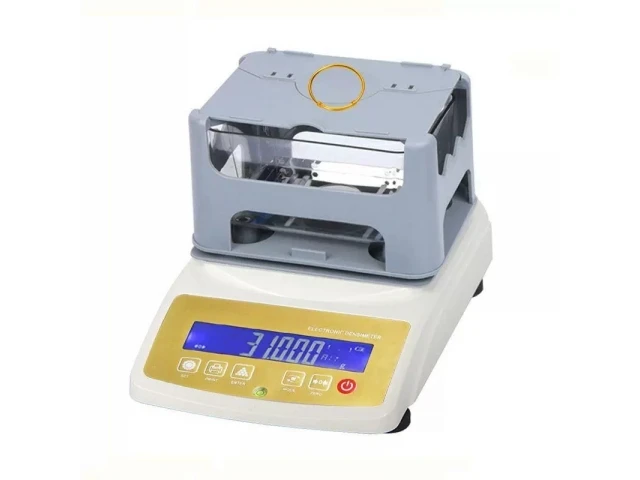
The overall structural design of density balance focuses on measurement stability and anti-interference performance, which fully adapts to the precision requirements of physical testing. The main body of the instrument is composed of a stable bearing base, high-precision sensing module, fluid testing assembly and data processing and display unit. The base usually adopts a rigid and shock-resistant structural design, which can effectively reduce the interference of low-frequency vibration in the external environment on the measurement process and avoid data fluctuation caused by subtle displacement. The built-in sensing module is the core component of the equipment, which can accurately capture tiny load changes and ensure the sensitivity of long-term measurement. The supporting testing assembly includes a special measuring bracket and a container for holding the medium fluid. The bracket is designed with lightweight and stable characteristics, which can keep the sample in a fixed immersion state and avoid measurement deviation caused by sample shaking or floating. All structural parts are matched with precise dimensions to ensure the stability of the mechanical state during repeated tests, laying a foundation for consistent and repeatable measurement results.
Standardized operation and scientific environmental control are key factors to ensure the reliability of density balance measurement results. Before formal testing, the instrument needs to be placed on a horizontal and stable working platform to eliminate measurement errors caused by inclined stress. It is also necessary to maintain a stable ambient temperature and humidity in the working space, because excessive temperature fluctuation will cause the density of the medium fluid to change, and humidity imbalance may affect the surface state of the sample and the working performance of internal electronic components. In the preparation stage, the testing medium fluid needs to be kept clean and free of impurities and bubbles, as bubbles attached to the sample surface or suspended in the fluid will affect the accuracy of buoyancy calculation. For different types of samples, targeted pretreatment is also required. Solid samples need to keep the surface dry and clean to avoid the interference of adsorbed dust and moisture; particulate samples need to be placed evenly to prevent accumulation and floating; liquid samples need to be kept standing to eliminate internal bubbles and ensure uniform component distribution.
In the actual measurement process, density balance avoids the complex manual calculation links of traditional density detection methods. After placing the sample according to the standard steps and completing the immersion test, the internal system can automatically complete data comparison and algorithm calculation, and directly present the final density value. This automated processing mode not only reduces the operational difficulty for technicians but also effectively avoids human errors caused by manual reading and calculation. In addition, the instrument has a stable data anti-interference mechanism, which can filter out subtle signal fluctuations generated by external environmental interference in real time, ensuring that each test data maintains high stability. For repeated sampling tests of the same material, the instrument can maintain good data consistency, which is very suitable for batch detection and continuous monitoring scenarios.
Density balance has a wide range of application values in multiple professional fields, covering basic scientific research, industrial manufacturing and quality inspection links. In material science research, it is used to analyze the density characteristics of new composite materials, polymer materials and inorganic non-metallic materials. Researchers can judge the uniformity of material internal structure and the rationality of formula proportion through accurate density data, providing data support for material performance optimization and new product development. In chemical industry production, the instrument is applied to the detection of chemical solvents, adhesive solutions, paint slurries and petrochemical liquids. By monitoring the density changes of chemical liquids in real time, technicians can judge the stability of product components and control the production process parameters to ensure the uniformity of batch product quality.
In the processing and manufacturing industry of plastic, rubber and new materials, density balance is an essential testing tool for daily quality control. Many polymer products will have subtle changes in internal density due to different processing temperatures, molding pressures and raw material proportions. Regular density detection can help enterprises timely find abnormal product performance, avoid unqualified products from flowing into the market, and reduce production resource waste. For particulate materials and powder materials used in industry, the instrument can also complete effective density testing, solving the detection difficulties caused by irregular sample shapes and small volume. In the food and beverage industry, density balance is used to detect the density of liquid beverages, edible oils and food additives, assisting enterprises in judging product purity and component stability and ensuring that product performance meets production standards.
In teaching and scientific research institutions, density balance serves as an important experimental teaching and scientific research equipment. It helps students and researchers intuitively understand the basic principles of fluid mechanics and material physical properties, and completes experimental verification and data accumulation of basic physical projects. The simple and efficient operation mode enables experimental personnel to focus more on the analysis and summary of experimental laws, rather than tedious measurement operations. In the field of commodity detection and material identification, technicians can use density data as an important auxiliary basis for material identification. Different types of materials have relatively fixed density ranges, and accurate density detection can quickly distinguish similar materials with similar appearance but different internal components, providing a simple and efficient identification method for commodity inspection and material screening work.
Daily maintenance and standardized management can effectively extend the service life of density balance and maintain long-term measurement accuracy. In daily use, the surface of the instrument and the testing assembly should be kept clean regularly, and residual samples and medium fluid should be cleaned in time after each test to avoid long-term adhesion of impurities affecting the sensitivity of the sensing module and the stability of the mechanical structure. The instrument should be placed in a dry and ventilated environment for a long time to avoid moisture erosion and dust accumulation on internal components. In addition, regular calibration and performance inspection are indispensable links. By using standard substances with known density for regular verification, the tiny system errors generated by long-term operation of the instrument can be eliminated, ensuring that the measurement state of the instrument is always in a stable and reliable range.
With the continuous development of material science and precision testing technology, density balance is also constantly evolving in structural optimization and functional expansion. Modern equipment is developing towards more compact structure, stronger anti-interference ability and more diversified testing functions. While maintaining high-precision measurement performance, the operation process is further simplified, and the data storage and derivation functions are gradually improved, which can better meet the needs of batch testing and long-term data tracking in industrial production. At the same time, the adaptability of the instrument to special samples is also continuously enhanced, realizing stable detection of high-viscosity liquids, porous solids and ultra-fine powders, further expanding its application scope in emerging material fields.
As a precise testing tool connecting material physical properties and industrial application, density balance undertakes important technical supporting functions in many fields. Its unique testing principle and efficient working mode make up for the deficiencies of traditional density detection methods, providing accurate, stable and convenient technical means for material performance analysis and product quality control. In the future, with the continuous innovation of manufacturing technology and testing algorithms, density balance will continue to optimize its performance, adapt to more complex testing scenarios, and provide more reliable data support for the development of material science, industrial manufacturing and precision detection industries. The continuous progress of this equipment also reflects the continuous improvement of modern precision testing technology, laying a solid foundation for the standardized and refined development of various industry detection links.
https://www.veidtweighing.com/Balance/DensityBalance
Post Date: Jun 7, 2026
https://www.supplier-manufacturer.com/weight-balance-scale/density-balances.html

![50kg Cast Iron Weight]()
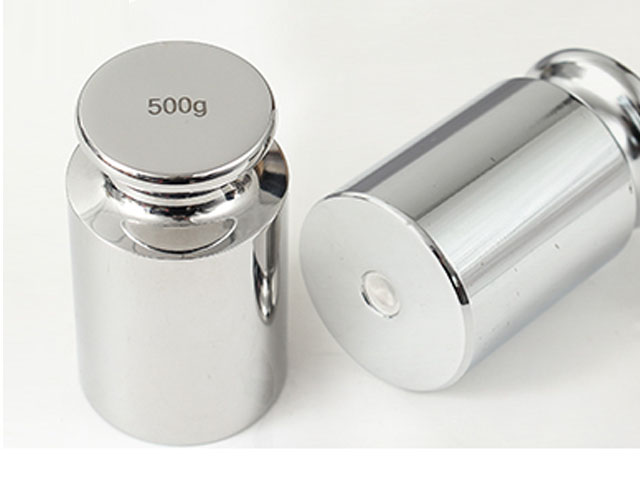
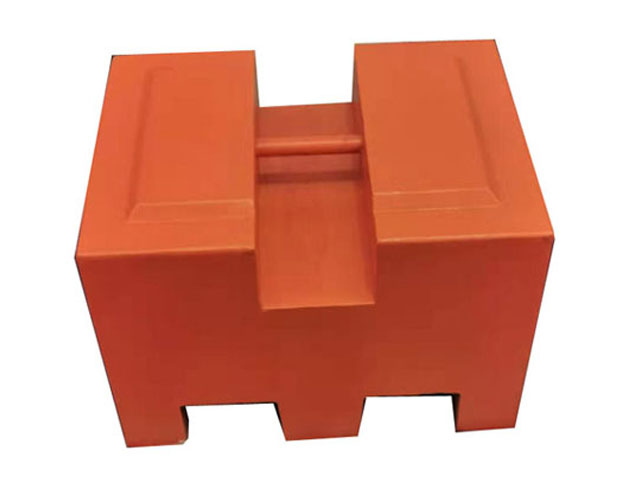
50kg Cast Iron Weight
Cast iron has long stood as one of the most dependable and widely utilized foundational materials for producing solid weight blocks across industrial, commercial, and prac…![Laboratory Test Weight]()
Laboratory Test Weight
Within every professional laboratory environment, regardless of whether the core work focuses on scientific research, material analysis, experimental formulation, or routi…![Scale Calibration Weight Set]()
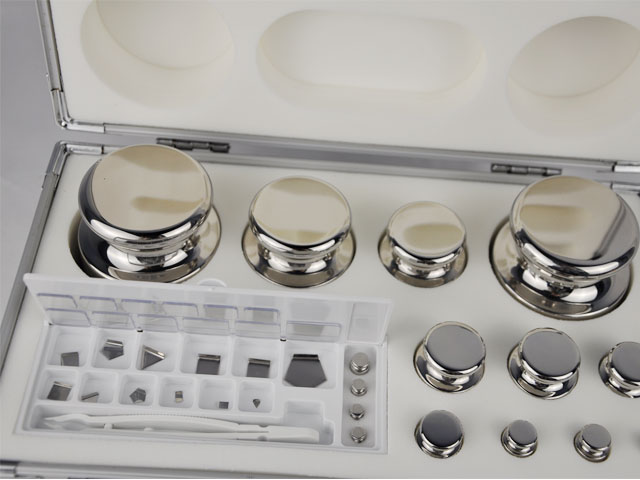
Scale Calibration Weight Set
In every sector that relies on numerical weighing data to guide operations, make decisions, or maintain consistent output, the stability and accuracy of weighing equipment…![Class 1 Calibration Weight]()
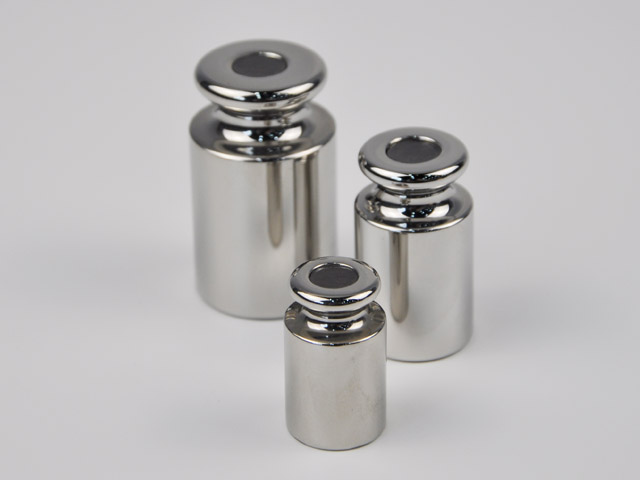
Class 1 Calibration Weight
In the entire system of modern measurement and metrology work, mass measurement stands as one of the most fundamental and indispensable basic measurement links, running th…![Calibration Weight Set]()
Calibration Weight Set
In every sector that relies on consistent and dependable mass measurement, the role of a calibration weight set remains irreplaceable, serving as the silent foundational t…