Dial Spring Scales
A dial spring scale is a traditional mechanical measuring instrument designed to gauge weight and tensile force through the physical properties of elastic components and mechanical transmission structures. Rooted in the fundamental physical rule that the deformation of an elastic body is proportional to the applied external force, this tool has maintained stable practical value in various measurement scenarios despite the rapid development of modern electronic measuring equipment. Its unique mechanical working mode, simple structural design and convenient operation process make it a common measuring tool in daily life, laboratory research, industrial production and agricultural measurement, adapting to diverse basic measurement needs with reliable and stable performance.
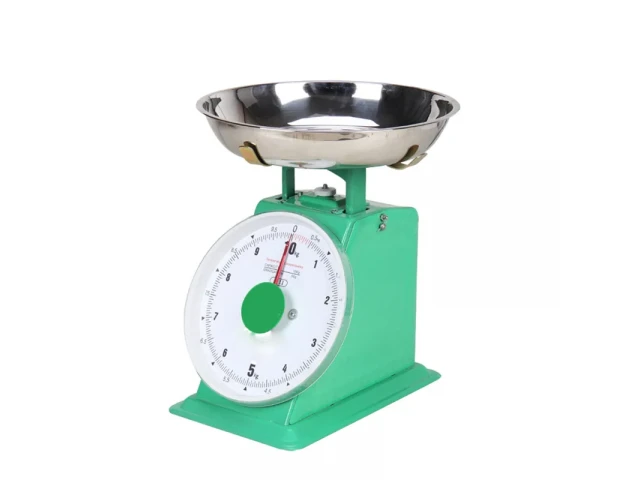
The core working logic of a dial spring scale originates from the classic elastic mechanics principle. Inside the sealed casing of the scale lies a precision-made metal spring, which serves as the core sensing component of the entire device. When external load or tensile force acts on the scale’s stress-bearing part, the spring will produce corresponding elastic deformation, including stretching under tension and compression under pressure. The degree of this deformation always maintains a stable proportional relationship with the magnitude of the applied force within the effective measuring range of the instrument. This regular physical change is the basic guarantee for the scale to achieve accurate measurement, enabling invisible force values to be converted into visible mechanical displacement changes.
To convert the tiny elastic deformation of the spring into intuitive readable data, the dial spring scale is equipped with a set of delicate mechanical transmission and amplification structures. These structures usually include matching gears, racks and connecting lever parts, which work together to amplify the subtle displacement generated by the spring’s deformation. The amplified mechanical movement will drive the pointer fixed on the dial to rotate steadily. The uniformly calibrated scale lines and numerical marks on the dial correspond one-to-one with the deformation degree of the spring, allowing users to directly read the accurate weight or force value through the position where the pointer stops. The whole measurement process relies entirely on mechanical linkage operation, without the need for electric energy, battery power or other external energy supply, which endows the device with extremely high environmental adaptability.
In terms of overall structural design, the dial spring scale features a compact and integrated layout, with each component cooperating closely to ensure measurement stability. The outer casing is usually made of sturdy metal or high-strength engineering materials, which can effectively protect the internal precision spring and transmission parts from external collision, dust and slight moisture interference. The stress-bearing part is designed with high hardness and tensile resistance, which can bear continuous load action within the measuring range and avoid structural deformation or damage after long-term use. The dial is embedded on the front of the casing, with clear and uniform scale distribution and moderate spacing, which is convenient for users to observe and record data from multiple angles. The pointer is made of lightweight rigid materials, ensuring sensitive response to mechanical transmission and stable stop position after force balance, reducing visual reading errors to a certain extent.
One of the most prominent characteristics of the dial spring scale is its independent and energy-free operation mode. Different from electronic measuring tools that are restricted by power supply conditions, this mechanical scale can work normally in any environment without energy support. It can be used smoothly in outdoor field environments, temporary operation sites and closed spaces where power supply is inconvenient, avoiding measurement failures caused by power shortage, circuit failure or electronic component aging. This advantage makes it highly adaptable in complex and changeable working scenarios, and it can maintain consistent working performance in low temperature, high temperature and dry conventional environments, with no obvious attenuation of measurement sensitivity.
In daily household scenarios, dial spring scales play a practical auxiliary role in daily measurement work. Many families use this tool to complete daily weighing work such as ingredient preparation for home cooking and small item weighing. Its portable size and simple operation mode allow ordinary users to get started quickly without professional training. In travel scenarios, handheld dial spring scales are often used to detect the weight of luggage, helping users control the load of carried items and avoid excessive load problems. Compared with bulky fixed measuring equipment, its light weight and easy storage features make it more suitable for mobile and temporary measurement needs in daily life.
In laboratory teaching and basic scientific research fields, dial spring scales are widely used as basic experimental and measuring equipment. Physics teaching experiments in middle and primary schools often rely on this tool to demonstrate the elastic force principle, tension measurement and gravity detection experiments, helping learners intuitively understand the proportional relationship between force and elastic deformation. In basic scientific research involving small force measurement, it can provide stable and continuous mechanical data support. Its intuitive mechanical operation process enables experimenters to clearly observe the force change process, which is more conducive to analyzing the change law of experimental data compared with digital equipment that only displays final values.
Industrial and agricultural production scenarios also put forward stable demand for dial spring scales. In light industrial processing, manufacturing workers use it to detect the tensile resistance of small parts, the bearing capacity of packaging materials and the assembly tightness of finished products, providing effective data reference for product quality inspection and process debugging. In agricultural production, it is commonly used for weighing harvested grains, fruits and vegetables, as well as measuring the weight of small agricultural supplies, helping producers count output and standardize commodity trading metering. Some portable large-range dial spring scales can also adapt to outdoor field operation needs, completing rapid weighing of bulk agricultural products and small industrial goods.
In terms of usage operation, the dial spring scale has extremely low threshold and high fault tolerance. Before measurement, users only need to place the scale in a horizontal or vertical stable state according to the usage specification, and adjust the zero position to ensure the pointer aligns with the zero scale line when no load is applied. During measurement, hang the measured item stably on the hook or place the load on the stress-bearing platform, keep the equipment in a static state, and wait for the pointer to stabilize before reading the data. After the measurement is completed, remove the load, and the pointer will automatically reset to the zero position under the action of the spring’s elastic recovery force. The whole operation process is simple and straightforward, and the reading result is stable and intuitive, which is not easy to be affected by external signal interference and human misoperation.
Like all measuring instruments, the measurement accuracy and service life of dial spring scales are closely related to daily use and maintenance habits. In the process of use, it is necessary to avoid overloading the equipment, because long-term overload pressure will cause irreversible plastic deformation of the internal spring, resulting in inaccurate measurement data and failure to reset the pointer normally. At the same time, it is necessary to avoid violent collision, extrusion and long-term placement in humid and corrosive environments, so as to prevent rust, deformation or jamming of internal transmission parts. Regular simple zero calibration is also an effective way to maintain measurement stability. By fine-tuning the zero position before use, the tiny errors generated by long-term mechanical wear can be eliminated, ensuring the consistency of measured data.
In terms of performance characteristics, dial spring scales have both advantages and inherent limitations of mechanical equipment. Their prominent advantages lie in stable mechanical performance, strong environmental adaptability, no dependence on energy and low failure rate, and they can maintain long-term stable working state after simple maintenance. However, restricted by mechanical transmission principles, its measurement precision is slightly lower than that of high-precision electronic measuring instruments, and it is not suitable for ultra-precision micro force measurement scenarios. In addition, long-term continuous use will produce slight mechanical wear, which requires regular calibration and maintenance to ensure measurement effectiveness. Even so, in conventional measurement scenarios that do not require ultra-high precision, its comprehensive practicability and stability are fully sufficient to meet daily and industrial use needs.
With the continuous progress of measuring technology, various high-precision intelligent electronic measuring equipment have emerged in large numbers, but dial spring scales have not been replaced in the market. Its irreplaceable value lies in its ultra-high stability in complex environments, zero energy consumption use mode and intuitive mechanical measurement logic. It is not only a practical measuring tool, but also a typical carrier of basic mechanical principles, which plays an important role in teaching demonstration, basic measurement and popular science display. In many scenarios requiring simple, rapid and stable measurement, users still prefer to choose dial spring scales because of their reliable performance and convenient operation.
Looking at the application development of dial spring scales, this traditional mechanical measuring instrument is still evolving in structural optimization and scene adaptation. Modern optimized dial spring scales adopt more durable elastic materials and more precise transmission structures, effectively reducing mechanical wear and improving measurement stability. The casing structure is more ergonomically designed, with more comfortable grip and more convenient carrying and operation. The dial scale design is more scientific, with clearer scale identification and wider visual angle, further reducing reading errors. These subtle optimizations enable this classic measuring tool to better adapt to the diversified and refined basic measurement needs of modern society.
In conclusion, the dial spring scale is a mature and practical mechanical measuring instrument condensed from basic physical principles and mechanical design wisdom. It relies on stable elastic deformation and mechanical transmission to complete weight and force measurement, with the advantages of simple structure, convenient operation, no energy dependence and strong environmental adaptability. It has wide application coverage in daily life, teaching experiments, industrial production and agricultural measurement. Although it has certain limitations in measurement precision compared with intelligent electronic equipment, its unique stability and practicability make it always occupy an important position in the field of basic measurement. With continuous structural optimization and performance improvement, dial spring scales will continue to provide stable and reliable measurement services for various conventional measurement scenarios in the future.
https://www.veidtweighing.com/CommercialScale/DialSpringScale
Post Date: Jun 7, 2026
https://www.supplier-manufacturer.com/weight-balance-scale/dial-spring-scales.html

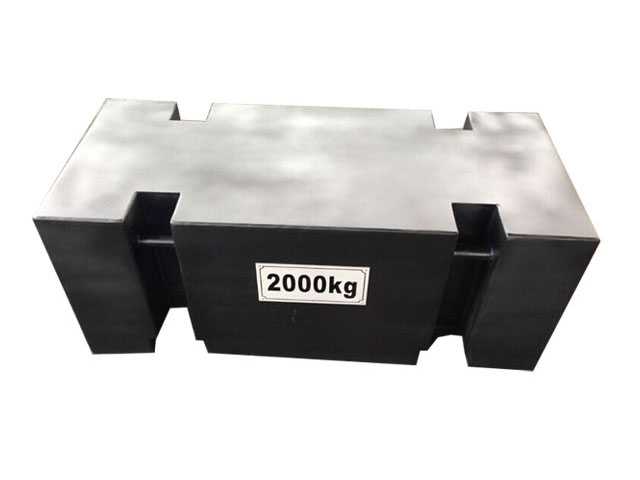
![2000kg Industrial Calibration Weight Heavy Industry Scale]()
2000kg Industrial Calibration Weight Heavy Industry Scale
In modern heavy industrial production and commercial measurement operations, consistent and accurate weighing data serves as a fundamental foundation for standardized prod…![Standard Weight Wholesale]()
Standard Weight Wholesale
Standard weight wholesale stands as a foundational pillar within the broader B2B distribution ecosystem, serving as the critical connecting link between product producers,…![High Precision Weight]()
High Precision Weight
High precision weight serves as a fundamental foundational component in modern industrial manufacturing, scientific research, experimental testing, and precision mechanica…![50g Standard Weight]()
50g Standard Weight
In the intricate tapestry of human life, production, and scientific exploration, the concept of mass measurement stands as one of the most fundamental and indispensable pi…![Forklift Scale Test Weight]()
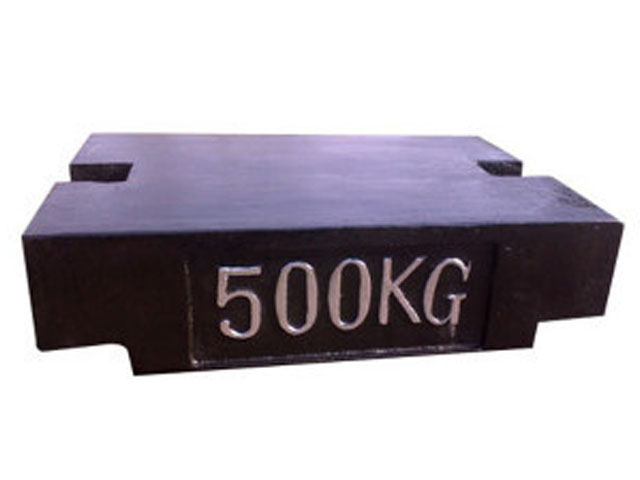
Forklift Scale Test Weight
Forklift scale test weight serves as a fundamental auxiliary medium for verifying the operational stability and measurement precision of onboard forklift weighing systems …