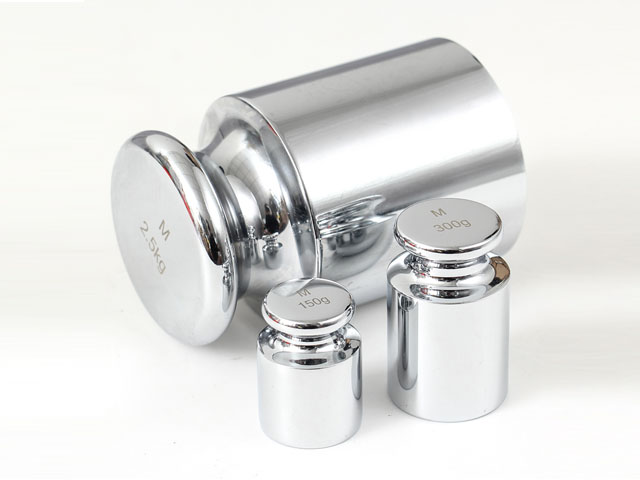
Weighing Scales
A weighing scale stands as one of the most practical and widely used measuring tools in human daily life and industrial activities, serving as a reliable medium for people to grasp the weight information of various objects. From trivial household scenarios to precise operational links in commercial transactions and production processing, this simple yet sophisticated device integrates basic physical principles and user-oriented design, bringing convenience and accuracy to countless scenes of life and work. Unlike professional measuring instruments that are limited to specific fields, the weighing scale features strong universality, adaptable to diverse usage environments and measurement demands of different accuracy levels, making it an indispensable part of modern life.
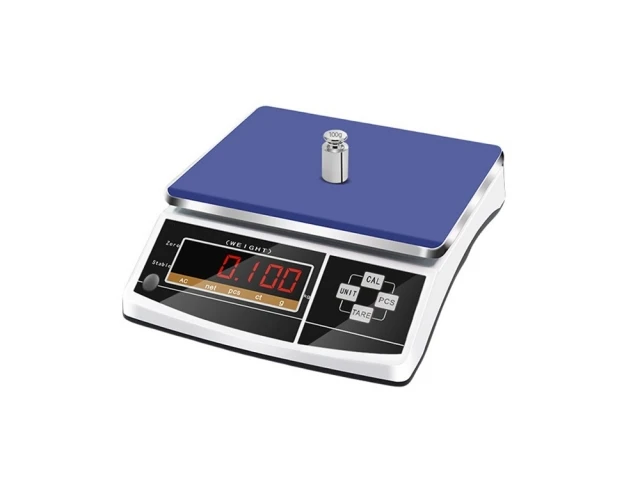
The core working logic of a weighing scale originates from the basic physical laws of force and gravity, and the internal structural design continues to iterate and optimize with the progress of manufacturing technology. Traditional mechanical weighing scales rely on the principle of lever balance and elastic deformation. When an object is placed on the bearing surface of the scale, the gravity of the object acts on the internal mechanical structure, driving the lever or spring component to produce corresponding displacement and deformation. Through the transmission and amplification of the mechanical structure, the subtle physical changes are converted into intuitive pointer deflection, so that users can read the weight data of the object. This mechanical structure is simple and stable, free from the interference of external power supply, and can maintain stable working performance after long-term use, which is why mechanical weighing scales have been popular in households and small scenarios for a long time.
With the development of electronic technology, electronic weighing scales have gradually become the mainstream product in the market, realizing a qualitative leap in measurement accuracy and user experience. Different from mechanical structures, electronic weighing scales are equipped with high-sensitivity sensing components inside. When bearing the weight of an object, the sensors will convert the pressure signal generated by gravity into a measurable electrical signal. After being processed, amplified and calculated by the internal circuit system and chip program, the electrical signal is finally converted into digital weight data, which is directly displayed on the screen. This digital measurement mode effectively avoids the visual deviation caused by manual reading of pointers, greatly improves the accuracy of measurement results, and also shortens the time required for weighing. The whole weighing process only takes a few seconds, which perfectly adapts to the fast-paced life and production rhythm.
In daily household life, weighing scales play a subtle but important role in helping people maintain a scientific and regular lifestyle. In family diet management, many people use weighing scales to measure the weight of ingredients when cooking and baking. Different ingredients have unique matching proportions in food production, and accurate weight control directly affects the taste, texture and nutritional balance of finished food. For homemade pastries, desserts and healthy light meals, relying on approximate visual estimation often leads to unbalanced ingredient ratios, while the data provided by weighing scales can standardize the production process and make homemade food more stable in quality. At the same time, for people who pay attention to physical health and body management, body weighing scales have become a common household item. Regular weight measurement helps people track physical changes, adjust diet and exercise plans in a timely manner, and maintain a healthy physical state. This quantitative health management method is more scientific and effective than subjective physical perception.
In commercial and trading scenarios, weighing scales undertake the important function of fair measurement and standardized transaction, which is the basic guarantee for maintaining the order of commodity circulation. In fresh markets, grocery stores and bulk commodity sales scenarios, weighing scales are used to measure the weight of various bulk goods such as vegetables, fruits, grains and nuts. Accurate weighing data ensures that both buyers and sellers can complete transactions based on unified measurement standards, avoiding disputes caused by inaccurate measurement. In supermarket operations, embedded and desktop weighing scales help merchants complete commodity weighing and labeling quickly, improving the efficiency of commodity settlement and shopping checkout. In addition, in the catering industry, many catering enterprises use weighing scales to standardize the portion of dishes and ingredients, ensuring the consistency of product quality in chain operation, which not only optimizes the customer dining experience, but also realizes standardized cost control for enterprises.
Industrial production and processing fields also rely heavily on the accurate measurement performance of weighing scales, and different types of weighing equipment meet the diversified measurement needs of production links. In light industry processing, food manufacturing, pharmaceutical production and other industries, small and medium-sized high-precision weighing scales are used for raw material proportioning and finished product sampling inspection. The precise proportioning of raw materials is the core premise of stable product quality, and tiny weight errors may affect the texture, efficacy and safety of products. In heavy industry, logistics and warehousing links, large-scale weighing equipment can complete the weight measurement of goods, packaging parts and whole batches of materials, providing accurate data support for inventory statistics, cargo settlement and production data analysis. These weighing works run through the whole process from raw material entry to finished product delivery, helping enterprises realize refined production management and reduce resource waste caused by inaccurate proportioning and statistics.
The continuous optimization of weighing scale design is always centered on user experience and scenario adaptation, covering structural design, functional setting and appearance optimization. In terms of structural design, most modern weighing scales adopt anti-slip bearing surfaces and stable base structures. The anti-slip design can prevent small objects from sliding during weighing, ensuring the stability of the weighing state; the stable base can reduce the vibration interference caused by placement and effectively improve the stability of measurement results. In terms of material selection, the bearing part of the weighing scale is mostly made of wear-resistant, pressure-resistant and easy-to-clean materials, which can adapt to frequent daily use and complex commercial use environments, and is not easy to be damaged by daily friction and collision, extending the service life of the equipment.
In terms of functional iteration, modern electronic weighing scales have broken through the single weighing function and added many practical auxiliary functions suitable for daily use. Many household weighing scales are equipped with zero-tracking and tare functions, which can automatically eliminate the weight of containers such as trays and packaging bags, directly measuring the net weight of ingredients and objects, simplifying the weighing operation steps and improving measurement efficiency. Some weighing scales also have automatic shutdown and power-saving functions, which can automatically enter the standby state after a period of idle use, reducing energy consumption and adapting to long-term household use. In addition, the high-definition digital display screen adopted by mainstream products can clearly display data in different light environments, avoiding the problem of unclear reading, and the large-screen design also facilitates the elderly and children to view measurement data intuitively.
Although the structure and principle of weighing scales are relatively simple, correct use and daily maintenance are crucial to maintain their measurement stability and service life. In the process of use, the placement environment has a great impact on the measurement effect. Weighing scales need to be placed on a flat, hard and stable horizontal surface. Placing them on soft surfaces such as carpets and cushions will cause the equipment to be stressed unevenly, resulting in deviation in measurement data. At the same time, it is necessary to avoid placing the weighing scale in a humid, high-temperature or strong vibration environment for a long time. Humid environment may corrode the internal circuit and sensing components of electronic scales, high temperature will affect the sensitivity of sensors, and strong vibration will damage the internal mechanical structure or precision components.
Daily cleaning and maintenance also affect the working state of the weighing scale. In daily use, dust, oil stains and sundries may accumulate on the bearing surface and gaps of the equipment, which will affect the contact state between the object and the scale surface and lead to inaccurate weighing. Regular wiping and cleaning can keep the equipment clean and ensure the stability of measurement. In addition, it is necessary to avoid overloading the weighing scale. Each weighing scale has a reasonable measuring range. Long-term overload use will cause irreversible deformation of internal sensors and mechanical structures, reduce measurement accuracy, and even cause equipment damage. For small household weighing scales, avoiding the impact of heavy objects can effectively protect the internal precision components.
With the continuous progress of manufacturing technology and the continuous improvement of market demand, the development trend of weighing scales is moving towards higher precision, more diversified functions and more intelligent operation. Traditional single-function weighing equipment can no longer fully meet the refined needs of users. Modern weighing products are gradually integrating intelligent sensing, data recording and data storage functions. Some household weighing scales can record daily measurement data, help users form long-term data records, and intuitively present the change trend of weight information. In commercial and industrial fields, intelligent weighing scales can be connected with data statistics systems to realize automatic upload and sorting of weighing data, reducing manual recording errors and improving the informatization level of enterprise management.
At the same time, the appearance design of weighing scales is also constantly optimized, abandoning the single and bulky design of traditional equipment. Modern weighing products are more lightweight and thin, with simple and versatile appearance styles, which can be well integrated into household decoration, commercial display and production environment, meeting users' dual needs for practicality and aesthetics. In terms of portability, mini portable weighing scales are widely used in daily travel, shopping and outdoor scenarios. They are small in size, light in weight and easy to carry, realizing convenient weight measurement at any time and place, further expanding the application scope of weighing tools.
As a basic measuring tool that has been passed down and iterated for a long time, the weighing scale has never faded out of people's vision with the development of technology, but has been continuously endowed with richer application values with technological progress. It is not only a tool for data measurement, but also an important helper for people to standardize life, standardize transactions and refine production. From manual mechanical weighing to intelligent electronic digital weighing, every technological upgrade of weighing scales is a concrete embodiment of people's pursuit of accurate life and efficient production.
In the future, with the continuous integration of intelligent technology, sensor technology and manufacturing technology, the performance of weighing scales will be further improved, and the product forms and application scenarios will be more abundant. It will continue to play an irreplaceable role in household life, commercial transactions, industrial production, scientific research and experimentation, and other fields, providing stable and accurate measurement support for all aspects of social production and life, and becoming a subtle and reliable cornerstone of orderly life and efficient production.
https://www.veidtweighing.com/CommercialScale/WeighingScale
Post Date: Jun 7, 2026
https://www.supplier-manufacturer.com/weight-balance-scale/weighing-scales.html

![Scale Calibration Weight]()
Scale Calibration Weight
Scale calibration weight stands as an essential foundational tool in the entire field of modern measurement and weighing operations, serving as the fundamental reference m…![Calibration Weight For Sale]()
Calibration Weight For Sale
In every sector that relies on reliable mass measurement to sustain daily operations, maintain consistent output quality, and uphold operational stability, calibration wei…![Calibration Weight Kit]()
Calibration Weight Kit
In every sector that relies on reliable mass measurement to maintain operational stability, procedural consistency, and consistent output quality, the calibration weight k…![20 Kg Calibration Weight]()
20 Kg Calibration Weight
In every sector that relies on accurate mass measurement to maintain operational order, product quality, and operational consistency, the role of standardized mass referen…![Stainless Steel Flat Test Weight For Platform Scale Calibration]()
Stainless Steel Flat Test Weight For Platform Scale Calibration
Stainless steel flat test weights serve as essential precision tools for the routine calibration and accuracy verification of platform scales across diverse industrial and…