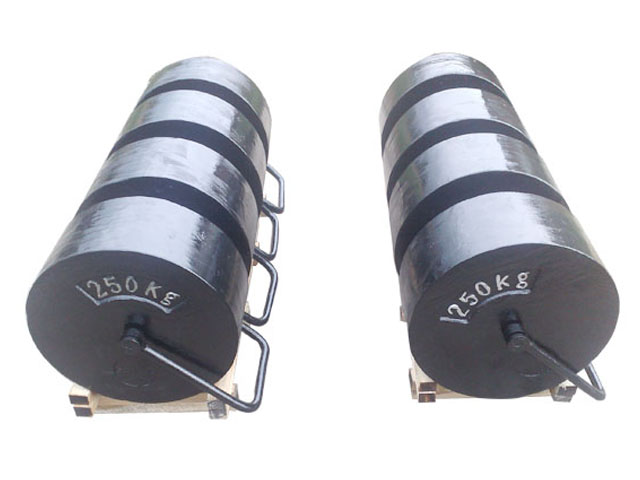
Stainless Steel Flat Test Weight For Platform Scale Calibration
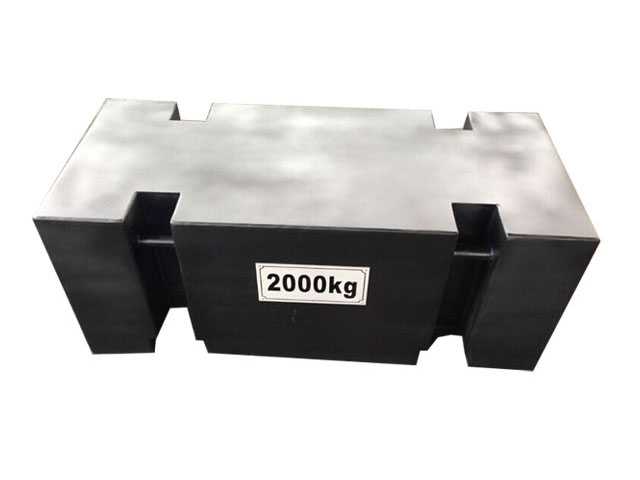
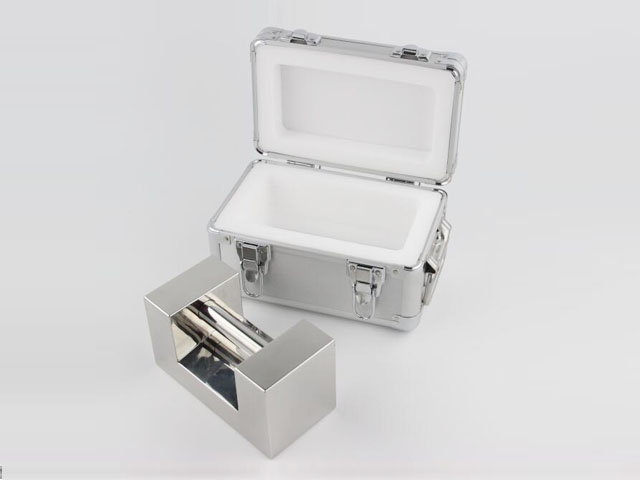
Stainless steel flat test weights serve as essential precision tools for the routine calibration and accuracy verification of platform scales across diverse industrial and commercial scenarios. Unlike traditional cast iron weights, these flat-structured stainless steel units feature a compact, flat profile that fits perfectly on the flat weighing surface of platform scales, enabling stable placement and uniform pressure distribution during calibration procedures. Crafted from premium stainless steel materials, they boast outstanding resistance to corrosion, oxidation, and environmental wear, maintaining consistent mass stability over long-term use even in humid, dusty, or mildly corrosive working environments. As a core component of weighing equipment maintenance, these test weights effectively eliminate measurement deviations caused by long-term scale operation, mechanical vibration, and environmental changes. They support full-range calibration of platform scales from small desktop models to large industrial floor platforms, ensuring all weighing data remains reliable, consistent, and trustworthy for daily production, logistics detection, and quality inspection work.
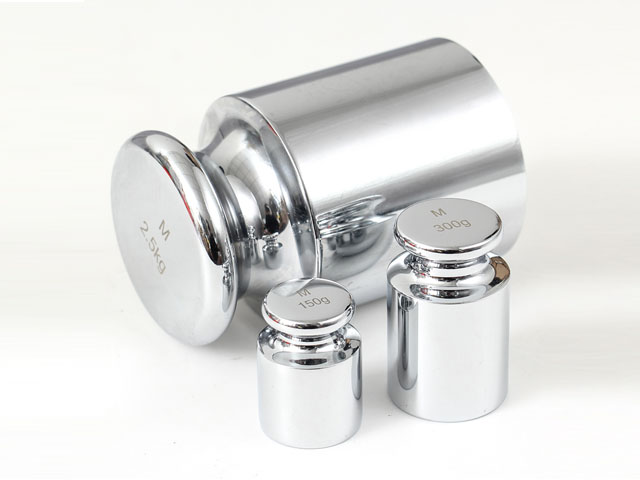
The unique flat structural design of stainless steel test weights is tailored specifically to the working characteristics of platform scales, bringing unparalleled practical advantages in calibration operations. Platform scales rely on flat bearing surfaces to bear measured objects, and the flat shape of these test weights completely matches this structural feature, avoiding the unstable placement and tilting issues common with cylindrical or irregular weights. This fully fitted contact ensures that the gravity of the test weight is evenly applied to the scale’s weighing sensor, allowing the scale to capture accurate pressure signals and generate precise reading feedback during calibration. Additionally, the flat structure features smooth, flat upper and lower surfaces with no protruding edges or uneven parts, which prevents local stress concentration on the scale’s weighing platform and protects the sensor and scale body from accidental damage during repeated calibration tests. The streamlined flat outline also simplifies stacking operations, enabling users to combine multiple weights flexibly to complete full-scale range calibration, covering light-load, medium-load, and heavy-load detection requirements of various platform scales.
Material selection is the core advantage that endows stainless steel flat test weights with superior performance and long service life compared to ordinary calibration weights. High-quality stainless steel used for manufacturing these weights features high density uniformity and stable physical properties, with no internal pores or structural gaps that may cause mass deviation. This homogeneous material structure ensures that each test weight maintains precise and fixed mass parameters, with minimal mass loss or change even after years of repeated use. More importantly, stainless steel exhibits excellent anti-corrosion and anti-rust properties, effectively resisting moisture, dust, chemical vapor, and other environmental factors that easily erode traditional metal weights. In industrial workshops, logistics warehouses, and outdoor working environments where platform scales are frequently used, these test weights will not rust, deform, or lose mass due to environmental erosion. Their smooth polished surface also prevents dust adhesion and dirt accumulation, making daily cleaning and maintenance extremely convenient, while permanently retaining stable weighing calibration performance.
Regular calibration of platform scales with stainless steel flat test weights is critical to eliminating systematic errors and ensuring the accuracy of industrial and commercial weighing work. During long-term operation, platform scales are inevitably affected by mechanical vibration, frequent load bearing, temperature changes, and component aging, which gradually cause subtle deviations in sensor sensitivity and weighing accuracy. These tiny errors will continue to accumulate over time, leading to inaccurate weighing data that may affect production quality control, cargo settlement, and data statistics. Stainless steel flat test weights provide fixed and accurate mass references for scale calibration, allowing operators to compare the scale’s displayed values with the standard mass of the test weights, identify existing deviations in a timely manner, and adjust the scale’s parameters for correction. Regular calibration with these professional test weights can effectively control weighing errors within a reasonable range, ensure the consistency and authenticity of all weighing results, and avoid economic losses and quality risks caused by inaccurate measurement data.
Stainless steel flat test weights boast wide applicability, adapting to almost all types of platform scales and diverse working scenarios in multiple industries. In manufacturing industries, they are used to calibrate workshop platform scales for raw material weighing, finished product detection, and batch quality inspection, ensuring precise proportioning of production materials and qualified product weight standards. In logistics and warehousing fields, these test weights calibrate large floor platform scales and pallet weighing scales, guaranteeing accurate calculation of cargo weight, shipping volume, and storage statistics, which supports standardized cargo settlement and transportation management. They also play an important role in food processing, pharmaceutical production, and chemical industries, where strict weighing accuracy is required. These industries demand ultra-stable measurement data to ensure product safety and formula accuracy, and the stable performance of stainless steel flat test weights fully meets their high-standard calibration needs.
The operational convenience of stainless steel flat test weights greatly improves the efficiency of platform scale calibration and reduces the difficulty of daily equipment maintenance. Their lightweight and flat design makes single-piece handling and placement simple and labor-saving, without the cumbersome operation of bulky traditional weights. The smooth surface and regular shape allow operators to quickly place, adjust, and stack the weights stably on the scale platform, completing calibration work in a short time. For large-range platform scale calibration, multiple flat test weights can be neatly stacked without sliding or tilting, realizing flexible combination of different weights to adapt to multi-point calibration requirements of the scale’s full measuring range. Moreover, the durable structure of stainless steel materials resists collision and wear during handling and use, reducing the probability of weight damage and mass deviation caused by accidental impact. The simple and practical design lowers the technical threshold for calibration operations, enabling ordinary equipment maintenance personnel to complete professional scale calibration work independently.
Long-term economic benefits make stainless steel flat test weights a cost-effective choice for enterprise weighing equipment maintenance. Although ordinary low-cost calibration weights have a low initial purchase cost, they are prone to rust, deformation, and mass drift after short-term use, requiring frequent replacement and repeated calibration verification, which increases long-term operational costs. In contrast, stainless steel flat test weights have an extremely long service life due to their excellent material stability and structural durability, maintaining accurate mass and intact performance after years of frequent use. Their low maintenance requirements eliminate the need for regular anti-rust treatment, surface repair, and parameter verification, greatly saving labor and time costs for equipment maintenance. Stable calibration performance also avoids economic losses caused by inaccurate weighing data, such as unqualified products, cargo settlement errors, and production data deviations, creating stable and long-term value for enterprise production and operation management.
With the continuous improvement of industrial measurement precision requirements, the application value of stainless steel flat test weights in platform scale calibration is becoming increasingly prominent. Modern industrial production and commercial circulation have put forward higher standards for the accuracy, stability, and consistency of weighing equipment, and traditional calibration tools can no longer meet the needs of high-frequency and high-precision calibration work. Stainless steel flat test weights integrate structural rationality, material superiority, and operational practicability, perfectly matching the precision maintenance needs of modern platform scales. They not only ensure the real-time accuracy of weighing equipment but also provide reliable basic support for enterprise quality control, standardized production, and compliant operation. As indispensable precision measuring auxiliary tools, these test weights will continue to play a key role in optimizing weighing management, improving measurement accuracy, and guaranteeing production quality in various industrial and commercial fields.
Stainless Steel Flat Test Weight For Platform Scale Calibration
https://www.veidtweighing.com/ssweight/StainlessSteelWeight
Post Date: Aug 14, 2026

![Test Weight Price]()
Test Weight Price
In the vast and interconnected landscape of bulk commodity production, circulation, and market transactions, test weight stands as one of the most fundamental and influent…![Material of Calibration Weight]()
Material of Calibration Weight
The material selection for calibration weights stands as one of the most foundational and impactful decisions in the entire design, production, and long-term application p…![Calibration Weight Vender In China]()
Calibration Weight Vender In China
The global ecosystem of precision measurement relies heavily on stable and reliable mass reference tools, among which calibration weights stand as the most fundamental and…![200kg Test Weight]()
200kg Test Weight
In the complex and interconnected system of modern industrial production, logistics transportation, engineering construction and experimental testing, the stability and re…![250kg Test Weight]()
250kg Test Weight
In the vast and intricate landscape of industrial production, mechanical operation, and metrological verification, the 250kg test weight stands as an indispensable foundat…