1000kg Large Calibration Weight Port Weighbridge Use
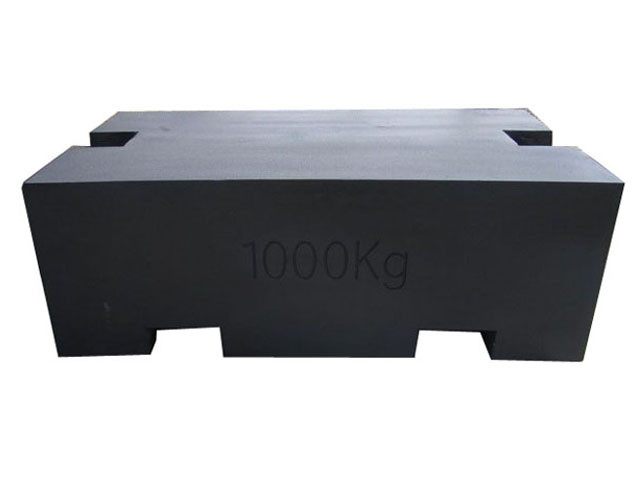
In modern port logistics and cargo management, accurate weight measurement serves as the fundamental foundation for efficient cargo circulation, safe shipping operation, and standardized freight settlement. Weighbridges, as core weighing equipment for port bulk cargo and vehicle weight detection, require stable and reliable calibration support to maintain consistent measurement accuracy during long-term daily operation. The 1000kg large calibration weight has become a vital auxiliary tool for port weighbridge calibration, adapting to the high-intensity, high-frequency working environment of ports and effectively ensuring the authenticity and stability of weighbridge measurement data throughout all operational cycles. Unlike small calibration weights used for precision instrument debugging in laboratory environments, large calibration weights of 1000kg are designed to match the heavy-load working characteristics of port weighbridges, covering the mainstream weighing range of port vehicle and cargo weighing scenarios, and filling the gap in large-range standard weight verification for outdoor industrial weighing equipment.
Port operational scenarios pose unique challenges to weighing equipment and calibration work, which distinguishes port weighbridge calibration from ordinary industrial weighing calibration work. Ports are typically open-air operation areas with complex and variable environmental conditions, including long-term exposure to wind, rain, and humidity, as well as frequent dust accumulation from bulk cargo such as grains, minerals, and construction materials. These environmental factors may cause subtle changes in the structural stress and sensor sensitivity of weighbridges over time, leading to slight deviations in weighing data. In addition, port weighbridges bear frequent rolling and heavy pressure from various transport vehicles every day, and continuous mechanical vibration and load impact will gradually affect the stability of the weighing platform and internal sensing components. Regular calibration with standard large weights is therefore essential to eliminate systematic errors caused by environmental erosion and mechanical fatigue, and to restore the accurate measurement performance of weighbridges.
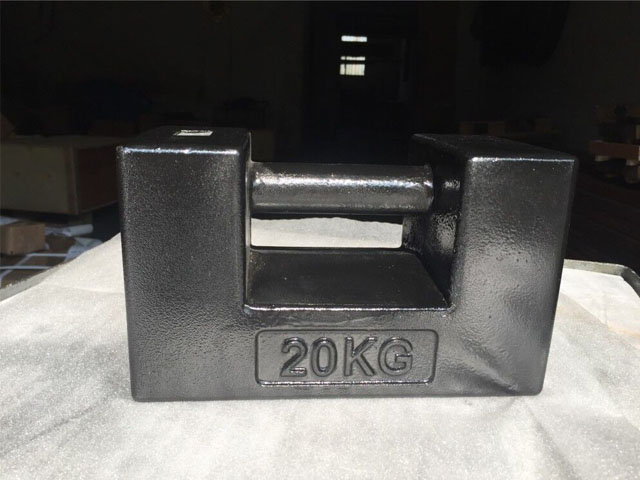
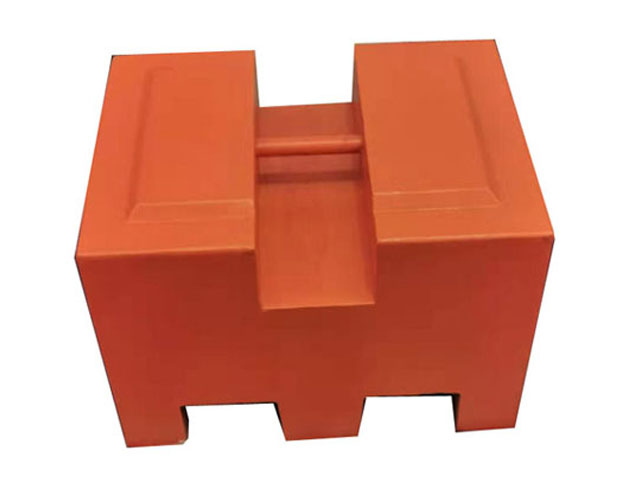
The 1000kg large calibration weight is well-suited for the structural and functional characteristics of port weighbridges in terms of design and application. Manufactured with high-density and high-stability metal materials, this type of calibration weight features a compact and solid overall structure, uniform internal density, and stable surface flatness, avoiding structural deformation or weight value changes caused by external pressure or temperature changes. Its standardized weight value provides a fixed and reliable measurement reference for weighbridge verification, enabling operators to conduct targeted detection and correction of weighbridge errors under heavy-load conditions. In port weighing work, most cargo transport vehicles carry bulk goods with large single-load weight, and the weighing process is basically carried out under medium and heavy load conditions. Using 1000kg standard weights for calibration can simulate the actual heavy-load working state of the weighbridge more realistically than small weights, making the calibrated measurement data more in line with the actual operational needs of the port.
The application process of 1000kg large calibration weights in port weighbridge calibration follows standardized operational logic, ensuring the scientific and rigorous nature of calibration work. Before formal calibration, port staff need to complete basic preprocessing work for the weighbridge and calibration weights. The surface of the weighbridge platform is thoroughly cleaned to remove accumulated dust, cargo residues, and sundries that may affect the contact balance, ensuring the platform surface is flat and clean to guarantee uniform stress during weighing. Meanwhile, the calibration weights are inspected for surface integrity, checking for adhesion of foreign substances that may affect weight accuracy, and the weights are placed in a dry and stable environment for a period of time to adapt to the on-site temperature and humidity, reducing measurement interference caused by environmental differences. In addition, it is necessary to confirm that the weighbridge is in a normal standby state, with no abnormal alarm prompts for the sensing system and data display system, and all mechanical parts operate flexibly without jamming or abnormal friction.
During the formal calibration operation, operators place the 1000kg calibration weight stably on different detection points of the weighbridge platform in accordance with operational specifications. Considering the large coverage area of the port weighbridge platform and the possible uneven stress of different areas, multi-point placement detection is required, including the center and four corner positions of the platform. This multi-position calibration method can effectively detect regional measurement deviations of the weighbridge, avoid inaccurate local weighing caused by platform structural settlement or sensor sensitivity differences, and comprehensively verify the overall weighing performance of the equipment. After each placement of the standard weight, the staff records the data displayed by the weighbridge system, compares it with the standard weight value, and sorts out the deviation range. If the data deviation exceeds the allowable range of daily use, fine adjustment and parameter correction of the weighbridge system are carried out in a targeted manner until the displayed value is consistent with the standard weight value of the calibration weight.
In daily port operation, the application scenarios of 1000kg large calibration weights cover regular routine calibration, post-maintenance re-verification, and abnormal data troubleshooting. Routine regular calibration is the most common application scenario. Ports carry out periodic calibration of weighbridges according to operational frequency and environmental conditions, so as to continuously maintain the accuracy of weighing data and ensure the standardized settlement of cargo freight and the accurate statistics of cargo throughput. After the weighbridge undergoes mechanical maintenance, component replacement, or platform cleaning and overhaul, the internal stress balance and sensor parameters of the equipment may change, making re-calibration with standard 1000kg weights necessary to confirm that the equipment returns to normal working accuracy. When abnormal fluctuations in weighing data are found in daily work, such as inconsistent repeated weighing data of the same vehicle or obvious deviation from estimated cargo weight, staff can use 1000kg calibration weights for rapid detection to judge whether the error comes from equipment failure or external interference, providing an accurate basis for subsequent troubleshooting and maintenance.
Standardized maintenance and storage of 1000kg large calibration weights are crucial to maintain their long-term measurement stability and extend their service life, which in turn guarantees the reliability of weighbridge calibration work. In the harsh open-air environment of ports, calibration weights are prone to surface corrosion, rust, and foreign substance adhesion if placed randomly for a long time, which will directly affect the accuracy of standard weight values. Therefore, after each use, the weights need to be cleaned in time to remove surface dust, water stains, and residual cargo debris, and then stored in a dry, ventilated, and flat special storage area, avoiding long-term exposure to rain and moisture. During handling and placement, violent collision and rolling should be avoided to prevent structural deformation and internal density changes caused by external impact, which would lead to weight value deviation. In addition, regular manual inspection of the calibration weights is required to check for surface damage, corrosion pits, or structural looseness, ensuring that the weight state remains stable for each calibration use.
The standardized application of 1000kg large calibration weights plays an important supporting role in improving the overall operational efficiency and management level of port logistics. Port cargo weighing data is not only the basis for freight settlement between suppliers and carriers, but also an important statistical basis for port cargo throughput, inventory management, and shipping scheduling. Accurate weighbridge data can effectively avoid economic disputes caused by weighing deviations, ensure the fair and orderly development of port cargo trading and transportation business. At the same time, stable and accurate weighing data helps ports complete accurate cargo classification and volume statistics, providing reliable data support for port operation planning, resource allocation, and transportation route optimization. For shipping safety management, accurate weight detection can prevent overloaded vehicles from entering and exiting the port, reduce the risk of road damage and traffic accidents caused by overloading, and standardize the safe operation order of port transportation.
In the context of continuous upgrading of modern port intelligent logistics systems, the matching use of large calibration weights and intelligent weighbridge systems has become an inevitable trend. Modern port weighbridges are mostly integrated with intelligent data recording, automatic uploading, and data analysis functions, which can realize automatic recording and storage of weighing data. The regular calibration with 1000kg standard weights provides accurate basic parameters for the intelligent system, ensuring that all data collected, analyzed, and uploaded by the system is true and effective. The stable calibration effect enables the intelligent weighing system to maintain high-precision operation for a long time, reducing manual data correction work, improving the automation level of port weighing management, and laying a solid foundation for the digital and intelligent transformation of port logistics operation.
In conclusion, the 1000kg large calibration weight is an indispensable basic measuring tool in the daily operation and maintenance of port weighbridges. It adapts to the heavy-load and high-frequency working characteristics of port weighing equipment, solves the problem of accuracy attenuation of weighbridges caused by complex environmental factors and long-term mechanical operation, and provides stable and reliable standard reference for port weighing work. Through standardized calibration operation, scientific daily maintenance, and reasonable scenario application, this type of calibration weight can continuously exert its value, ensure the long-term accurate and stable operation of port weighbridges, support the efficient, standardized and safe development of port cargo transportation and logistics management, and become an important guarantee for the stable operation of modern port weighing systems.
1000kg Large Calibration Weight Port Weighbridge Use
https://www.veidtweighing.com/calibration-weights.html
Post Date: Jun 19, 2026

![Spoon Scales]()
Spoon Scales
In daily cooking, baking, and ingredient preparation, the accuracy of ingredient measurement often determines the final quality of food and beverage. Many people rely on t…![Cast Iron Weight With Handle]()
Cast Iron Weight With Handle
Cast iron weight with handle stands as a fundamental and reliable tool widely adopted across industrial production, commercial operation, daily maintenance work and variou…![Moisture Analyzers]()
Moisture Analyzers
Moisture content stands as one of the most critical physical attributes of solid, liquid, and granular materials across diverse industrial and research fields. Subtle vari…![Cast Iron Counterweight]()
Cast Iron Counterweight
Throughout the entire evolution of mechanical engineering and industrial manufacturing, maintaining stable force balance and reliable structural stability has always been …![Standard Weights]()
Standard Weights
Body weight is one of the most intuitive and fundamental indicators that reflect the physical condition of the human body, and the concept of standard weight has long been…