100kg Stainless Steel Calibration Weight Logistics Scale
In modern logistics and industrial operation systems, accurate weight measurement serves as a fundamental foundation for standardized operation, cost accounting, inventory management, and cargo transportation safety. All types of logistics weighing equipment that undertake daily weight detection of goods, pallets, and bulk materials will experience subtle measurement deviation after long-term mechanical vibration, frequent load bearing, and environmental changes. Regular calibration with professional standard weights is essential to maintain the stability and consistency of weighing data. The 100kg stainless steel calibration weight stands out as a practical and widely applicable standard measuring tool, perfectly matching the conventional weighing range of mainstream logistics scales, and plays an indispensable role in daily calibration and error correction of logistics weighing equipment across warehousing, distribution, freight forwarding, and industrial outbound scenarios.
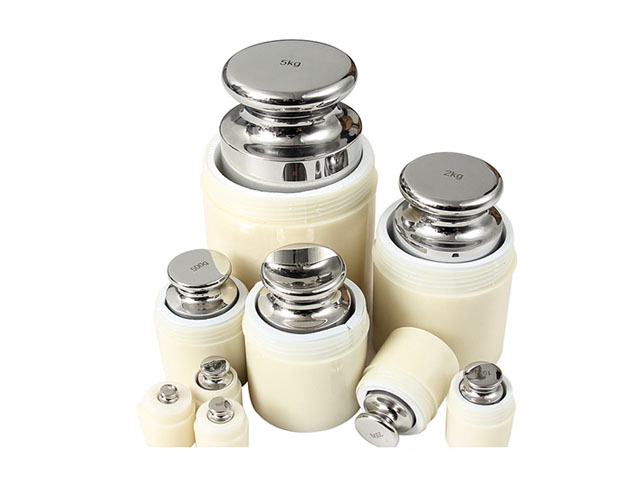
The core value of stainless steel materials for calibration weights lies in their stable physical and chemical properties, which adapt to the complex and changeable working environments of logistics sites. Unlike ordinary metal materials that are prone to oxidation, rust, and surface wear after long-term use, high-quality stainless steel used for manufacturing calibration weights features excellent corrosion resistance, oxidation resistance, and surface hardness. Logistics sites often face variable conditions including humid air, occasional contact with dust, packaging debris, and trace chemical residues from goods. These environmental factors may cause mass changes to low-quality standard weights, leading to inaccurate calibration results. The 100kg stainless steel calibration weight maintains a stable mass state for a long time in such working environments, with no obvious quality loss or increase caused by external erosion, ensuring that it can always provide reliable reference mass data for scale calibration.
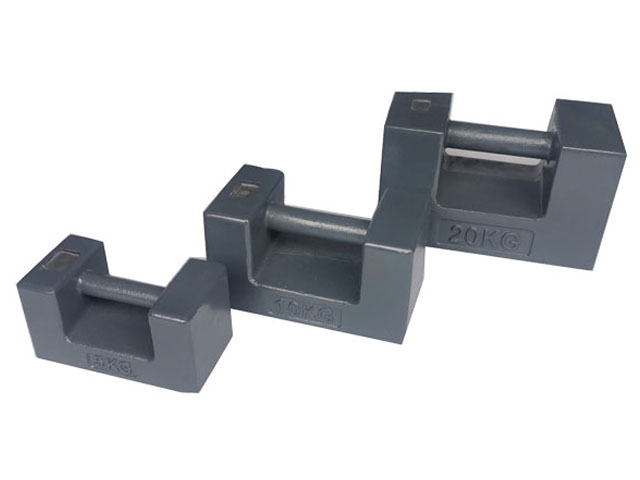
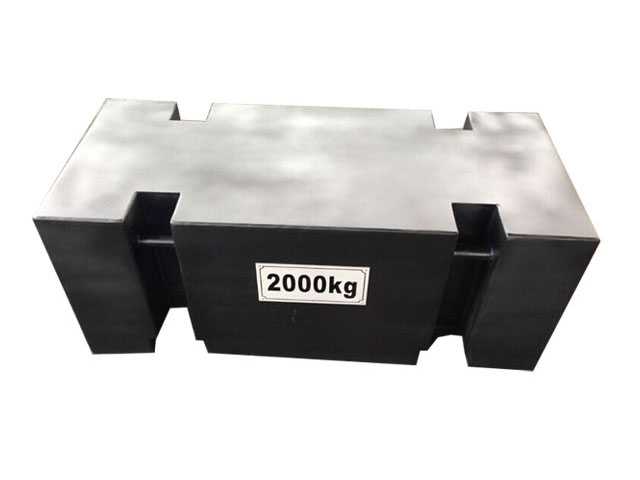
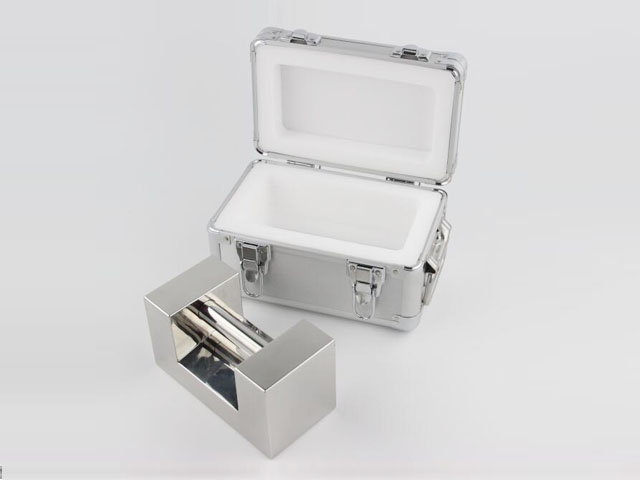
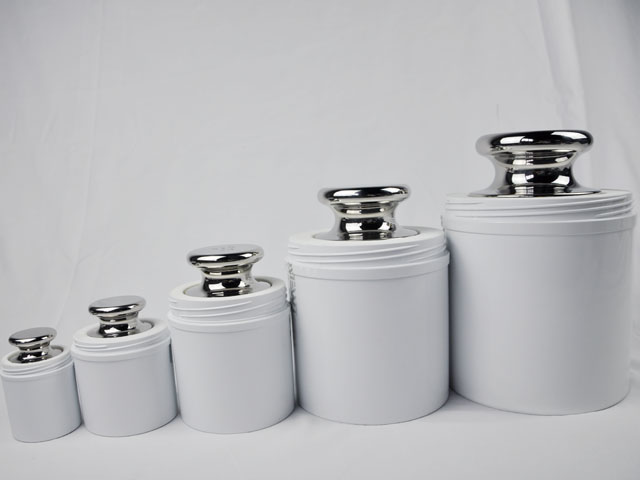
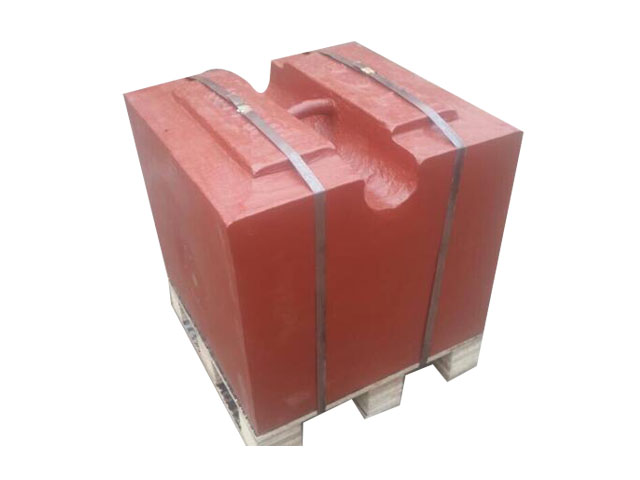
In terms of structural design, the 100kg stainless steel calibration weight adopts integrated and smooth processing technology, with uniform surface texture and precise overall dimension control. The overall structure is compact and regular, which is convenient for stacking, handling, and placement during on-site calibration work. The surface is finely polished to reduce surface roughness, effectively avoiding dust adhesion and residual stains that may affect mass accuracy. Daily cleaning and maintenance only require simple wiping to keep the surface clean, lowering the threshold of daily management and adapting to the efficient and fast-paced operation mode of logistics sites. The moderate weight of 100kg balances calibration accuracy and operational convenience, making it suitable for calibrating medium and large capacity logistics platform scales, pallet scales, and floor scales that are commonly used in daily logistics operations, filling the gap between small precision weights and large-tonnage calibration tools in practical application.
Logistics scales are the core measurement equipment for cargo weight confirmation in the entire supply chain, covering multiple key links including warehouse incoming inspection, inventory counting, outbound weighing, transit distribution, and freight settlement. In actual operation, logistics scales need to bear frequent loading and unloading of goods of different sizes and weights, and the internal sensor and mechanical bearing structure will gradually produce fatigue changes with the increase of service time. In addition, external factors such as ground unevenness, temperature difference changes, and equipment vibration during operation will also cause temporary or permanent measurement errors of the scales. If these errors cannot be corrected in a timely manner, they will gradually accumulate, resulting in inconsistent weighing data of goods, which will further affect inventory data statistics accuracy, cause deviations in transportation load calculation, and even bring hidden troubles to cargo handover and business settlement between upstream and downstream enterprises in the supply chain.
Regular calibration with 100kg stainless steel calibration weights provides an effective solution to eliminate logistics scale measurement errors. The calibration work follows standardized operation procedures, placing the standard weight stably on the center of the logistics scale weighing platform, and comparing the scale display data with the standard mass of the calibration weight to judge the current measurement accuracy of the equipment. For slight deviations in weighing data, staff can complete parameter adjustment and error correction of the scale through professional operation, restoring the equipment to a normal and accurate working state. For deviations beyond the adjustable range, timely equipment maintenance and inspection can be arranged to avoid long-term use of inaccurate weighing equipment and prevent a series of operational problems caused by measurement errors.
The application scenarios of 100kg stainless steel calibration weights in logistics operation are extremely extensive, covering daily operation and quality management of most medium-sized logistics weighing scenarios. In warehouse management links, regular calibration of inventory weighing scales ensures that the weight data of incoming and outgoing goods is true and effective, helping enterprises complete accurate inventory counting, avoid inventory differences caused by weighing errors, and optimize warehouse storage space planning and goods scheduling efficiency. In cargo distribution and express logistics links, accurate scale calibration ensures that the weight data of parcels and pallet goods is consistent with the actual situation, providing reliable data support for transportation vehicle load matching, distribution route arrangement, and standardized cargo handover.
In industrial supporting logistics scenarios, many finished products and semi-finished products need to be weighed before leaving the factory to confirm batch quality and shipment quantity. The use of 100kg stainless steel calibration weights to regularly calibrate factory logistics scales can maintain the consistency of product weighing standards, ensure stable product delivery quality, and help enterprises maintain standardized production and operation processes. At the same time, in third-party logistics service scenarios, unified and accurate weighing standards are the basis for fair cooperation between logistics service providers and customers. Stable and reliable scale calibration work can effectively avoid weight disputes in cargo handover, improve the transparency and credibility of logistics services, and build stable cooperative relationships between enterprises.
Compared with calibration weights made of cast iron and other conventional materials, stainless steel calibration weights have obvious advantages in service life and environmental adaptability, which is more in line with the long-term use needs of logistics enterprises. Cast iron weights are susceptible to moisture and rust in humid logistics warehouses and outdoor transit environments, and rust peeling will cause continuous mass loss, leading to failure of calibration reference standards. In contrast, stainless steel materials can resist daily environmental erosion, and the surface is not easy to wear and deform during repeated handling and use. After long-term repeated calibration operations, the mass stability of the 100kg stainless steel calibration weight can still be well maintained, reducing the frequency of weight replacement and long-term use cost for enterprises.
In terms of daily management and use specifications, the 100kg stainless steel calibration weight has low maintenance requirements, which is convenient for logistics enterprises to implement standardized management. During daily storage, it only needs to be placed in a dry, flat, and dust-proof storage area, avoiding long-term extrusion and violent collision with heavy objects. Before each calibration operation, simple surface cleaning can remove floating dust and impurities on the surface to ensure the accuracy of calibration reference. During the calibration process, stable placement and standardized operation can avoid artificial tilt and displacement affecting the calibration effect. Simple and convenient use and maintenance methods enable logistics staff to quickly master the operation skills, complete daily equipment calibration work efficiently, and will not increase excessive operational burden on enterprise management.
The importance of regular calibration of logistics scales with standard weights is also reflected in the standardization and normalization of enterprise operation management. With the continuous improvement of modern logistics industry operation standards, the measurement accuracy of logistics equipment has become an important part of enterprise quality management. Stable weighing data can help enterprises realize refined management of logistics links, accurately count cargo throughput, optimize transportation resource allocation, and reduce operational risks caused by data errors. The 100kg stainless steel calibration weight, as a stable and reliable measurement reference tool, provides basic technical support for the standardized operation of logistics enterprises, helping enterprises form a complete equipment calibration and maintenance system, and ensuring the sustainable and stable operation of logistics weighing links.
In practical application, the 100kg specification can well cover the weighing detection needs of most conventional pallet goods and bulk packaged goods in logistics. Most single pallet goods in warehousing and logistics are within the medium weight range, and the 100kg standard weight can accurately detect the weighing accuracy of the scale in the conventional working range, avoiding the problem of insufficient calibration pertinence caused by the mismatch between calibration weight specification and actual weighing range. Targeted calibration for the conventional working range of logistics scales can maximize the guarantee of measurement accuracy in daily business, making the calibration work more efficient and targeted.
In addition, the good structural stability of the 100kg stainless steel calibration weight ensures that no deformation or structural damage occurs during handling and calibration. The integral molding process makes the weight uniform in force, and it can maintain a regular shape after long-term stacking and handling, ensuring that the contact area with the scale weighing platform is stable each time, thus ensuring the consistency of calibration conditions. Stable calibration conditions are the premise of accurate calibration results, which can avoid measurement errors caused by irregular placement and structural changes of the weight, and further improve the reliability of scale calibration work.
In the entire logistics supply chain, every link involving cargo weighing is closely linked to enterprise operation benefits and service quality. Small weighing errors will be amplified in batch cargo operation, resulting in inaccurate statistical data, unbalanced transportation load, and abnormal settlement data. Timely and accurate calibration of logistics scales with 100kg stainless steel calibration weights can effectively curb such operational risks, maintain the accuracy and uniformity of weighing standards in all links of the supply chain, ensure the smooth progress of cargo warehousing, transportation, handover, and settlement work, and help enterprises reduce operational losses caused by measurement deviations.
With the continuous development of intelligent logistics, the degree of automation of logistics weighing equipment is constantly improving, and the real-time and accuracy requirements of weighing data are also getting higher. Intelligent logistics scales are connected with warehouse management systems and transportation scheduling systems, and all operational data are uploaded and analyzed in real time. Once the weighing equipment has measurement errors, it will affect the accuracy of system data statistics and intelligent scheduling decisions. The application of 100kg stainless steel calibration weights in daily calibration can adapt to the development needs of intelligent logistics, maintain the long-term stable operation of intelligent weighing equipment, and provide accurate basic data for intelligent logistics management and decision-making.
To sum up, the 100kg stainless steel calibration weight, with its stable material performance, reasonable specification design, strong environmental adaptability, and convenient use and maintenance characteristics, has become an essential standard measuring tool in the daily operation and maintenance of logistics scales. It undertakes the important work of regular error detection and accuracy correction of logistics weighing equipment, effectively guarantees the accuracy and stability of cargo weighing data in warehousing, distribution, transportation, and other links, supports the standardized, refined, and intelligent operation of modern logistics enterprises, and plays a positive role in improving the overall operation efficiency and service quality of the logistics industry. In the long-term operation and management of logistics equipment, standardized application and scientific maintenance of stainless steel calibration weights will continue to provide solid basic guarantee for the stable operation of logistics weighing links.
100kg Stainless Steel Calibration Weight Logistics Scale
https://www.veidtweighing.com/calibration-weights.html
Post Date: Jun 19, 2026

![Purposes of Test Weight]()
Purposes of Test Weight
In every sector that relies on accurate mass measurement to maintain operational stability, consistent output quality, and reliable operational standards, test weights sta…![Test Weight Price]()
Test Weight Price
In the vast and interconnected landscape of bulk commodity production, circulation, and market transactions, test weight stands as one of the most fundamental and influent…![Material of Calibration Weight]()
Material of Calibration Weight
The material selection for calibration weights stands as one of the most foundational and impactful decisions in the entire design, production, and long-term application p…![Calibration Weight Vender In China]()
Calibration Weight Vender In China
The global ecosystem of precision measurement relies heavily on stable and reliable mass reference tools, among which calibration weights stand as the most fundamental and…![200kg Test Weight]()
200kg Test Weight
In the complex and interconnected system of modern industrial production, logistics transportation, engineering construction and experimental testing, the stability and re…