20kg Cast Iron Calibration Weight For Truck Scale
Truck scales serve as essential measuring equipment in logistics, transportation, industrial production, and commercial trading sectors, undertaking the critical task of accurately weighing heavy vehicles and their loads. The long-term operation of truck scales in complex working environments, including frequent vehicle rolling, vibration impact, and exposure to variable temperature and humidity conditions, can gradually cause minor deviations in weighing accuracy. Regular calibration with standard weights is a fundamental method to maintain the stable and reliable performance of truck scales, and 20kg cast iron calibration weights have become a widely adopted standard tool for daily calibration and routine testing of truck scales due to their stable physical properties, practical structural design, and adaptable application characteristics.
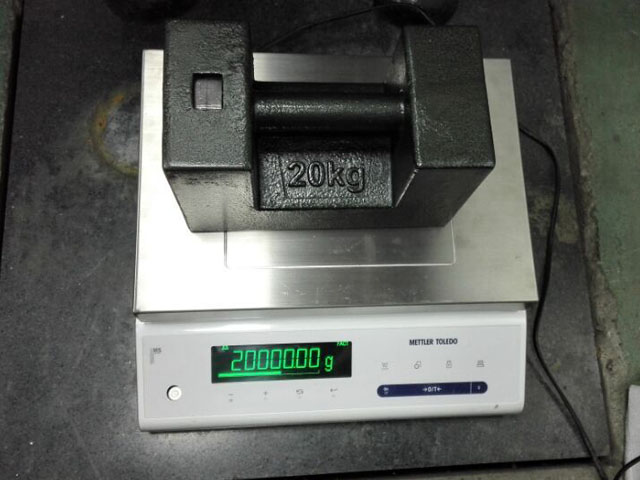
Cast iron materials have long been preferred for manufacturing standard calibration weights for industrial weighing equipment, and the 20kg specification strikes a practical balance between single-unit weight and flexible operability for truck scale calibration work. The raw materials used for this type of calibration weight undergo refined smelting and ingredient proportioning, which endows the finished product with dense internal texture and uniform material distribution. This structural uniformity effectively avoids the quality deviation caused by internal porosity or uneven density that may occur in ordinary cast products. In practical application, such material features ensure that the 20kg cast iron weight can maintain consistent mass status for a long time, with slow natural mass change and strong resistance to external environmental interference, laying a solid foundation for reliable calibration data.
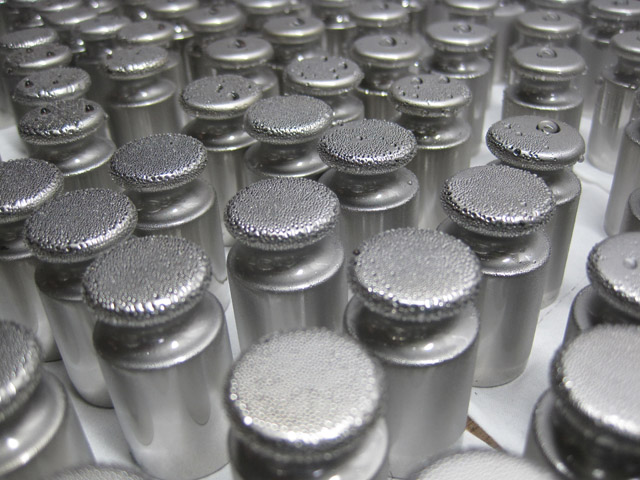
The overall manufacturing process of 20kg cast iron calibration weights follows standardized industrial processing procedures. After integral casting, the weight undergoes multiple stages of fine polishing, surface smoothing, and dimensional trimming to ensure regular overall shape and flat, smooth contact surfaces. A uniform protective coating is applied on the outer surface of the weight, which effectively isolates air, moisture, and dust in the working environment. This protective treatment greatly reduces the possibility of surface oxidation, rusting, and corrosion, preventing mass changes caused by surface material loss or adhesion of foreign substances. Different from lightweight calibration tools used for precision laboratory scales, this cast iron weight is designed to adapt to harsh on-site working conditions of truck scales, with strong surface wear resistance and structural impact resistance, and can withstand frequent handling, stacking, and placement operations in open-air industrial scenarios.
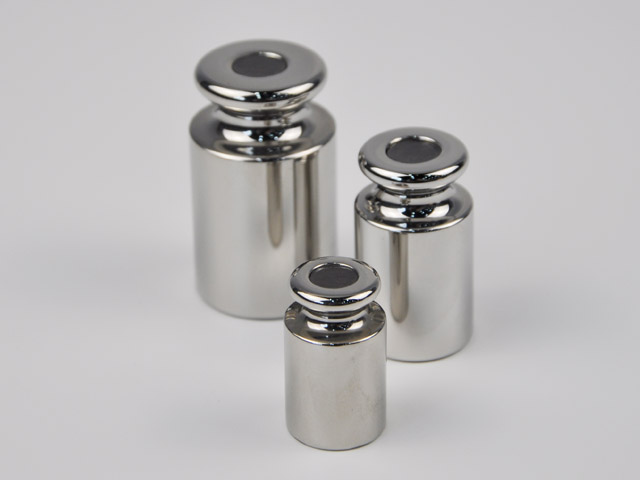
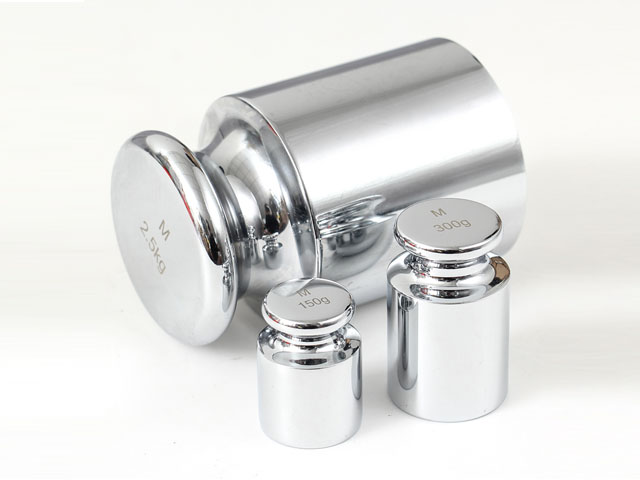
In terms of structural design, the 20kg cast iron calibration weight adopts an integrated block structure with a built-in handheld grip, which is highly in line with the actual operation needs of truck scale calibration work. The integral casting structure eliminates loose parts or assembly gaps, ensuring overall structural stability and avoiding mass errors caused by part displacement or loss. The reserved grip part is ergonomically designed with moderate height and width, which enables operators to stably grasp and move the weight during calibration. The design avoids excessive physical exertion during repeated handling and ensures accurate placement of the weight on the scale platform. The bottom of the weight is flat and level, which can fully fit the surface of the truck scale platform when placed, preventing tilting or shaking that may affect the accuracy of weighing feedback. Meanwhile, the edge parts of the weight are smoothly polished without sharp corners, effectively reducing the risk of collision damage to the scale platform and personal scratch injuries during operation.
The 20kg mass specification is highly targeted for the daily calibration and error detection of truck scales. As large-scale weighing equipment, truck scales have a wide weighing range and are used for measuring heavy loads, so their accuracy verification cannot rely solely on ultra-precision lightweight weights. A single 20kg weight has moderate mass, which can be used for single-point calibration of small-range errors of truck scales, and can also be combined with multiple weights to complete multi-point calibration of different load segments. This flexible combination mode can cover the low and medium load test ranges of truck scales, effectively detecting whether the scale has zero drift, linear deviation, or local weighing inaccuracy. In the daily maintenance of truck scales, staff usually use 20kg cast iron weights to conduct frequent spot checks on the weighing accuracy, which can timely discover minor performance changes of the equipment and avoid the gradual expansion of weighing errors affecting industrial measurement and trading settlement.
The application scenarios of 20kg cast iron calibration weights for truck scales cover multiple links of equipment operation and maintenance. In daily routine inspection, weighing and measuring staff place the weight on different positions of the truck scale platform, including the center and four corner areas, to test the weighing consistency of each area of the scale. Long-term use of truck scales may lead to inconsistent stress bearing on different parts of the platform, resulting in different weighing results for the same load in different positions. The detection method with 20kg standard weights can effectively identify such positional deviation problems and provide accurate basis for subsequent equipment debugging and adjustment. In regular equipment maintenance, technical personnel use these weights to calibrate the zero point and linearity of the truck scale, correct the system errors generated by long-term vibration and load pressure, and restore the equipment to a stable working state.
In addition to conventional daily calibration, this type of calibration weight also plays an important role in equipment overhaul and fault troubleshooting. When the truck scale has abnormal weighing data, unstable numerical display, or obvious deviation between measured value and actual load value, maintenance personnel will use 20kg cast iron weights for step-by-step testing. By comparing the feedback data of the scale with the standard mass of the weight, they can quickly judge whether the error comes from sensor aging, platform deformation, line failure, or parameter drift. This targeted detection method improves the efficiency of equipment fault diagnosis, helps to accurately locate problems, and reduces the time cost of equipment maintenance and downtime loss. At the same time, in the acceptance link of newly installed or renovated truck scales, 20kg cast iron calibration weights are also used for preliminary accuracy verification to ensure that the installed equipment meets the basic weighing standards before formal put into use.
The excellent environmental adaptability of 20kg cast iron calibration weights makes them suitable for various working conditions where truck scales are deployed. Most truck scales are installed in open-air yards, freight stations, industrial parks, and other sites, which are exposed to wind, sun, rain, and temperature changes all year round. Ordinary precision calibration tools are easily affected by temperature and humidity, resulting in mass drift, while cast iron materials have stable thermal expansion and contraction properties, with small mass change amplitude in different temperature environments. The surface protective layer can resist rainwater erosion and dust accumulation, ensuring that the weight can maintain stable mass performance in humid, dry, dusty, and other complex environments. Whether in high-temperature summer environments or low-temperature winter conditions, it can complete calibration work normally without frequent auxiliary correction due to environmental factors.
Standardized operation methods are crucial to give full play to the calibration effect of 20kg cast iron weights. Before each calibration work, operators need to check the surface state of the weight to remove surface dust, sediment, and residual moisture, because foreign attachments will cause minor changes in the actual mass of the weight and affect the calibration accuracy. It is also necessary to confirm the surface cleanliness and flatness of the truck scale platform to ensure that there are no sundries blocking or platform deformation affecting the placement of the weight. During placement, the weight should be gently and steadily placed in the designated test position to avoid throwing, sliding, or collision, so as to prevent mechanical impact from causing structural damage to the weight or the scale equipment. After the weighing data of the scale is stable, record the numerical feedback, and compare and analyze it with the standard mass to judge the equipment accuracy status. After the completion of calibration, the weight should be cleaned again and stored in a dry and ventilated environment to avoid long-term exposure to harsh environments.
Daily maintenance and proper storage can effectively extend the service life and maintain the measurement stability of 20kg cast iron calibration weights. After each use, timely cleaning of surface dirt and moisture can prevent long-term adhesion of pollutants from corroding the surface protective layer and damaging the base material. During stacking and storage, avoid extrusion and collision between multiple weights to prevent surface wear and structural deformation. It is recommended to place the weights on a flat and dry storage rack, keep a certain distance from the ground to prevent moisture absorption and oxidation caused by ground humidity. Regular manual inspection of the weight surface is needed to check for peeling of the protective layer, obvious wear, or structural deformation. If minor surface scratches occur, timely maintenance and repair can be carried out to ensure the continuity and stability of mass performance. Scientific maintenance can make the weight maintain consistent calibration accuracy for a long time and reduce the frequency of replacement and recalibration caused by performance attenuation.
In the entire industrial weighing system, the role of 20kg cast iron calibration weights is irreplaceable in the fine management of truck scale equipment. The accurate operation of truck scales is related to the fairness of commodity trading in the logistics and transportation industry, the accuracy of industrial production data statistics, and the compliance of enterprise operation and management. Small deviations in weighing accuracy, if not corrected in time, will accumulate over time, leading to large measurement errors, which will not only affect the economic benefits of enterprises but also reduce the credibility of equipment measurement data. As a convenient, stable, and durable standard calibration tool, the 20kg cast iron weight provides basic technical support for the long-term stable operation of truck scales. Its moderate specification, stable performance, and strong environmental adaptability make it suitable for large-scale popularization and use in various truck scale application scenarios, forming an important part of the daily maintenance system of industrial weighing equipment.
Compared with other types of calibration weights, cast iron calibration weights of 20kg have outstanding practical advantages in truck scale calibration scenarios. Precision metal weights with high manufacturing costs are mostly used for laboratory precision calibration and are not suitable for frequent on-site use and harsh environmental conditions. Lightweight plastic or alloy weights have poor structural stability and are prone to deformation and mass change after long-term use. In contrast, 20kg cast iron calibration weights balance performance and applicability, with firm structure, stable mass, low maintenance cost, and strong anti-interference ability, which can fully meet the daily calibration and regular testing needs of truck scales. The flexible single weight and combined use mode can adapt to different calibration requirements, whether it is daily rapid spot check or regular comprehensive accuracy detection, it can achieve ideal use effect.
With the continuous development of industrial logistics and the continuous improvement of measurement standard requirements, the frequency and standardization of truck scale calibration work are constantly improving. More enterprises and measurement institutions have begun to pay attention to the daily maintenance and regular calibration of weighing equipment, and the demand for stable and reliable conventional calibration weights is also increasing. The 20kg cast iron calibration weight will continue to play an important role in the field of truck scale calibration by virtue of its mature manufacturing technology, stable product performance, and wide scenario adaptability. In the future, with the continuous optimization of casting and surface treatment processes, the comprehensive performance of such calibration weights will be further improved, providing more accurate and reliable basic support for the stable operation of industrial weighing equipment and standardized measurement work.
20kg Cast Iron Calibration Weight For Truck Scale
https://www.veidtweighing.com/calibration-weights.html
Post Date: Jun 7, 2026

![Calibration Weight For Mechanical Balance Scale]()
Calibration Weight For Mechanical Balance Scale
Mechanical balance scales remain a foundational tool in precision weighing operations across laboratories, industrial workshops, educational institutions, and quality insp…![200g F2 Precision Calibration Weight Quality Control Lab]()
200g F2 Precision Calibration Weight Quality Control Lab
In modern quality control laboratory operations, accurate and repeatable mass measurement serves as the foundational pillar of reliable experimental data, product testing,…![Laboratory Weight For Weighing Scale]()
Laboratory Weight For Weighing Scale
In every scientific laboratory, industrial testing facility, and research workspace where precise mass measurement serves as the foundation of reliable experimental data a…![Jewelry Standard Weight]()
Jewelry Standard Weight
Weight stands as one of the most fundamental and consistent benchmarks in the creation, evaluation, and circulation of jewelry, serving as a universal language that connec…![Standard Weight Manufacturer]()
Standard Weight Manufacturer
The production of standard weights stands as a foundational pillar supporting the normal operation of modern industrial production, laboratory metrological testing, commer…