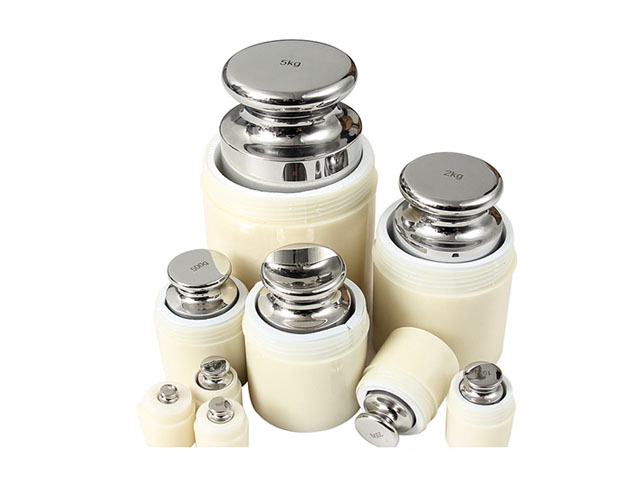
200g F2 Precision Calibration Weight Quality Control Lab
In modern quality control laboratory operations, accurate and repeatable mass measurement serves as the foundational pillar of reliable experimental data, product testing, and industrial quality verification. Every quantitative test involving mass parameters relies on the stability and precision of weighing equipment, and regular calibration of such equipment is essential to eliminate systematic errors and maintain consistent measurement performance. The 200g F2 precision calibration weight stands as a core standard tool in daily laboratory calibration work, tailored to meet the medium-to-high precision weighing demands of conventional analytical balances and precision weighing instruments commonly deployed in quality control scenarios. Its stable physical properties, standardized mass deviation range, and strong environmental adaptability make it a staple device for maintaining the accuracy traceability system of laboratory mass measurement, supporting the stable operation of various testing and quality inspection procedures across pharmaceutical, chemical, food, material, and electronic manufacturing industries.
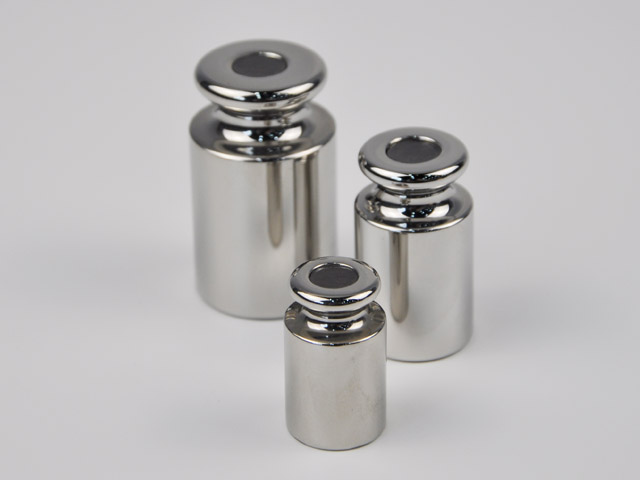
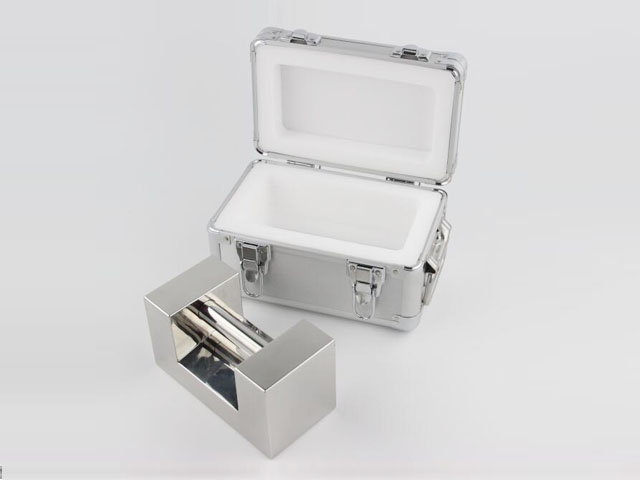
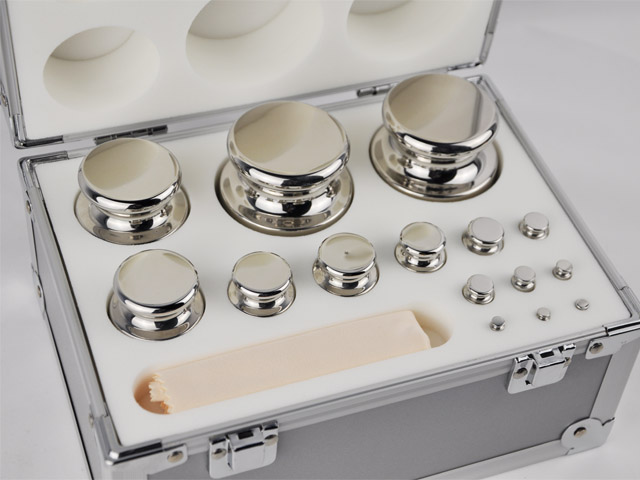
The structural and physical design of the 200g F2 precision calibration weight is optimized for long-term laboratory use and frequent calibration operations. Manufactured from high-density stainless steel materials selected for uniform texture and stable physical properties, the weight effectively resists common laboratory environmental interferences including mild humidity changes, ordinary atmospheric oxidation, and minor surface abrasion caused by daily handling. The material’s consistent density and low magnetic susceptibility avoid subtle mass fluctuations induced by magnetic field interference in laboratory environments, ensuring that the actual mass value remains stable over prolonged service cycles. The surface undergoes fine polishing treatment to form a smooth and compact protective layer, which prevents dust adhesion, liquid residue penetration, and surface corrosion that may affect mass accuracy. Such structural and material characteristics enable the weight to maintain stable measurement performance under conventional laboratory constant temperature and humidity conditions, laying a solid foundation for consistent calibration results.
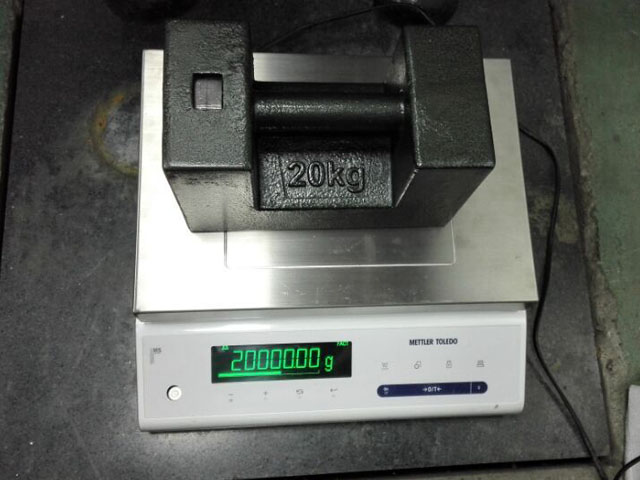
In daily quality control laboratory workflows, the 200g F2 precision calibration weight is primarily applied to the routine calibration and linearity verification of precision weighing instruments. Most analytical balances and semi-micro balances used in quality testing have a nominal weighing range covering 0 to 200 grams, making the 200g weight an ideal single-point calibration tool for full-range accuracy verification. During daily instrument inspection, laboratory operators use this weight to check the zero drift, indication error, and repeatability of weighing equipment before formal testing work. Regular calibration with the standard mass helps correct tiny deviations generated by long-term instrument operation, mechanical vibration, and environmental parameter changes, ensuring that all mass data obtained from product testing, sample analysis, and experimental verification are true and effective. For batch testing scenarios involving multiple samples and repeated experiments, consistent calibration standards eliminate measurement differences caused by instrument status fluctuations, ensuring the comparability of experimental data within the same batch and between different testing cycles.
Beyond basic single-point calibration, the 200g F2 precision calibration weight also supports multi-point linearity detection of weighing instruments in standardized laboratory quality control processes. The linearity of a balance determines its accurate measurement capability across different load ranges, which is critical for testing work involving samples of varying weights. By combining the 200g weight with other standard weights of different specifications, operators can complete gradient load testing of weighing equipment, verify the deviation changes of instrument indication under different load conditions, and judge whether the instrument maintains stable and linear working performance. This detection method effectively identifies potential hidden problems such as uneven sensor sensitivity and mechanical structural aging of weighing equipment, allowing laboratory personnel to conduct timely maintenance and parameter adjustment, so as to ensure that the instrument always meets the precision requirements of quality control testing.
The rational application of the 200g F2 precision calibration weight is closely linked to the quality control level and data credibility of the entire laboratory system. In industrial quality control links such as raw material incoming inspection, semi-finished product process testing, and finished product performance verification, mass measurement data is an important basis for judging product qualification. Slight deviations in weighing results may lead to misjudgment of product quality, causing unnecessary material waste, production delay, or unqualified products entering the market. The use of standardized F2-class calibration weights unifies the measurement benchmark of laboratory weighing instruments, ensures that all testing data is based on consistent and accurate mass standards, and improves the rigor and credibility of laboratory quality evaluation results. For third-party testing laboratories and enterprise internal quality inspection departments with standardized management systems, standardized calibration operations using professional calibration weights are key to maintaining standardized testing processes and stable service quality.
To fully exert the precision performance of the 200g F2 precision calibration weight, laboratories need to formulate standardized use and management specifications and strictly control various influencing factors in the use process. Environmental conditions are core factors affecting calibration accuracy. The weight should be stored and used in a clean, dry, constant-temperature laboratory space to avoid mass changes caused by extreme temperature fluctuations, excessive humidity, or dusty environments. Temperature variation will cause slight thermal expansion and contraction of the weight material, while high humidity may lead to subtle surface oxidation or moisture adhesion, both of which will affect the accuracy of standard mass values. Therefore, quality control laboratories usually maintain a stable temperature and humidity environment in the weighing operation area, and place the calibration weight in a professional storage box when not in use to isolate external environmental interference.
Standard operating procedures are crucial to protecting the structural integrity and mass stability of the 200g F2 precision calibration weight. In the process of taking, placing, and calibrating, operators should avoid direct hand contact with the weight surface, as sweat, grease, and fine impurities on the skin will adhere to the surface and cause cumulative mass deviation over time. Professional tweezers and non-contact handling tools should be used for all handling operations to ensure the surface cleanliness of the weight. At the same time, collision, drop, and severe friction should be strictly prohibited. Although the weight is made of high-strength stainless steel, violent impact will cause local structural deformation or surface damage, directly changing the standard mass value and leading to invalid calibration results. In daily use, the placement of the weight on the weighing pan needs to be flat and centered to avoid eccentric load affecting the calibration judgment of instrument performance.
Regular cleaning and maintenance are essential to extend the service life and maintain the precision stability of the 200g F2 precision calibration weight. Laboratory environments inevitably generate fine dust and floating particles, which will gradually adhere to the weight surface after long-term placement and use. Operators need to conduct regular surface cleaning with professional soft cleaning tools and neutral cleaning reagents to remove surface dust and residual impurities, ensuring that the surface state of the weight is consistent with the standard state. It is important to avoid corrosive cleaning agents and hard cleaning tools during cleaning, so as not to scratch the polished surface or cause chemical corrosion damage. After cleaning, the weight should be placed in a dry and ventilated environment to dry naturally, and then stored in a sealed professional storage box to prevent secondary pollution.
Scientific cycle verification management is an important part of the long-term stable application of the 200g F2 precision calibration weight. With the increase of use times and service time, subtle mass changes may occur in the weight due to unavoidable factors such as tiny surface abrasion and environmental aging. Quality control laboratories need to establish a complete equipment use ledger, record the daily use times, use scenarios, and maintenance status of the calibration weight, and arrange regular performance verification according to the laboratory’s internal management system. Through periodic professional detection, the mass deviation of the weight can be accurately grasped, and corresponding adjustment and elimination measures can be taken for tiny deviations, ensuring that the weight always meets the precision requirements for laboratory calibration work. Systematic cycle management effectively avoids the problem of long-term use of unqualified standard weights, preventing large-scale deviation of laboratory measurement data caused by failure of calibration benchmark.
In practical laboratory application scenarios, the 200g F2 precision calibration weight also shows good compatibility with diverse testing needs. It is suitable for precision calibration of various conventional analytical balances used in food component detection, pharmaceutical ingredient analysis, chemical reagent configuration, material density testing, and electronic product quality inspection. Its moderate mass range covers the most frequent weighing intervals of daily laboratory testing, avoiding the inconvenience of using ultra-light or ultra-heavy standard weights for conventional sample testing calibration. Compared with lower-grade standard weights, it has smaller mass tolerance range and higher stability, which can meet the higher precision calibration needs of quality control laboratories; compared with higher-grade ultra-precision weights, it has stronger environmental adaptability and lower maintenance threshold, more suitable for frequent daily calibration operations in conventional quality control laboratories.
The standardized application of the 200g F2 precision calibration weight also helps laboratories optimize overall quality control efficiency and reduce operational risks. Accurate instrument calibration can effectively reduce repeated testing caused by inaccurate instrument data, improve the one-time pass rate of sample testing, and save laboratory time cost and sample consumption cost. Unified and standardized calibration management makes the testing data of different batches and different time periods have good consistency and traceability, which is convenient for laboratory personnel to sort out testing data, analyze product quality trends, and provide reliable data support for enterprise production optimization and quality improvement. In addition, standardized use and maintenance of calibration weights can reduce the loss rate of precision measuring tools, extend the service cycle of equipment, and reduce the daily operation cost of laboratory precision measurement system.
In summary, the 200g F2 precision calibration weight is an indispensable basic standard device in modern quality control laboratory measurement systems. Its stable material performance, reasonable mass specification, and wide application adaptability enable it to undertake core calibration work for conventional precision weighing equipment in laboratories. Standardized use, scientific maintenance, and perfect cycle management can fully exert its precision advantages, ensure the accuracy, stability, and traceability of laboratory mass measurement data, and provide solid technical support for product quality inspection, experimental data research, and standardized operation of laboratories. In the continuous development of industrial quality control and scientific research testing, the standardized application and refined management of such precision calibration tools will always be an important foundation for ensuring the authenticity and reliability of laboratory testing results and promoting the standardized development of quality control work.
200g F2 Precision Calibration Weight Quality Control Lab
https://www.veidtweighing.com/calibration-weights.html
Post Date: Jun 19, 2026

![High Precision Stainless Steel Calibration Weight]()
High Precision Stainless Steel Calibration Weight
High precision stainless steel calibration weights serve as fundamental reference tools in modern metrology, laying a solid foundation for accurate mass measurement across…![Lock Style Test Weight]()
Lock Style Test Weight
The connection between lock style and test weight forms a foundational part of mechanical hardware evaluation, focusing on how different structural designs of locking devi…![Stainless Steel Weight For Analytical Balance]()
Stainless Steel Weight For Analytical Balance
Analytical balances represent foundational precision instruments in modern laboratory environments, designed to capture minute mass variations with high degrees of accurac…![Material of Test Weight]()
Material of Test Weight
The core performance and long-term practical value of every test weight are fundamentally determined by the raw material selected for its production, as this foundational …![Stainless Steel Weight Vender In China]()
Stainless Steel Weight Vender In China
The stainless steel weight manufacturing sector in China has developed steadily alongside the growth of global industrial, commercial, and consumer product markets, formin…