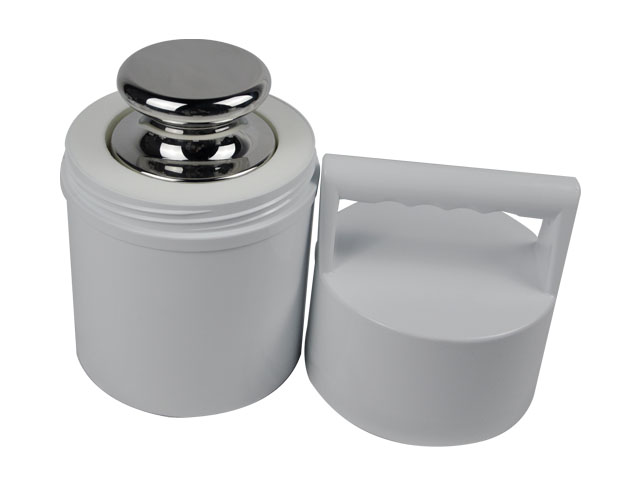
Calibration Weight For Mechanical Balance Scale
Mechanical balance scales remain a foundational tool in precision weighing operations across laboratories, industrial workshops, educational institutions, and quality inspection environments, relying on pure mechanical lever principles to achieve mass comparison without reliance on electronic components or power sources. At the core of maintaining their stable and reliable weighing performance lies the rational application and regular verification of calibration weights, which serve as standardized mass references to eliminate systematic deviations and ensure every weighing result aligns with consistent measurement benchmarks. Unlike electronic weighing devices that require frequent digital calibration and sensor correction, mechanical balance scales depend entirely on the accuracy of physical mass references, making calibration weights an indispensable supporting component for their long-term normal operation and accurate data output.
The working logic of mechanical balance scales is built on the law of lever moment equilibrium, where a central fulcrum supports a symmetrical beam with two weighing pans suspended at equal arm lengths. During standard weighing processes, an object with unknown mass is placed on one pan, while calibration weights with predefined known mass values are placed on the opposite pan. When the beam returns to a horizontal stationary state and the pointer aligns with the central scale mark, the moment generated by the unknown object’s mass balances the moment from the calibration weights, allowing the object’s mass to be determined by summing the standard mass values of the applied weights. This purely physical measurement principle means that any subtle deviation in the calibration weights’ actual mass will directly transmit to the final weighing result, causing cumulative errors that affect the credibility of experimental data, product quality testing, and experimental verification work.
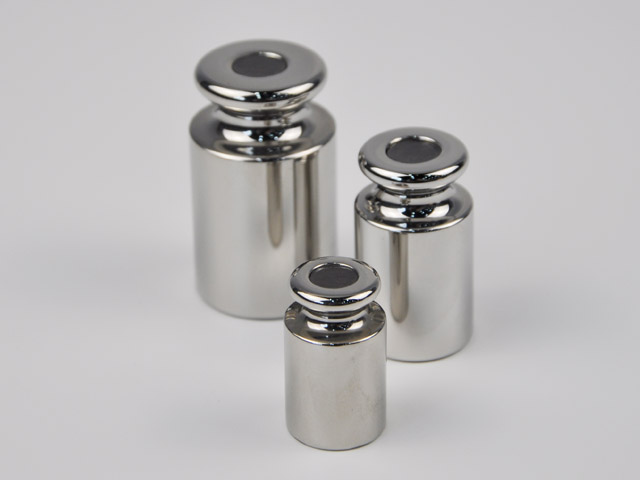
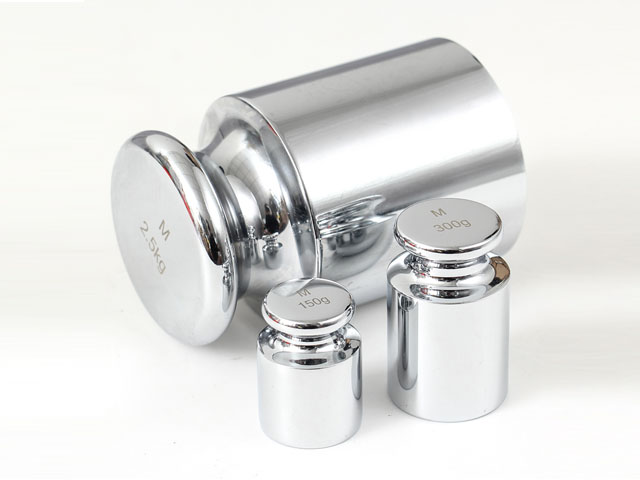
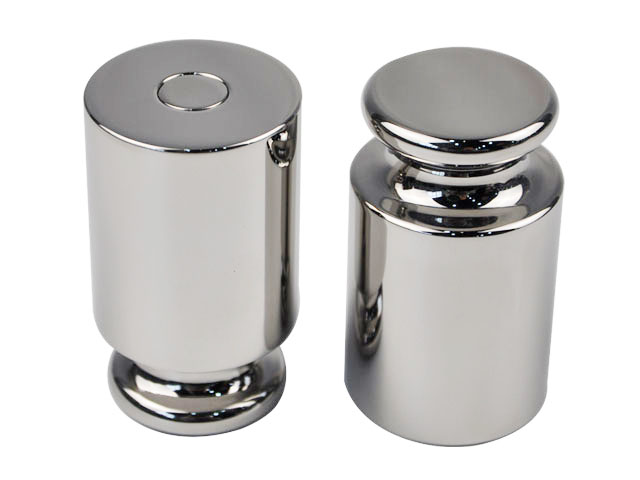
Calibration weights designed for mechanical balance scales are specially manufactured to match the structural characteristics and precision requirements of mechanical weighing equipment, differing from ordinary counterweights used for rough weighing. These weights undergo strict dimensional processing and surface finishing to ensure uniform density distribution, regular geometric shapes, and smooth surface textures, all of which help minimize external interference during weighing. Their compact structure and standardized mass gradation enable flexible combination and use, adapting to the diverse weighing range requirements of different mechanical balance models, from micro-precision analytical balances used in chemical experiments to medium and large-range mechanical balances for industrial material testing. Each weight is produced to maintain stable mass characteristics under conventional environmental conditions, avoiding drastic mass fluctuations caused by minor external changes.
One of the most prominent values of calibration weights is correcting the inherent drift of mechanical balance scales after long-term use. Mechanical balance equipment will experience subtle structural changes during prolonged operation, including slight wear of the central fulcrum, minor deformation of the support beam, dust accumulation in movable parts, and friction changes in pointer transmission components. These gradual changes do not cause obvious structural damage in the short term but will slowly shift the balance’s zero position and reduce weighing sensitivity, leading to inconsistent measurement results. Regular calibration with standard weights can effectively identify such subtle deviations: by placing standard weights of different mass levels on the balance pan and observing the beam’s equilibrium state and pointer indication, users can judge whether the balance has zero drift, sensitivity attenuation, or unilateral deviation, and adjust the balance’s fine-tuning knob and limit device accordingly to restore its optimal working state.
Environmental adaptability is a key consideration in the production and application of calibration weights for mechanical balances, as mechanical weighing systems are highly sensitive to ambient temperature, humidity, and air flow changes. High-quality calibration weights adopt stable material formulas that resist oxidation, corrosion, and temperature expansion and contraction, preventing surface oxidation layer formation, moisture absorption, or structural volume changes that may alter mass values in humid, dry, or temperature-fluctuating environments. In laboratory environments with frequent reagent contact and air circulation, these stable material properties ensure the weights maintain consistent mass reference performance for a long time. Meanwhile, the surface polishing treatment of the weights reduces dust adhesion and surface abrasion, lowering the frequency of mass changes caused by external contamination and daily wear during repeated use.
Scientific selection of calibration weight specifications is crucial to achieving accurate calibration and efficient weighing for mechanical balance scales. Mechanical balances of different precision grades and weighing ranges require matching weight combinations to complete full-scale calibration and daily verification. For small-range precision mechanical analytical balances used in pharmaceutical analysis, chemical testing, and microscopic material research, small-specification calibration weights with fine mass gradations are required to verify micro-weighing accuracy and sensitivity. For medium-range mechanical balances used for conventional sample weighing and bulk material detection, medium-specification weight combinations can meet daily calibration and sample comparison needs. Large mechanical balances for industrial heavy object weighing need matched large-mass calibration weights to complete full-load and half-load calibration, ensuring accurate measurement in the main working range of the equipment. Matching weight specifications with balance parameters avoids incomplete calibration ranges or insufficient verification accuracy, ensuring every working interval of the balance meets precision standards.
Standardized operation procedures directly affect the effectiveness of calibration weight application and the accuracy of mechanical balance calibration results. Before each calibration operation, users need to place the mechanical balance on a stable, horizontal, vibration-free work platform to avoid horizontal tilt and ground vibration interfering with beam equilibrium. It is necessary to clean the balance pans, beam, and weight surfaces with soft cleaning tools to remove dust, debris, and residual stains, as tiny particle attachments can generate extra mass and affect equilibrium judgment. In addition, the calibration weights and balance equipment should be placed in the working environment for a period of time to achieve temperature consistency with the ambient air, eliminating weighing errors caused by temperature differences between the weights, equipment, and air.
During formal calibration, users should first adjust the mechanical balance to zero state, ensuring the beam is naturally horizontal and the pointer is centered without load. Then place calibration weights of standard mass on the center of the weighing pan in sequence, starting from small specifications and gradually increasing to large specifications, observing the beam’s lifting state and pointer offset. If the beam cannot maintain horizontal equilibrium or the pointer has obvious fixed deviation, fine mechanical adjustment of the balance is required until the equipment can achieve accurate equilibrium corresponding to the standard weight mass. For full-range calibration, multi-point verification with weights of different masses in low, medium, and high intervals is necessary to check the linearity of the balance’s weighing performance and avoid local precision loss in individual ranges. After calibration, the weights should be removed in order, and the balance should be observed to return to zero stably to confirm the calibration effect is valid.
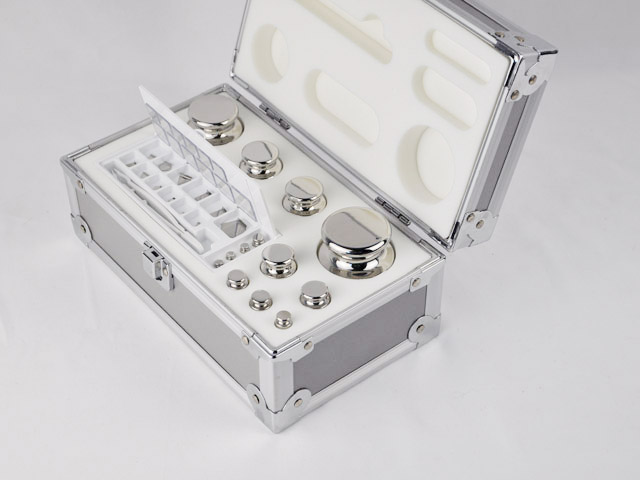
Daily maintenance and proper storage of calibration weights are essential prerequisites for maintaining their long-term accuracy and service life. These precision measuring accessories cannot be randomly stacked or collided, as impact and friction will cause surface wear and local material loss, leading to mass deviation. Unused calibration weights need to be placed in a dry, dust-proof, and corrosion-proof sealed storage container with a fixed placement position to avoid long-term exposure to humid air, corrosive gas, and direct sunlight. In daily handling, users should avoid direct contact with the weight surface with bare hands, as hand sweat, grease, and skin residues will adhere to the surface, causing slow oxidation and mass change over time. It is recommended to use special tweezers or non-slip soft gloves for handling to keep the weight surface clean and intact.
Regular inspection and periodic re-verification of calibration weights are also key links in maintaining measurement accuracy. Even with good maintenance, long-term repeated use will bring subtle wear and aging, leading to slow mass drift. Users should conduct regular self-inspection of the weights, observing surface integrity, checking for obvious wear, corrosion, or deformation, and eliminating unqualified weights in a timely manner. Meanwhile, regular professional mass verification should be arranged to compare the actual mass of the weights with standard reference values, correct subtle mass deviations, and ensure the weights always provide reliable reference standards for mechanical balance calibration. This cyclic maintenance mechanism effectively avoids measurement errors caused by aging calibration accessories and maintains the long-term stable performance of mechanical balance weighing systems.
In practical application scenarios, calibration weights also play an important role in unifying measurement standards and ensuring experimental repeatability. In scientific research experiments requiring repeated verification and data comparison, consistent calibration standards ensure that weighing data obtained from different batches of experiments and different time periods maintain high consistency, avoiding experimental result deviation caused by equipment precision differences. In industrial quality inspection and product testing, standardized calibration of mechanical balances with qualified weights ensures unified detection standards for raw material weighing, finished product testing, and process parameter verification, reducing product quality fluctuations caused by inaccurate weighing data. In teaching experiments, the use of standard calibration weights helps students intuitively understand the principles of mechanical equilibrium and mass measurement, cultivating standardized experimental operation habits and accurate data awareness.
It is important to avoid improper usage behaviors that may affect calibration accuracy in daily operations. Overloading mechanical balances with excessive calibration weights will exceed the equipment’s bearing range, causing irreversible deformation of the balance beam and damage to the fulcrum structure, permanently reducing equipment precision. Placing weights on the edge of the weighing pan instead of the center will generate eccentric moment, causing beam tilt and resulting in inaccurate equilibrium judgment. In addition, calibration operations should be avoided in environments with strong air convection, electromagnetic interference, and severe vibration, as these external factors will interfere with the static equilibrium state of the mechanical balance, reducing the authenticity and effectiveness of calibration results. Standardizing every operation detail maximizes the role of calibration weights in correcting balance precision and stabilizing measurement performance.
In summary, calibration weights are the core precision accessories that support the normal and accurate operation of mechanical balance scales. From correcting equipment structural drift and verifying full-range precision to unifying measurement standards and ensuring data repeatability, their application runs through the entire service cycle of mechanical balance equipment. Scientific selection, standardized operation, rigorous maintenance, and regular verification together constitute the complete application system of calibration weights, enabling mechanical balance scales to maintain stable and reliable weighing performance in long-term use. In various fields that rely on precise mechanical weighing, attaching importance to the standardized management and correct use of calibration weights is an important guarantee for improving measurement accuracy, standardizing experimental and testing processes, and ensuring the credibility of all data results derived from mechanical balance weighing.
Calibration Weight For Mechanical Balance Scale
https://www.veidtweighing.com/calibration-weights.html
Post Date: Jun 19, 2026

![200g F2 Precision Calibration Weight Quality Control Lab]()
200g F2 Precision Calibration Weight Quality Control Lab
In modern quality control laboratory operations, accurate and repeatable mass measurement serves as the foundational pillar of reliable experimental data, product testing,…![Laboratory Weight For Weighing Scale]()
Laboratory Weight For Weighing Scale
In every scientific laboratory, industrial testing facility, and research workspace where precise mass measurement serves as the foundation of reliable experimental data a…![Jewelry Standard Weight]()
Jewelry Standard Weight
Weight stands as one of the most fundamental and consistent benchmarks in the creation, evaluation, and circulation of jewelry, serving as a universal language that connec…![Standard Weight Manufacturer]()
Standard Weight Manufacturer
The production of standard weights stands as a foundational pillar supporting the normal operation of modern industrial production, laboratory metrological testing, commer…![Analytical Balance Weight]()
Analytical Balance Weight
Analytical balance weight measurement stands as a foundational practice in modern laboratory science, serving as the backbone of quantitative analysis across chemistry, bi…