Standard Weight Manufacturer
The production of standard weights stands as a foundational pillar supporting the normal operation of modern industrial production, laboratory metrological testing, commercial weighing transactions, and engineering equipment debugging work. These essential physical measuring tools are not simple metal or composite material blocks made through rough processing; every link from raw material screening and preliminary forming to fine machining, mass adjustment, surface protection treatment, and finished product inspection requires rigorous technological control and meticulous manual and mechanical coordination. Every standard weight produced by professional manufacturing facilities carries stable mass performance and consistent structural reliability, serving as a reliable medium for unifying weighing data across different scenarios, regions, and equipment types. In the entire manufacturing sector focused on standard weight production, the core pursuit has always been to balance structural durability, long-term mass stability, environmental adaptability, and practical application compatibility, ensuring every finished product can maintain steady performance during long-term repeated use and complex working conditions, without unnecessary mass deviation or structural damage that affects normal weighing and calibration work.
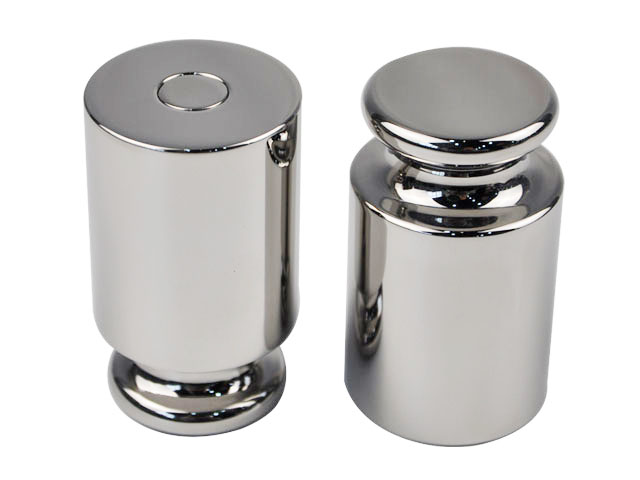
The first and most critical starting point in the entire standard weight manufacturing process lies in scientific and targeted raw material selection, which directly determines the inherent performance foundation of subsequent finished products and their long-term service life in different application environments. Professional manufacturers always adhere to practical application demands as the core basis for material selection, fully considering key factors such as the working environment humidity, corrosion risk, frequency of use, bearing handling methods, and long-term mass retention requirements of standard weights in different scenarios. For standard weights applied in conventional industrial production workshops, equipment counterweight debugging, and general commercial weighing verification, high-quality cast iron and mild steel materials are widely selected due to their good overall rigidity, strong pressure resistance, excellent casting and welding forming performance, and stable physical properties that are not prone to rapid changes under conventional indoor and outdoor natural conditions. These raw materials have uniform internal texture after smelting and preliminary forging or casting treatment, with no obvious internal pores, sand holes, or structural cracks, avoiding hidden dangers of subtle mass changes or structural loosening caused by internal material defects during later long-term use and frequent handling. For standard weights used in high-precision laboratory metrological testing, pharmaceutical production detection, and fine chemical ingredient calibration, special stainless steel materials and non-magnetic alloy materials are preferred. These materials feature stronger corrosion resistance, better oxidation resistance, lower magnetic conductivity, and smoother surface density consistency, effectively preventing subtle mass changes caused by chemical reactions between the weight surface and air, moisture, or trace chemical substances in the working environment, and avoiding interference with high-sensitivity weighing and testing equipment caused by magnetic induction effects.
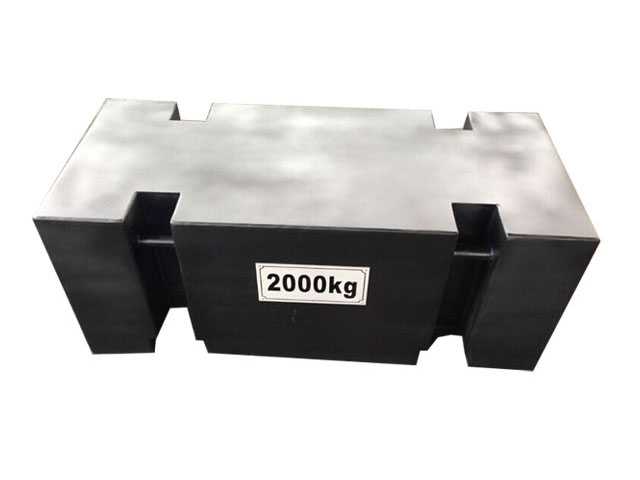
After completing strict raw material screening and preliminary quality inspection of incoming materials, the formal preliminary forming processing of standard weights begins, adopting different forming processes according to the final use specification, shape design, and weight range of the product. For large-specification standard weights used for engineering machinery counterweight, large-scale weighing equipment debugging, and heavy-load industrial calibration, the main forming methods include steel plate welding assembly and integral casting molding. In the steel plate welding and forming process, professional processing equipment is used for automatic cutting and shaping of qualified raw steel plates and channel steel according to pre-designed structural drawings, accurately cutting steel materials into required size specifications and structural components, and then assembling and welding each component through professional welding technology to form a hollow or solid integral weight structure. During the welding process, workers strictly control welding current, welding speed, and welding seam thickness to ensure firm welding joints without virtual welding, missing welding, or welding seam cracks, guaranteeing the overall structural integrity and compression resistance of the weight. An adjusting cavity with a special sealing structure is reserved inside the welded weight structure, facilitating subsequent fine mass adjustment and long-term minor mass compensation caused by natural wear and tear during later use. For standard weights produced by integral casting, qualified raw materials are melted in strict accordance with material ratio requirements, and the molten liquid is poured into prefabricated professional molds for integral casting and cooling shaping. After cooling and demolding, preliminary trimming is carried out to remove casting burrs, excess edge materials, and surface irregularities, ensuring the overall shape and basic size of the weight meet preliminary design standards. For small and medium-sized high-precision standard weights used for laboratory precision calibration and small weighing instrument detection, integral CNC machining forming is mostly adopted. Solid raw material blocks are processed by high-precision CNC machining equipment for integral cutting, turning, and grinding, completing one-time forming of the weight’s outer contour, internal structure, and adjusting structure, ensuring high consistency of overall size and structural symmetry of each batch of products and laying a solid foundation for subsequent fine mass calibration.
Preliminarily formed standard weights inevitably have minor deviations in overall mass and surface smoothness, so the next fine machining and surface finishing process becomes an indispensable key link to improve product accuracy and appearance quality. After preliminary forming, all semi-finished products are sent to the precision processing workshop for secondary fine grinding, edge trimming, and surface polishing treatment. For welded and cast standard weights, mechanical grinding equipment is used to polish all outer surfaces and edges to remove sharp corners, surface protrusions, and rough textures, making the weight surface smooth and flat without any burrs or uneven areas. This not only optimizes the appearance of the product but also effectively avoids accidental scratches to operators and equipment during handling and use, and reduces surface dirt accumulation and wear degree in daily use. For high-precision standard weights processed by CNC integration, fine polishing and mirror surface treatment are carried out according to use requirements, making the surface smooth and delicate, reducing surface adhesion of dust and impurities, and minimizing the impact of surface contamination on mass accuracy during long-term use. In addition to surface polishing, all semi-finished products will undergo internal structural finishing to check whether the internal adjusting cavity is unobstructed and the sealing structure is intact, ensuring the subsequent mass adjustment work can be carried out smoothly and the adjusting cavity can be effectively sealed after adjustment to prevent external moisture, dust, and impurities from entering the interior and affecting the internal structure and mass stability of the standard weight.
Mass calibration and fine adjustment are the core technological links that determine the core performance of standard weights, and all manufacturing work before this link is to create good basic conditions for precise mass adjustment. Professional manufacturers are equipped with high-precision weighing and testing equipment suitable for different weight ranges, and all calibration and adjustment work is carried out in a constant temperature and dry working environment to avoid mass detection deviation caused by temperature changes, air humidity, and air flow interference. Each semi-finished standard weight is placed on professional weighing testing equipment for initial mass detection, and professional operators record the actual mass data of each product and compare it with the target standard mass required by product specifications. According to the detected mass deviation data, targeted fine adjustment is carried out through the reserved adjusting cavity inside the weight. For weights with insufficient actual mass, appropriate adjusting materials such as iron blocks and lead materials are added into the adjusting cavity; for weights with excessive actual mass, redundant internal fillers are taken out through professional tools. The entire adjustment process is carried out in small increments and repeated detection and adjustment are performed until the actual mass of each standard weight is within the reasonable error range required by conventional use standards. After completing fine mass adjustment, the adjusting cavity is tightly sealed with special sealing screws and sealing materials to achieve a waterproof and dustproof closed state, preventing the adjusting materials inside the cavity from shifting, leaking, or being affected by the external environment during subsequent handling, transportation, and use, ensuring the long-term mass stability of the standard weight and avoiding frequent mass changes that require repeated calibration.
After completing mass adjustment and sealing treatment, standard weights need to undergo professional surface protection treatment to enhance environmental adaptability and corrosion resistance and extend overall service life. Different surface protection processes are selected according to different raw material properties and application scenarios of products. Standard weights made of cast iron and ordinary steel are mostly treated with anti-rust painting, oil sealing, and surface bluing processes. The surface is thoroughly cleaned and derusted first to remove surface oxide layers, rust spots, and oil stains, and then uniform anti-rust coating and protective paint are sprayed on the surface. After the paint layer is naturally dried and solidified, a stable protective film is formed on the weight surface, effectively isolating the contact between the internal metal material and external air and moisture, preventing rust and corrosion that may cause structural damage and mass changes. For stainless steel and alloy high-precision standard weights, after surface polishing, passivation and anti-oxidation treatment are carried out to enhance the natural corrosion resistance and oxidation resistance of the material itself, without affecting the surface flatness and mass accuracy of the weight. All surface protection treatment processes strictly follow long-term use durability requirements, ensuring the protective layer does not easily fall off, fade, or fail during long-term outdoor placement, workshop use, and repeated handling, maintaining the good appearance and stable performance of standard weights for many years.
Before all finished standard weights leave the factory, they must go through comprehensive and strict finished product quality inspection and performance recheck, which is the final barrier to ensure product quality meets use requirements. The quality inspection work covers multiple key dimensions including size recheck, mass re-calibration, structural stability detection, surface protection effect inspection, and appearance quality inspection. Professional inspectors use professional measuring tools to recheck the overall external dimensions and structural symmetry of each standard weight to ensure no dimensional deviation affects normal matching and use with weighing equipment. The mass of each product is re-calibrated again with high-precision testing equipment to confirm that the mass error is always within the qualified range and there is no mass fluctuation after sealing treatment. Structural stability tests are carried out for standard weights with handles and lifting structures to simulate conventional lifting and handling scenarios, detecting whether the welding parts and connecting structures are firm and reliable without loosening or deformation. The surface protection layer is inspected for uniformity, adhesion, and anti-corrosion effect to ensure no missing coating, peeling, or obvious defects. After all inspection items are fully qualified, clear and durable marking treatment is carried out on the surface of standard weights, marking key information such as nominal mass, production batch, and material type. The marking process adopts laser etching or mechanical engraving technology to ensure clear and firm marking that is not easy to wear and fade during long-term use, facilitating user management, use identification, and subsequent regular maintenance and re-calibration work.
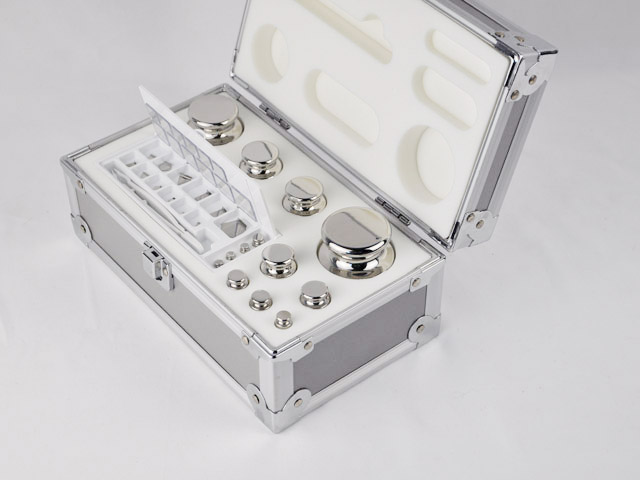
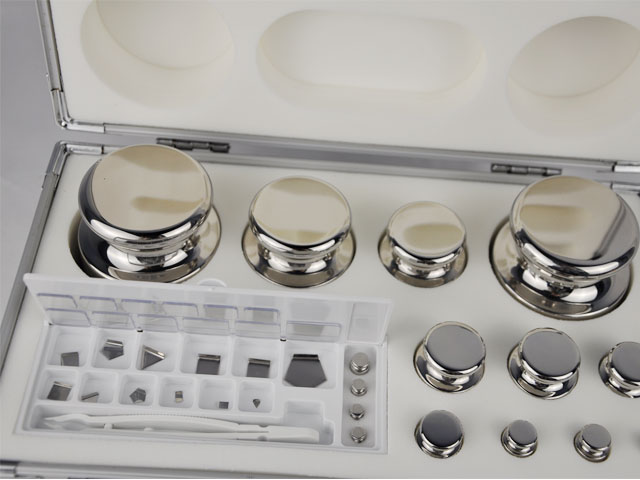
Qualified finished standard weights will enter the final professional packaging and storage link before leaving the factory, and scientific packaging and storage management are also important links to avoid product damage and mass deviation during transportation and temporary storage. According to different product specifications and sizes, standard weights are packaged with shockproof, moisture-proof, and wear-resistant packaging materials. Small high-precision standard weights are placed in customized shockproof packaging boxes with moisture-proof cushions inside to avoid collision, friction, and moisture erosion during transportation and handling. Large standard weights are wrapped with moisture-proof and anti-wear materials on the surface, and fixed with professional binding structures to prevent collision and extrusion deformation during long-distance transportation. All packaged products are stored in a dry, ventilated, and constant-temperature professional warehouse, classified and stored according to different specifications and use types, avoiding stacking extrusion, damp corrosion, and accidental collision in the warehouse. Professional warehouse management personnel regularly check the storage environment and product status to ensure all standard weights maintain stable performance and intact state before being delivered to users.
The application scenarios of standard weights cover almost all fields that require weighing calibration and counterweight balancing, and professional manufacturers always keep close communication and connection with end users in different industries, deeply understanding the actual use pain points and environmental characteristics of different scenarios to continuously optimize manufacturing technology and product design. In industrial manufacturing production lines, standard weights are used for daily debugging and regular calibration of production weighing equipment, ensuring accurate measurement of raw material batching, finished product weighing, and production process monitoring data, maintaining consistent production quality and standardized production process. In various laboratories and scientific research institutions, standard weights provide accurate mass reference for scientific research experiments, data testing, and instrument calibration, ensuring the accuracy and repeatability of experimental data and scientific research results. In engineering machinery and equipment manufacturing, standard weights are used for equipment counterweight testing, mechanical balance debugging, and load performance detection, ensuring the safe and stable operation of various mechanical equipment in the working process. In commercial weighing management and market supervision, standard weights are used for regular inspection and calibration of various commercial weighing devices, maintaining fair and orderly market weighing transactions and protecting the legitimate rights and interests of all trading parties.
In the long-term production and operation process, standard weight manufacturing work is not limited to fixed production processes and product specifications, but also focuses on continuous technological optimization and process improvement combined with market demand changes and user feedback. With the continuous upgrading of industrial production automation and the continuous improvement of laboratory metrological accuracy requirements, manufacturers constantly update processing equipment, optimize raw material selection schemes, improve fine adjustment and calibration technology, and enhance surface protection and quality inspection standards. At the same time, aiming at the special use environment and personalized use needs of some users, targeted structural design and process optimization are carried out to produce standard weights adapted to special working conditions such as high humidity, high corrosion, and frequent mobile use. This people-oriented production and manufacturing concept focusing on practical application and long-term stability enables standard weights to always maintain reliable use value in various complex scenarios and provide solid basic support for the stable operation of all walks of life.
The maintenance and long-term use management of standard weights are also closely related to the manufacturing concept of professional manufacturers. While focusing on producing high-quality products, manufacturers also summarize practical maintenance suggestions suitable for different types of standard weights, guiding users to carry out regular cleaning, regular re-calibration, and standardized storage management in the use process. Good maintenance work can effectively prolong the service life of standard weights, keep mass accuracy stable for a long time, and reduce the frequency of replacement and repeated procurement costs for users. Whether it is conventional standard weights used in industrial workshops or high-precision standard weights used in laboratory testing, scientific manufacturing technology and standardized later maintenance complement each other, jointly ensuring that each standard weight can always maintain stable performance and give full play to its basic metrological and counterweight role in long-term use.
Standard Weight Manufacturer
https://www.veidtweighing.com/standard-weights.html
Post Date: May 5, 2026
https://www.supplier-manufacturer.com/standard-weight/standard-weight-manufacturer.html

![10 Kg Calibration Weight]()
10 Kg Calibration Weight
In every field that relies on accurate mass measurement to maintain operational stability, product consistency, and data reliability, the 10 kg calibration weight stands a…![Stainless Steel Test Weight For Metrology Institute Inspection]()
Stainless Steel Test Weight For Metrology Institute Inspection
Stainless steel test weights serve as core precision tools for daily inspection, calibration and verification work carried out by professional metrology institutes, laying…![Standard Weight For Crane Scales]()
Standard Weight For Crane Scales
In modern industrial production, logistics transportation, engineering construction and material detection fields, crane scales have become indispensable core weighing equ…![Standard Weight For Digital Scales]()
Standard Weight For Digital Scales
Digital scales have become indispensable precision measuring tools across civilian, commercial, industrial, and scientific research fields, valued for their high sensitivi…![Laboratory Calibration Weight Kit]()
Laboratory Calibration Weight Kit
Laboratory calibration weight kits serve as foundational metrological tools in all sectors that rely on precise mass measurement, forming an indispensable part of daily la…