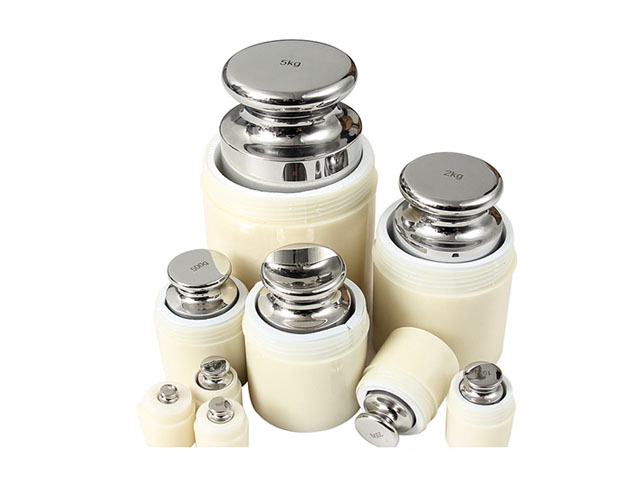
500g Calibration Weight For Balance Scale
In every industry and research field that relies on accurate mass measurement, maintaining the reliability of balance scales is a fundamental prerequisite for consistent and credible results. A 500g calibration weight serves as a practical and essential tool for routine scale verification and calibration, acting as a stable mass reference to align balance scale readings with standardized mass values. Unlike casual weighing accessories, this precision tool is engineered to deliver steady and repeatable reference mass performance, making it a staple device for correcting minor measurement deviations and stabilizing the operational accuracy of various balance scales in daily use. Its moderate mass capacity makes it highly versatile, compatible with a wide range of desktop and bench-top balance scales used in laboratory, manufacturing, educational, and quality inspection environments.
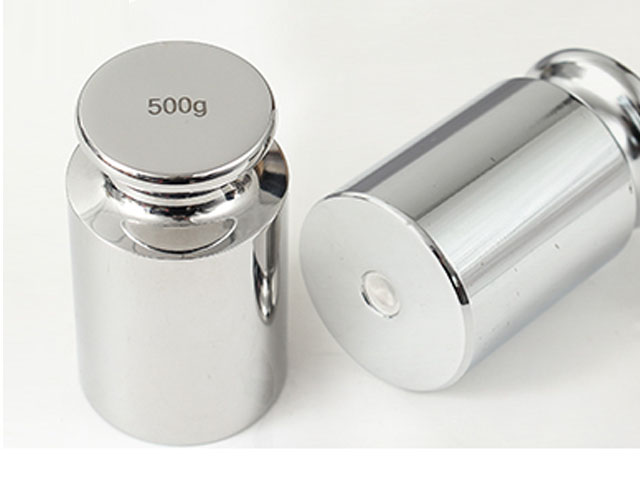
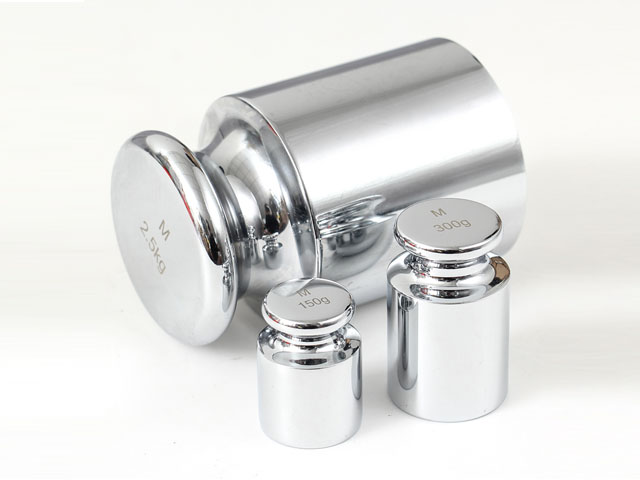
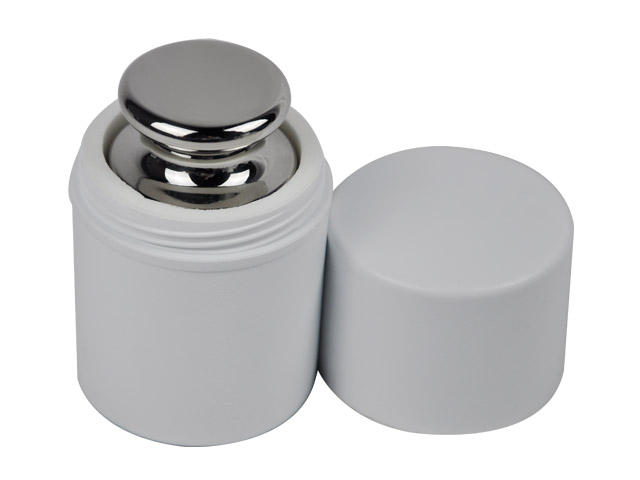
The physical construction and material selection of 500g calibration weights are carefully optimized to resist external environmental interference and preserve long-term mass stability. Most calibration weights of this specification are crafted from dense, durable metal materials with excellent anti-corrosion and anti-oxidation properties. The surface undergoes refined finishing processes to create a smooth, compact texture that repels dust, moisture, and residual particles, effectively preventing mass changes caused by surface adhesion, oxidation, or wear during long-term storage and use. The integral molding structure eliminates loose components or structural gaps, ensuring the overall mass remains uniform and stable without gradual deviation under normal working conditions. The streamlined and compact shape is designed to fit perfectly on the central weighing platform of standard balance scales, avoiding tilting or uneven force application that may affect calibration effects.
The core function of a 500g calibration weight lies in eliminating systematic errors of balance scales caused by daily operation and environmental changes. Balance scales are sensitive precision instruments that can generate subtle reading deviations after frequent use, vibration interference, temperature and humidity fluctuations, or long-term static placement. These minor deviations may be negligible for rough weighing tasks but can accumulate to affect the authenticity and consistency of data in scenarios requiring precise measurement. By applying a fixed and known 500g standard mass, users can compare the scale’s displayed value with the standard mass, intuitively identifying existing measurement errors. This simple and efficient verification method allows for timely adjustment and correction of balance scale parameters, restoring the instrument to a normal accurate working state and laying a solid foundation for subsequent formal weighing work.
In laboratory environments, the application of 500g calibration weights is particularly widespread and critical. Scientific research experiments, chemical reagent preparation, and sample component analysis all depend on accurate mass data to ensure the reproducibility and authenticity of experimental results. Even small measurement inaccuracies can lead to distorted experimental data, failed research trials, or inconsistent test conclusions. Laboratory staff can use the 500g calibration weight to perform pre-experiment calibration and daily regular inspection of balance scales, ensuring that every weighing operation of experimental samples, reagents, and auxiliary materials meets precision requirements. Meanwhile, in laboratory quality control links, regular calibration with standard weights helps maintain the stability of experimental data across different time periods and operators, facilitating data comparison, result verification, and experimental record sorting.
Industrial manufacturing and quality control sectors also rely heavily on 500g calibration weights to standardize weighing processes. In production lines involving raw material proportioning, finished product sampling inspection, and semi-finished product testing, balance scale accuracy directly affects product quality and production consistency. Deviations in weighing data may lead to unreasonable material proportioning, unqualified product specifications, or excessive production waste. Factory quality inspection teams can arrange periodic calibration checks using 500g standard weights for commonly used balance scales on production posts. This regular inspection mechanism can effectively intercept instrument accuracy drift problems in advance, avoid batch product quality abnormalities caused by inaccurate weighing, and reduce unnecessary production losses and quality risks. For small-batch customized production and precision part processing, the accurate reference provided by this calibration weight further ensures that product mass parameters meet design and industry norms.
Educational and teaching scenarios also benefit greatly from the use of 500g calibration weights. In physics experiment courses in schools and vocational training institutions, mass measurement and instrument calibration are basic teaching contents that help students understand the principles of mechanical and electronic balance operation. The 500g calibration weight, with its moderate mass and high visibility, is suitable for teaching demonstration and student hands-on operation. Teachers can guide students to complete scale zeroing, calibration verification, and error comparison experiments through standard weights, enabling students to intuitively grasp the importance of instrument calibration and master basic precision measurement operation specifications. Hands-on training with standard calibration tools helps cultivate students’ rigorous experimental habits and lays a practical operational foundation for their future engagement in scientific research, industrial detection, and related technical work.
To achieve optimal calibration results, standardized operation methods must be followed when using a 500g calibration weight for balance scale calibration. Before starting calibration, it is essential to place the balance scale on a horizontal, stable, and vibration-free working surface to avoid tilting or external vibration interfering with instrument stabilization. Clean the scale’s weighing platform and the surface of the calibration weight with a soft, dry cloth to remove dust, water stains, oil residues, and other attachments, as foreign matter on the contact surface is a common cause of inaccurate calibration results. After turning on the balance scale, wait for a sufficient warm-up and stabilization period to ensure the instrument’s internal sensing system reaches a stable working state and completes self-inspection and zeroing operations.
During the formal calibration process, place the 500g calibration weight gently in the exact center of the balance scale platform. Central placement ensures uniform force on the weighing sensor and avoids eccentric load errors caused by offset placement. It is necessary to avoid touching the weight surface directly with hands during operation, as skin grease and sweat can leave residues on the weight surface, gradually causing subtle mass changes and affecting long-term calibration accuracy. After placing the weight, wait patiently for the scale’s reading to stabilize, then compare the displayed numerical value with the standard 500g mass. If there is a measurable deviation, follow the instrument’s built-in calibration procedures for parameter adjustment until the displayed value matches the standard mass range, then complete the calibration process and restore the scale to normal weighing mode.
Daily maintenance and proper storage of 500g calibration weights are crucial to sustaining their long-term precision and service life. After each use, the weight should be cleaned promptly to remove surface attachments and placed in a dry, cool, and dust-free storage environment, away from high temperature, high humidity, corrosive gases, and strong magnetic fields. Extreme environmental conditions may cause material aging, surface corrosion, or subtle structural changes, which will affect the accuracy of the standard mass. Avoid violent collision, dropping, or extrusion of the weight, as impact force may cause surface deformation or internal structural changes, leading to irreversible mass deviation. Long-term unused weights should be inspected and cleaned regularly to ensure their surface integrity and mass stability, ready for subsequent use at any time.
It is also important to arrange regular re-verification for 500g calibration weights that are used frequently. With the increase of service time and usage frequency, even well-maintained standard weights may produce tiny mass changes due to subtle environmental erosion and repeated friction. Regular professional verification can timely detect minor mass deviations and confirm whether the weight still meets the standard reference requirements. This regular maintenance mechanism ensures that the calibration work of balance scales always relies on accurate and reliable reference tools, forming a complete closed-loop management system from instrument detection, calibration adjustment to tool maintenance.
In practical application, the 500g calibration weight also has good compatibility and matching flexibility. It can be used independently for single-point calibration of medium-range balance scales, and can also cooperate with other specification standard weights to complete multi-point calibration of high-precision scales, covering a wider range of weighing detection requirements. Its moderate mass design avoids the overload risk of small-range scales and the insufficient precision problem of large-mass weights on medium and small scales, making it one of the most widely applicable single calibration weight specifications in daily precision measurement work. Whether for daily instrument inspection, regular accuracy calibration, or experimental data verification, this standard weight can provide stable, accurate, and convenient mass reference support.
In summary, the 500g calibration weight is an indispensable basic precision auxiliary tool in the field of mass measurement. Its stable physical properties, reasonable structural design, and wide application scenarios make it a key guarantee for maintaining the accuracy and stability of balance scale operation. Standardized use, scientific maintenance, and regular verification can maximize its calibration value, effectively reduce measurement errors caused by instrument aging and environmental interference, and provide reliable data support for laboratory research, industrial production, quality inspection, and teaching training. For any scenario that requires accurate mass measurement, adhering to regular scale calibration with standard 500g weights is a simple and effective way to standardize operational processes and improve the credibility of measurement results.
500g Calibration Weight For Balance Scale
https://www.veidtweighing.com/calibration-weights.html
Post Date: Jun 19, 2026

![Types of Calibration Weight]()
Types of Calibration Weight
Calibration weights serve as fundamental physical standards in the entire field of metrology, forming the essential foundation for maintaining the accuracy, consistency, a…![E1 Class Standard Weight]()
E1 Class Standard Weight
Within the intricate and foundational realm of mass metrology, the role of precision reference artifacts remains irreplaceable for maintaining consistent, reliable, and tr…![500kg Test Weight]()
500kg Test Weight
In the complex and interconnected framework of modern industrial production, logistics transportation, engineering construction, and mechanical operation, the consistency …![F1 Class Test Weight]()
F1 Class Test Weight
Weight management stands as one of the most foundational and intricately nuanced elements within the operational and technical framework of single-seater open-wheel motors…![25kg Cast Iron Weight]()
25kg Cast Iron Weight
In the vast landscape of industrial production, daily operational maintenance, engineering construction, and routine equipment debugging, reliable mass objects with stable…