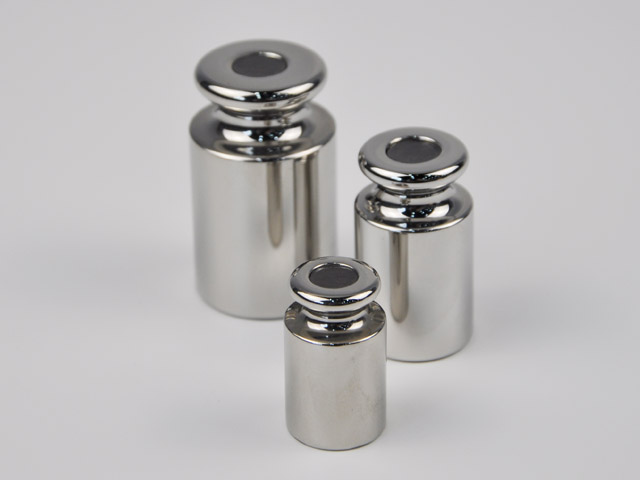
Astm Standard Calibration Weight
Precision mass measurement serves as a foundational pillar across scientific research, industrial production, pharmaceutical manufacturing, and material testing industries, where consistent and reliable weighing results directly determine the validity of experimental data, product quality stability, and production standardization. ASTM standard calibration weights stand as core metrological tools formulated to unify mass measurement benchmarks, standardize weighing instrument verification processes, and eliminate measurement deviations caused by inconsistent reference standards in different usage scenarios. These standardized mass artifacts are designed to provide traceable mass references for various weighing equipment, covering high-precision laboratory balances, routine analytical scales, and industrial weighing devices used in production lines, forming an indispensable part of modern metrological guarantee systems.
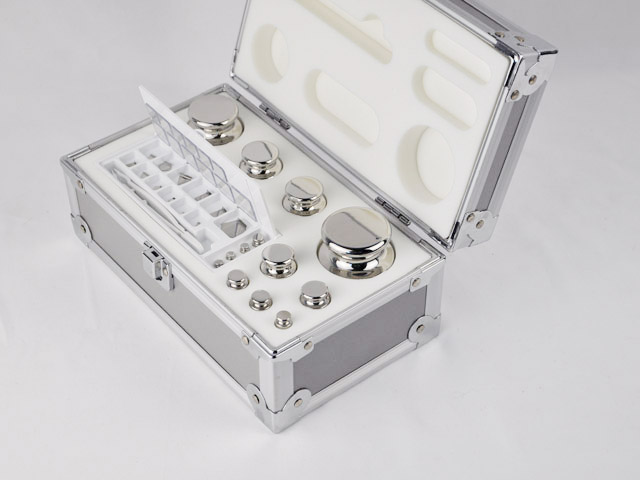
The formulation and iteration of ASTM standard calibration weight specifications focus on unifying the dimensional parameters, mass deviation ranges, material performance requirements, and usage norms of mass reference artifacts, building a complete hierarchical system to adapt to diverse precision measurement demands in different fields. The classification system of ASTM calibration weights follows a gradual precision differentiation logic, with multiple hierarchical grades covering ultra-precision laboratory measurement to general industrial weighing scenarios. The core design concept of this grading system is to match the precision level of calibration weights with the resolution and application requirements of corresponding weighing equipment, ensuring that each type of weighing instrument can obtain a matched reference standard to complete accurate verification and calibration.
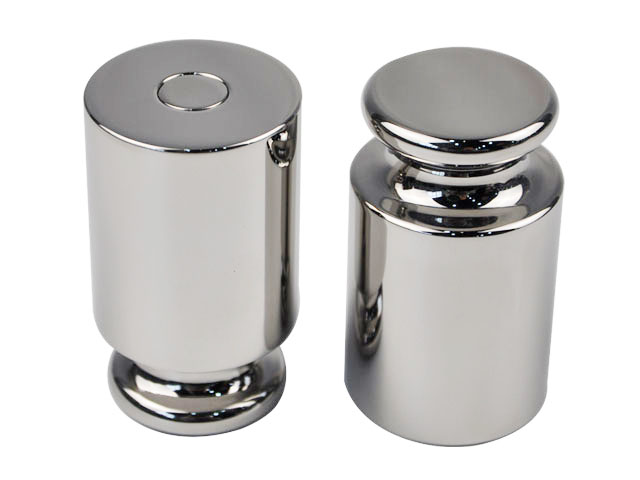
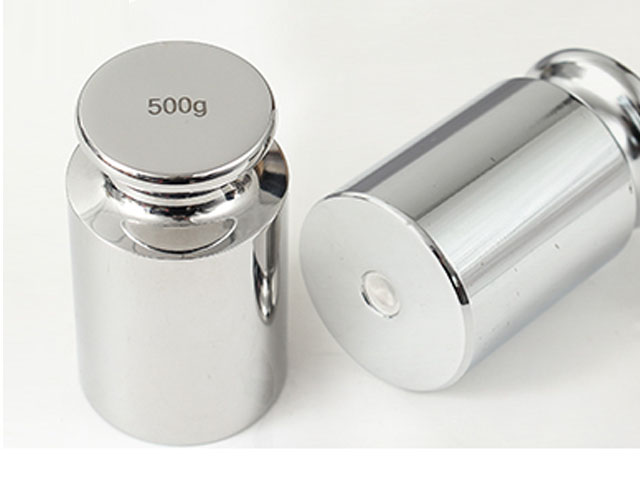
Material selection is a critical factor that determines the long-term stability and measurement consistency of ASTM standard calibration weights. High-quality calibration weights are mostly crafted from high-density, low-magnetism metal materials with excellent oxidation resistance and corrosion resistance. Such materials can effectively resist the influence of external environmental factors including temperature fluctuation, air humidity, and trace chemical corrosion in the working environment, avoiding mass drift caused by surface oxidation, rust, or material aging. In addition, the physical properties of selected materials maintain high stability under conventional working temperature ranges, with small thermal expansion and contraction coefficients, which prevents dimensional changes from affecting mass measurement accuracy during long-term use. The surface of qualified calibration weights undergoes fine polishing and sealing treatment to reduce surface roughness, minimize the adsorption of dust, moisture, and airborne particles, and further maintain the stability of mass values in daily use.
Each grade of ASTM standard calibration weight corresponds to a reasonable mass tolerance range, which is formulated based on extensive experimental data and practical application accumulation. The tolerance setting fully considers the error characteristics of different weighing devices and the accuracy requirements of application scenarios. Higher-grade calibration weights feature narrower tolerance ranges and more stable mass performance, suitable for ultra-precision measurement work such as micro-analysis, precision material testing, and scientific research experiments that require strict data accuracy. Medium and low-grade calibration weights with relatively moderate tolerance ranges adapt to conventional laboratory analysis, daily instrument debugging, and general industrial weighing calibration, balancing practical performance and application applicability in daily production and testing.
In practical application scenarios, ASTM standard calibration weights are mainly used for regular calibration, daily verification, and performance debugging of various weighing instruments. Weighing equipment will gradually produce subtle measurement deviations after long-term operation, frequent use, or changes in placement environment, due to mechanical wear, sensor aging, and environmental vibration interference. Regular calibration with standardized weights can effectively detect and correct these deviations, restore the measurement accuracy of weighing equipment, and ensure that each weighing result is within the allowable error range of industry norms. In laboratory environments, researchers rely on these standard weights to verify the accuracy of analytical balances before experiments, eliminating systematic measurement errors and ensuring the repeatability and credibility of experimental data.
Industrial production fields also depend heavily on ASTM standard calibration weights to maintain production standardization and product consistency. In food processing, chemical production, and new material manufacturing, the accurate weighing of raw materials and finished products is directly related to product formula accuracy, batch stability, and compliance with production specifications. Regular calibration of production line weighing equipment with standard weights can avoid product quality problems caused by inaccurate weighing, reduce raw material waste and defective product rates, and stabilize overall production quality levels. At the same time, in commodity detection and quality supervision links, these standard mass artifacts provide unified measurement benchmarks for sampling inspection, ensuring the fairness and consistency of detection results in different testing institutions.
Standardized operation and scientific maintenance are essential to maintain the long-term performance stability of ASTM standard calibration weights. In terms of usage specifications, operators need to follow standardized operating procedures, avoid direct contact with the weight surface by hands during use, as sweat, grease, and skin debris will adhere to the surface and cause subtle mass changes. For high-precision grade weights, professional clamping tools are required for handling to prevent surface scratches, collisions, and abrasion, which may damage the structural integrity and mass stability of the weights. In addition, the use environment needs to meet basic cleanliness and stability requirements, avoiding operation in environments with severe vibration, strong corrosive gas, excessive dust, or extreme temperature and humidity fluctuations, so as to reduce external interference on the mass state of the weights.
Daily storage management also plays a vital role in protecting the performance of calibration weights. Qualified storage environments are usually dry, clean, and temperature-stable, with special sealed storage containers to isolate external dust and moisture. Different grades and different nominal mass weights need to be stored in a classified manner to avoid mutual collision and friction during storage and handling. Long-term idle weights require regular surface cleaning and mass state inspection to remove adsorbed dust and moisture, check for surface oxidation, scratches, or deformation, and eliminate potential factors that may cause mass deviation. For weights that have been used for a long time or have been accidentally collided and contaminated, regular professional inspection and parameter verification are needed to confirm whether their mass performance still meets standard requirements.
The value of ASTM standard calibration weights in the metrological system lies in realizing the unification and traceability of mass measurement values. In the entire measurement link chain from laboratory precision research to industrial mass production, all weighing results need to be based on unified standard mass references. Without standardized calibration weights, different equipment, different laboratories, and different production links will have independent measurement benchmarks, resulting in inconsistent data, poor experimental repeatability, and unstandardized product quality. The hierarchical design of ASTM standard weights builds a complete value transmission chain, realizing the gradual transmission of mass benchmarks from high-precision reference standards to conventional measuring equipment, ensuring the consistency and accuracy of mass measurement results in all links of scientific research, production, and detection.
With the continuous upgrading of industrial manufacturing technology and the continuous improvement of scientific research precision requirements, the application scenarios and performance requirements of ASTM standard calibration weights are also constantly evolving. In emerging fields such as precision electronics manufacturing, biomedical testing, and nanomaterial research, higher requirements are put forward for the stability, precision, and environmental adaptability of calibration weights. This promotes the continuous optimization of material technology, processing technology, and standard specifications of calibration weights, making the entire standard system more adaptable to the development needs of modern precision manufacturing and cutting-edge scientific research. At the same time, the popularization and standardized application of ASTM standard calibration weights also help standardize the weighing and measurement behaviors of various industries, improve the overall level of industrial metrology, and provide solid basic support for technological innovation and quality upgrading in various fields.
It is worth noting that the matching selection of ASTM standard calibration weights and equipment is crucial to the calibration effect. In actual operation, the precision grade of the calibration weight needs to be reasonably selected according to the resolution, measuring range, and application scenario of the weighing equipment. Using weights with insufficient precision grade cannot effectively correct the subtle errors of high-resolution weighing equipment, while blindly using high-precision weights for conventional equipment will cause unnecessary resource waste and increase equipment maintenance costs. Reasonable type selection and standardized application can maximize the performance advantages of standard weights, ensure the accuracy of calibration work, and maintain the long-term stable operation of weighing equipment.
In conclusion, ASTM standard calibration weights are basic metrological tools integrating standardization, stability, and practicability, running through all links of mass measurement and calibration. Their standardized design, hierarchical classification, and stable physical performance provide reliable benchmark support for scientific research experiments, industrial production detection, and quality supervision work. Standardized use, scientific maintenance, and reasonable type selection can effectively extend the service life of calibration weights, maintain their accurate and stable mass performance, and continuously provide reliable guarantee for unified and standardized mass measurement in various industries. With the continuous progress of metrological technology and the continuous improvement of industry standardization requirements, ASTM standard calibration weights will continue to play an irreplaceable basic role in the field of precision measurement, supporting the high-quality development of various industries relying on accurate and traceable mass measurement.
Astm Standard Calibration Weight
https://www.veidtweighing.com/calibration-weights.html
Post Date: Jun 19, 2026
https://www.supplier-manufacturer.com/calibration-weight/astm-standard-calibration-weight.html

![Chrome Steel Weights]()
Chrome Steel Weights
In the field of precision measurement and industrial calibration, the stability and accuracy of standard weights serve as the fundamental guarantee for reliable data acqui…![Cast Iron Weight For Sale]()
Cast Iron Weight For Sale
Cast iron weights have long stood as a fundamental and reliable component across countless industrial, commercial, residential, and fitness-related applications, earning c…![Chemistry Laboratory Precision Weighing Weight Set]()
Chemistry Laboratory Precision Weighing Weight Set
In the daily operation of chemistry laboratories, accurate mass measurement serves as the fundamental foundation for all quantitative experimental research, data recording…![10kg Cast Iron Weight]()
10kg Cast Iron Weight
A 10kg cast iron weight stands as one of the most fundamental and widely utilized solid weighting components across everyday operational environments, industrial workspace…![Laboratory Balance Calibration Weight Stainless Steel]()
Laboratory Balance Calibration Weight Stainless Steel
In modern laboratory operations, accurate mass measurement serves as the fundamental foundation for scientific research, experimental analysis, and quality inspection. Eve…