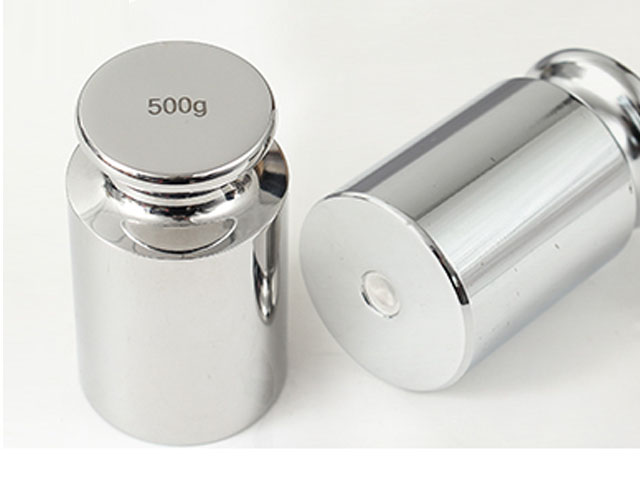
Types of Calibration Weight
Calibration weights serve as fundamental physical standards in the entire field of metrology, forming the essential foundation for maintaining the accuracy, consistency, and reliability of all weighing and measuring equipment used across scientific research, industrial production, commercial trade, and quality inspection sectors. Every weighing instrument, no matter the size, design, or functional complexity, relies on matched calibration weights to complete regular calibration, error verification, and performance adjustment work, ensuring that measured mass data remains consistent with unified metrological specifications and meets the basic requirements of fair trade, precise experimental research, and standardized industrial manufacturing. The diversity of actual application environments, varying accuracy demands for weighing tasks, different usage frequency and handling conditions, and distinct long-term stability requirements for mass standards have driven the continuous development and diversification of calibration weight designs, leading to a wide range of calibration weight types differentiated by core production materials, accuracy grading standards, structural manufacturing designs, external shape characteristics, and targeted practical application scenarios. Understanding the core attributes, structural features, performance advantages, and applicable scope of each type of calibration weight is not only a necessary prerequisite for metrology practitioners to select appropriate mass calibration tools reasonably but also a key guarantee to extend the service life of calibration weights, reduce external interference affecting measurement accuracy, and maintain the long-term stability of the entire metrological measurement system. Each classification dimension of calibration weights is interrelated and mutually restrictive, and different types of calibration weights have their own unique design positioning and application boundaries, which cannot be substituted for each other in professional metrological work, requiring scientific matching according to actual working conditions and calibration objectives.
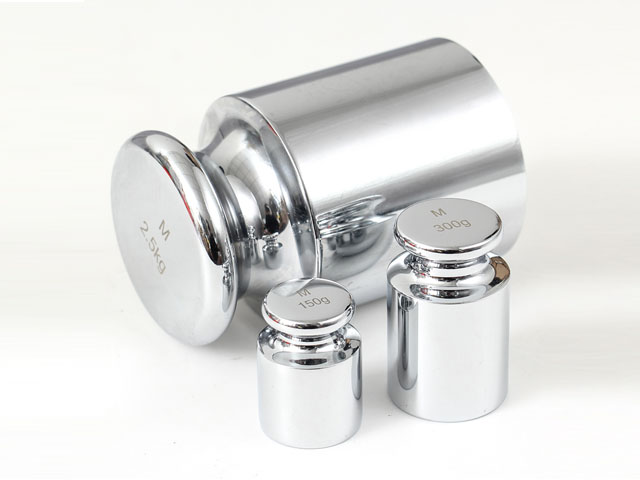
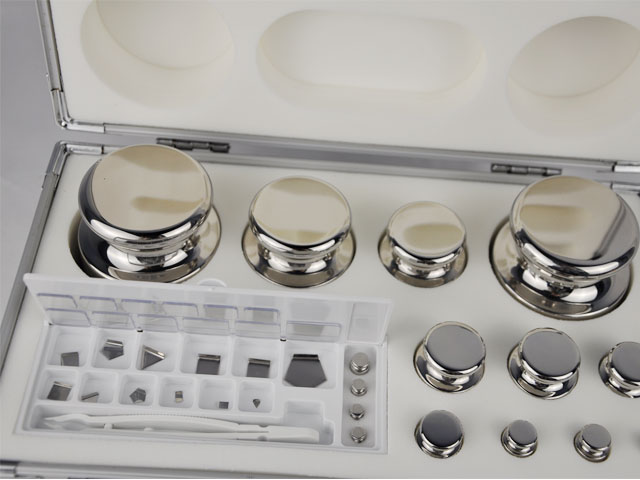
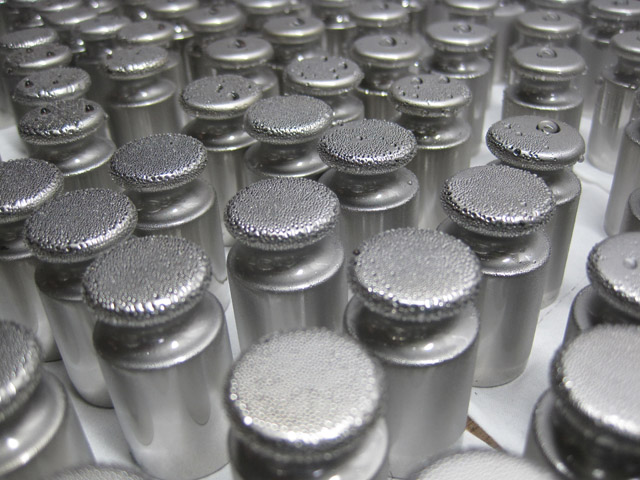
The most fundamental and influential classification of calibration weights is based on the raw materials used for production and surface processing technology, as the material properties directly determine the core performance indicators of calibration weights including density uniformity, corrosion resistance, magnetic susceptibility, surface wear resistance, thermal expansion stability, and long-term mass retention capability. Different working environments such as indoor constant-temperature laboratories, humid industrial production workshops, outdoor open-air weighing sites, and special experimental environments with chemical gas contact put forward completely different requirements for the material durability and environmental adaptability of calibration weights, making material selection the primary factor to be considered in the production and selection of all calibration weights. Among the common material-based calibration weight types, stainless steel calibration weights are the most widely used and versatile category, favored by most precision metrology and conventional calibration scenarios due to their balanced comprehensive performance. Stainless steel used for manufacturing calibration weights undergoes special smelting and refining processes, with extremely low internal impurity content, uniform internal density distribution, and excellent resistance to oxidation and chemical corrosion. This type of material will not easily produce surface oxidation rust layers even after long-term placement in conventional indoor environments, and the surface will not suffer obvious wear or mass loss during daily manual handling and repeated use. In addition, high-quality stainless steel calibration weights have low magnetic susceptibility, which can effectively avoid the adsorption of tiny metal particles in the working environment, preventing external attachments from affecting the true mass of the weights and ensuring the stability of mass values for a long time. Most stainless steel calibration weights adopt fine polishing and smooth surface treatment processes, making the surface easy to clean and maintain; simple wiping can remove surface dust and tiny contaminants, effectively reducing the impact of external dirt accumulation on calibration accuracy. These calibration weights made of stainless steel are suitable for precision laboratory calibration work, quality control testing in industrial production lines, and daily calibration of various electronic balances and mechanical weighing instruments, covering most medium and high-precision conventional calibration needs.
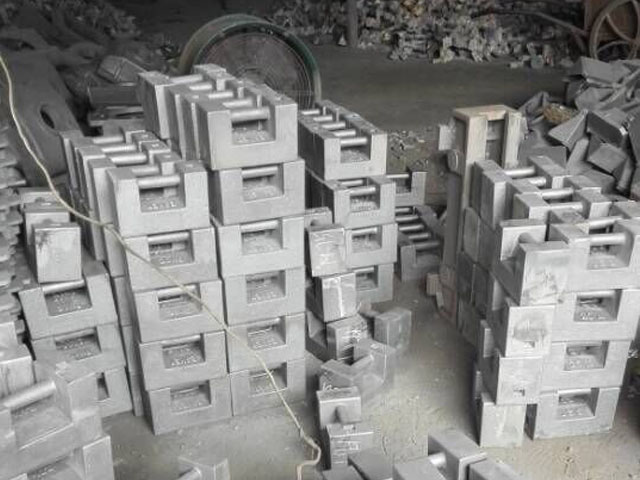
Cast iron calibration weights represent another important material type, mainly designed and manufactured for heavy-load industrial weighing scenarios and low-precision routine testing work. Cast iron as the raw material has the characteristics of high overall density, strong structural rigidity, and low production processing cost, enabling the production of large-specification heavy calibration weights that are stable in structure and not easy to deform under external force. Unlike stainless steel materials, cast iron has relatively strong hardness and impact resistance, so cast iron calibration weights can withstand frequent handling, stacking, and moving in harsh industrial environments without structural deformation or surface damage, adapting to the rough use conditions of industrial production sites. The surface of cast iron calibration weights is usually treated with anti-rust coating and paint sealing to slow down the oxidation and corrosion rate of the material in humid and dusty industrial environments, extending the service cycle of the weights. Although cast iron calibration weights are slightly inferior to stainless steel products in surface finish and long-term mass retention stability, they fully meet the accuracy requirements of low-precision weighing equipment calibration such as large-tonnage platform scales, truck scales, and industrial floor scales. In industrial production links that require frequent load testing and weighing equipment debugging, cast iron calibration weights have become the preferred choice due to their good cost performance and strong environmental adaptability, undertaking most heavy-duty and low-precision calibration and testing tasks.
In addition to stainless steel and cast iron, there are other special material calibration weights designed for special metrological scenarios, including brass calibration weights, aluminum alloy calibration weights, and quartz glass calibration weights, each with unique application positioning and performance characteristics. Brass calibration weights have good surface finish and moderate oxidation resistance, with stable material properties and not easy to be affected by conventional environmental temperature and humidity changes, often used for small-specification conventional calibration work in commercial weighing and general laboratory scenarios. The texture of brass material is relatively soft, so the surface of brass calibration weights is not easy to produce hard scratches during use, maintaining the integrity of the weight surface for a long time, and the overall appearance is neat and uniform, suitable for daily calibration of small and medium-sized weighing instruments in shopping malls, warehouses, and general inspection departments. Aluminum alloy calibration weights are characterized by light overall weight and high structural strength, mainly used for special calibration scenarios that require frequent carrying and mobile calibration operations. Under the premise of ensuring basic calibration accuracy, aluminum alloy calibration weights reduce the labor intensity of operators during handling and moving, and are convenient for outdoor mobile metrological inspection and field equipment calibration work. Quartz glass calibration weights belong to special high-precision calibration tools, with extremely low thermal expansion coefficient, excellent chemical inertness, and non-magnetic characteristics, not affected by external temperature changes, chemical gas erosion, and magnetic field interference at all. This type of calibration weight is only used in top-level scientific research laboratories and special precision metrological research work, meeting the ultra-high stability requirements of special mass measurement experiments, and is rarely used in conventional industrial and daily calibration work due to high production process requirements and limited application scope.
Another core classification method for calibration weights is based on accuracy grading standards, which divides different types of calibration weights according to allowable mass deviation, measurement uncertainty, and long-term mass stability, directly corresponding to different precision levels of weighing equipment and calibration work requirements. Accuracy grading is the key basis for metrology personnel to select matching calibration weights, as the accuracy level of the calibration weight must be higher than the accuracy level of the calibrated weighing instrument to ensure the effectiveness and reliability of calibration results. High-grade precision calibration weights are designed for top-level mass value transmission and ultra-precision weighing instrument calibration, usually manufactured from high-purity stainless steel materials with one-piece integrated forming structure, without any adjustable filler or detachable accessories inside the weights. The internal structure of such calibration weights is compact and uniform, with extremely small mass deviation per unit specification, very tight tolerance range, and excellent long-term mass stability, requiring storage in constant-temperature and constant-humidity professional metrology laboratories, with strict requirements for handling and use processes, and only allowed to be operated by professional metrology technicians. These high-grade calibration weights are mainly used as reference standards in metrology institutions, responsible for mass value transmission and calibration of other lower-grade calibration weights, as well as calibration and debugging of ultra-precision analytical balances and mass comparators in scientific research laboratories, supporting high-precision experimental data measurement and metrological standard maintenance work.
Medium-grade precision calibration weights are the most widely used type in various professional laboratories and industrial quality control departments, with balanced accuracy performance and convenient use conditions, suitable for conventional precision calibration work that does not require ultra-high measurement levels. This type of calibration weight is mostly made of high-quality stainless steel materials, with fine surface treatment and stable internal structure, the allowable mass deviation is within the range required by conventional precision calibration, and it can adapt to normal laboratory indoor environment use without strict constant-temperature and constant-humidity storage conditions. Medium-grade calibration weights can be used for daily calibration of precision electronic balances, analytical instruments, and conventional laboratory weighing equipment, and also serve as conventional working standards for quality inspection and product testing in industrial enterprises, meeting the calibration needs of most precision production and testing links. The long-term mass stability of medium-grade calibration weights is good, and regular routine maintenance and regular re-calibration can maintain stable working performance for a long time, with high comprehensive applicability in various conventional precision metrological scenarios.
Low-grade general-purpose calibration weights are mainly oriented to industrial production sites, commercial trade weighing scenarios, and low-precision weighing equipment calibration work, with relatively loose allowable deviation range and low requirements for use and storage environment. Most of these calibration weights are made of cast iron or ordinary metal materials, with simple structural design and strong environmental adaptability, able to work normally in dusty, humid, and frequently moved industrial and commercial environments. Low-grade calibration weights are suitable for calibration and daily inspection of large platform scales, retail commercial weighing scales, industrial weighing batching equipment, and other low-precision weighing instruments, ensuring that the weighing data of conventional production and trade links meets basic metrological requirements. Although the accuracy level of low-grade calibration weights is relatively general, they play an irreplaceable basic role in maintaining normal weighing order in industrial production and commercial circulation links, meeting the most basic mass measurement standardization needs.
Calibration weights can also be divided into different types according to structural design and manufacturing technology, mainly including one-piece integrated calibration weights and split adjustable calibration weights, with obvious differences in structural performance, mass stability, and later maintenance methods. One-piece integrated calibration weights are formed by one-time processing and molding of integral raw materials, with no detachable parts, no internal adjustable cavities, and no additional filling materials inside the weights. The overall structure of this type of calibration weight is solid and compact, the internal material distribution is uniform, there will be no mass change caused by loose internal parts or loss of filling materials during long-term use, and the long-term mass retention performance is excellent. The surface of one-piece calibration weights is smooth and seamless, not easy to accumulate dust and contaminants, convenient for cleaning and maintenance, and not easy to be affected by external environmental factors to cause mass deviation. Due to the integrated structural design, one-piece calibration weights have strong impact resistance and structural stability, not easy to deform during handling and use, and are mostly used for high and medium-precision calibration scenarios that require high long-term stability of mass values. The production and processing process of one-piece calibration weights is relatively strict, and the overall performance is more stable, which is the mainstream structural type of precision calibration weights.
Split adjustable calibration weights adopt a combined structural design, with a reserved adjustable cavity inside the weight body and a detachable sealing knob or upper cover on the top or side of the weight. The internal adjustable cavity can be filled with a small amount of fine adjusting materials, and the staff can fine-tune the actual mass of the weight by increasing or reducing the filling materials during initial production calibration and later regular maintenance and re-calibration, ensuring that the mass of the weight is within the standard allowable deviation range. This structural design makes split adjustable calibration weights have the advantage of convenient later maintenance and mass correction; even after long-term use resulting in slight mass loss or deviation, the accuracy can be restored through simple internal adjustment without replacing the entire weight. However, compared with one-piece integrated calibration weights, split adjustable calibration weights have relatively complex internal structures, and the sealing performance of the detachable parts will affect the long-term stability of the weight. If the sealing is not tight, external dust and moisture may enter the internal cavity, affecting the internal filling materials and leading to mass changes. Split adjustable calibration weights are mostly used for medium and low-precision conventional calibration work, suitable for scenarios where the use frequency is high and later regular adjustment and maintenance are needed, balancing the use accuracy and maintenance convenience.
In terms of external shape and structural form, calibration weights have a variety of differentiated types to adapt to different weighing instrument structures, calibration operation methods, and storage and carrying conditions, including cylindrical calibration weights, disc calibration weights, block calibration weights, hook calibration weights, and stackable calibration weights. Cylindrical calibration weights are the most common conventional shape, with smooth cylindrical appearance, uniform stress on the bottom, stable placement on the weighing pan of various balances and weighing instruments, simple and convenient calibration operation. The overall structure of cylindrical calibration weights is symmetrical, not easy to tilt and roll when placed, suitable for daily calibration of various desktop electronic balances and small mechanical weighing instruments, and convenient for centralized storage and arrangement. Disc calibration weights are designed into flat disc shapes with thin thickness and large bottom contact area, which can be stably placed on special weighing equipment with small bearing surface, and are mostly used for calibration of micro-weighing instruments and special precision weighing devices. The flat structural design of disc calibration weights is not easy to produce shaking during weighing, which helps to improve the stability of calibration operation and is suitable for small-specification precision calibration work.
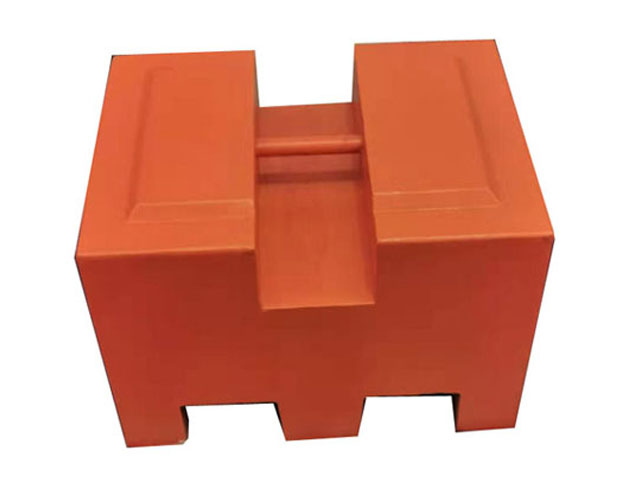
Block calibration weights adopt square or rectangular solid block structure, with heavy single weight and strong structural stability, mostly used for large-specification heavy calibration scenarios and load testing of large weighing equipment. The side of block calibration weights is usually designed with anti-slip lines or handling grooves, which is convenient for operators to carry and stack, and is not easy to slide during placement and use, adapting to the heavy-load calibration work of industrial large-tonnage weighing scales. Hook calibration weights are designed with integrated hooks or hanging structures on the top, specially used for calibration of hanging scales, crane scales, and suspension-type weighing instruments. Different from placed calibration weights, hook calibration weights complete the calibration work through suspension loading, matching the structural characteristics of suspension weighing equipment, and meeting the calibration and testing needs of special hanging weighing scenarios. Stackable calibration weights have a special nested and stacked structural design, which can be stacked and combined according to actual calibration mass needs, realizing flexible combination of different mass specifications with a set of weights, reducing the number of single weights and saving storage space. Stackable calibration weights are convenient for mobile carrying and on-site combined use, suitable for field mobile calibration and multi-specification flexible calibration work.
The application scenario-based classification of calibration weights is essentially a comprehensive classification formed by the combination of material, accuracy, and structure, dividing calibration weights into laboratory professional calibration weights, industrial production calibration weights, commercial trade calibration weights, and special engineering testing calibration weights, each adapting to the unique working conditions and calibration objectives of different fields. Laboratory professional calibration weights focus on high accuracy and long-term stability, mostly made of stainless steel one-piece structure with high accuracy grade, used in scientific research laboratories, metrology inspection institutions, and enterprise precision testing rooms, responsible for precision calibration of analytical balances, experimental weighing instruments, and precision mass value transmission work. The use environment of such calibration weights is stable with constant temperature and humidity, and the operation and management are standardized, ensuring that the calibration accuracy meets the requirements of scientific research and precision testing.
Industrial production calibration weights focus on durability and environmental adaptability, mostly made of cast iron or ordinary stainless steel with medium and low accuracy grades and sturdy structural design, used for daily calibration and regular inspection of various production line weighing batching equipment, industrial platform scales, and production testing weighing instruments. The industrial production environment is complex with much dust and humidity and frequent equipment use, so this type of calibration weight prioritizes structural firmness and anti-corrosion and anti-wear performance, meeting the basic calibration needs of industrial production and ensuring the stability of production batching and product quality testing data. Commercial trade calibration weights focus on practicality and moderate accuracy, used for calibration of retail weighing scales, warehouse inventory weighing equipment, and logistics distribution weighing instruments, ensuring fair trade and accurate measurement in commodity circulation links, maintaining the normal order of commercial transactions, and protecting the legitimate rights and interests of both buyers and sellers.
Special engineering testing calibration weights are designed for engineering load testing, mechanical performance testing, and special equipment pressure testing scenarios, mostly large-specification heavy stackable or block calibration weights, with strong structural bearing capacity and impact resistance, suitable for heavy-load static load testing and equipment performance debugging of engineering machinery, testing equipment, and special pressure-bearing devices. This type of calibration weight does not require ultra-high measurement accuracy but requires excellent structural stability and pressure resistance to ensure the safety and effectiveness of engineering testing work.
In the actual metrological work process, the selection of calibration weight types cannot rely on a single classification standard alone, but requires comprehensive consideration of calibration accuracy requirements, use environment conditions, weighing instrument type, use frequency, and later maintenance conditions to select the most matching calibration weight. High-precision scientific research calibration work must choose high-grade one-piece stainless steel calibration weights with stable performance and high accuracy; harsh industrial production scenarios need to prioritize cast iron or thickened stainless steel calibration weights with strong durability and anti-corrosion performance; field mobile calibration work is suitable for light and portable stackable or aluminum alloy calibration weights; special suspension and heavy-load testing scenarios need to select special-shaped structural calibration weights matching the equipment structure. Only by scientifically matching different types of calibration weights according to actual needs can the accuracy of calibration work be guaranteed, the service life of calibration weights be extended, and the long-term stability and standardization of the entire mass metrology system be maintained. The continuous iteration and upgrading of calibration weight types also follow the development needs of metrological technology, constantly optimizing materials, structures, and accuracy performance to adapt to the increasingly refined weighing and measuring needs of various industries, providing solid basic support for the accurate operation of all links involving mass measurement in society.
Types of Calibration Weight
https://www.veidtweighing.com/calibration-weights.html
Post Date: May 3, 2026
https://www.supplier-manufacturer.com/calibration-weight/types-of-calibration-weight.html

![200kg Cast Iron Lock Calibration Weight Truck Scale Test]()
200kg Cast Iron Lock Calibration Weight Truck Scale Test
Truck scales serve as fundamental weighing equipment for industrial logistics, material settlement, and cargo measurement, providing core data support for daily operationa…![Kilogram Range Laboratory Weight Set]()
Kilogram Range Laboratory Weight Set
In every professional laboratory environment where mass measurement serves as the foundational basis for experimental research, quality inspection, and routine operational…![Square Standard Weight]()
Square Standard Weight
Square standard weight serves as a fundamental measuring and balancing component widely adopted in industrial production, physical training, experimental testing, and dail…![Industrial Standard Weight]()
Industrial Standard Weight
In every corner of modern industrial production and commercial operation, accurate mass measurement stands as an indispensable foundational condition for maintaining order…![Digital Scale Standard Weight]()
Digital Scale Standard Weight
Digital scales have become indispensable measuring tools in daily life, commercial transactions, industrial production, and scientific research, relying on precise electro…