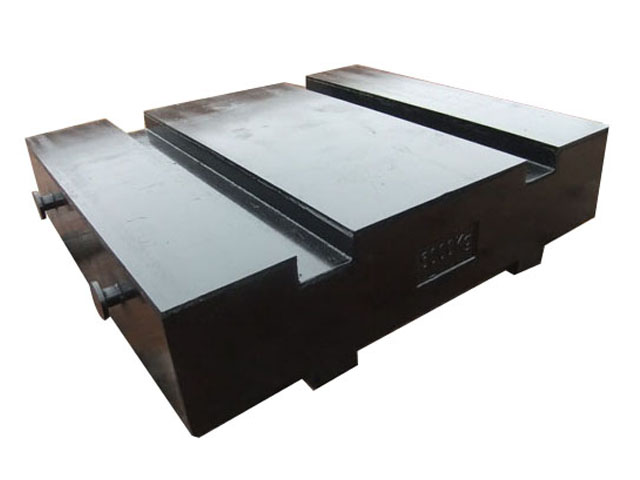
25kg Oiml Standard Calibration Weight Crane Scale Test
Industrial weighing operations rely heavily on the stable and consistent performance of crane scales, which undertake weight measurement tasks for suspended loads in manufacturing, logistics, construction, and material handling scenarios. The accuracy and repeatability of crane scale readings directly affect operational efficiency, load safety management, and data consistency in daily industrial workflows. Regular performance testing with standard calibration weights serves as a fundamental and effective method to maintain reliable scale operation, and the 25kg standard calibration weight has become a widely applicable testing tool for medium-range load verification of general-purpose crane scales. This article elaborates on the practical application, complete testing procedures, key control points, result evaluation methods, and daily application considerations of 25kg standard calibration weights in crane scale testing, providing systematic guidance for on-site weighing verification and routine equipment maintenance.
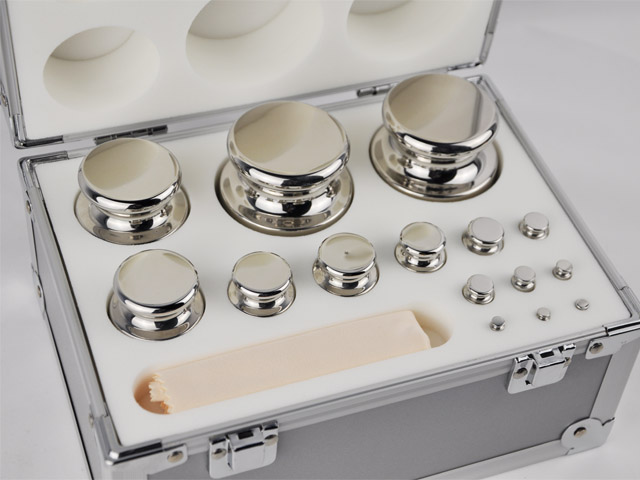
Before conducting any crane scale test with 25kg standard calibration weights, comprehensive pre-test preparation is essential to eliminate external interference and ensure the authenticity and validity of test data. The first step of preparation is environmental condition inspection, as crane scale weighing results are highly sensitive to ambient changes. The testing site should be arranged in a flat, stable indoor or sheltered outdoor area, avoiding strong airflow, direct sunlight, and severe temperature fluctuations. Excessive wind can generate additional pulling force on suspended loads, while drastic temperature changes may cause slight deformation of the scale’s internal force-bearing components and affect sensor sensitivity. It is advisable to maintain a stable ambient temperature and moderate humidity during testing, with no obvious vibration or electromagnetic interference from surrounding mechanical equipment and electrical devices, so as to prevent abnormal fluctuations in scale display data.
Equipment preparation covers both the crane scale itself and the 25kg standard calibration weight. For the crane scale, a pre-test power-on warm-up is required, with a standing time of no less than ten minutes to allow the internal circuit system and load sensor to reach a stable working state. During the warm-up period, staff should check the scale’s appearance, suspension hooks, connecting components, and display screen to confirm no structural damage, loose parts, or blurred display faults. Meanwhile, the zero-point state of the unloaded scale must be verified. After ensuring no load is hung on the scale, perform manual zero clearing operation to eliminate zero drift caused by long-term standby or residual stress of components. For the 25kg standard calibration weight, visual inspection and surface cleaning are necessary to remove surface dust, oil stains, and attachments, as accumulated foreign matters will cause subtle changes in actual weight and lead to test deviation. In addition, check the overall integrity of the weight to ensure no deformation, cracks, or wear that may affect weight accuracy, and confirm the weight is kept in a stable state after long-term constant temperature placement.
Standardized operational preparation is also a key link to guarantee test accuracy. Testing staff need to wear stable protective equipment and stand in a fixed operating position to avoid body shaking or accidental contact with equipment during operation. The suspension position of the crane scale should be fixed firmly to ensure the scale remains vertical and stress-free in the unloaded state, with no lateral tilt or torsion force. All test steps need to be carried out in accordance with unified operational norms, and the test data recording form should be prepared in advance to record each group of display values, test time, and environmental conditions in real time, laying a foundation for subsequent data analysis and result judgment.
The formal testing process of crane scales using 25kg standard calibration weights follows a step-by-step and multi-cycle verification mechanism, which mainly includes zero-point recheck, static load testing, repeated load testing, and stable reading verification. After completing all pre-test preparations, first recheck the zero-point of the crane scale. Observe the display value after the scale is fully static for three to five seconds. If the display cannot return to zero steadily, perform zero clearing again and repeat the observation until a stable zero state is maintained, which marks the official start of the test.
In the formal load test, the 25kg standard calibration weight should be lifted slowly and hung stably on the center of the crane scale’s suspension hook. Sudden lifting, rapid swinging, or eccentric suspension must be avoided in the operation process. Rapid lifting will generate inertial impact force, and eccentric suspension will cause uneven stress on the scale’s force-bearing structure, both of which will lead to inaccurate instantaneous reading data. After the weight is suspended stably and the scale’s display value tends to be stable, keep the static state for no less than five seconds, then record the displayed measurement data accurately. This single static load test needs to be repeated multiple times, with an interval of two to three minutes between each test. The interval setting helps the scale’s internal sensor and mechanical structure fully release stress and recover its initial state, avoiding cumulative fatigue error caused by continuous load bearing.
To further verify the scale’s repeatability and stability, multi-cycle alternating testing is required. After completing multiple single 25kg load tests, unload the weight completely, wait for the scale to return to a stable zero state, and then carry out the next round of load testing in the same operation mode. In the whole testing process, the suspension position of the weight, lifting speed, static holding time, and test interval should be kept consistent to ensure the uniformity of test conditions and make the comparison of multiple groups of data more referential. For crane scales with medium and large measuring ranges, the 25kg standard weight can also be used for low-range point verification, cooperating with other weight combinations to complete full-range multi-point testing, so as to check the linear performance of the scale in different load intervals.
Test result analysis and error judgment are core links to evaluate crane scale performance. After collecting all test data, calculate the difference between each displayed measurement value and the nominal value of the standard weight, and analyze the fluctuation range of multiple groups of repeated test data. Small data deviations are inevitable in industrial weighing tests due to the influence of tiny environmental changes and mechanical structural clearance. The key of result evaluation is to judge whether the deviation is within the reasonable allowable range of conventional industrial weighing scenarios. If the single test deviation is stable and the fluctuation of repeated test data is small, it indicates that the crane scale has good measurement stability and reliable low-range weighing performance.
If continuous or excessive deviation occurs in test data, it is necessary to analyze the error sources in a targeted manner. Common error factors include insufficient preheating time leading to unstable sensor operation, unclean weight surface causing weight deviation, unstable suspension state leading to load swing, and internal component aging of the scale leading to zero drift and linear deviation. In addition, long-term mechanical vibration of the equipment, wear of the hook connection structure, and improper daily storage of the scale will also cause gradual changes in weighing performance. After eliminating external operational and environmental interference, if the data deviation still exists stably, it means the crane scale needs parameter adjustment and calibration correction to restore its accurate weighing performance.
Beyond basic accuracy verification, long-term periodic testing with 25kg standard calibration weights plays an important role in daily equipment maintenance and fault early warning. Most crane scales are used in complex industrial environments, and their internal sensing components and mechanical structures will produce subtle fatigue changes after long-term load operation. These changes cannot be observed through daily visual inspection, but can be captured through regular fixed-point testing with standard weights. By comparing test data of different cycles, staff can track the performance change trend of the scale. If the deviation gradually increases or the data stability decreases in periodic tests, it indicates that the equipment has potential aging or failure risks, and targeted maintenance and inspection can be carried out in advance to avoid weighing failure or safety accidents in formal load operation.
There are several key details that need continuous attention in the daily application of 25kg standard calibration weights for crane scale testing. First, the standard weight itself needs regular maintenance. Long-term placement, frequent handling, and environmental humidity may cause surface oxidation, wear, or attachment of impurities on the weight, which will affect its standard weight value. Daily storage should be in a dry, dust-proof, and stable environment, with regular cleaning and fixed-cycle accuracy verification to ensure the reliability of the test reference benchmark. Second, the test environment should be strictly controlled each time. Even in the same test site, subtle changes in temperature, humidity, and airflow every day will affect the test results, so environmental parameters should be recorded synchronously in each test for subsequent data comparison and analysis.
Third, operational standardization must be implemented consistently. Unstandardized operations such as fast lifting, load swing, and eccentric suspension are the main causes of accidental test errors. Testing staff need to form standardized operation habits, keep each test action unified, and reduce human-induced test deviations. In addition, test records should be filed and managed uniformly. Complete test data archives can provide effective reference for equipment life cycle management, help enterprises sort out equipment performance changes, and formulate reasonable maintenance and replacement plans.
In practical industrial application scenarios, the 25kg standard calibration weight is highly adaptable for crane scale testing. It is suitable for daily spot check, regular verification, and post-maintenance performance confirmation of small and medium-range crane scales, and can also be used for auxiliary testing of low-range linearity of large-range crane scales. Compared with heavy standard weights, the 25kg weight is convenient for handling and operation, with low operational risk, and can complete efficient and accurate weighing verification in a short time, which is very suitable for frequent daily testing work in industrial sites. Long-term adherence to standardized testing with 25kg standard weights can effectively maintain the measurement accuracy of crane scales, ensure the consistency of industrial weighing data, reduce equipment failure rates, and provide stable technical support for safe and efficient industrial load handling operations.
To sum up, the application of 25kg standard calibration weights in crane scale testing is a systematic and standardized technical work covering pre-preparation, standardized operation, data analysis, and daily maintenance. Every link in the testing process affects the authenticity and effectiveness of the final test result. Only by strictly controlling environmental conditions, standardizing operational steps, perfecting data recording and analysis, and doing a good job in the maintenance of testing tools and tested equipment, can the accurate evaluation of crane scale weighing performance be realized. Regular and standardized testing not only ensures the reliability of crane scale measurement data in industrial production, but also effectively extends the service life of equipment, reduces potential operational risks, and creates stable and reliable basic conditions for the orderly development of various industrial weighing and load handling work.
25kg Oiml Standard Calibration Weight Crane Scale Test
https://www.veidtweighing.com/calibration-weights.html
Post Date: Jun 19, 2026

![1000kg Test Weight]()
1000kg Test Weight
In the complex and interconnected framework of modern industrial production, material circulation, engineering operation, and scientific measurement, the consistency and r…![20kg Test Weight]()
20kg Test Weight
In the modern industrial production system, daily measurement verification and routine equipment performance testing work run through every link of manufacturing, logistic…![Digital Balance Calibration Standard Laboratory Weight]()
Digital Balance Calibration Standard Laboratory Weight
In every modern laboratory setting that relies on quantitative measurement data to support experimental research, material formulation, quality verification, and scientifi…![High Accuracy Test Weight]()
High Accuracy Test Weight
High accuracy test weight stands as a foundational physical reference tool embedded deep within the core of modern measurement and industrial production systems, serving a…![Cast Iron Test Weight]()
Cast Iron Test Weight
Cast iron test weights stand as foundational physical measuring artifacts that underpin the entire operational logic of modern weighing and metrological systems across all…