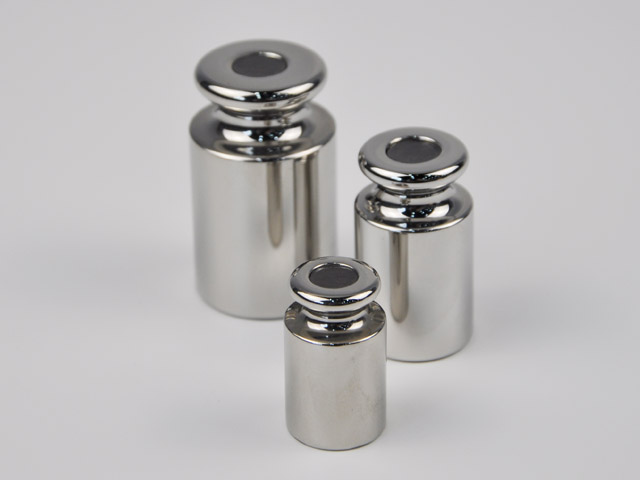
F1 Class Calibration Weight
Precision mass measurement forms the foundational pillar of modern scientific research, industrial manufacturing, quality control, and material testing, where even minor deviations in weighing data can trigger cascading errors in experimental results, product quality assessments, and process parameter adjustments. In the entire weighing and calibration system, calibration weights serve as physical mass references that unify measurement standards and maintain data consistency across diverse working scenarios. Among all common mass reference grades, F1 class calibration weights occupy a critical middle-to-high precision position, bridging ultra-high precision reference masses and routine industrial calibration tools, and have become a staple measuring accessory in professional laboratories and standardized production environments worldwide. These weights are meticulously engineered to deliver stable, repeatable mass output, adapting to rigorous daily calibration and verification work while balancing practical usability and precise metrological performance for universal application in multiple technical fields.
The core value of F1 class calibration weights lies in their strictly controlled metrological performance and stable physical properties, which distinguish them from ordinary weighing tools and lower-grade calibration masses. Designed with refined tolerance ranges, these weights feature extremely low mass deviation within their nominal value specifications, ensuring that each mass unit maintains consistent accuracy during long-term use. Their overall performance is positioned between ultra-precision reference masses used for top-level standard tracing and general-purpose calibration weights for coarse industrial calibration, making them highly versatile. They can not only complete regular calibration and error verification of high-precision analytical balances and precision scales but also act as a reference standard for grading and calibrating lower-grade calibration weights, forming a complete and hierarchical mass measurement tracing system in practical operation. This hierarchical application characteristic enables F1 class calibration weights to connect top-level measurement standards with on-site industrial measurement, effectively standardizing scattered weighing equipment data in various industries.
Material selection is a key factor determining the long-term stability and measurement reliability of F1 class calibration weights. Most qualified F1 class calibration weights adopt high-quality stainless steel as the core manufacturing material, a choice rooted in the material’s excellent comprehensive physical and chemical properties. This type of stainless steel alloy contains balanced metal components that endow the finished weights with strong corrosion resistance, effectively resisting oxidation, moisture erosion, and mild chemical corrosion in conventional laboratory and industrial environments. In daily use, frequent cleaning and long-term exposure to humid air or trace chemical vapors will not easily cause surface rust, peeling, or mass loss, which is essential for maintaining stable mass parameters over years of service. Beyond corrosion resistance, the material features uniform density and low magnetic susceptibility, avoiding mass value fluctuations caused by magnetic field interference in complex working environments. The smooth and dense surface formed by precision polishing further reduces dust adhesion and surface wear, minimizing accidental mass changes caused by external contact and environmental factors.
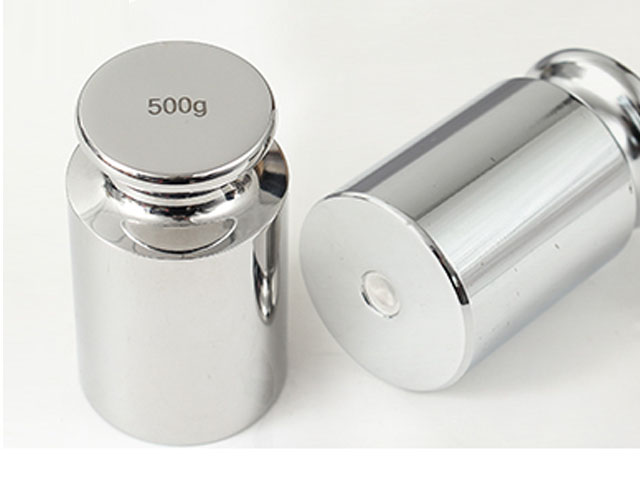
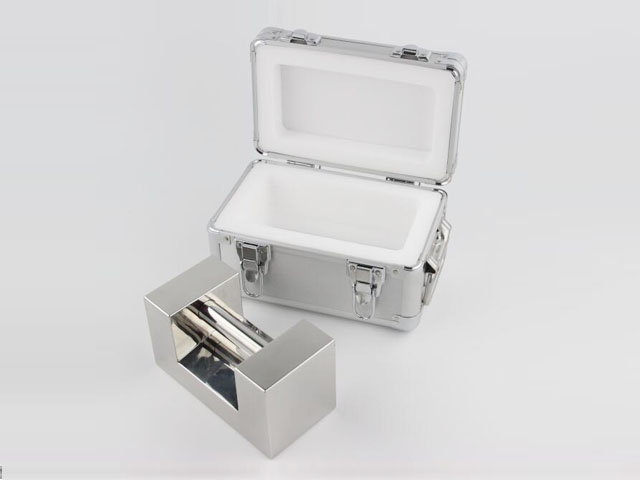
The manufacturing process of F1 class calibration weights follows rigorous precision processing standards, with every production link refined to control tiny errors. The blank forming, fine grinding, surface polishing, and mass trimming processes are all completed with high-precision processing equipment, ensuring that the geometric dimensions, surface flatness, and overall uniformity of each weight meet unified technical requirements. Standardized geometric designs, including regular cylindrical and block structures, ensure stable placement on weighing equipment without tilting or shaking during calibration operations, eliminating measurement errors caused by unstable placement. The fine trimming process precisely adjusts the mass of each finished piece within the specified tolerance range, ensuring that the actual mass of every weight stays highly consistent with its nominal value. No obvious processing defects or surface irregularities exist on qualified finished products, laying a solid foundation for consistent and reliable long-term measurement performance.
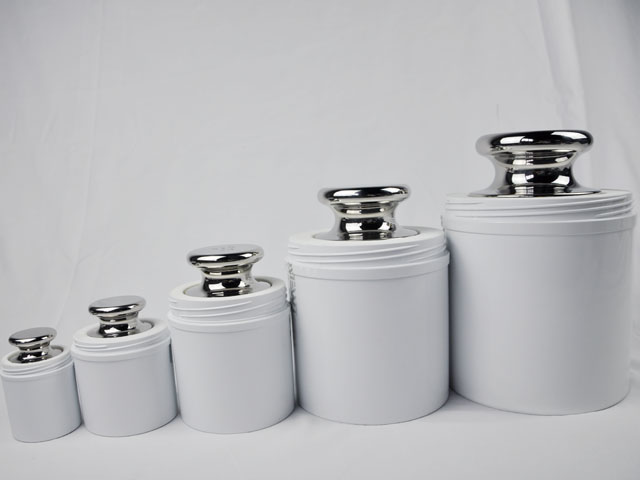
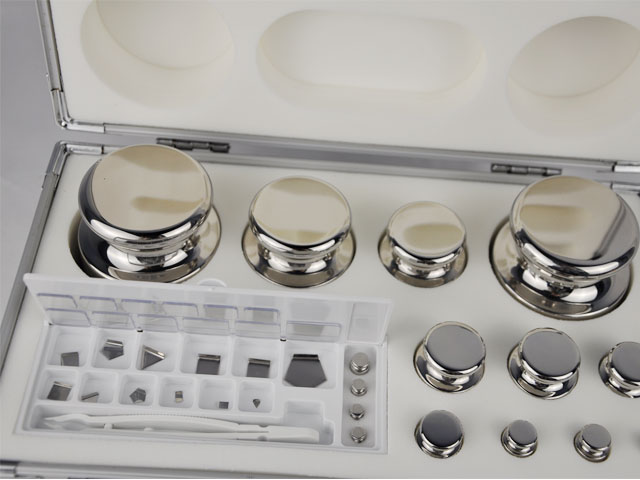
F1 class calibration weights have a wide coverage of nominal mass specifications, ranging from tiny milligram-level small weights to large kilogram-level heavy weights, fully meeting the calibration and verification needs of various precision weighing equipment. Small-specification weights are mainly used for calibrating high-resolution analytical balances in scientific research laboratories, supporting trace sample weighing in chemical analysis, pharmaceutical research, and material micro-testing. Medium and large-specification weights are suitable for precision electronic scales and semi-analytical balances in industrial quality control, food testing, and environmental monitoring, adapting to conventional sample detection and production parameter verification scenarios. The complete specification range allows users to select matching weights according to the range and resolution of different weighing devices, realizing targeted calibration and effectively improving the accuracy and stability of daily weighing work.
In practical application scenarios, F1 class calibration weights undertake two core tasks: daily equipment calibration and periodic performance verification. For high-precision weighing instruments that are frequently used in laboratories and production lines, mechanical wear, environmental temperature and humidity changes, and long-term vibration interference will cause subtle drift in measurement accuracy over time. Regular calibration with F1 class calibration weights can timely detect tiny errors in weighing equipment and correct parameter deviations, ensuring that each weighing result maintains credible accuracy. In addition, these weights can be used for periodic performance inspection of measuring equipment, verifying whether the repeatability, linearity, and stability of weighing instruments remain in a qualified state, providing reliable data support for equipment maintenance and performance evaluation. Meanwhile, they can serve as transfer standards for lower-grade weights, completing the accuracy calibration of mass tools used in on-site rough measurement, and realizing the hierarchical transmission of measurement accuracy from high-precision standards to on-site application tools.
Laboratory environments are the most typical application scenarios for F1 class calibration weights, especially in scientific research institutions, pharmaceutical laboratories, and third-party testing laboratories that require high data accuracy and repeatability. In chemical analysis experiments, precise weighing of reagents directly affects the success rate of chemical reactions and the accuracy of experimental data. Calibrating analytical balances with F1 class weights ensures that the weighing of trace reagents and standard samples is accurate, avoiding experimental result errors caused by inaccurate weighing. In pharmaceutical research and production, the proportioning of drug ingredients and the detection of trace active ingredients rely on stable and precise weighing data. Regular calibration of weighing equipment with F1 class weights ensures the consistency and safety of drug ingredient proportioning, providing basic guarantee for standardized drug production. In material science research, the density, specific gravity, and component content testing of new materials all require accurate mass measurement, and the stable performance of F1 class calibration weights effectively supports the development of high-precision material performance tests.
Industrial quality control is another key application field of F1 class calibration weights. In precision manufacturing, food processing, electronic production, and environmental monitoring industries, the accuracy of weighing data is directly related to product quality qualification rate and production standard compliance. Precision parts processing requires accurate weighing of raw materials and finished products to control product dimensional accuracy and component proportion. Food testing needs to detect the content of additives, nutrients, and trace harmful substances in products, and accurate weighing is the premise of reliable detection data. Environmental monitoring involves the weighing of air and water quality detection samples, and stable weighing accuracy ensures the objectivity and authenticity of environmental monitoring data. F1 class calibration weights maintain the long-term stable operation of industrial weighing equipment through regular calibration, avoid unqualified products and inaccurate detection data caused by weighing errors, and help enterprises establish standardized quality control systems.
Although F1 class calibration weights have excellent stability and accuracy, their long-term service performance still depends on standardized use and scientific daily maintenance. In the use process, weights should be placed gently to avoid violent collision, which can prevent surface deformation and internal structural changes that affect mass accuracy. Manual direct contact with the weight surface should be avoided during operation, as sweat, oil stains, and dust on human hands will adhere to the surface, causing subtle mass changes and affecting calibration accuracy. It is recommended to use professional tweezers or non-wear handling tools to take and place weights to keep the surface clean and intact. Meanwhile, the use environment should be kept dry, clean, and stable, avoiding long-term placement in high temperature, high humidity, or strong corrosive gas environments, to prevent material aging and surface corrosion.
Regular cleaning and standardized storage are essential measures to maintain the performance of F1 class calibration weights. Surface dust and slight stains can be cleaned with clean soft cloths and neutral cleaning solutions, and the weights must be completely dried before storage to avoid residual moisture causing surface oxidation. Unused weights need to be placed in matched sealed storage boxes with shockproof and moisture-proof functions, which can effectively isolate external dust, moisture, and mechanical vibration interference. Classified storage according to different nominal specifications can avoid confusion and collision between weights, facilitating convenient access and management. In addition, long-term stored weights need regular performance inspection to check for surface wear, corrosion, and mass deviation problems, ensuring that their metrological performance remains stable and effective during the service cycle.
In the entire field of mass measurement, F1 class calibration weights play an irreplaceable role in maintaining measurement uniformity and accuracy. As a medium-precision mass reference tool with balanced performance and wide adaptability, they not only meet the high-precision calibration needs of professional laboratory equipment but also adapt to the standardized calibration work of industrial conventional weighing instruments, building a stable bridge between top-level measurement standards and on-site measurement applications. Their stable physical properties, precise manufacturing accuracy, and diverse specification coverage make them applicable to almost all scenarios that require precision mass calibration and verification. With the continuous improvement of industrial production standards and scientific research precision requirements, the demand for standardized and high-precision mass measurement tools is increasing day by day, and F1 class calibration weights will continue to maintain important application value in quality control, scientific research innovation, and industrial standardization development, providing basic technical support for the stable operation of various precision measurement work.
F1 Class Calibration Weight
https://www.veidtweighing.com/calibration-weights.html
Post Date: Jun 19, 2026
https://www.supplier-manufacturer.com/calibration-weight/f1-class-calibration-weight.html

![Oiml Laboratory Weight]()
Oiml Laboratory Weight
In every modern laboratory that relies on consistent and dependable mass measurement work, Oiml laboratory weight stands as an indispensable foundational tool that underpi…![50g Stainless Steel Weight]()
50g Stainless Steel Weight
In the intricate landscape of measurement and weighing work that permeates every corner of daily life, industrial production, experimental research, and daily household ma…![Complete Stainless Steel Calibration Weight Full Set]()
Complete Stainless Steel Calibration Weight Full Set
Precision measurement serves as the fundamental foundation of industrial production, laboratory research, quality inspection, and daily metering operations, and calibratio…![E2 Grade Stainless Steel Weight]()
E2 Grade Stainless Steel Weight
E2 Grade Stainless Steel Weight stands as a foundational component in the realm of precision mass measurement, serving as a reliable and steady reference point for countle…![304 Stainless Steel Weight For Scale Calibration]()
304 Stainless Steel Weight For Scale Calibration
Scale calibration serves as a foundational step in maintaining consistent and reliable weighing results across industrial, commercial, and laboratory environments. Every m…