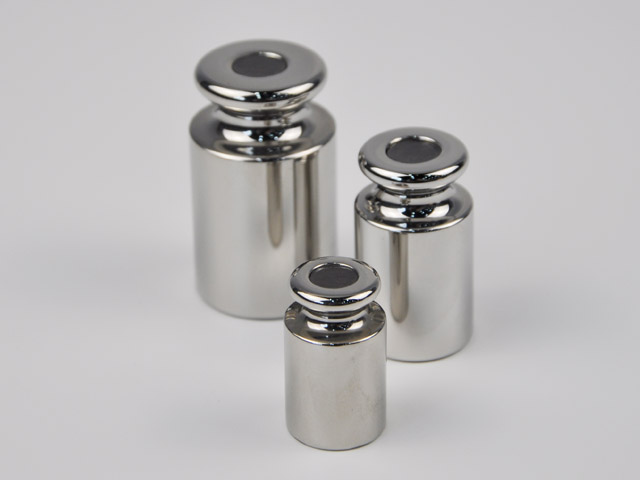
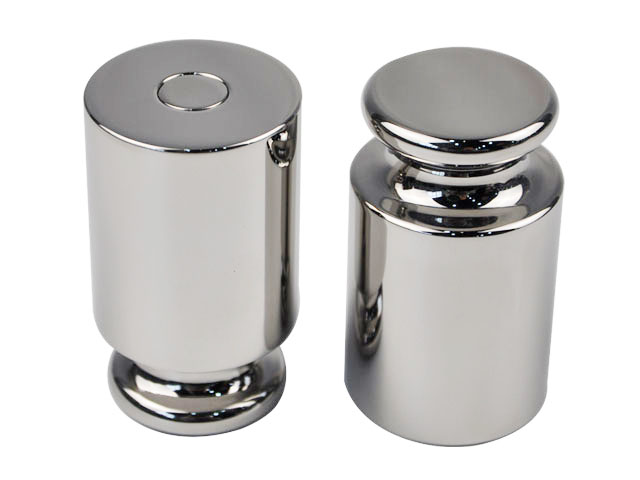
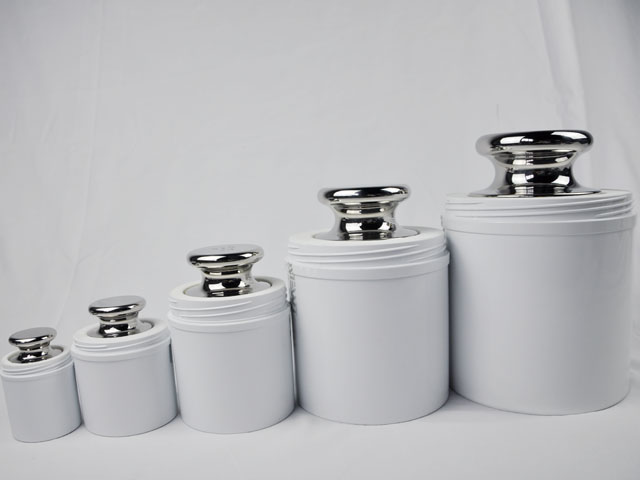
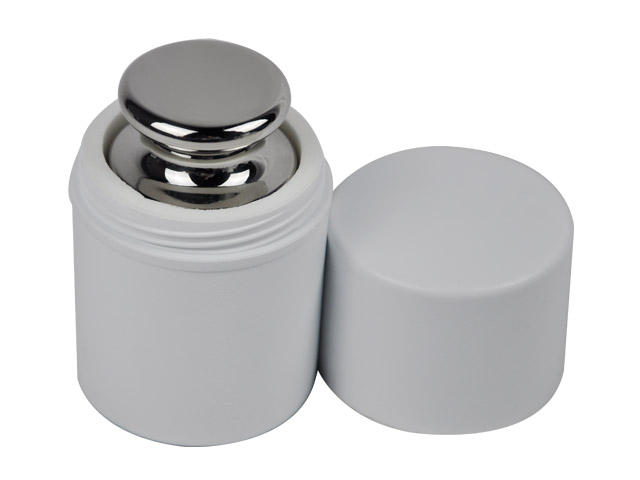
304 Stainless Steel Weight For Scale Calibration
Scale calibration serves as a foundational step in maintaining consistent and reliable weighing results across industrial, commercial, and laboratory environments. Every mechanical and digital weighing device gradually develops minor deviations during long-term operation, caused by frequent use, environmental changes, mechanical vibration, and surface wear. To correct these subtle errors and ensure weighing data stays consistent with actual physical values, standard calibration weights become essential auxiliary tools. Among various materials used for manufacturing calibration weights, 304 stainless steel stands out as a widely adopted option, balancing stable physical properties, durable structural performance, and strong environmental adaptability, making it suitable for daily and periodic calibration of most conventional weighing scales. Understanding the inherent characteristics of 304 stainless steel and its practical application logic in scale calibration helps users conduct more standardized calibration operations and extend the service life of both weighing equipment and calibration tools.
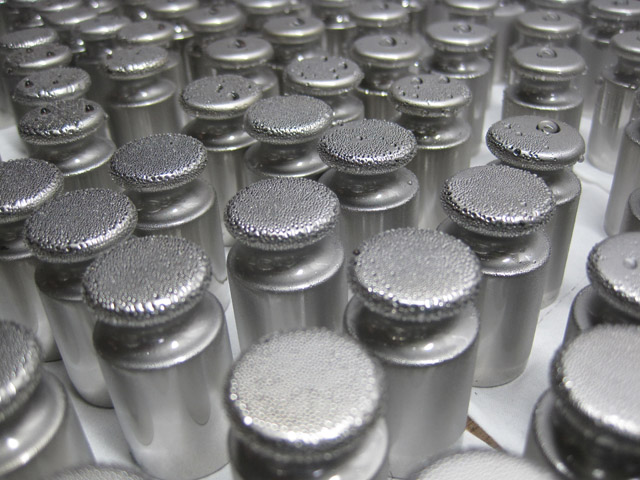
The core value of calibration weights lies in their ability to maintain stable mass over long periods, and material properties determine the fundamental stability of such standard weights. 304 stainless steel is a common austenitic stainless steel alloy with a fixed density of 7.93 grams per cubic centimeter, a uniform physical parameter that provides a reliable basis for precise weight manufacturing. Compared with ordinary carbon steel materials often used for low-end calibration weights, 304 stainless steel contains balanced proportions of chromium and nickel elements in its alloy composition, which fundamentally improves its resistance to oxidation and chemical corrosion. Ordinary carbon steel weights are prone to rust and surface oxidation when exposed to humid air, acidic dust, or fluctuating temperature and humidity conditions. Rust layers and oxide attachments will increase the surface mass of the weight, leading to gradual deviation of the standard mass value and invalidating calibration accuracy. In contrast, the alloy structure of 304 stainless steel forms a dense protective oxide film on the surface, effectively isolating contact between internal metal and external air, moisture, and weak corrosive substances. This characteristic allows 304 stainless steel weights to maintain stable surface conditions and consistent mass values in conventional indoor and general industrial environments, avoiding frequent mass changes caused by material deterioration.
In addition to corrosion resistance, the mechanical properties of 304 stainless steel further support its applicability for calibration weight production. The material features moderate hardness and good structural rigidity, resisting deformation caused by ordinary external extrusion, collision, and friction. During daily calibration work, weights inevitably experience minor contact friction with weighing platforms and occasional accidental collisions during handling and storage. Soft metal materials are prone to surface scratches, dents, and structural deformation, which alter the overall volume and effective mass of the weight. 304 stainless steel maintains stable structural integrity under normal operating conditions, with uniform material texture and no internal porous defects, ensuring that the actual mass of each weight matches the nominal value for a long time. Meanwhile, the material has extremely low magnetic permeability, which avoids magnetic adsorption interference that may affect high-precision weighing. Some metal materials generate subtle magnetic adsorption after long-term use or friction, easily adsorbing tiny metal debris and dust in the air, leading to accumulated mass errors. The non-magnetic feature of 304 stainless steel effectively eliminates this interference factor, ensuring the purity and stability of the weight’s physical mass.
Surface processing technology for 304 stainless steel calibration weights also plays a vital role in improving calibration accuracy and usability. Most qualified 304 stainless steel calibration weights undergo fine polishing treatment, forming a smooth and flat surface without obvious pores, scratches, or uneven areas. A smooth surface greatly reduces the adsorption capacity of dust, moisture, and tiny particulate matter in the air. In weighing and calibration processes, even tiny adsorbed impurities can affect the final reading of high-sensitivity scales. Rough and porous surfaces easily accumulate invisible dirt, which gradually accumulates over multiple uses and causes cumulative mass deviation. The polished surface of 304 stainless steel weights is easy to clean and maintain; simple wiping can remove surface attachments, restoring the weight to its clean state and ensuring each calibration operation is based on accurate standard mass conditions. Moreover, the smooth surface reduces friction loss during long-term repeated use, slowing down the wear rate of the weight surface and maintaining long-term consistency in dimensional and mass parameters.
The application scenarios of 304 stainless steel calibration weights cover most conventional weighing calibration needs in various industries. In laboratory environments, various analytical scales, precision electronic balances, and portable weighing devices require regular calibration to ensure accurate experimental data. Experimental data in chemical analysis, material testing, and biological detection fields relies heavily on precise weighing results, and subtle weighing errors may lead to deviations in experimental conclusions and data failure. 304 stainless steel calibration weights provide stable standard mass references for daily calibration of laboratory weighing equipment, ensuring the repeatability and authenticity of experimental data. In industrial production workshops, large number of platform scales, bench scales, and conveyor weighing equipment need periodic calibration to meet production and quality inspection requirements. Industrial production environments have relatively complex conditions with more dust and larger temperature and humidity fluctuations, and the good environmental adaptability of 304 stainless steel allows it to maintain stable performance in such environments, adapting to frequent calibration operations in continuous production scenarios.
Commercial weighing scenarios also rely heavily on 304 stainless steel calibration weights for routine inspection and calibration. Weighing equipment used in market transactions, commodity detection, and warehouse inventory needs to maintain accurate metering performance to ensure fair transaction results and standardized inventory statistics. Long-term use of commercial scales leads to component aging, sensor sensitivity attenuation, and mechanical structure wear, all of which cause weighing deviations. Regular calibration with standard 304 stainless steel weights can timely correct these deviations, keeping commercial weighing equipment within normal accuracy ranges. Unlike professional high-precision alloy weights suitable for ultra-fine calibration, 304 stainless steel weights balance performance and applicability, meeting daily calibration demands of most conventional weighing equipment without excessive performance redundancy, making them suitable for large-scale popular use in general scenarios.
Standardized use and maintenance methods directly affect the service life and calibration stability of 304 stainless steel weights. Although the material has strong corrosion resistance and wear resistance, improper use and storage can still cause unnecessary mass errors and structural damage. During the calibration process, operators should avoid direct hand contact with the weight surface as much as possible. Sweat, grease, and tiny impurities on human hands will adhere to the weight surface, forming invisible attachments that affect mass accuracy over time. It is recommended to use clean gloves or special tweezers to take and place weights, ensuring the surface remains clean and dry. When placing weights on the weighing platform, gentle placement is required to prevent violent impact; strong collision may cause subtle structural deformation of the weight or tiny scratches on the polished surface, damaging the stable state of the standard mass.
Storage conditions also determine the long-term performance stability of 304 stainless steel calibration weights. Unused weights should be placed in a dry, clean, and well-ventilated storage environment, avoiding long-term placement in humid, high-temperature, or corrosive gas environments. Although 304 stainless steel resists conventional corrosion, prolonged exposure to extreme humid conditions or contact with acidic and alkaline substances will still cause slow surface deterioration, affecting surface smoothness and mass stability. Weights of different specifications should be stored separately to avoid mutual friction and collision caused by stacking, preventing surface wear and specification confusion. Regular cleaning is also essential for daily maintenance; surface dust and attachments can be wiped with clean soft cloth, and stubborn stains can be treated with neutral cleaning agents, followed by thorough drying to avoid residual moisture on the surface.
Regular inspection of 304 stainless steel calibration weights cannot be ignored in daily management. After long-term use, even high-stability stainless steel weights may have subtle changes due to environmental accumulation and use loss. Users should conduct regular visual inspection and accuracy comparison of weights. Visual inspection focuses on checking whether the weight surface has scratches, pits, discoloration, or rust spots, and whether the shape is deformed. Once abnormal surface conditions are found, the weight should be stopped from use in time for cleaning and correction. For accuracy detection, regular comparison with higher-precision standard weights can effectively judge whether the mass of the calibration weight has deviated, ensuring that it always meets the basic requirements of scale calibration work.
It is also necessary to clarify the applicable limits of 304 stainless steel calibration weights to avoid inappropriate use affecting calibration results. This type of weight is more suitable for conventional precision scale calibration in general industrial, commercial, and laboratory scenarios. For ultra-high-precision weighing equipment used in professional metering and scientific research fields that require extremely strict mass stability and low error tolerance, higher-grade special alloy weights are usually required. The stable performance of 304 stainless steel can fully meet the error control range of most conventional weighing equipment, and its comprehensive environmental adaptability makes it more practical in daily industrial and commercial applications. In addition, when using 304 stainless steel weights for calibration, users need to match the weight specification with the range of the weighing equipment. Choosing appropriate weight specifications according to the maximum weighing range and precision level of the scale can ensure the calibration effect and effectively detect the linear error and zero drift of the weighing equipment.
In practical calibration operations, the matching between environmental factors and 304 stainless steel weights also needs attention. Temperature changes will slightly affect the volume of metal materials, thereby producing tiny mass deviation effects. Although the density and structural stability of 304 stainless steel can weaken such changes significantly, calibration work should still be carried out in a constant temperature and dry environment as much as possible to reduce external interference. In low-temperature or high-temperature environments, the weighing sensor of the scale and the weight itself will produce subtle physical changes, and calibration in extreme environments cannot reflect the accurate operating state of the equipment under conventional working conditions. Therefore, standardized calibration environment matching, combined with the stable performance of 304 stainless steel weights, can maximize the accuracy of scale calibration.
In summary, 304 stainless steel has become a mainstream material for manufacturing conventional scale calibration weights by virtue of its stable physical density, excellent corrosion resistance, good mechanical rigidity, and low magnetic permeability. Its unique material properties solve many common problems of traditional calibration weights, such as easy rust, large mass deviation, and short service life. Reasonable application of 304 stainless steel calibration weights, combined with standardized use, scientific storage, and regular inspection and maintenance, can maintain long-term stable calibration performance, effectively correct the operating errors of various conventional weighing scales, and ensure the accuracy and consistency of weighing data in production, experiment, and transaction links. In the field of daily scale calibration that pursues stability and practicability, 304 stainless steel calibration weights provide reliable basic technical support for the normal operation of weighing equipment and the standardization of weighing work.
304 Stainless Steel Weight For Scale Calibration
https://www.veidtweighing.com/ssweight/StainlessSteelWeight
Post Date: May 28, 2026

![Laboratory Balance Calibration Weight Stainless Steel]()
Laboratory Balance Calibration Weight Stainless Steel
In modern laboratory operations, accurate mass measurement serves as the fundamental foundation for scientific research, experimental analysis, and quality inspection. Eve…![E2 Class Laboratory Weight]()
E2 Class Laboratory Weight
In every modern analytical laboratory, research institution, and quality control facility focused on accurate physical measurement, the pursuit of reliable and consistent …![2kg Stainless Steel Weight For Scale]()
2kg Stainless Steel Weight For Scale
In every sector that relies on dependable weighing operations, having reliable reference tools forms the backbone of consistent and trustworthy measurement workflows, and …![5kg Stainless Steel Heavy Duty Industrial Standard Weight]()
5kg Stainless Steel Heavy Duty Industrial Standard Weight
Industrial weighing operations form the backbone of modern manufacturing, processing, and quality control workflows, requiring consistent, reliable, and durable calibratio…![1kg Stainless Steel Weight]()
1kg Stainless Steel Weight
In the intricate and interconnected world of modern measurement operations, industrial production, laboratory research, and daily quality verification work, the 1kg stainl…