Digital Scale Calibration Weight
In all fields that rely on precise mass measurement, digital scale calibration weights serve as fundamental auxiliary tools that underpin consistent and reliable weighing results. Digital scales have become indispensable in daily operations, ranging from fine laboratory testing and industrial component detection to craft production and daily precision weighing tasks. However, the internal sensing systems of digital scales are susceptible to subtle changes caused by external environments and long-term operation, leading to gradual deviations in measurement data. Calibration weights act as standardized mass references, helping correct these deviations, unify measurement benchmarks, and ensure every weighing output stays consistent with actual physical mass values. Understanding the working logic, usage norms, and maintenance skills of calibration weights is essential for every user who pursues stable and accurate weighing performance.
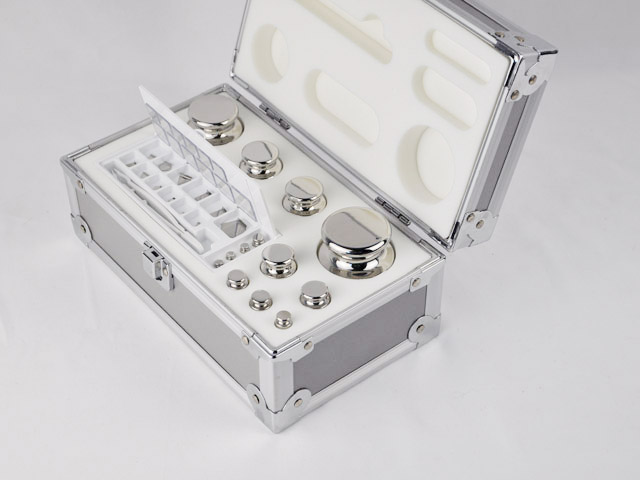
The core value of digital scale calibration weights lies in providing fixed, repeatable mass references for scale parameter adjustment. Unlike random objects with uncertain mass, professional calibration weights are manufactured with strict dimensional uniformity and mass stability, with subtle tolerance ranges that meet general precision measurement requirements. Every digital scale operates based on internal sensor signal conversion: when an object is placed on the weighing platform, the load cell converts pressure signals into digital data, which is then calculated and displayed by the internal program. After long-term use, frequent vibration, temperature changes, or position movement, the sensor’s signal sensitivity will shift, causing the scale to display inaccurate readings even when there is no visible damage to the equipment. Calibration weights eliminate such systematic errors by inputting known standard mass values into the scale’s internal system, allowing the device to reset its zero point and linear calculation parameters.
The demand for calibration and the application of calibration weights cover a wide range of scenarios, all of which prioritize measurement stability and accuracy. In laboratory environments, where experimental data repeatability is critical, slight weighing errors may lead to entirely different experimental conclusions. Regular calibration of analytical scales and precision electronic balances with standard weights can maintain the authenticity and credibility of experimental data. In industrial production, many small parts, raw material formulations, and finished product inspections require precise weighing; stable calibration ensures product consistency and avoids quality fluctuations caused by measurement deviations. In craft processing and jewelry weighing fields, tiny mass differences directly affect product value and production standards, making regular scale calibration a necessary daily operation. Even for household and small commercial digital scales, periodic calibration with standard weights can avoid daily measurement errors caused by environmental changes and casual use habits.
To understand the rationality of calibration weight application, it is necessary to clarify the common causes of digital scale measurement drift. The first factor is environmental change. Air humidity, ambient temperature, and ground flatness all affect weighing accuracy. High humidity may cause slight oxidation on the scale’s platform and internal metal components, while temperature fluctuations change the physical properties of load cell materials, leading to inconsistent signal conversion efficiency. Moving the scale to different positions also alters horizontal stress and ground bearing conditions, resulting in zero-point offset. The second factor is mechanical fatigue and dust accumulation. Long-term bearing pressure, frequent object placement and removal, and accumulated dust and fine debris on the weighing platform and internal gaps will interfere with sensor induction and platform levelness, producing cumulative errors. The third factor is electrical system fluctuation. Voltage instability, long-term standby operation, and frequent startup and shutdown will affect the stability of the scale’s internal circuit operation, leading to subtle deviations in data calculation. These invisible changes cannot be identified by naked eye observation but can be accurately detected and corrected through calibration weights.
The standard calibration process using digital scale calibration weights follows scientific and standardized logic, ensuring thorough error correction without introducing new measurement deviations. Before formal calibration, users need to prepare a suitable operating environment, placing the digital scale on a flat, stable horizontal surface and avoiding ventilation openings, direct sunlight, and vibrating areas. It is necessary to preheat the scale for an appropriate time according to equipment characteristics to stabilize internal circuit and sensor status, and clean the weighing platform to remove dust, stains, and residual sundries that may affect contact flatness. After completing environmental preparation, turn on the scale and wait for it to enter the normal standby state, perform zero-point clearing operation, and confirm that the display shows zero without offset numbers.
In the formal calibration stage, users need to select calibration weights with appropriate mass specifications according to the scale’s weighing range and precision level. In general, choosing a weight that accounts for fifty to eighty percent of the full weighing range can better test the linear performance of the scale, covering the conventional weighing interval of the equipment. After entering the scale’s dedicated calibration mode by pressing the corresponding function key, steadily place the selected calibration weight in the center of the weighing platform. Central placement is crucial because offset placement will cause uneven platform stress and produce accidental errors. Keep the weight stationary for several seconds to allow the scale’s sensor to fully sense the pressure signal and complete data acquisition and parameter adjustment. After the equipment prompts the completion of calibration, remove the weight and wait for the scale to return to zero state.
A complete calibration work cannot end with simple parameter adjustment, and subsequent verification steps are essential to ensure effective calibration. After finishing calibration, users can place the same calibration weight on the platform again for multiple repeated tests, observing whether each displayed reading remains stable and consistent with the standard mass of the weight. It is also feasible to use different specification weights for cross verification to check the linear accuracy of the scale in different weighing intervals. If individual reading deviations occur, repeated calibration operations can be carried out after rechecking the environment and platform status. Only after consecutive stable and accurate verification results can the calibration work be confirmed as completed, and the scale can be put back into formal use.
The service life and calibration stability of calibration weights themselves directly affect the effect of scale calibration, so daily standardized maintenance cannot be ignored. Most conventional calibration weights are made of dense, corrosion-resistant metal materials with smooth and flat surfaces, but long-term improper use and storage will still cause mass changes. Direct contact with hands during use should be avoided, as sweat, grease, and fine dirt on the skin will adhere to the weight surface, increasing surface load and causing subtle mass deviation over time. It is recommended to use clean tweezers or non-woven gloves to take and place weights to maintain surface cleanliness.
Storage conditions also play a key role in maintaining the precision of calibration weights. Weights should be stored in a dry, clean, constant-temperature storage space, avoiding long-term exposure to humid air, corrosive gas, and high-temperature environments. Humid environments may cause surface oxidation and rust, while corrosive gases will erode the metal surface, both of which will change the standard mass of the weight. Meanwhile, weights of different specifications should be stored separately to avoid collision and friction between each other, preventing surface wear and dimensional deformation caused by extrusion and impact. Regular cleaning of calibration weights is also necessary; use clean soft cloths for daily dust removal, and avoid using corrosive cleaning liquids that may damage the surface structure.
It is also important to master the correct use frequency of calibration weights, which can be adjusted according to the usage intensity and application scenarios of digital scales. For scales used in high-precision experimental testing and industrial quality inspection scenarios with high measurement requirements, calibration with standard weights is recommended before each use or at fixed short-term cycles to ensure real-time accuracy of measurement data. For equipment used intermittently or in conventional daily weighing scenarios, regular monthly or quarterly calibration can meet usage needs. In addition, mandatory calibration should be carried out after any special situation that may affect scale accuracy, such as equipment movement, accidental collision, long-term idle reuse, and abnormal reading fluctuations during use.
Many users overlook the matching principle between calibration weights and digital scales in actual operation, which easily leads to unsatisfactory calibration effects. Weights with excessive mass cannot fully calibrate low-range precision scales and may even cause pressure damage to sensitive sensors; weights with too small mass can only correct zero-point errors and cannot detect linear deviations in the full range of the scale. Therefore, matching the weight specification to the scale’s parameters is a prerequisite for effective calibration. Meanwhile, worn, deformed, or contaminated calibration weights cannot continue to be used, as their own mass is no longer standard, and using such weights for calibration will instead solidify measurement errors and affect the normal use of the scale.
In essence, digital scale calibration weights are the bridge to maintain the measurement accuracy of electronic weighing equipment. All digital scales have inherent measurement drift characteristics after long-term use, and manual calibration with standard weights is the most direct and effective way to eliminate errors. Good calibration habits and standardized weight maintenance methods can not only ensure the accuracy and stability of each weighing result but also effectively extend the overall service life of digital scales, reducing equipment failure rates and measurement error losses caused by long-term uncalibrated use. In all precision weighing work, attaching importance to the application and maintenance of calibration weights is a basic guarantee for standardized operation and credible data results, which runs through the whole cycle of equipment use.
Digital Scale Calibration Weight
https://www.veidtweighing.com/calibration-weights.html
Post Date: Jun 19, 2026
https://www.supplier-manufacturer.com/calibration-weight/digital-scale-calibration-weight.html

![Cast Iron Weight For Elevator]()
Cast Iron Weight For Elevator
Within the intricate and interconnected framework of modern vertical transportation infrastructure, cast iron weights stand as an indispensable foundational component that…![Types of Laboratory Weight]()
Types of Laboratory Weight
Laboratory weights are fundamental mass standard tools applied across scientific research, chemical analysis, pharmaceutical testing, material experimentation, and industr…![E1 Class High Accuracy Laboratory Weight]()
E1 Class High Accuracy Laboratory Weight
In the intricate and rigorous world of laboratory metrology, the consistency and credibility of all experimental data and measurement outcomes hinge entirely on reliable m…![Lab Stainless Steel Weight Kit]()
Lab Stainless Steel Weight Kit
In every laboratory environment where precise mass measurement serves as the core of daily experimental operations, quality inspection procedures, and routine metrology ma…![20kg Stainless Steel Crane Scale Lock Test Weight]()
20kg Stainless Steel Crane Scale Lock Test Weight
Industrial weighing accuracy serves as the foundational guarantee for standardized production, safe operation, and standardized measurement in various industrial sectors. …