Cast Iron Weight For Weighbridge
Weighbridges serve as the foundational backbone of bulk material weighing operations across industrial parks, logistics hubs, mining sites, agricultural distribution centers, and port cargo handling areas, undertaking the critical task of measuring the mass of heavy vehicles and their loaded goods with steady and reliable data output. To maintain the stable working performance of these large-scale weighing devices and ensure every weighing reading stays consistent and trustworthy during long-term daily operation, regular calibration, routine performance verification, and periodic functional testing become indispensable daily management work, and cast iron weight has always been the core and essential matching component for completing all these key weighing maintenance tasks. Unlike small weighing test tools used for desktop or small platform scales, cast iron weight designed specifically for weighbridge use is engineered to adapt to heavy-load working scenarios, harsh outdoor and semi-outdoor operating environments, and frequent repeated handling and stacking operations, focusing on stable physical properties, durable structural performance, and consistent mass retention for many years, creating a solid guarantee for the normal and efficient operation of the entire weighbridge weighing system. The rational selection, standardized use, and proper maintenance of these cast iron weights directly affect the accuracy of commercial settlement weighing, the compliance of industrial production material statistics, and the safety and order of on-site logistics transportation management, making them an indispensable basic supporting facility in all links relying on weighbridge data for production and operation decision-making.
The inherent material advantages of cast iron lay a solid foundation for its widespread application in weighbridge matching weighing work, distinguishing it from other common weight manufacturing materials and making it more suitable for heavy-duty industrial weighing scenarios. Fine-grained gray cast iron is the mainstream base material for producing weighbridge dedicated cast iron weights, featuring reasonable density distribution, excellent compressive resistance, good shock absorption performance, and strong structural stability under long-term static pressure and occasional external impact. This material has stable physical characteristics under different ambient temperature conditions, with negligible mass fluctuation within the common temperature variation range of outdoor and factory industrial areas, avoiding obvious mass deviation caused by seasonal temperature changes or day and night temperature differences that could affect calibration and test results. The internal structure of qualified cast iron for weights is compact and uniform, without loose pores, internal cracks, or uneven density areas that may occur in inferior casting materials, ensuring that each weight can maintain balanced stress bearing during placement on the weighbridge surface and consistent mass performance after long-term placement and repeated handling. In addition, cast iron has good wear resistance and oxidation resistance in natural atmospheric environments, resisting daily wind and sun exposure, light rain erosion, and minor friction and collision during on-site handling, effectively slowing down the aging and damage speed of the weight body and extending the overall service life of each cast iron weight in long-term continuous use.
The production and manufacturing process of cast iron weight for weighbridge directly determines its mass accuracy, structural firmness, and on-site adaptability, adopting integrated high-temperature melting and integral casting molding technology as the core production method with multiple refined processing steps for follow-up optimization. The whole production process starts with the precise proportioning of cast iron raw materials, strictly controlling the ratio of various raw material components to ensure the cast iron after melting meets the required hardness, density, and structural toughness standards for weighbridge weight production. After high-temperature melting in professional smelting equipment, the molten cast iron is poured into customized integral molds designed according to standard weight specifications and structural requirements, ensuring the overall shape of the weight is regular, the stress distribution of the whole body is uniform, and no structural weak points prone to deformation or damage exist. After pouring is completed, the cast iron blank is placed in a controlled temperature environment for natural slow cooling and shaping, avoiding rapid cooling that leads to internal structural stress concentration, surface deformation, or internal crack generation, which could affect the stability of weight quality and structural safety. After the blank is fully cooled and formed, workers carry out preliminary surface trimming, removing casting burrs, sharp edges, and surface uneven parts to make the weight surface flat and smooth and prevent sharp parts from causing accidental scratches during handling and stacking. Subsequent fine grinding and finishing treatment further optimize the flatness of the weight’s working contact surface, ensuring close and stable contact with the weighbridge bearing platform during calibration and testing, avoiding weighing data errors caused by unbalanced placement or poor contact.
Surface protection treatment is a necessary processing link for cast iron weight for weighbridge, effectively enhancing its environmental adaptability and anti-corrosion and anti-rust capabilities in complex on-site working conditions. After finishing and before mass fine-tuning, the surface of each cast iron weight is coated with a layer of environmentally friendly protective paint with strong adhesion and good weather resistance, covering the entire outer surface of the weight body including the bottom contact surface and side and top areas. This protective coating can effectively isolate the cast iron body from direct contact with humid air, rainwater, dust, and corrosive substances in the external environment, preventing rust, oxidation, and surface corrosion that may cause surface shedding, structural damage, and even subtle changes in the overall mass of the weight. For weighbridge weights used in coastal areas with high air humidity or industrial areas with slight corrosive gas emissions, the surface protection coating can effectively resist long-term environmental erosion, maintaining the integrity of the weight appearance and the stability of internal performance for a long time. Moreover, the uniform paint coating also makes the surface of the cast iron weight neat and consistent, facilitating on-site staff to quickly identify weight specifications and carry out daily inventory and management work, while reducing surface friction loss during weight handling, stacking, and transfer, and avoiding surface wear and mass change caused by long-term friction and collision.
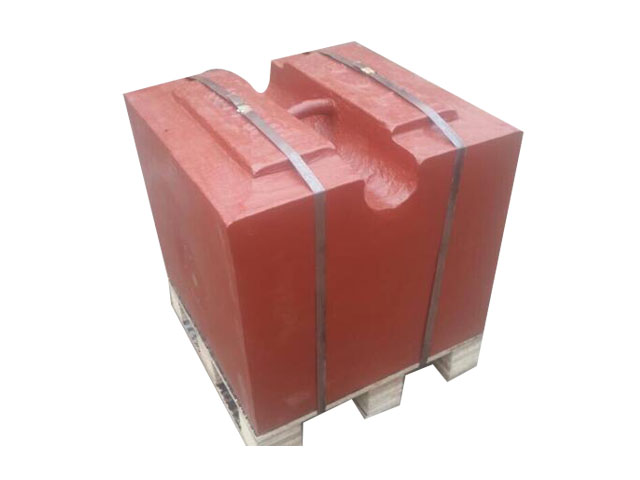
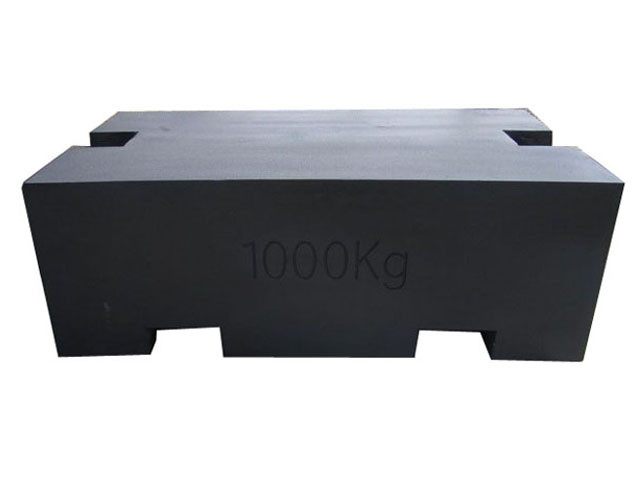
Structural design of cast iron weight for weighbridge is fully optimized around on-site actual use needs, focusing on convenient handling, stable placement, safe stacking, and accurate mass control to adapt to all calibration and testing work of different types and specifications of weighbridges. Most weighbridge dedicated cast iron weights adopt regular rectangular overall structural design, with flat and smooth top and bottom surfaces to ensure stable placement on the weighbridge bearing platform without tilting or shaking during weighing testing. The side structure is designed with reasonable radian or standardized handling reserved positions, matching conventional on-site lifting and handling tools, making it convenient for staff to use small lifting equipment or manual auxiliary tools for weight transfer, stacking, and placement operations, reducing handling difficulty and improving overall work efficiency. Many cast iron weights are equipped with internal mass adjusting cavities in the structural design, reserving reasonable space for fine mass debugging in the later production stage. After initial casting and processing, professional staff fine-tune the internal mass through standardized filling and trimming operations to ensure each weight meets the required mass standard, realizing accurate control of single weight mass and consistent coordination between multiple weights. The overall structural thickness and solid design of the weight body ensure it will not deform or sink after long-term stacking and heavy-pressure placement, maintaining stable structural shape and unchanged contact state with the weighbridge for many years, and avoiding weighing data deviation caused by weight structural deformation.
The core application scenarios of cast iron weight for weighbridge cover regular daily calibration, periodic performance verification, fault detection and debugging after equipment maintenance, and daily weighing accuracy spot check of weighbridges, running through the whole life cycle of weighbridge operation and use. In daily industrial production and logistics transportation management, weighbridges need to maintain high weighing accuracy all the time, because weighing data is not only the basis for commercial trade settlement between enterprises but also the important data support for enterprise production material accounting, inventory statistics, and transportation capacity scheduling. Regular calibration with matched cast iron weights can timely correct subtle weighing errors caused by long-term vibration, vehicle rolling, and environmental changes of the weighbridge, ensuring each weighing data is true and effective. After the weighbridge completes mechanical maintenance, sensor replacement, or foundation reinforcement construction, cast iron weights need to be used for comprehensive performance testing and calibration to verify whether the weighing system returns to normal working state and meets daily use requirements. In addition, in the daily safety management and quality inspection work of enterprises, regular random inspection of weighbridge weighing accuracy with cast iron weights can effectively avoid weighing data deviation caused by equipment aging or improper operation, preventing economic disputes and production management confusion caused by inaccurate weighing.
The adaptability of cast iron weight for weighbridge to complex working conditions is one of its important advantages, enabling stable and reliable work in various harsh outdoor and industrial production environments without being affected by changes in external conditions. Whether it is high-temperature and strong sunlight exposure in summer, low-temperature frost and snow weather in winter, or dusty and humid working environments in mining, construction, and logistics yards, cast iron weights can maintain stable mass and structural performance without obvious performance attenuation or mass change. The material characteristics of cast iron determine that it will not produce obvious expansion and contraction deformation due to ambient temperature changes, and the mass change per unit temperature is controlled within a very small range, ensuring accurate and reliable calibration and test results in different seasons and different weather conditions. At the same time, the sturdy and durable structural design enables the cast iron weight to withstand slight collision and extrusion during on-site handling and stacking, not easy to crack or damage, and can adapt to frequent mobile use and long-term fixed placement use switching. For weighbridges used for heavy-load and high-frequency weighing work all year round, the supporting cast iron weights can keep long-term stable coordination work state, without frequent replacement and frequent mass recalibration, reducing the daily maintenance cost and work intensity of enterprise weighing management.
Daily maintenance and scientific management of cast iron weight for weighbridge are key measures to maintain its long-term mass stability and extend service life, and standardized daily management can effectively avoid mass deviation and structural damage caused by improper use and storage. After each use, the cast iron weight should be placed in a dry, ventilated, and flat special storage area, avoiding long-term direct placement in open-air humid environment or muddy and dusty yard to prevent accelerated surface corrosion and paint falling. Regular surface cleaning work should be done regularly to remove surface dust, sediment, and stains, keeping the weight surface and bottom contact surface clean and flat, ensuring no foreign matter affects the placement stability and mass accuracy of the weight. During handling and stacking, violent throwing and strong collision should be avoided to prevent structural deformation of the weight body and damage to the surface protective coating caused by impact, and stacking height should be controlled reasonably to avoid excessive extrusion and deformation of the bottom weight. Regular regular mass inspection and appearance inspection should be carried out every certain period, checking whether there is paint falling, rust deformation, or structural damage on the weight surface, and timely carrying out repainting maintenance and mass recalibration for weights with abnormal conditions to ensure each weight is always in good working condition. Scientific maintenance and management not only maintain the working performance of cast iron weights but also reduce the long-term use cost of enterprises and ensure the long-term stable operation of weighbridge weighing work.
In the overall industrial weighing system construction and daily operation management, cast iron weight for weighbridge, as a basic and important supporting facility, plays an irreplaceable important role in maintaining weighing accuracy, standardizing weighing management, and ensuring production and operation order. Its excellent material performance, mature production technology, reasonable structural design, and strong working condition adaptability make it the preferred matching weighing test tool for all kinds of large and medium-sized weighbridges, meeting the calibration, testing, and verification work needs of different industries and different working scenarios. With the continuous development of industrial production and logistics transportation industry, the frequency of weighbridge use is getting higher and higher, and the requirements for weighing data accuracy and stability are becoming more and more strict, which also makes the reasonable configuration, standardized use, and scientific maintenance of cast iron weight for weighbridge more important. Only by attaching importance to every link from weight selection, use operation to daily maintenance, can we ensure that the weighbridge always maintains accurate and stable weighing performance, provide reliable weighing data support for enterprise production scheduling, trade settlement, and safety management, and lay a solid foundation for the standardized and orderly development of industrial bulk material weighing and transportation work.
Cast Iron Weight For Weighbridge
https://www.veidtweighing.com/cast-iron-weights.html
Post Date: May 4, 2026
https://www.supplier-manufacturer.com/cast-iron-weight/cast-iron-weight-for-weighbridge.html

![Economical Stainless Steel M1 Class Calibration Weight]()
Economical Stainless Steel M1 Class Calibration Weight
In modern industrial production, laboratory testing, and daily metrological verification work, accurate weighing results serve as the fundamental guarantee for product qua…![Stainless Steel Weight For Balance Calibration]()
Stainless Steel Weight For Balance Calibration
Balance calibration stands as one of the most foundational and indispensable steps in all fields that rely on accurate mass measurement, forming the bedrock of reliable da…![Stainless Steel Test Weight For Food Industry Weighing]()
Stainless Steel Test Weight For Food Industry Weighing
In the food industry, consistent and reliable weighing operations form the backbone of production stability, product quality uniformity, and operational standardization. E…![50kg Test Weight]()
50kg Test Weight
In every sector that relies on reliable mass measurement to maintain operational stability and consistent operational standards, the 50kg test weight stands as a foundatio…![Stainless Steel Weight Wholesale]()
Stainless Steel Weight Wholesale
Stainless steel weights have become indispensable functional components across modern industrial production, commercial manufacturing, and daily product assembly, making w…