Stainless Steel Test Weight For Food Industry Weighing
In the food industry, consistent and reliable weighing operations form the backbone of production stability, product quality uniformity, and operational standardization. Every stage from raw material procurement, ingredient proportioning, and semi-finished product processing to finished product packaging and delivery relies on precise weighing data to maintain operational order. Slight deviations in weighing results can lead to inconsistent ingredient ratios, unstable product textures, shortened shelf life, and even uniform production standards that fail to meet daily operational requirements. In this context, stainless steel test weights serve as fundamental precision tools for verifying and calibrating various weighing equipment in food production environments, playing an irreplaceable role in maintaining the accuracy and stability of industrial weighing systems throughout long-term continuous operation.
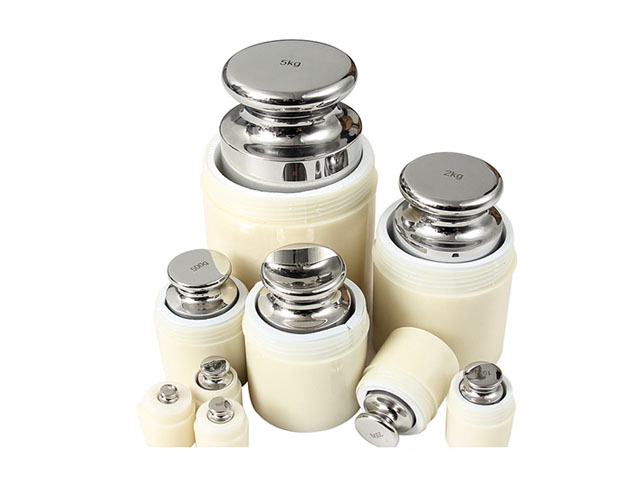
Unlike test weights made from ordinary metal materials, stainless steel test weights are tailored to adapt to the unique and complex working conditions of food production workshops. Food industry working environments often involve frequent contact with water, food residues, oil stains, and mild cleaning agents, along with regular high-pressure washing and sanitary cleaning procedures. Ordinary metal weights are prone to oxidation, rust, surface peeling, and quality degradation under such conditions, which not only affect the stability of their own mass but also may produce debris that contaminates the clean production environment. Stainless steel materials effectively avoid these problems by virtue of their dense internal structure, smooth surface texture, and excellent anti-corrosion and anti-oxidation properties. The overall structural stability of the material ensures that the weight maintains stable mass parameters during long-term repeated use, while the non-porous surface prevents the adhesion and accumulation of tiny food residues, grease, and bacteria, fully adapting to the high hygiene standards required in food processing scenarios.
The inherent physical properties of stainless steel lay a solid foundation for the practical application of test weights in food industry weighing work. The material features high density uniformity and low thermal expansion coefficient, meaning its mass will not undergo obvious changes due to routine temperature fluctuations in production workshops. Food processing workshops often have temperature differences between cold storage areas, constant temperature production areas, and high-temperature processing areas, and frequent temperature changes can cause subtle deformation and mass drift in low-precision metal tools. Stainless steel test weights can maintain stable physical properties within the conventional temperature variation range of food production, ensuring that calibration and verification results will not be disturbed by ambient temperature changes. In addition, the material has low magnetism and stable chemical properties, avoiding mass deviation caused by external magnetic interference or mild chemical contact, which is crucial for maintaining the long-term accuracy of weighing equipment calibration.
In daily food production, various types of weighing equipment are widely used, including desktop electronic balances for small-batch ingredient weighing, platform scales for semi-finished product weighing, floor scales for raw material and finished product loading measurement, and online dynamic weighing equipment for assembly line production. All of this equipment requires regular verification and calibration with stainless steel test weights to eliminate systematic errors caused by long-term operation, mechanical wear, environmental impact, and frequent start-stop use. During continuous industrial production, weighing sensors and mechanical structures of weighing equipment will gradually produce subtle fatigue and deviation, which cannot be accurately identified through daily visual observation. Regular calibration with standard stainless steel test weights can effectively detect subtle errors in weighing equipment, adjust equipment parameters in a timely manner, and ensure that each weighing data in the production process is true and effective.
Ingredient proportioning is one of the most critical links in food production, and the accuracy of weighing directly determines the taste, quality, and safety of food products. For baked goods, beverage production, seasoning processing, and canned food manufacturing, the proportion of various raw materials needs to be strictly controlled. If the weighing of sugar, salt, additives, and functional raw materials deviates, it will lead to inconsistent taste of products in different batches, unbalanced nutritional components, and even affect the microbial stability of products during storage. Stainless steel test weights provide accurate reference standards for the calibration of ingredient weighing equipment, ensuring that the weighing error of each raw material is controlled within a reasonable range. This standardized weighing management mode enables food enterprises to maintain consistent product quality in large-scale batch production, reduce product quality fluctuations caused by weighing errors, and improve the overall stability of product batches.
In addition to ingredient proportioning, stainless steel test weights also play a key role in finished product packaging and quantitative filling links. Most packaged food products have fixed net content requirements, and stable quantitative weighing is an important part of standardized production. Long-term continuous operation of filling and packaging equipment may lead to gradual deviation of quantitative values due to mechanical vibration and component wear. Regular verification with stainless steel test weights can timely correct the quantitative error of packaging equipment, avoid excessive net content that increases production costs or insufficient net content that affects product standard compliance, and help enterprises maintain standardized and orderly packaging production while controlling production costs effectively.
The hygienic adaptability of stainless steel test weights is a core advantage that distinguishes them from other metal test weights in the food industry. Food production scenarios have extremely strict requirements for tool sanitation, and any tool in contact with the production environment must be easy to clean, free of dirt accumulation, and free of harmful substance precipitation. The polished surface of stainless steel test weights is smooth and flat, without tiny gaps or pits, so surface residues such as grease, crumbs, and liquid stains can be quickly wiped clean with conventional cleaning methods. Routine cleaning with warm water and mild neutral cleaning agents will not cause damage to the surface structure or material properties of the weights. After cleaning, the surface dries quickly without residual water stains, effectively inhibiting the growth and reproduction of bacteria and mold. This excellent cleanability ensures that the test weights will not become a hidden source of pollution in the food production environment, fully meeting the daily sanitary management requirements of food processing workshops.
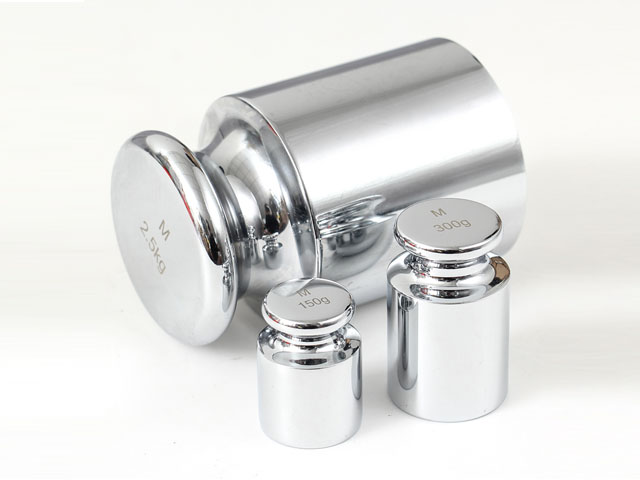
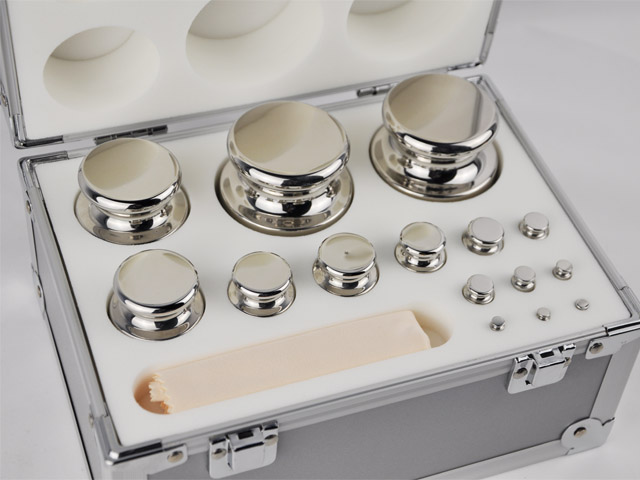
In terms of structural design, stainless steel test weights for the food industry adopt practical and hygienic structural forms suitable for industrial use. Most products feature integrated molding structures with no loose parts or splicing gaps, avoiding residue accumulation in gaps that is difficult to clean. The surface polishing treatment not only improves the aesthetics of the product but also further enhances anti-fouling and anti-corrosion capabilities. The overall structure is sturdy and wear-resistant, able to withstand frequent handling, placement, and repeated use in industrial scenarios without surface scratches, deformation, or damage. For test weights of different specifications, the standardized volume and size design ensures stable placement during calibration work, avoiding tilting or shaking that affects verification accuracy. The reasonable weight gradient design covers the full-range weighing verification requirements from small-batch precision weighing to large-scale industrial weighing, meeting the diverse calibration needs of different equipment in food production lines.
Long-term service stability is another important feature of stainless steel test weights in food industry applications. In the daily operation of food enterprises, weighing equipment calibration is a regular and long-term work, which requires test weights to maintain stable mass accuracy for many years. Stainless steel materials have strong resistance to oxidation and chemical corrosion, and will not rust or deteriorate in humid, multi-oil, and frequently cleaned production environments. Compared with cast iron test weights that are prone to rust and surface wear, stainless steel test weights have a longer service cycle and lower attenuation of accuracy parameters during use. In the long-term use process, the mass change is extremely small, which can continuously provide accurate reference standards for equipment calibration, reduce the frequency of test weight replacement, and bring stable and reliable measurement support for enterprise production management.
Standardized use and maintenance of stainless steel test weights are key factors to ensure their long-term accuracy and service life. In daily operation, staff need to develop standardized usage habits to avoid unnecessary loss of accuracy. When taking and placing test weights, gentle handling is required to prevent strong collision, drop, or friction with hard objects, so as to avoid surface deformation and mass change caused by external force impact. It is necessary to keep the storage environment dry, clean, and free of corrosive gases and pollutants. Long-term exposure to humid air or stacked with oil and dirt will affect the surface state of the weights. After each use, timely cleaning and drying should be carried out, and then stored in a special dry storage area to prevent dust and sundry adhesion.
Regular routine inspection is also an essential part of maintaining the performance of stainless steel test weights. Staff should regularly check the surface integrity of the weights, observe whether there are scratches, depressions, stains that are difficult to clean, or abnormal surface oxidation. For weights used in high-frequency calibration scenarios, periodic accuracy inspection should be arranged to confirm whether their mass parameters remain stable. Once subtle deviation or surface damage is found, corresponding adjustment and maintenance measures should be taken in a timely manner to avoid using abnormal test weights for equipment calibration, which would lead to inaccurate weighing equipment parameters and affect production quality.
In the systematic quality management system of food enterprises, stainless steel test weights are an important guarantee for the traceability and standardization of weighing data. All production links involving weighing need to rely on calibrated and accurate equipment to obtain valid data, and the accuracy of equipment calibration fundamentally depends on the stability of test weight quality. Standardized application of stainless steel test weights enables enterprises to form a complete closed-loop management system of "equipment verification, parameter adjustment, data recording, and regular re-inspection" for weighing links, making production data more standardized and traceable. This management mode helps enterprises optimize production processes, reduce quality risks, and provide solid basic support for stable product quality control.
With the continuous upgrading of food industry production technology and the gradual improvement of production standardization requirements, the application scenarios of stainless steel test weights are becoming more extensive and the application requirements are becoming more refined. Modern food production is developing towards automation, intelligence, and high-precision quantification, and higher standards are put forward for the accuracy and stability of online weighing equipment and offline detection balances. As a basic precision measuring tool adapted to hygienic production environments, stainless steel test weights will continue to play an irreplaceable role in ensuring the accurate operation of automated weighing systems, stabilizing batch production quality, and standardizing enterprise production management.
In conclusion, stainless steel test weights have become indispensable basic equipment in food industry weighing work by virtue of their excellent hygienic performance, stable physical and chemical properties, durable structural quality, and wide scenario adaptability. They not only ensure the long-term accuracy and stability of various weighing equipment in food production but also provide reliable technical support for standardized production, consistent product quality, and efficient operational management of food enterprises. Standardized selection, scientific use, and reasonable maintenance of stainless steel test weights can effectively optimize the weighing management level of food production links, reduce production quality risks, and create stable and reliable basic conditions for the high-quality and sustainable development of food processing production.
Stainless Steel Test Weight For Food Industry Weighing
https://www.veidtweighing.com/ssweight/StainlessSteelWeight
Post Date: May 28, 2026

![Rectangular Weight]()
Rectangular Weight
Rectangular weight stands as a fundamental geometric weight component widely utilized in industrial production, physical measurement, fitness training, structural engineer…![Standard Weight Supplier]()
Standard Weight Supplier
In every sector that relies on accurate mass measurement and consistent weighing system performance, standard weights stand as foundational functional components that main…![Balance Standard Weight]()
Balance Standard Weight
In every field that relies on quantitative measurement, the coordination between balance equipment and standard weight serves as the fundamental foundation of accurate dat…![150g Standard Weight]()
150g Standard Weight
In the quiet rhythm of daily life, we often overlook the subtle power of a fixed standard weight, a simple numerical measure that quietly shapes how we eat, live, and conn…![Calibration Weight Exporter]()
Calibration Weight Exporter
In the intricate ecosystem of global industrial manufacturing, scientific research, and commercial trade, consistent and accurate weight measurement serves as a fundamenta…