Cast Iron Weight For Elevator
Within the intricate and interconnected framework of modern vertical transportation infrastructure, cast iron weights stand as an indispensable foundational component that quietly underpins the stable, steady, and efficient daily operation of all types of traction elevator systems. Often overlooked by ordinary passengers who only focus on the smooth riding experience and comfortable interior space of elevator cars, these solid and robust cast iron structures undertake the core balancing task of offsetting the overall mass of elevator cabins and the variable load carried by passengers or goods, forming a basic mechanical balance relationship similar to a seesaw between the elevator car and the counterweight system through traction steel ropes and traction sheaves. Every time an elevator ascends to high floors or descends to ground levels, the cast iron weight moves in the opposite vertical direction synchronously, offsetting most of the gravitational tension generated by the elevator car and its internal load, which fundamentally alleviates the operating pressure on the elevator drive motor and traction drive assembly, and creates reliable basic conditions for the long-term stable circulation of elevator operation throughout its service life. The rational application and reliable quality of cast iron elevator weights are not only related to the smoothness of elevator daily operation and the stability of stop leveling, but also closely linked to the service life of various core mechanical parts of the elevator system and the overall operational safety of vertical transportation equipment in various building scenarios.
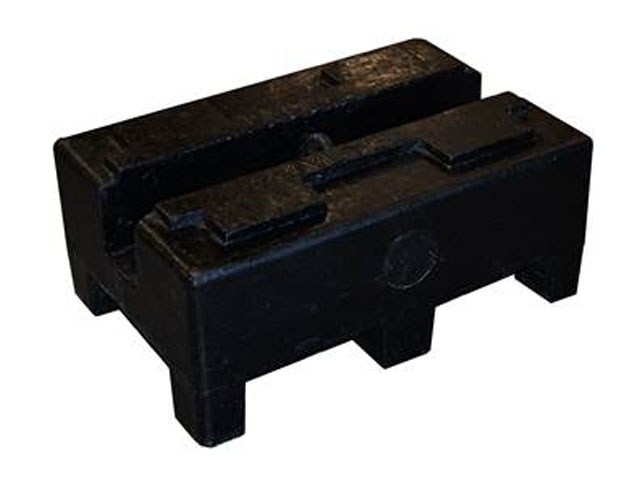
The basic working logic of cast iron weights in elevator operation follows the most fundamental principles of mechanical force balance and traction transmission, forming a mutually constrained and coordinated operating structure with elevator cars, steel rope sets, traction machines, and guide rail systems. Each set of cast iron weights used for elevator configuration is designed and manufactured according to the fixed self-weight of the elevator car and the conventional load range of passenger or freight transportation in actual use. The overall mass of the cast iron weight group is scientifically calculated to match the combined weight of the empty elevator car and a reasonable proportion of the rated carrying load, ensuring that the two ends of the traction rope wound on the traction sheave maintain a relatively balanced tension state under most daily operating conditions. When the elevator car carries passengers or goods and runs upward, the cast iron weight installed in the counterweight frame moves downward along the fixed guide rails, and its own gravity effectively offsets the upward pulling force required by the car, so the drive motor only needs to output a small amount of extra power to complete the smooth lifting of the car without bearing the full weight of the car and its internal load. On the contrary, when the elevator car runs downward with loads, the cast iron weight rises synchronously, and the gravitational potential energy generated during the weight falling process also assists the stable descending operation of the car, avoiding excessive reliance on the elevator braking system to control the descending speed and effectively reducing the frequent working intensity of the braking device during long-term operation.
The reason why cast iron has become the preferred and most widely used material for manufacturing elevator counterweight weights lies in its unique physical properties, stable structural characteristics, and good adaptability to the long-term working environment of elevator shafts, which cannot be replaced by many other common metal or non-metal materials. Cast iron materials have high natural density and stable mass distribution per unit volume, which enables the counterweight to achieve the required balanced mass with a relatively compact overall structural volume, perfectly adapting to the limited installation space inside elevator shafts and avoiding the problem of excessive space occupation that may be caused by low-density materials under the same weight demand. In addition, cast iron has excellent structural rigidity and compression resistance, and it will not produce obvious deformation, structural distortion or mass loss even after years of long-term reciprocating up and down movement, long-term static pressure and occasional slight mechanical vibration in the elevator shaft. Unlike some lightweight alloy materials that are prone to structural fatigue after long-term frequent movement or composite materials that are easily affected by environmental humidity and temperature changes, cast iron can maintain stable physical properties and structural integrity in the closed and relatively stable internal environment of elevator shafts all year round, resisting the subtle impact and friction generated by daily elevator operation, and ensuring that the counterweight mass balance effect remains consistent throughout the long service cycle of the elevator equipment.
The production and casting process of cast iron elevator weights follows mature and standardized casting and post-processing procedures, focusing on ensuring the uniformity of internal material structure, the accuracy of overall dimension specification and the flatness of external assembly contact surfaces, so as to meet the precise assembly and long-term safe operation requirements of elevator mechanical systems. In the initial casting stage, raw materials are proportioned and smelted according to stable material ratio standards, and the molten iron is poured into prefabricated professional molds made according to elevator counterweight design drawings. The internal structure of the molds is precisely processed to ensure that each cast iron weight has a regular shape, consistent wall thickness and uniform internal density after casting and forming, avoiding internal hollow areas, trachoma or structural density unevenness that may affect the balance effect. After the casting is completed and the cast iron weight is naturally cooled and shaped, strict surface treatment and finishing processes are carried out, including removing surface casting burrs, smoothing sharp edges and corners, and polishing the contact surfaces matched with the counterweight frame. These post-processing steps are crucial to prevent the cast iron weight from generating extra friction and vibration during the sliding process along the guide rails, and also to avoid abnormal wear and collision between adjacent weights or between weights and the counterweight frame during long-term operation.
Different types of elevators configured for different building scenarios and usage needs are matched with cast iron weights of different specifications, overall dimensions and combined mass grades, realizing targeted balance configuration for diversified elevator operation scenarios. Residential building passenger elevators, which need to carry daily household residents and run frequently with small load changes for a long time, are equipped with cast iron weight groups with stable conventional mass matching, focusing on ensuring the smoothness of low-frequency start and stop and the comfort of riding experience. Commercial complex and office building elevators, which face large passenger flow, frequent peak operation and frequent load changes between full load and no load, adopt cast iron weight combinations with more precise mass calibration, ensuring that the elevator can maintain force balance and stable operation state under various complex load conditions, and reduce the impact of frequent start and stop on the drive system and braking parts. Freight elevators used in industrial plants, logistics warehouses and large shopping malls need to bear heavy goods and have large load fluctuation range, so they are equipped with cast iron weights with thicker structural thickness and higher overall mass, meeting the balance demand under heavy-load operation conditions and ensuring the structural stability of the counterweight system during heavy-load lifting and lowering.
The installation and assembly process of cast iron weights in elevator counterweight systems also follows scientific and standardized construction requirements, and reasonable assembly and fixing methods directly affect the overall balance effect and operation safety of the elevator. All cast iron weights are neatly and stably stacked inside the special counterweight frame made of sturdy steel structures, and fixed with reliable fixing parts to prevent individual weights from shifting, loosening or colliding with each other during the high-speed up and down movement of the elevator. The overall center of gravity of the assembled cast iron weight group is kept in the middle position of the counterweight frame, ensuring that the stress on the two sides of the counterweight guide rail is uniform during operation, avoiding unilateral friction and eccentric wear caused by deviation of the center of gravity. After the assembly is completed, professional debugging and calibration work will be carried out to fine-tune the total mass of the cast iron weight group according to the actual operating parameters of the elevator, so that the tension balance of the traction rope reaches the optimal state, the motor output power is kept within a reasonable energy-saving range, and the elevator can achieve accurate floor leveling after each stop, avoiding the problem of uneven car floor height affecting passenger getting on and off safety and riding experience.
In terms of long-term energy consumption control and mechanical component protection, the application of cast iron elevator weights brings obvious and lasting positive effects to the entire elevator operation system. By balancing most of the car and load weight, the working load of the elevator drive motor is effectively reduced, the current required for each operation cycle is lowered, and the daily long-term operation energy consumption of the elevator is reasonably controlled, which helps building property management departments reduce the daily operation and maintenance energy cost of vertical transportation equipment. At the same time, due to the balanced protection of the cast iron weight, the traction sheave, traction steel rope, bearing assembly and braking system of the elevator do not need to bear excessive mechanical tension and braking pressure for a long time, the wear degree of various core mechanical parts is significantly reduced, the frequency of equipment failure and parts replacement is lowered, and the overall maintenance cost of elevator long-term operation is effectively saved. The stable mechanical balance environment created by cast iron weights also reduces the vibration and jitter of the elevator during operation, optimizes the running smoothness of the car, and improves the overall riding comfort for passengers and the safety of goods transportation for freight elevators.
Daily maintenance and regular inspection of cast iron elevator weights are simple and convenient, adapting to the routine equipment management rhythm of elevator operation and maintenance personnel, and hardly bringing extra complicated maintenance work. The main daily inspection contents include checking whether the fixing state of the weights in the counterweight frame is firm, whether there is looseness or displacement of individual weights, whether the surface of the weights has serious corrosion or abnormal wear, and whether the contact parts between the weights and the frame are kept smooth and clean. Since cast iron materials have strong corrosion resistance and structural stability under the conventional working conditions of elevator shafts, regular simple dust removal and surface anti-rust maintenance can maintain the good working state of the weights for a long time. Unlike some precision electronic components that need frequent calibration and maintenance, cast iron weights belong to durable mechanical structural parts with stable performance, and their core balance performance can remain unchanged for a long time as long as the overall structure is intact and the fixing is firm, providing continuous and reliable basic guarantee for elevator operation.
With the continuous development of modern building construction technology and vertical transportation industry, the design and production technology of cast iron weights for elevators is also constantly optimized and upgraded along with the iteration of elevator equipment technology. Modern elevator design pays more attention to energy-saving operation, stable performance and long service life, which further promotes the continuous improvement of the casting process and structural design of cast iron weights. The optimized cast iron weight products have more reasonable structural design, more accurate mass control and more stable overall performance, can better adapt to the operation needs of new high-rise building elevators, high-speed elevators and special-purpose elevators, and maintain the core balance function unchanged under more complex operating conditions. As the most basic and core balancing component of traction elevators, cast iron weights will always occupy an irreplaceable important position in the vertical transportation field. Although they have no gorgeous appearance and no direct contact with passengers, they silently bear the key balancing task in the elevator operation process, escorting the safe, stable, energy-saving and long-term reliable operation of various elevator equipment in all kinds of buildings, and becoming an important hidden cornerstone supporting the normal operation of modern urban vertical transportation systems.
Cast Iron Weight For Elevator
https://www.veidtweighing.com/cast-iron-weights.html
Post Date: May 4, 2026
https://www.supplier-manufacturer.com/cast-iron-weight/cast-iron-weight-for-elevator.html

![Calibration Weight Exporter]()
Calibration Weight Exporter
In the intricate ecosystem of global industrial manufacturing, scientific research, and commercial trade, consistent and accurate weight measurement serves as a fundamenta…![10kg Standard Weight]()
10kg Standard Weight
In every sector that relies on reliable mass measurement to maintain operational stability, product consistency, and data credibility, the 10kg standard weight stands as a…![Crane Scales]()
Crane Scales
In modern industrial production and material handling processes, accurate weight measurement serves as a fundamental guarantee for operational standardization, safety mana…![What is Standard Weight]()
What is Standard Weight
In the fields of metrological inspection and industrial weighing, standard weights are core basic instruments that maintain the unification of mass value and ensure the ac…![Printer Scales]()
Printer Scales
A printer scale represents a sophisticated integrated device that merges electronic weighing technology with embedded printing functionality, serving as a fundamental tool…