Purposes of Cast Iron Weight
Cast iron weights stand as one of the most fundamental and widely utilized weighted components across industrial, commercial, residential, and recreational sectors worldwide, earning long-term practical reliance due to their stable physical properties, solid structural performance, and adaptable functional characteristics. For decades, these robust weighted units have been crafted through mature casting processes, featuring consistent density, strong resistance to external physical damage, and reliable long-term performance under diverse environmental conditions, making them an indispensable basic component in daily operation and functional maintenance of various equipment, production processes, and daily life scenarios. Unlike other lightweight or fragile weighted materials that are prone to deformation, density fluctuation, or surface damage after long-term use, cast iron maintains steady mass stability even under harsh working conditions such as continuous mechanical vibration, outdoor temperature changes, and frequent handling and placement, which lays a solid foundation for it to fulfill a variety of core practical purposes in different fields. The core value of cast iron weights lies not only in their simple mass-bearing function, but also in their ability to provide stable reference mass, maintain mechanical balance, enhance structural stability, realize load simulation, and support standardized operation of various production and daily scenarios, covering almost all links that require accurate weight matching, stable counterbalance, and reliable load bearing in modern society.
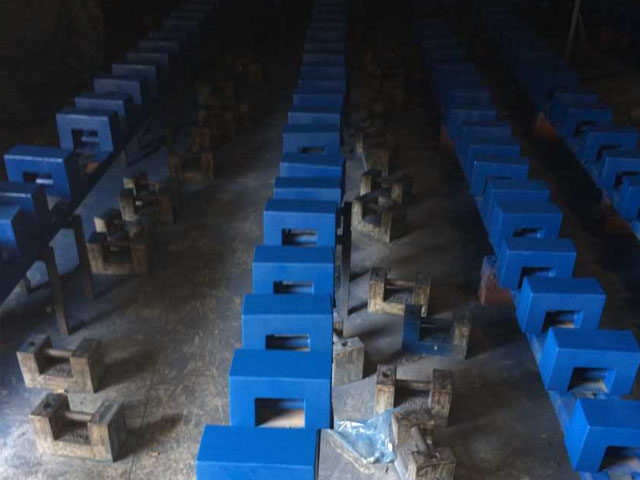
One of the most primary and widely recognized purposes of cast iron weights is to serve as reliable reference mass standards for the calibration and routine verification of various weighing equipment and measuring instruments. In all walks of life that rely on accurate weight measurement for production transactions, quality control, and standardized operation, the accuracy of weighing tools directly affects the fairness of commodity circulation, the stability of product quality, and the compliance of production operation processes, and regular calibration of these weighing tools with stable standard weights becomes an essential daily work. Cast iron weights are perfectly suited for this core work because their overall mass remains relatively constant over time, with little mass loss caused by surface wear, oxidation, or long-term placement, and their overall structural shape is not easy to deform under normal use, ensuring that the reference mass provided remains consistent for a long period. In industrial production workshops, material distribution centers, port logistics hubs, and wholesale and retail trading markets, various large and medium-sized weighing devices including floor scales, platform scales, truck scales, and batching scales all need regular calibration with cast iron weights. Before each formal use or after long-term continuous operation and external collision vibration, these weighing devices may have slight deviation in measurement data due to mechanical fatigue or sensor sensitivity changes, and placing cast iron weights with fixed nominal mass on the weighing surface can effectively check whether the measurement data of the weighing equipment is within the normal reasonable range and make subtle adjustments to ensure that subsequent weighing work can reflect the real mass of measured goods and materials. This calibration function is not limited to large industrial weighing equipment; small and medium-sized cast iron weights are also commonly used for daily inspection of small electronic balances and mechanical balances in factory quality inspection rooms, agricultural purchasing stations, and daily commodity sales points, ensuring that every link from raw material procurement to finished product sales can maintain accurate weight measurement order and avoid measurement errors affecting production benefits and transaction fairness.
Beyond basic weighing instrument calibration, cast iron weights play a vital role in mechanical balance adjustment and equipment operation stability maintenance across machinery manufacturing, mining operations, marine engineering, and transportation equipment operation. All kinds of mechanical equipment in the working process will produce continuous vibration and centrifugal force due to the rotation of internal parts, reciprocating operation of components, and uneven load distribution, and long-term unbalanced operation will not only lead to increased mechanical wear and reduced service life of parts, but also cause equipment operation deviation, reduced work efficiency, and even potential safety hazards in serious cases. Installing and configuring appropriate cast iron weights as counterweights can effectively offset the unbalanced force generated during mechanical operation, keep the overall center of gravity of the equipment in a stable state, and ensure that all mechanical parts operate smoothly within the designed track and range. In large mining machinery and engineering construction equipment, for example, various excavating equipment, lifting machinery, and crushing equipment bear uneven material load during operation, and the auxiliary cast iron weights installed on the fuselage can balance the stress generated during equipment operation, reduce vibration amplitude during mechanical movement, and avoid equipment tilting or shaking affecting construction progress and operation safety. In ship and watercraft operation and maintenance work, cast iron weights are used for hull balance debugging and draft adjustment, helping the ship maintain a stable floating state on the water surface, avoid hull tilt caused by uneven cargo loading and personnel distribution, and ensure the stability and safety of navigation and berthing processes. In the production and assembly process of automobile and transportation vehicles, cast iron weights are also used for chassis balance debugging and vehicle load distribution testing, helping manufacturers optimize vehicle body stress structure, ensure stable driving performance of vehicles on different road conditions, and reduce jitter and deviation during driving. The good pressure resistance and impact resistance of cast iron materials enable these weights to withstand long-term vibration and mechanical impact in the equipment interior without mass change or structural damage, maintaining long-term effective balance adjustment effect and reducing frequent maintenance and replacement frequency of equipment counterbalance parts.
Cast iron weights also serve an important practical purpose in structural stabilization and wind resistance anti-tilting reinforcement for various outdoor facilities, temporary engineering structures, and daily fixed equipment. Many outdoor public facilities, temporary activity facilities, and industrial auxiliary equipment are placed in open-air environments without fixed foundation fixation, and are easily affected by natural factors such as wind force, external impact, and ground vibration, leading to displacement, tilting, or even collapse, which not only affects normal use function, but also brings potential safety risks to surrounding personnel and property. Placing fixed cast iron weights at the bottom or around these facilities can increase the overall base weight of the facilities, lower the center of gravity of the whole structure, and effectively enhance the overall stability and anti-interference ability of the facilities against external natural and human factors. In outdoor temporary activity venues, mobile exhibition booths, temporary stage facilities, and outdoor advertising support frames, cast iron weights are widely used as fixed counterweights to prevent these light temporary structures from being blown over by strong wind or displaced by accidental collision, ensuring the smooth progress of outdoor activities and the safety of on-site personnel. In agricultural production scenarios, some mobile agricultural processing equipment, temporary breeding facility brackets, and outdoor irrigation equipment also rely on cast iron weights for fixed stabilization, avoiding equipment displacement caused by farmland wind, field operation vibration, and livestock collision, and ensuring the continuous and stable progress of agricultural production work. In residential and daily life scenarios, some outdoor sunshade facilities, mobile garden facilities, and household outdoor leisure equipment also use small and medium-sized cast iron weights to enhance placement stability, preventing equipment tilting and damage caused by weather changes and daily movement. The high overall density and heavy unit mass of cast iron make these weights occupy a small placement space but provide obvious stabilizing effect, and they are not easy to be moved by external slight force, with good weather resistance, able to maintain stable weight and structural performance in long-term outdoor sun exposure and rain erosion, without frequent replacement and maintenance.
Recreational fitness and physical strength training represent another major application field and important purpose of cast iron weights, which are widely used in home fitness spaces, commercial gymnasiums, and professional physical training venues to meet the needs of daily strength exercise, muscle training, and physical fitness improvement for different groups of people. Cast iron weight plates and matched cast iron counterweight blocks become essential basic equipment for strength training due to their stable mass, solid structure, and suitable hardness and durability. In various strength training processes such as weightlifting training, bodybuilding shaping, and daily muscle endurance exercise, trainers can freely match and combine cast iron weights according to their own physical fitness and training goals, realizing gradual load increase and scientific progressive training, which helps effectively exercise muscle strength, enhance physical coordination, and improve overall physical fitness. Commercial gymnasiums need to bear frequent use and high-strength training of a large number of trainers every day, and cast iron weights can withstand long-term repeated handling, stacking, and conventional training use without deformation, cracking, or mass change, maintaining stable training load effect for a long time. For family fitness users, small and medium-sized cast iron weights are easy to store and carry, with simple and durable structure, suitable for daily home strength training, without complex maintenance and frequent replacement, meeting the daily fitness needs of ordinary families. Different from other fitness weight accessories made of light materials, cast iron fitness weights have uniform mass distribution and stable load feeling during use, which can provide accurate training load feedback for trainers, help users better control training intensity, avoid training accidents caused by unbalanced load, and ensure the safety and effectiveness of fitness training process. Whether it is basic squat, bench press, deadlift training or muscle exercise through various plate-loaded fitness equipment, cast iron weights can provide stable and reliable load support, becoming an indispensable basic guarantee for scientific fitness and long-term physical training.
In industrial production processing, material batching and product quality detection links, cast iron weights undertake the important purpose of load simulation, material proportioning reference and production process parameter verification, supporting the standardized and orderly development of industrial production and processing work. In chemical production, food processing, building materials manufacturing and other industries that need accurate material batching and proportioning, production personnel need to regularly check the accuracy of batching weighing systems to ensure that the proportion of various raw materials used in production meets production process requirements, and cast iron weights are used to simulate conventional production material load to test the operation accuracy and batching stability of batching equipment. Accurate material proportioning is directly related to the quality stability and performance consistency of finished products, and the use of cast iron weights to regularly verify batching equipment can effectively avoid product quality problems caused by inaccurate batching ratio, reduce production waste and unqualified product rate, and improve overall production efficiency and product qualification rate. In building materials production and engineering component processing, cast iron weights are also used for load-bearing performance testing of building materials and processed parts, simulating the load pressure that products may bear in actual use, detecting the structural stability and pressure resistance of products, ensuring that the produced building materials and engineering components meet basic use safety requirements. In product packaging and finished product inspection links of various processing enterprises, cast iron weights are used to check whether the weighing data of product packaging meets the specified standards, avoiding insufficient product net weight affecting product sales credibility and market reputation, and ensuring that enterprise production and product sales operate in a standardized and compliant manner. The stable mass and strong durability of cast iron make these weights suitable for long-term repeated use in complex industrial production environments, adapting to high-intensity and high-frequency production detection and calibration work needs, and providing reliable basic support for standardized production and quality control of enterprises.
In agricultural production, rural daily operation and grass-roots commodity trading scenarios, cast iron weights maintain simple and practical basic functions, serving the needs of agricultural material weighing, grain purchasing and selling, and daily rural trading measurement. Agricultural production involves a large number of links such as grain harvesting, seed purchasing, fertilizer distribution, and agricultural by-product sales, all of which require accurate weight measurement to ensure the fairness of agricultural product transactions and the rational distribution of agricultural materials. Rural purchasing stations, farmers' markets and grass-roots trading points often use various types of cast iron weights to calibrate mechanical weighing scales and small electronic weighing equipment, ensuring accurate weighing data in grain purchasing, fertilizer distribution and agricultural by-product sales processes, protecting the legitimate rights and interests of farmers and traders, and maintaining the stable order of rural commodity trading. In addition, in agricultural irrigation equipment fixing, farmland temporary protection facility stabilization, and rural mobile breeding equipment fixing work, cast iron weights are also used as stabilizing counterweights to ensure the normal operation of agricultural production equipment and facilities, and provide basic guarantee for the smooth progress of agricultural planting, breeding and harvesting work. The simple structure, durable performance and low maintenance demand of cast iron weights are very suitable for the complex use environment and simple daily operation needs in rural areas, not affected by rural dust, humidity and other environmental factors, and can maintain good use effect for a long time, becoming an essential practical tool in rural production and life.
Overall, cast iron weights are not simple auxiliary weighted components with single function, but multi-purpose practical supplies integrating measurement calibration, mechanical balance, structural stabilization, fitness training and production detection, covering multiple fields of industrial production, commercial transactions, engineering construction, fitness recreation and agricultural life. Their unique material advantages of stable density, solid structure, strong durability and wide environmental adaptability make them always maintain reliable use effect in various complex and different use scenarios, and their diverse practical purposes meet the basic operation needs of all walks of life for accurate weighing, stable balance and safe fixation. With the continuous development of modern industrial production, commercial trade and daily life operation, the basic role and various practical purposes of cast iron weights will continue to be valued and applied, maintaining an irreplaceable important position in basic measurement, mechanical operation and daily stable use links of all industries.
Purposes of Cast Iron Weight
https://www.veidtweighing.com/cast-iron-weights.html
Post Date: May 4, 2026
https://www.supplier-manufacturer.com/cast-iron-weight/purposes-of-cast-iron-weight.html

![Astm Class Laboratory Weight]()
Astm Class Laboratory Weight
In every professional laboratory environment where accurate mass measurement serves as the foundational basis for experimental research, quality inspection, and industrial…![25kg Stainless Steel Weight]()
25kg Stainless Steel Weight
In the intricate framework of industrial operation, daily commercial measurement, and equipment debugging work, standard weights serve as one of the most fundamental and i…![10kg Stainless Steel Metrology Inspection Calibration Weight]()
10kg Stainless Steel Metrology Inspection Calibration Weight
In the intricate framework of modern measurement and metrology operations, standardized mass references serve as the foundational guarantee for consistent and accurate wei…![5kg Stainless Steel Weight]()
5kg Stainless Steel Weight
A 5kg stainless steel weight stands as one of the most fundamental and widely utilized weighing and balancing tools across countless professional sectors, daily operationa…![Economical Stainless Steel M1 Class Calibration Weight]()
Economical Stainless Steel M1 Class Calibration Weight
In modern industrial production, laboratory testing, and daily metrological verification work, accurate weighing results serve as the fundamental guarantee for product qua…