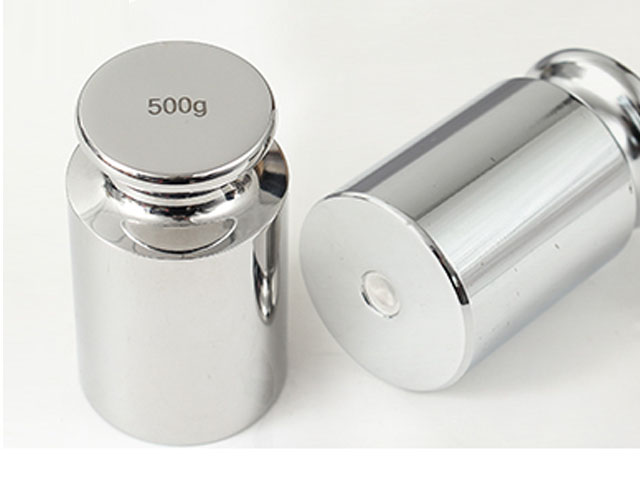
10kg Stainless Steel Metrology Inspection Calibration Weight
In the intricate framework of modern measurement and metrology operations, standardized mass references serve as the foundational guarantee for consistent and accurate weighing results across diverse professional scenarios. The 10kg stainless steel metrology inspection calibration weight stands as a fundamental tool in this system, designed to deliver stable, repeatable mass reference data for the calibration, verification, and routine inspection of various weighing instruments. Crafted specifically for general industrial measurement, laboratory metrology, and commercial weighing verification scenarios, this weight integrates reliable material performance and precise dimensional processing to meet the daily and periodic measurement standardization needs of multiple industries, becoming an indispensable component in maintaining the uniformity of mass measurement values.
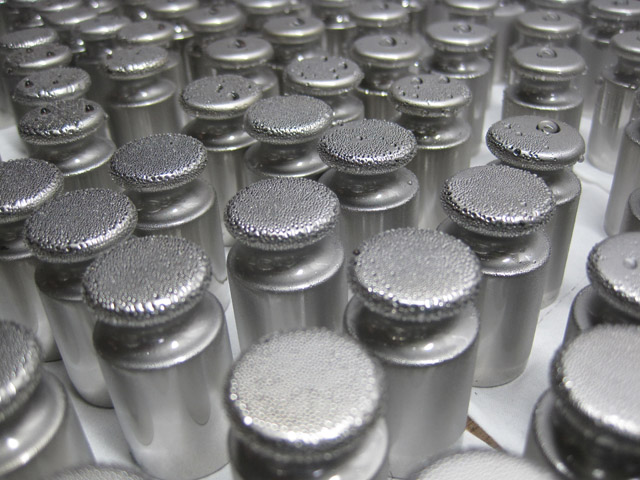
The selection of stainless steel as the core manufacturing material defines the core performance attributes of this 10kg calibration weight, laying a solid foundation for its long-term stable use in complex working environments. Unlike ordinary metal materials that are prone to oxidation, rust, and surface deterioration after long-term exposure to air, moisture, or mild corrosive substances, stainless steel features excellent chemical stability and surface durability. Its dense material structure effectively resists daily oxidation, water vapor erosion, and minor contact corrosion generated in industrial production and laboratory environments, preventing surface quality changes that may affect mass accuracy. This stable material characteristic ensures that the effective mass of the weight remains consistent over extended service cycles, avoiding frequent measurement deviations caused by material aging or surface damage. Meanwhile, stainless steel possesses good hardness and structural rigidity, which can withstand slight friction, conventional handling, and routine placement impacts in daily use, reducing the probability of surface wear, dents, and deformation that would compromise measurement precision.
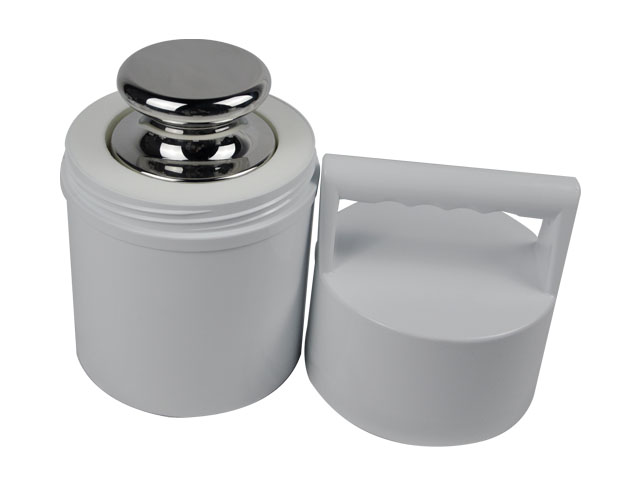
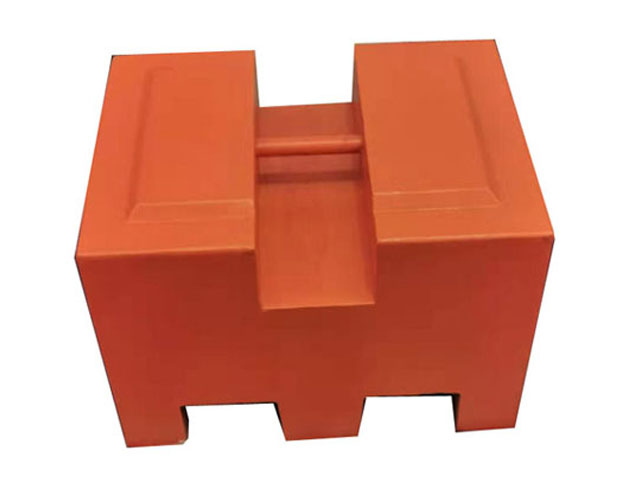
The structural design of the 10kg stainless steel calibration weight fully complies with conventional metrology usage habits and operational ergonomics, balancing structural stability and operational convenience. The overall shape adopts a regular block structure with smooth and flat overall surfaces and neat edge transitions, eliminating irregular raised or recessed structures that may accumulate dust and impurities. The standardized structural design not only ensures uniform stress distribution during placement and use but also simplifies daily cleaning and maintenance work. Many conventional versions are equipped with integrated handle structures, which are seamlessly connected with the weight body without affecting the overall mass balance and structural stability. This auxiliary structure enables operators to complete handling, placement, and replacement operations safely and conveniently during equipment calibration and inspection, avoiding operational errors or accidental damage to the weight caused by improper gripping. The overall dimensional proportion is precisely controlled during processing, ensuring stable placement on the weighing platform of various balances and scales, preventing tilting and displacement during calibration operations, and further ensuring the stability of measurement reference conditions.
The core functional value of the 10kg stainless steel calibration weight lies in providing accurate and reliable mass reference standards for the calibration and inspection of weighing equipment of different specifications. All weighing instruments, including electronic platform scales, precision balances, industrial weighing scales, and commercial metering scales, will produce subtle measurement deviations after long-term operation, frequent use, or environmental changes such as temperature fluctuation and vibration. These deviations will gradually accumulate and affect the accuracy of weighing results, thereby interfering with production detection, experimental data recording, and commercial transaction measurement. The 10kg calibration weight serves as a fixed mass reference source. By placing it on the weighing equipment to be detected, operators can compare the equipment’s display data with the standard mass value of the weight, intuitively judging whether the weighing instrument has measurement errors, and completing parameter debugging and error correction accordingly. This standardized calibration and inspection process effectively eliminates systematic errors of weighing equipment and ensures that all measurement data obtained by the instrument is true and valid.
This type of calibration weight boasts extensive application adaptability, covering commercial measurement, industrial production, laboratory metrology, and logistics detection fields. In commercial trading scenarios such as supermarkets, marketplaces, and retail stores, various weighing devices used for commodity pricing and transaction measurement require regular routine inspection and calibration. The 10kg weight, with its moderate mass specification, is suitable for calibrating medium-capacity commercial weighing scales, ensuring the fairness and accuracy of daily commodity weighing transactions and maintaining the standardized order of commercial measurement. In industrial production environments, many production processes rely on precise weighing control, including raw material batching, product quality detection, and semi-finished product weight screening. Regular calibration of production line weighing equipment with the 10kg stainless steel weight can stabilize the accuracy of production measurement links, reduce product quality fluctuations caused by weighing deviations, and improve the overall consistency of industrial product quality.
In professional laboratory metrology environments, the 10kg calibration weight undertakes the basic work of daily verification of medium and large precision weighing instruments. Laboratory measurement work requires high repeatability and stability of data, and any minor deviation of weighing equipment will affect the accuracy of experimental results and test data. The stable mass performance of stainless steel materials ensures that the weight will not produce abnormal mass changes due to laboratory temperature and humidity changes, providing a reliable reference basis for daily instrument self-inspection and periodic standardized detection. In logistics and warehousing industries, weighing equipment used for cargo weight statistics and inventory management also needs regular calibration. The 10kg specification can meet the daily inspection needs of most conventional logistics weighing scales, ensuring the accuracy of cargo weight measurement and providing reliable data support for logistics transportation scheduling and inventory accounting.
Standardized use and scientific maintenance are key to maintaining the long-term precision and service life of the 10kg stainless steel calibration weight. In daily operation, operators need to follow standardized metrology operation procedures, avoid direct contact between the weight surface and sharp hard objects, and prevent scratches and impact deformation on the weight surface that may affect mass accuracy. During the calibration process, the weight should be placed gently and stably on the center of the weighing platform to avoid lateral sliding and collision, ensuring that the calibration environment is flat, stable, and free from strong air flow and vibration interference. After each use, the surface of the weight should be cleaned with a soft, dry tool to remove surface dust, stains, and residual impurities, preventing long-term adhesion of dirt from causing surface oxidation or local thickness changes.
For daily storage, the calibration weight needs to be placed in a dry, clean, and constant-temperature storage space, avoiding long-term placement in high-humidity, high-temperature, or corrosive gas environments. Reasonable storage conditions can effectively prevent material performance changes and surface aging, maintaining the long-term stability of the weight’s standard mass. In addition, long-term use will inevitably produce subtle wear. Regular manual inspection of the weight’s surface integrity and structural stability is required, and abnormal conditions such as surface scratches, deformation, and rust should be recorded in a timely manner to arrange professional detection and correction, ensuring that it always meets the basic requirements of metrology reference work.
From the perspective of metrology system operation, the popularization and standardized use of 10kg stainless steel calibration weights play a vital role in unifying mass measurement values in various industries. Measurement accuracy is the basis of industrial production, commercial transactions, and scientific research. Unstandardized weighing data will lead to chaotic production parameters, inaccurate transaction measurement, and distorted experimental data, affecting the orderly development of various industries. As a common and versatile standard mass tool, this calibration weight can be matched with most medium-capacity weighing equipment on the market. Its stable performance and convenient operation make it widely applicable to grassroots daily calibration and inspection work, filling the demand gap for conventional mass reference tools in general scenarios.
Compared with calibration weights made of other materials, stainless steel products show obvious advantages in comprehensive cost and environmental adaptability. Cast iron weights are prone to rust and have poor surface stability, requiring frequent maintenance and replacement in humid environments, while some alloy materials with high precision are costly and not suitable for large-scale daily conventional calibration work. The 10kg stainless steel calibration weight balances performance and applicability, with moderate maintenance costs and strong environmental adaptability. It can maintain stable working performance in most conventional working environments, without frequent replacement due to material failure, reducing the overall use cost of enterprise and institutional metrology work while ensuring measurement accuracy.
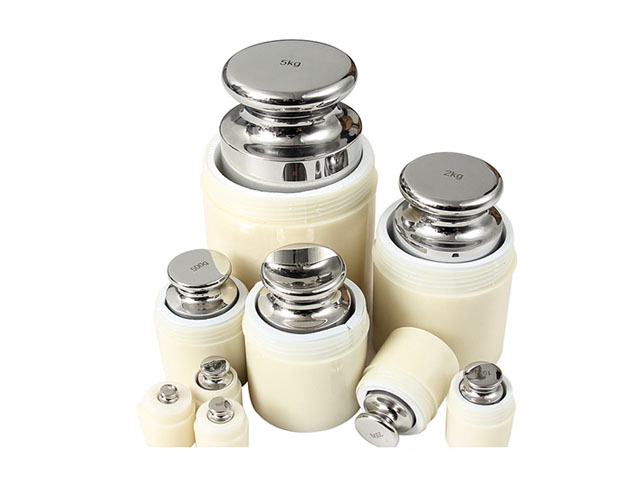
In practical metrology work, the 10kg stainless steel calibration weight is often used in conjunction with weights of other specifications to form a complete mass calibration system, meeting the diversified calibration needs of weighing equipment with different ranges and accuracies. For medium-range weighing instruments that often involve 10kg threshold measurement, this standard weight becomes the core reference tool for fixed-point calibration and linear detection. By conducting multi-point calibration and verification with matching weights, the overall linearity and stability of weighing equipment can be comprehensively optimized, further improving the consistency and reliability of equipment measurement data in full-range use.
With the continuous improvement of industrial production standardization, commercial measurement standardization, and laboratory scientific research precision requirements, the importance of basic metrology tools such as stainless steel calibration weights has become increasingly prominent. The 10kg specification, as one of the most widely used mass reference specifications in conventional metrology work, adapts to the mainstream weighing range needs of most industries. Its reliable material performance, standardized structural design, and flexible and convenient operation mode enable it to efficiently complete daily calibration, periodic inspection, and error correction work of weighing equipment, providing basic technical support for the standardized operation of measurement links in various fields.
In conclusion, the 10kg stainless steel metrology inspection calibration weight is a practical and stable basic metrology tool. Its excellent material durability, standardized structural design, and accurate mass reference performance support the stable operation of weighing measurement work in commerce, industry, laboratory, logistics and other fields. Through standardized use and scientific maintenance, it can maintain long-term and stable working performance, continuously provide accurate mass reference standards for various weighing equipment, help all walks of life standardize measurement data, reduce measurement errors, and provide solid basic guarantee for production standardization, transaction fairness and scientific research accuracy.
10kg Stainless Steel Metrology Inspection Calibration Weight
https://www.veidtweighing.com/ssweight/StainlessSteelWeight
Post Date: Jun 7, 2026

![Stainless Steel Calibration Weight For School Laboratory Teaching]()
Stainless Steel Calibration Weight For School Laboratory Teaching
Stainless steel calibration weights are fundamental teaching tools tailored for school laboratory science courses, covering physics, chemistry, and general science experim…![Standard Weight For Counting Scales]()
Standard Weight For Counting Scales
In modern industrial production, inventory management, and precision manufacturing, counting scales have become indispensable tools for quantifying bulk small parts, compo…![Standard Weight For Laboratory Balances]()
Standard Weight For Laboratory Balances
In modern laboratory scientific research, industrial detection, and analytical testing, the accuracy and reliability of weighing data serve as the fundamental guarantee fo…![Forklift Scale Calibration Standard Weight]()
Forklift Scale Calibration Standard Weight
Forklift scale calibration with standard weights serves as a core operational practice in industrial logistics, manufacturing, and warehouse management, ensuring that onbo…![500g Calibration Weight For Balance Scale]()
500g Calibration Weight For Balance Scale
In every industry and research field that relies on accurate mass measurement, maintaining the reliability of balance scales is a fundamental prerequisite for consistent a…