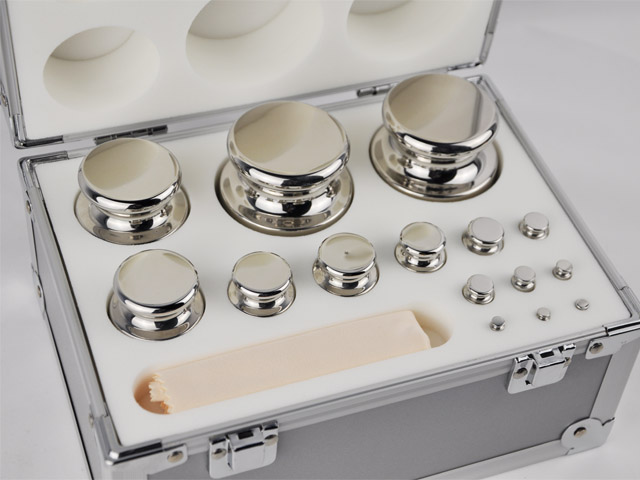
Cast Iron Weight For Precision Scales
Precision weighing forms the foundational backbone of countless operational workflows across industrial production, laboratory research, commercial transaction management, and quality control processes, where consistent and reliable measurement data directly determines operational efficiency, product uniformity, and compliance with routine operational norms. At the core of maintaining the stable performance and dependable reading output of all types of precision scales, cast iron weights stand out as essential foundational reference tools that have maintained enduring practical value through decades of industrial development and technological iteration. Unlike auxiliary weighing accessories that only serve temporary functional purposes, these cast iron reference weights are engineered specifically to deliver steady, repeatable mass reference points, enabling regular scale verification, routine calibration adjustment, and daily operational testing for precision weighing equipment of all sizes and functional configurations. The inherent physical properties of cast iron, paired with refined casting and surface treatment processes, make these weights uniquely suited to meet the practical demands of long-term frequent use in diverse working environments, striking a balanced combination of structural stability, consistent mass retention, and convenient operational handling that few other common weighting materials can match effectively.
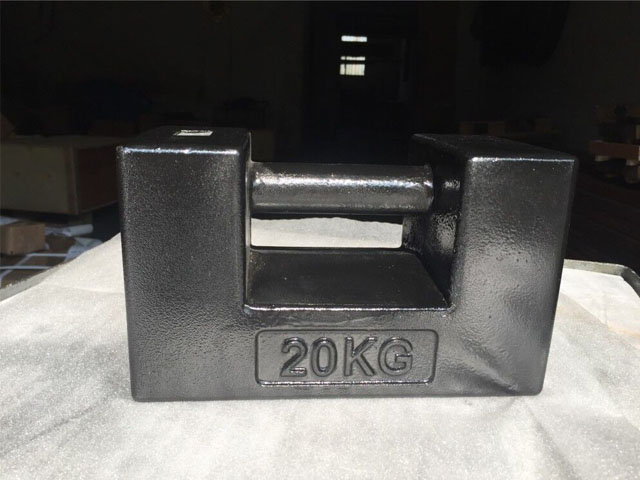
The core material composition of cast iron weights tailored for precision scale use is carefully selected gray cast iron, a material renowned for its uniform internal density, excellent structural rigidity, and reliable casting performance that lays a solid foundation for long-term mass stability. This specific type of cast iron features a compact internal molecular structure with minimal internal porosity and negligible material shrinkage after the casting process, ensuring that each finished weight maintains a consistent internal mass distribution without uneven density deviations that could affect weighing accuracy during use. The density characteristics of qualified gray cast iron provide reliable inherent mass consistency, allowing each weight to retain its set nominal mass steadily even after prolonged placement, repeated handling, and regular use in different working scenarios. Beyond mass stability, the material also possesses strong natural vibration resistance and structural compression resistance, two key attributes that play a vital role in practical precision weighing work. In busy industrial workshops, laboratory testing rooms, and on-site field weighing locations, external mechanical vibrations, minor accidental impacts, and continuous environmental changes are unavoidable; cast iron’s natural ability to withstand such external influences prevents subtle structural deformation or internal material shifts that could alter the weight’s effective mass over time, ensuring every calibration and scale verification operation remains accurate and valid.
The production and manufacturing process of cast iron weights for precision scales follows standardized casting and finishing procedures designed to eliminate dimensional deviations, surface defects, and mass inconsistencies that could interfere with precision weighing work. The entire production workflow starts with precise raw material proportioning and high-temperature smelting to ensure the cast iron molten liquid maintains uniform composition and consistent density throughout every production batch, avoiding material impurities or component unevenness that might compromise weight performance. The molten cast iron is then poured into professionally manufactured molds with precise dimensional specifications, allowing the formation of weight blanks with standard external shapes, regular geometric dimensions, and integrated structural integrity. After cooling and initial demolding, each weight blank undergoes strict preliminary trimming to remove excess casting burrs, smooth sharp edge corners, and eliminate surface cracks, pits, or uneven protrusions that could affect stable placement on precision scale platforms. Every surface of the finished weight is polished to achieve a smooth, flat finish that ensures full contact with scale weighing surfaces during use, preventing tilting or unstable positioning that might lead to inaccurate weighing feedback. A key structural design incorporated into most cast iron precision weights is a reserved adjusting cavity on the upper part of the weight body, a practical structural feature that allows fine mass trimming during final finishing. This cavity enables subtle mass correction to align each weight closely with its nominal mass standard, addressing minor mass deviations generated during the casting process without altering the overall structural stability or external shape of the weight.
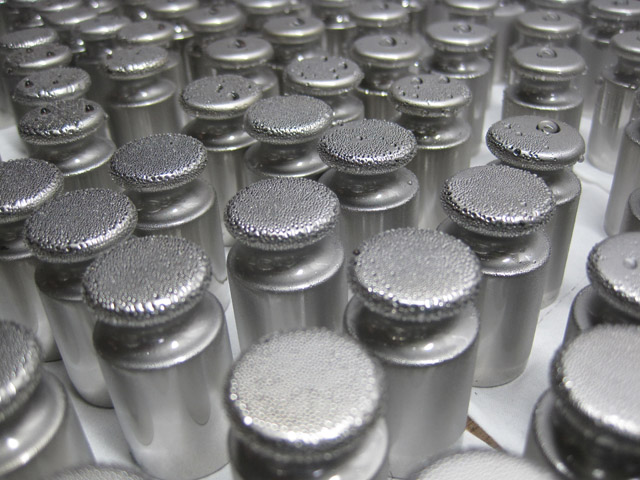
Surface protection treatment is an indispensable production step for cast iron weights used with precision scales, as it directly determines the service life and long-term mass stability of each weight in complex working environments. Raw cast iron material is naturally susceptible to oxidation and rust formation when exposed to humid air, dusty workshop conditions, or frequent contact with different external substances, and even minor surface corrosion can gradually change the effective surface quality and overall mass of the weight, interfering with the accuracy of precision scale calibration over time. To address this issue, all qualified cast iron precision weights receive uniform surface coating treatment using durable protective coating materials that form a tight, adhesive protective layer covering the entire weight surface. This protective coating effectively isolates the cast iron base material from direct contact with air, moisture, dust, and chemical irritants present in various working environments, preventing rust formation, surface oxidation, and material wear caused by long-term use and repeated handling. The coating process is carried out after thorough surface cleaning and polishing of each weight, ensuring the protective layer adheres evenly without peeling, bubbling, or uneven coverage, maintaining a smooth surface feel and consistent appearance for every weight. Beyond anti-corrosion and anti-rust functions, the uniform surface coating also simplifies daily cleaning work, allowing dust, dirt, and residual debris accumulated during use to be wiped off quickly and easily without damaging the weight surface or affecting its internal structural performance.
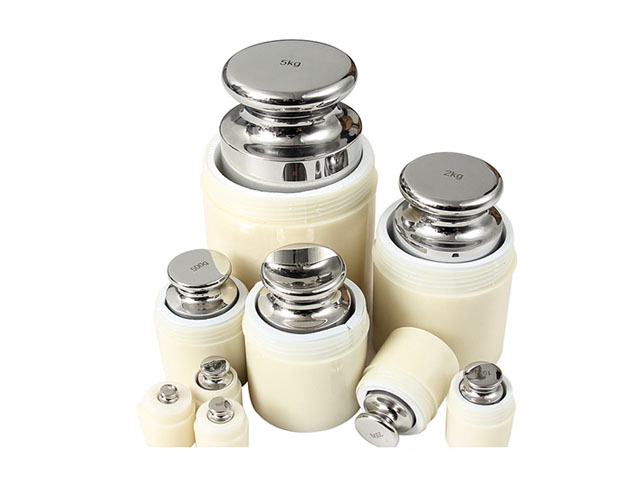
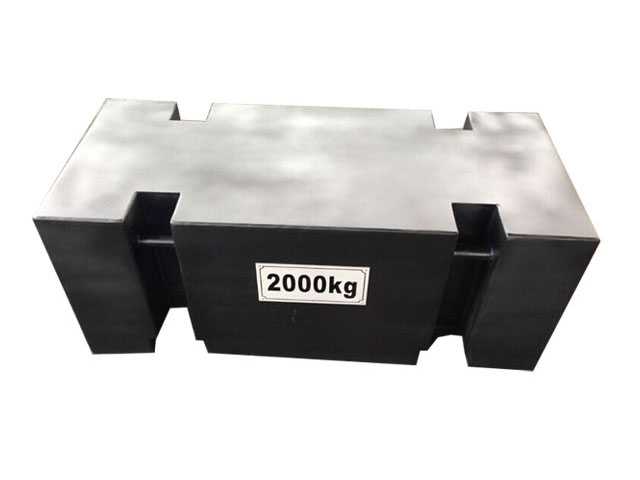
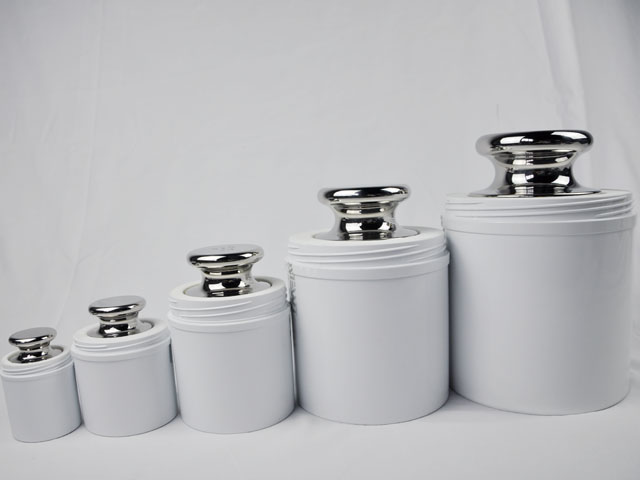
Structural design details of cast iron weights for precision scales are optimized around practical operational convenience and stable placement performance, fully adapting to the actual use habits and working requirements of precision weighing equipment operators. Most conventional cast iron precision weights adopt integrated block or cylindrical shapes with flat top and bottom surfaces, ensuring stable horizontal placement on all types of precision scale platforms, electronic balance surfaces, and mechanical weighing device bearing areas. The flat bottom surface design maximizes contact area between the weight and the scale weighing surface, avoiding shaking, tilting, or unbalanced force bearing during calibration and testing processes, which is essential for obtaining consistent and accurate weighing data. Many medium and large-specification cast iron weights are equipped with integrated grip handles or embedded lifting structures, a user-friendly design that greatly facilitates daily handling, transportation, placement, and storage work. Precision scale calibration often requires repeated movement and replacement of different specification weights during operation, and the integrated grip structure avoids direct hand contact with the main weight body, reducing the risk of surface coating damage caused by manual handling and preventing sweat, oil stains, and skin residues from adhering to the weight surface to affect long-term cleanliness and mass stability. Each weight is clearly marked with its corresponding nominal mass value on the outer surface through durable marking methods, ensuring operators can quickly identify different weight specifications during intensive calibration work, avoiding mixing different weights and ensuring the smooth progress of precision weighing verification tasks.
The application scope of cast iron weights for precision scales covers a wide range of scenarios requiring regular weighing equipment calibration and accurate mass reference, spanning industrial production, commercial operation, laboratory research, quality inspection, and on-site field testing work. In industrial manufacturing plants responsible for product processing, packaging, and finished product delivery, precision scales are used daily to measure raw material proportions, semi-finished product weights, and finished product packaging specifications, and regular calibration with cast iron reference weights ensures the weighing data recorded by these scales remains consistent with actual mass standards. This regular calibration work helps enterprises maintain stable product quality, avoid inconsistent product packaging specifications, and ensure unified weight standards for raw material feeding and finished product delivery throughout the production chain. In commercial weighing scenarios such as bulk commodity trading, material distribution centers, and market weighing stations, precision scales undertake important measurement settlement work, and cast iron weights provide reliable reference standards for daily scale testing, ensuring fair and accurate weight measurement in commercial transactions and maintaining orderly operational norms for daily commercial weighing activities.
In professional laboratory environments and institutional quality control departments, cast iron precision weights play a key role in calibrating high-precision analytical balances and experimental weighing equipment used for scientific research data collection and product quality testing. Laboratory weighing work requires extremely high data repeatability and accuracy, and regular calibration of experimental precision scales with standard cast iron weights eliminates subtle measurement errors caused by long-term equipment operation, environmental temperature changes, and daily mechanical wear. This ensures all experimental test data and quality inspection results are based on accurate and reliable weighing foundations, providing credible data support for product performance testing, material component analysis, and scientific research project experiments. In addition, cast iron weights are also widely used for on-site testing and daily maintenance of large and medium-sized precision weighing equipment such as floor scales, platform scales, and mobile weighing devices used in ports, mining operations, and logistics transportation sites. These field working environments have complex and changeable conditions, and the sturdy structure and strong environmental adaptability of cast iron weights allow them to maintain stable performance even in harsh working conditions, completing regular scale verification and calibration work effectively.
Daily maintenance and proper storage of cast iron weights for precision scales are critical to extending service life and maintaining long-term calibration accuracy, as reasonable daily management can effectively avoid unnecessary mass changes and surface damage caused by improper use. The most basic maintenance requirement is to keep all cast iron weights clean and dry at all times, wiping off surface dust, dirt, and residual debris in a timely manner after each use to prevent long-term dirt accumulation from corroding the protective coating and affecting the weight surface flatness. Weights should be placed in dry, ventilated storage areas with stable ambient temperature and low humidity, avoiding long-term placement in humid, dusty, or chemically corrosive environments that may accelerate surface aging and rust formation. During handling and use, operators should avoid violent collision, dropping, or excessive extrusion of cast iron weights, as strong external impact may cause subtle structural deformation of the weight body or damage to the surface protective coating, indirectly affecting mass stability and placement flatness. It is also important to place different specification weights separately during storage and use, avoiding random stacking and friction between weights that may cause surface coating wear and affect the overall appearance and structural integrity.
Regular periodic recheck and fine adjustment work is also an essential part of the daily management of cast iron precision weights. After a long period of use and repeated handling, even high-quality cast iron weights may produce subtle mass changes due to environmental influence and natural material aging. Regular professional mass recheck can detect minor mass deviations in a timely manner, and fine adjustment can be carried out through the reserved adjusting cavity to restore the weight to its standard nominal mass state. This periodic maintenance and recheck mechanism ensures that cast iron weights can always maintain qualified reference performance during long-term use, continuously providing accurate mass reference services for precision scale calibration work. Compared with other high-cost weighting materials, cast iron weights offer excellent comprehensive cost performance while meeting precision weighing work requirements, with mature production processes, stable material performance, and low daily maintenance costs, making them suitable for long-term large-scale use in various precision weighing scenarios.
In the entire precision weighing industry, cast iron weights have always been irreplaceable basic reference tools, relying on their stable material properties reliable manufacturing processes, reasonable structural design, and strong environmental adaptability to support the normal and accurate operation of all types of precision scales. Whether for daily routine calibration of industrial and commercial weighing equipment, accurate testing of laboratory experimental balances, or on-site verification of field mobile weighing devices, these cast iron reference weights provide steady and dependable mass support for every link involving precision weight measurement. With continuous development and upgrading of weighing technology and increasing requirements for weighing accuracy in various industries, the role of cast iron weights in precision scale management and calibration work will become more prominent. Adhering to standardized production and processing, implementing scientific daily maintenance and management, and conducting regular performance rechecks can ensure that cast iron weights maintain good working condition for a long time, continuously guaranteeing the accuracy, stability, and consistency of all precision weighing work in various industries.
Cast Iron Weight For Precision Scales
https://www.veidtweighing.com/cast-iron-weights.html
Post Date: May 4, 2026
https://www.supplier-manufacturer.com/cast-iron-weight/cast-iron-weight-for-precision-scales.html

![Portable Laboratory Calibration Weight Kit With Case]()
Portable Laboratory Calibration Weight Kit With Case
Accurate weighing serves as the foundational pillar of reliable experimental data, industrial detection, and daily precision measurement work. In laboratory operations, in…![Rectangular Cast Iron Weight]()
Rectangular Cast Iron Weight
Rectangular cast iron weight stands as one of the most fundamental and widely applied load-bearing and balancing components across modern industrial production, mechanical…![Specifications of Laboratory Weight]()
Specifications of Laboratory Weight
Laboratory weights are fundamental mass reference objects widely applied in experimental testing, instrument verification, and quantitative analysis across scientific rese…![What is Stainless Steel Weight]()
What is Stainless Steel Weight
Stainless steel weights serve as essential foundational tools for routine weighing adjustment and daily precision checking across various laboratory, industrial and educat…![Laboratory Weight Set]()
Laboratory Weight Set
In every laboratory environment dedicated to scientific research, experimental analysis, quality inspection, and academic teaching, consistent and dependable mass measurem…