Specifications of Cast Iron Weight
Cast iron weights stand as essential foundational components widely applied in industrial weighing calibration, mechanical counterbalancing, physical load testing, and daily operational weight matching across various production and operational scenarios. The overall specifications of such weights are systematically defined by core material composition, internal microstructural characteristics, inherent mechanical and physical performance parameters, standardized casting and processing craftsmanship, structural dimensional design norms, surface protection treatment requirements, as well as long-term service stability attributes, all of which work in tandem to determine the practical usability, consistent accuracy, and extended service life of each cast iron weight in diverse application environments. Unlike metal weights made from other alloy materials, cast iron weights rely on the unique material properties of iron-carbon alloys and mature forming technologies, achieving a balanced combination of stable density, reliable compressive resistance, excellent vibration absorption capacity, and reasonable structural adaptability, making them a preferred choice for conventional and heavy-duty weight application scenarios with universal applicability and stable comprehensive performance.
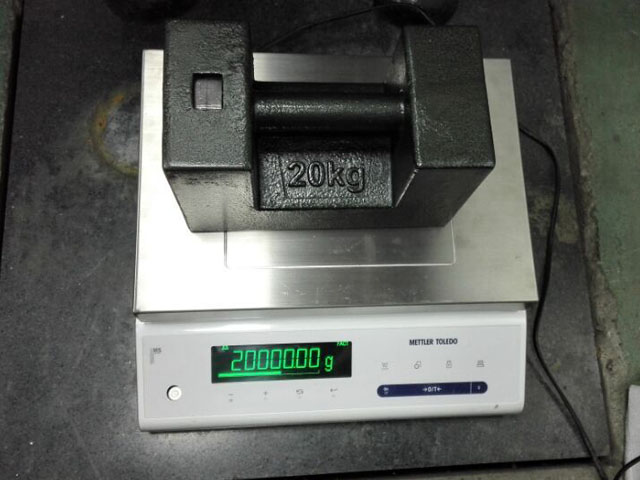
The core material specification of cast iron weights centers on the precise chemical composition configuration of the selected cast iron alloy, which serves as the fundamental basis for all subsequent performance and structural specifications. The primary raw material for producing qualified cast iron weights is gray cast iron, a type of iron-carbon alloy with a specific proportion of internal chemical elements, where the carbon content is controlled within a stable range between 2.7 percent and 4.0 percent by weight. This carbon content level is significantly higher than that of ordinary carbon steel, creating the essential material foundation for the alloy to form a stable graphite microstructure after casting and cooling. In addition to carbon, silicon constitutes another vital elemental component in the alloy, with a conventional content ranging from 1 percent to 3 percent; silicon plays a key regulatory role in promoting the precipitation of graphite inside the cast iron, effectively avoiding the excessive formation of hard and brittle cementite structures that could compromise the overall uniformity and structural stability of the weight. Trace amounts of manganese, sulfur, and phosphorus are also included in the material composition in controlled minimal proportions, with each auxiliary element adjusted within reasonable limits to avoid adverse impacts on the density uniformity and mechanical balance of the finished cast iron weight. Strict control over the entire chemical composition ratio ensures that each batch of cast iron raw materials maintains consistent basic density, avoiding significant density deviations between individual weights that would affect the inherent weight uniformity and long-term calibration stability during subsequent use.
Matching the chemical composition specifications, the internal microstructural specifications of cast iron weights are critical to their mechanical performance and anti-deformation capability under long-term service conditions. The graphite inside qualified gray cast iron used for weight production exists in the form of uniform and fine graphite flakes distributed evenly throughout the metal matrix. This unique microstructural feature brings two core functional advantages for cast iron weights. First, the flake graphite structure can effectively disperse and buffer external impact force and vibration energy during use, providing excellent vibration damping performance, which prevents structural deformation or local damage to the weight when placed in vibration-prone industrial working environments. Second, the uniform distribution of graphite flakes optimizes the internal stress balance of the cast iron material, enhancing the overall compressive strength and structural rigidity of the weight, enabling it to maintain stable shape and size even under long-term static pressure and frequent handling and stacking operations. In contrast to other types of cast iron with different graphite distribution forms, the microstructure adopted for cast iron weights is specially optimized to reduce material brittleness while ensuring sufficient hardness, avoiding both brittle fracture during collision and permanent deformation under continuous load, thus meeting the basic structural durability requirements of long-term repeated use.
Physical and mechanical performance specifications are key measurable indicators that define the practical working ability of cast iron weights in various application scenarios. In terms of basic physical properties, cast iron for weight production has a stable inherent density, with slight fluctuations only related to subtle differences in material proportioning and casting cooling conditions, ensuring that weights of the same volume maintain consistent mass standards. The material also features good thermal stability, with minimal volume and mass changes under conventional ambient temperature fluctuations, avoiding weight value deviations caused by thermal expansion and contraction in different seasonal and environmental temperature conditions. In terms of mechanical properties, cast iron weights have outstanding compressive strength and suitable surface hardness, allowing them to withstand long-term static load pressure and frequent contact friction without surface wear, edge damage, or internal structural loosening. The material also shows good wear resistance and moderate corrosion resistance in conventional atmospheric environments, slowing down the natural aging and surface loss caused by long-term exposure to air and conventional industrial humidity. These balanced mechanical properties ensure that cast iron weights do not experience structural damage or performance attenuation during daily handling, placement, stacking, and long-term stationary use, maintaining stable basic working performance throughout the service cycle.
Casting and processing craftsmanship specifications form the procedural guarantee for cast iron weights to achieve consistent dimensional accuracy and weight precision. The entire production process starts with high-temperature melting of prepared cast iron raw materials, with the melting temperature strictly controlled according to the alloy’s melting characteristics to ensure full fusion of all elemental components and uniform texture of the molten iron without internal impurity segregation. The molten iron is then poured into prefabricated standardized molds designed according to different weight specifications and shape requirements; the molds are manufactured with precise dimensional precision to ensure that the initial casting blank of each weight meets the preset outline size and volume standards. After pouring, the cast iron blanks undergo natural cooling and solidification in a controlled environment, with the cooling rate reasonably regulated to avoid internal stress concentration, shrinkage cavities, porosity, and other casting defects that would affect weight uniformity and structural firmness. After initial solidification and demolding, all weight blanks go through preliminary trimming and deburring processes to remove excess casting flash and sharp edges and corners, ensuring the surface smoothness and handling safety of the weights. Subsequent fine machining processes are carried out for key contact surfaces and overall dimensional calibration, including surface polishing and dimensional fine adjustment, to make the overall outline, flatness of the bottom contact surface, and symmetry of each part meet unified processing standards, ensuring that each weight can be placed stably without tilting and maintain accurate mass matching.
A notable structural specification of cast iron weights is the reserved weight adjustment cavity design, which is a practical structural configuration optimized for fine-tuning mass accuracy. During the mold design and casting stage, a closed or semi-closed hidden cavity is reserved inside each cast iron weight, with the cavity size and position scientifically arranged according to the overall weight specification and structural stress distribution, ensuring that the cavity does not affect the overall structural strength and mechanical stability of the weight. After the initial casting and rough machining of the weight, fine mass detection is carried out, and auxiliary weighting materials with stable density are added to the reserved adjustment cavity according to the detected subtle mass deviation to achieve precise matching of the standard weight value. After the weight adjustment is completed, the cavity is sealed and fixed with matching filling materials to prevent the internal auxiliary materials from loosening, falling off, or shifting due to external vibration and handling, ensuring that the fine-tuned weight value remains permanently stable. This adjustable structural design specification enables cast iron weights to achieve high-precision mass matching on the premise of ensuring overall structural firmness, making up for subtle mass deviations inevitably generated in the casting process and meeting the accurate weight matching requirements of different usage scenarios.
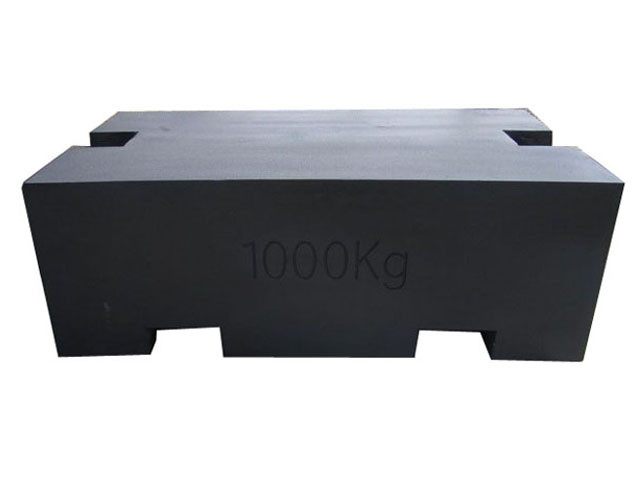
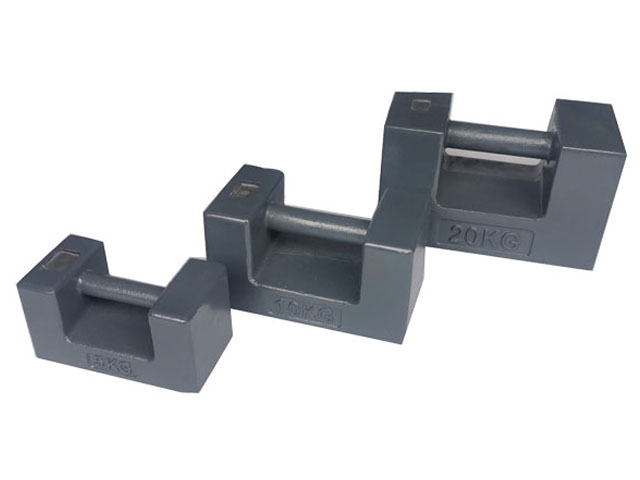
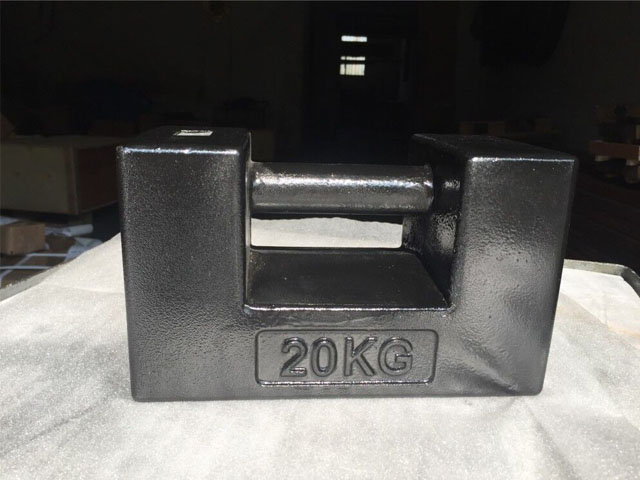
Shape and dimensional structure specifications cover the diversified external form design and unified structural size standards of cast iron weights to adapt to different placement, handling, and stacking requirements. Cast iron weights are produced in multiple conventional shapes including square, rectangular, cylindrical, and special nested slab types, with each shape designed according to ergonomic handling principles and on-site placement needs. Most conventional weights are designed with integrated grip structures or reserved handling grooves, allowing operators to carry, move, and place the weights conveniently and safely without slipping or accidental dropping during operation. The bottom of all cast iron weights is designed with a flat and smooth contact surface, ensuring full contact with the placement platform or weighing equipment, avoiding measurement errors or placement instability caused by uneven contact surfaces. For heavy-duty cast iron weights used in industrial batch calibration and large-scale mechanical counterbalancing, the nested structural design is adopted, enabling multiple weights to be stacked closely and saving storage and placement space while maintaining overall stability after stacking. All dimensional specifications are unified according to conventional usage habits and equipment matching standards, ensuring the interchangeability of weights of the same specification and facilitating unified management, storage, and repeated use in different working scenarios.
Surface anti-rust and protective treatment specifications are essential to extend the service life and maintain the appearance and surface integrity of cast iron weights. Cast iron materials are prone to surface oxidation and rust corrosion when exposed to humid air and conventional industrial environments for a long time, so all finished cast iron weights undergo standardized surface protective treatment after machining and weight calibration. The common protective treatment method is applying a uniform anti-rust coating on the entire outer surface of the weight, with the coating material selected to have good adhesion, weather resistance, and anti-corrosion performance, closely fitting the cast iron surface without peeling, fading, or falling off during long-term use and handling. The coating treatment not only isolates the cast iron material from air and moisture to prevent rust and corrosion but also reduces surface friction and wear during frequent handling and stacking, avoiding surface metal loss that could affect weight accuracy. For weights used in relatively harsh industrial environments with high humidity and slight corrosive substances, enhanced surface protection processes can be adopted to further improve environmental adaptability. The surface treatment specifications require uniform coating thickness without missing coating or uneven coverage, ensuring consistent protective effect on all parts of the weight and maintaining the surface integrity and long-term performance stability of the product.
Application matching and long-term stability specifications define the environmental adaptability and performance retention capabilities of cast iron weights during long-term continuous use. Such weights are suitable for indoor and outdoor conventional industrial environments, factory production workshops, weighing equipment calibration rooms, mechanical equipment counterweight positions, and physical performance test sites, with stable working performance under normal temperature and conventional humidity conditions without obvious performance attenuation. After long-term placement, frequent handling, and repeated stacking, the cast iron material maintains stable internal structure and unchanged density, with no permanent deformation, internal loosening, or obvious surface wear, ensuring that the weight value does not produce continuous deviation over time. The structural and material specifications also enable cast iron weights to resist conventional external vibration and slight impact damage, adapting to the complex working conditions of industrial sites. With regular daily maintenance and regular weight inspection, cast iron weights can maintain consistent working performance and accurate weight matching for a long time, reducing the frequency of replacement and re-calibration, and providing reliable and stable weight support for various industrial production and testing work.
In summary, the complete specifications of cast iron weights cover every link from internal material composition and microstructure to external casting processing, structural design, surface protection, and long-term service performance. Every detailed specification is formulated around the core needs of stable weight accuracy, reliable structural performance, strong environmental adaptability, and long service life. The coordinated matching of all specification indicators enables cast iron weights to always maintain stable and reliable working condition in various conventional and heavy-duty weight application scenarios, meeting the basic weight matching and calibration needs of different industries and fields. Reasonable specification design and strict production implementation standards ensure that cast iron weights remain one of the most practical and widely used weight products in the field of industrial weighing and mechanical counterbalancing, with stable comprehensive performance and good long-term use value.
Specifications of Cast Iron Weight
https://www.veidtweighing.com/cast-iron-weights.html
Post Date: May 4, 2026
https://www.supplier-manufacturer.com/cast-iron-weight/specifications-of-cast-iron-weight.html

![Cast Iron Weight With Fork Slot]()
Cast Iron Weight With Fork Slot
Cast iron weight with fork slot stands as a fundamental and reliable component widely utilized across diverse industrial, construction, logistics, and mechanical operation…![Density Balances]()
Density Balances
Density stands as one of the most fundamental and informative physical properties of all materials, serving as a critical reference for identifying material characteristic…![Cast Iron Weight For Testing]()
Cast Iron Weight For Testing
Cast iron weight for testing stands as a foundational and essential component in the entire field of weighing measurement and industrial calibration work, serving as a rel…![Chrome Steel Weights]()
Chrome Steel Weights
In the field of precision measurement and industrial calibration, the stability and accuracy of standard weights serve as the fundamental guarantee for reliable data acqui…![Cast Iron Weight For Sale]()
Cast Iron Weight For Sale
Cast iron weights have long stood as a fundamental and reliable component across countless industrial, commercial, residential, and fitness-related applications, earning c…