Moisture Analyzer Exporter
Moisture content stands as one of the most critical physical indicators that determine the quality, stability, and usability of raw materials and finished products across nearly all industrial and laboratory fields. Uncontrolled moisture levels can trigger subtle changes in material properties, ranging from altered texture and reduced structural stability to shortened service life and inconsistent processing performance. In industrial production, scientific research, and quality inspection workflows, accurate and rapid moisture detection has become an indispensable link to standardize production processes and maintain stable product quality. Moisture analyzers, as professional testing instruments designed for quantitative moisture measurement, have gradually replaced traditional manual detection methods with their efficient operation, stable testing performance, and wide applicability, becoming core equipment in modern material analysis and quality control systems.
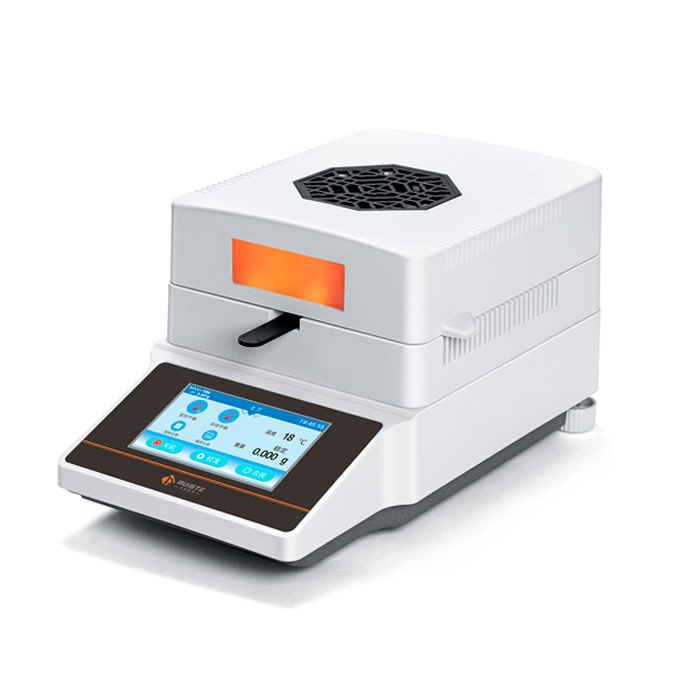
The core working logic of mainstream moisture analyzers in the market follows the thermogravimetric loss-on-drying principle, a detection method with solid theoretical support and practical reliability. This principle relies on the basic physical property that free and adsorbed moisture in materials can be completely evaporated under controlled heating conditions, while the dry matter of the material remains structurally stable without decomposition or volatilization within a specific temperature range. The entire detection process integrates high-precision weighing technology and constant-temperature heating technology, realizing real-time monitoring and automatic calculation of material weight changes. Before testing, the instrument first completes self-calibration and zeroing to eliminate interference from environmental factors and equipment status. After the sample is placed evenly in the testing container, the system records the initial weight of the sample accurately. Subsequently, the heating unit starts to work according to preset temperature and time parameters, heating the sample uniformly to evaporate internal moisture. During the whole drying process, the built-in high-sensitivity balance continuously collects weight data, tracks the real-time weight loss of the sample, and calculates the moisture volatilization rate dynamically. When the sample weight remains stable for a certain period with no obvious changes, it indicates that the free moisture in the sample has been fully evaporated. The system then calculates the moisture content of the sample based on the difference between the initial weight and the final stable weight, outputting intuitive and accurate data results.
Different heating structures and working modes derive multiple types of moisture analyzers, adapting to the detection needs of different material characteristics. Common heating forms include halogen heating, infrared heating, and resistance heating, each with unique technical characteristics and application scenarios. Halogen heating modules feature fast temperature rise speed and uniform heat radiation, which can quickly reach the preset temperature and form a stable heating environment on the sample surface. This heating method avoids local overheating of the sample, effectively preventing thermal decomposition, carbonization, or structural damage to heat-sensitive materials, and is suitable for most organic materials, granular raw materials, and daily chemical products. Infrared heating relies on thermal radiation to penetrate the shallow layer of the sample, achieving internal and external synchronous heating, which shortens the drying cycle and improves detection efficiency, making it ideal for materials with low moisture content and stable high-temperature resistance. Resistance heating provides gentle and stable continuous heating, with small temperature fluctuation, and is more suitable for bulky samples and materials with uneven texture that require slow and uniform drying. In addition to thermogravimetric drying analyzers, there are also micro-moisture detection devices based on chemical reaction principles, which are mainly used for trace moisture testing in liquids, solvents, and high-purity chemical materials. These chemical-based testing methods can capture extremely low moisture content that is difficult to detect by traditional drying methods, supplementing the detection range of physical drying analyzers and forming a comprehensive moisture detection system covering conventional and trace moisture scenarios.
The application scope of moisture analyzers covers food processing, agricultural production, pharmaceutical manufacturing, chemical industry, new material research, building materials, and environmental testing industries, with profound practical value in every field. In the food and agricultural sector, moisture content directly affects the storage cycle, taste, and processing performance of products. Grain, oil crops, dried fruits, baked goods, and dairy products all require strict moisture control. Excess moisture in grains can easily lead to mildew, insect infestation, and nutrient loss during storage, while insufficient moisture in processed food will affect taste and structural tenderness. Real-time moisture detection during grain purchasing, storage, and food processing can effectively standardize production parameters and reduce product loss. In the pharmaceutical industry, raw material intermediates, tablet preparations, capsule contents, and pharmaceutical auxiliary materials have strict moisture control standards. Excessive moisture will cause drug deterioration, reduce drug efficacy, and even trigger chemical reactions between ingredients, bringing hidden dangers to drug safety. Moisture analyzers provide accurate data support for pharmaceutical raw material incoming inspection, production process monitoring, and finished product quality sampling, ensuring the stability and safety of pharmaceutical products.
In the chemical and new material industry, moisture is a key factor affecting the processing performance and service life of polymer materials, plastic particles, coating raw materials, and resin products. Hygroscopic polymer materials will absorb ambient moisture during storage and transportation; if not detected and removed in time, bubbles, cracks, and structural defects will appear during injection molding and extrusion processing, reducing the mechanical strength and surface finish of finished products. Coating and ink materials with unqualified moisture content will have poor film-forming performance, slow drying speed, and uneven coloring, affecting the use effect and coating quality. In new energy material processing, electrolyte materials and battery raw materials have extremely strict requirements for trace moisture, and precise moisture detection can avoid material failure and performance attenuation caused by excessive moisture. In the building materials industry, the moisture content of cement, mortar, wall materials, and thermal insulation materials affects the structural stability and thermal insulation performance of buildings. Excessive moisture in building materials will lead to volume shrinkage, cracking, and mildew after construction, reducing the durability of building structures. Environmental testing also needs to detect moisture in soil, air sediments, and industrial waste to provide data support for environmental assessment and pollution control.
Standardized operation and reasonable sample processing are key prerequisites to ensure the accuracy and repeatability of moisture detection data. Different types of samples require targeted pretreatment methods to eliminate detection errors caused by uneven sample status. For solid block and granular samples, crushing, grinding, and screening treatment is usually required to make the sample particle size uniform, increase the contact area with heat, and ensure uniform drying and complete moisture volatilization. For viscous and paste samples, it is necessary to spread the sample evenly on the testing container to avoid local accumulation leading to incomplete internal drying. For volatile and heat-sensitive samples, appropriate low-temperature drying parameters need to be set to prevent sample component volatilization and thermal denaturation from affecting test results. In terms of operation steps, operators need to place the instrument in a flat, dry, and dust-free working environment, avoiding ambient temperature fluctuation, air convection, and vibration interference with weighing and heating systems. Before each test, the testing container needs to be cleaned and dried to eliminate residual moisture and impurities from previous tests. The sample weighing amount should match the instrument detection range and material characteristics; excessive sample volume will lead to incomplete drying, while too little sample will increase data deviation.
In addition to sample pretreatment and standardized operation, daily maintenance and parameter optimization also affect the long-term stable operation of moisture analyzers. Regular cleaning of the instrument heating chamber, weighing sensor, and air guide structure can prevent sample residue and dust accumulation from affecting heating efficiency and weighing accuracy. The weighing system needs regular calibration to ensure the accuracy of weight collection data, and the heating system needs periodic temperature verification to avoid temperature deviation leading to abnormal drying effects. In terms of parameter setting, different materials have different thermal stability and moisture volatilization characteristics, and operators need to formulate targeted drying temperatures, heating methods, and termination conditions according to material attributes. For materials containing bound moisture that is not easy to volatilize, segmented temperature rise procedures can be adopted, with low-temperature pre-drying to remove surface free moisture and high-temperature constant drying to evaporate internal bound moisture, ensuring comprehensive moisture detection. For materials prone to thermal decomposition, low-temperature long-time drying or vacuum-assisted drying modes can be selected to balance detection efficiency and data accuracy.
With the continuous upgrading of industrial production standards and laboratory testing requirements, moisture analyzer technology is also evolving toward intelligence, high efficiency, and refined detection. Traditional detection equipment relies on manual recording and calculation, with low efficiency and high human error. Modern moisture analyzers are equipped with intelligent data processing systems, which can automatically complete data recording, calculation, storage, and curve generation. The real-time drying curve can intuitively reflect the moisture volatilization law of samples, helping operators analyze material characteristics and optimize production processes. At the same time, the equipment has realized modular design, with flexible adjustable heating power, temperature range, and detection duration, adapting to the detection needs of multi-industry and multi-type materials. The optimization of sensor technology greatly improves the sensitivity and stability of the instrument, realizing accurate detection of trace moisture and micro-sample moisture, and expanding the application boundary of moisture detection technology.
In industrial batch production and large-scale quality inspection scenarios, the application of moisture analyzers also helps enterprises realize standardized process management and cost control. Stable moisture detection data can provide reliable basis for raw material incoming inspection, production parameter adjustment, and finished product grading, effectively reducing unqualified product rate and production waste. By monitoring moisture changes in real time during the production process, enterprises can timely adjust production formulas, processing temperature, and drying processes, maintain consistent product quality, and improve production stability. In scientific research experiments, precise moisture detection data is an important part of material performance research, helping researchers clarify the correlation between moisture content and material physical and chemical properties, providing data support for material formula optimization and process innovation.
It is worth noting that although moisture analyzers have high detection accuracy and stability, the rational selection of detection methods and equipment parameters is still required in practical application. No single detection mode can adapt to all material types, and operators need to select physical drying method or chemical detection method according to sample state, moisture content range, and thermal stability. For conventional solid materials with high moisture content, thermogravimetric drying analyzers can meet the detection needs with high efficiency and simplicity. For liquid samples and materials with trace moisture, chemical micro-detection methods are more appropriate. At the same time, environmental factors such as ambient humidity and temperature need to be controlled during detection to avoid moisture absorption or loss of samples in the testing process, which affects the authenticity of test data.
In conclusion, moisture analyzers, as professional and efficient moisture detection equipment, play an irreplaceable role in industrial production, scientific research, and quality supervision fields. Based on mature detection principles and continuously optimized structural design, they provide accurate and reliable moisture data support for various industries. With the continuous progress of manufacturing technology and the improvement of industry quality standards, moisture detection technology will develop in a more refined, intelligent, and efficient direction, and the application value of moisture analyzers will be further highlighted in material quality control, process optimization, and scientific research innovation. Standardized operation, reasonable parameter matching, and scientific daily maintenance can maximize the performance of the equipment, ensure the stability and accuracy of detection results, and provide solid technical support for the standardized development of various industrial fields and the improvement of product quality.
Moisture Analyzer Exporter
https://www.pruiste.com/moisture-analyzer.html
Post Date: May 23, 2026
https://www.supplier-manufacturer.com/moisture-analyzer/moisture-analyzer-exporter.html

![Lightweight Counting Scale]()
Lightweight Counting Scale
In modern daily operation and small-scale production environments, the demand for efficient and convenient counting tools continues to grow, especially for scenarios that …![Jewelry Counting Scale]()
Jewelry Counting Scale
In the intricate and refined world of jewelry production, trading, and inventory management, accurate measurement and quantity statistics stand as fundamental links to ens…![Electronic Counting Scale]()
Electronic Counting Scale
In modern production, inventory management, commercial circulation, and laboratory testing scenarios, the need for accurate and efficient quantification of small items has…![Counting Weighing Scale]()
Counting Weighing Scale
In modern daily operations, small business management, industrial production processing, warehouse inventory management, and material distribution work, the need to quanti…![Laboratory Analytical Balance]()
Laboratory Analytical Balance
Within every professional laboratory setting, whether dedicated to chemical research, biological experimentation, material development, or environmental sample analysis, r…