Micro Precision Balance
Micro precision balance stands as an essential measuring instrument designed for detecting subtle mass variations of tiny substances, serving as a fundamental tool in numerous scientific research and industrial production sectors. Unlike conventional weighing devices that focus on macroscopic mass measurement, this type of instrument is engineered to capture minimal weight changes at the microgram level, enabling researchers and technical personnel to obtain reliable mass data of miniature samples. The inherent attributes of high sensitivity and low measurement deviation make it irreplaceable in scenarios that demand rigorous data accuracy, laying a solid data foundation for experimental analysis, material research and quality inspection work. The internal structural design and operating logic of modern micro precision balances follow mature physical principles, and continuous technological optimization has further enhanced their stability and adaptability in complex usage environments.
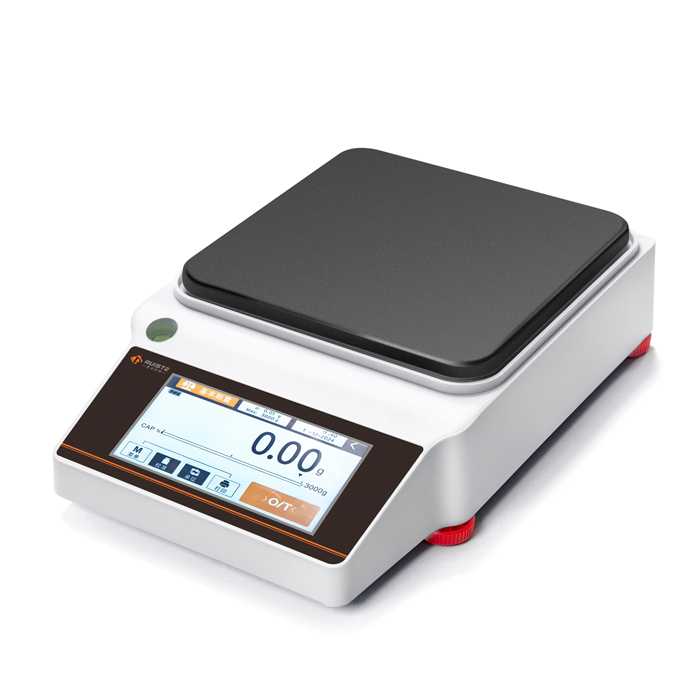
The core working principle of mainstream micro precision balances relies on electromagnetic force compensation technology, a physical mechanism that realizes accurate mass measurement through force balance. When a sample is placed on the weighing pan, the pressure generated by the sample’s gravity causes slight displacement of the internal mechanical structure. The built-in displacement sensor promptly captures this tiny positional change and transmits the signal to the closed-loop control circuit. The circuit dynamically adjusts the current flowing through the electromagnetic coil to generate a corresponding electromagnetic force that counteracts the gravity of the sample. Under stable working conditions, the magnitude of the current maintains a stable proportional relationship with the mass of the measured substance. The internal data processing module converts the current signal into intuitive digital mass readings, completing the entire weighing process. This operational mode effectively reduces mechanical friction interference compared with traditional mechanical balance structures, optimizing the consistency of repeated measurement data and shortening the stabilization time of numerical readings.
The structural composition of micro precision balance is meticulously designed to meet high-precision measurement requirements. The external protective shell adopts dense and shock-resistant materials, which can isolate fine dust and reduce the impact of external airflow on the internal weighing structure. The transparent windshield is a standard component for most models, effectively preventing the disturbance of indoor air convection to tiny samples, especially suitable for measuring lightweight particles and powdery substances. The weighing pan is usually made of corrosion-resistant metal materials with a smooth and flat surface, ensuring uniform stress on the contact area of the sample and avoiding measurement errors caused by uneven force. The internal sensing component and circuit system are installed on a shock-absorbing base to buffer the vibration transmitted from the placement platform. In addition, the intelligent data processing chip inside the instrument can filter out fluctuating signals generated by subtle environmental interference, further improving the smoothness and authenticity of displayed data.
Environmental conditions exert prominent influences on the measurement performance of micro precision balances, so standardized placement environment is a prerequisite for maintaining stable measurement states. Ambient temperature fluctuation constitutes one of the key influencing factors; drastic temperature changes will cause thermal expansion and contraction of internal metal components, altering the stress state of the sensing structure and inducing subtle reading deviations. It is advisable to keep the ambient temperature within a mild and stable range and avoid placing the instrument near heating equipment or direct sunlight. Air humidity also needs reasonable control. Excessively humid air may lead to moisture adhesion on internal electronic components, while an overly dry environment tends to generate static electricity, both of which interfere with signal transmission and sample stability. Ground vibration and airflow disturbance should also be minimized; the placement platform needs to be flat and sturdy, and the working area should stay away from ventilation outlets and mechanical operation equipment that produce vibration.
Standardized operating procedures are crucial to maintain the long-term working performance of micro precision balances and ensure the authenticity of measurement results. Before formal measurement, the instrument requires an adequate preheating period to stabilize the operating state of internal circuits and sensors, eliminating data drift caused by cold start of electronic components. Level calibration is an indispensable pre-operation step; operators need to adjust the supporting foot pads according to the level gauge to keep the instrument in a horizontal state, preventing structural tilt from causing unilateral stress on the sensing system. During sample placement, slow and gentle movements are required to avoid impact force causing structural vibration. Direct contact between hands and the weighing pan should be avoided to prevent sweat and grease from contaminating the metal surface and leaving residual substances that affect subsequent measurement. For powdery and volatile samples, sealed containers are recommended for holding to prevent sample loss and secondary pollution.
Micro precision balances have extensive application coverage in multiple professional fields, providing accurate measurement support for diversified industrial and scientific research work. In chemical laboratories, researchers use such instruments to weigh trace chemical reagents for preparing low-concentration solutions and conducting quantitative chemical reaction experiments. Accurate reagent dosage effectively controls the reaction rate and product yield, ensuring the repeatability of experimental data. In pharmaceutical research and production, the instrument is applied to the measurement of trace active ingredients in medicinal materials, helping technical personnel control the proportion of raw materials and maintain the uniformity of drug efficacy. The detection of tiny impurity components in pharmaceutical auxiliary materials also relies on its high-sensitivity measurement capability to meet production quality standards.
In new material research disciplines, micro precision balances assist researchers in analyzing the mass change characteristics of nanomaterials, composite films and microcrystalline structures. During material modification and performance testing, subtle mass fluctuations generated by physical adsorption and chemical reaction can be accurately captured, providing reliable data for studying material structural changes and service life. The environmental detection industry also makes full use of this instrument; staff weigh tiny sediment particles, aerosol components and water-soluble pollutants in environmental samples to analyze pollutant concentration and distribution rules, offering data support for environmental assessment and pollution control. In the processing and detection of precious raw materials, the instrument completes fine weighing of miniature raw material fragments to realize precise quantity statistics and loss control in the processing process.
With the continuous progress of industrial manufacturing and electronic information technology, the technical performance of micro precision balances has been steadily optimized. The iteration of sensor structures enhances the identification ability of tiny mass signals, reducing the fluctuation range of repeated measurement data. The optimized intelligent algorithm realizes fast stabilization of readings, shortening the waiting time for numerical stabilization during measurement and improving overall working efficiency. Some improved structural designs add anti-static coating and corrosion-resistant layers to key components, expanding the adaptability of the instrument in harsh experimental environments such as strong acid and alkali atmospheres. The humanized interaction design simplifies the operation logic; clear display interfaces and simple functional keys reduce the operation threshold for novice users, realizing convenient switching between basic weighing and data recording functions.
Daily maintenance and scientific storage methods directly determine the service life and long-term measurement stability of micro precision balances. After daily use, operators need to clean the surface of the weighing pan and the inner wall of the windshield with soft cleaning tools to remove residual sample dust and liquid stains. Abrasive cleaning supplies are prohibited to avoid scratching the smooth surface of metal components and damaging the anti-corrosion coating. The instrument should be placed in a dry and dust-free storage space when not in use, with protective covers to isolate suspended particles in the air. Regular inspection of the horizontal state and internal connection structure is necessary; loose internal parts should be adjusted in a timely manner to prevent structural displacement from affecting measurement accuracy. Long-term idle equipment needs regular power-on activation to maintain the activity of electronic circuits and avoid component aging caused by prolonged static state.
In actual application scenarios, reasonable error control measures need to be formulated to reduce the interference of human operation and external factors on measurement data. Multiple repeated measurements of the same sample can effectively reduce accidental errors, and the average value of valid measurement data is taken as the final statistical result. Operators should maintain a stable operating posture during use to avoid human-induced vibration. It is necessary to keep the working environment clean and tidy, and reduce personnel walking frequency around the instrument during high-precision measurement to avoid airflow disturbance caused by human movement. In addition, regular calibration of the instrument with standard mass objects can correct subtle system deviations and keep the measurement accuracy within a stable range for a long time.
Looking at the overall development trend of precision measuring instruments, micro precision balances will continue to evolve toward higher sensitivity, stronger environmental adaptability and intelligent integration. The combination of microelectronic technology and mechanical optimization will further reduce the lower measurement limit of the instrument, meeting the detection requirements of ultra-trace samples in cutting-edge scientific research. The intelligent data management function will realize automatic recording, sorting and exporting of measurement data, which is convenient for personnel to trace experimental records and summarize data rules. The compact structural design will save placement space, making the instrument adaptable to more limited laboratory and production line environments. As the basic supporting equipment of the precision industry, micro precision balances will always maintain an irreplaceable core status, continuously providing accurate and reliable mass measurement services for technological innovation and industrial upgrading in various industries.Micro precision balance stands as an essential measuring instrument designed for detecting subtle mass variations of tiny substances, serving as a fundamental tool in numerous scientific research and industrial production sectors. Unlike conventional weighing devices that focus on macroscopic mass measurement, this type of instrument is engineered to capture minimal weight changes at the microgram level, enabling researchers and technical personnel to obtain reliable mass data of miniature samples. The inherent attributes of high sensitivity and low measurement deviation make it irreplaceable in scenarios that demand rigorous data accuracy, laying a solid data foundation for experimental analysis, material research and quality inspection work. The internal structural design and operating logic of modern micro precision balances follow mature physical principles, and continuous technological optimization has further enhanced their stability and adaptability in complex usage environments.
The core working principle of mainstream micro precision balances relies on electromagnetic force compensation technology, a physical mechanism that realizes accurate mass measurement through force balance. When a sample is placed on the weighing pan, the pressure generated by the sample’s gravity causes slight displacement of the internal mechanical structure. The built-in displacement sensor promptly captures this tiny positional change and transmits the signal to the closed-loop control circuit. The circuit dynamically adjusts the current flowing through the electromagnetic coil to generate a corresponding electromagnetic force that counteracts the gravity of the sample. Under stable working conditions, the magnitude of the current maintains a stable proportional relationship with the mass of the measured substance. The internal data processing module converts the current signal into intuitive digital mass readings, completing the entire weighing process. This operational mode effectively reduces mechanical friction interference compared with traditional mechanical balance structures, optimizing the consistency of repeated measurement data and shortening the stabilization time of numerical readings.
The structural composition of micro precision balances is meticulously designed to meet high-precision measurement requirements. The external protective shell adopts dense and shock-resistant materials, which can isolate fine dust and reduce the impact of external airflow on the internal weighing structure. The transparent windshield is a standard component for most models, effectively preventing the disturbance of indoor air convection to tiny samples, especially suitable for measuring lightweight particles and powdery substances. The weighing pan is usually made of corrosion-resistant metal materials with a smooth and flat surface, ensuring uniform stress on the contact area of the sample and avoiding measurement errors caused by uneven force. The internal sensing component and circuit system are installed on a shock-absorbing base to buffer the vibration transmitted from the placement platform. In addition, the intelligent data processing chip inside the instrument can filter out fluctuating signals generated by subtle environmental interference, further improving the smoothness and authenticity of displayed data.
Environmental conditions exert prominent influences on the measurement performance of micro precision balances, so standardized placement environment is a prerequisite for maintaining stable measurement states. Ambient temperature fluctuation constitutes one of the key influencing factors; drastic temperature changes will cause thermal expansion and contraction of internal metal components, altering the stress state of the sensing structure and inducing subtle reading deviations. It is advisable to keep the ambient temperature within a mild and stable range and avoid placing the instrument near heating equipment or direct sunlight. Air humidity also needs reasonable control. Excessively humid air may lead to moisture adhesion on internal electronic components, while an overly dry environment tends to generate static electricity, both of which interfere with signal transmission and sample stability. Ground vibration and airflow disturbance should also be minimized; the placement platform needs to be flat and sturdy, and the working area should stay away from ventilation outlets and mechanical operation equipment that produce vibration.
Standardized operating procedures are crucial to maintain the long-term working performance of micro precision balances and ensure the authenticity of measurement results. Before formal measurement, the instrument requires an adequate preheating period to stabilize the operating state of internal circuits and sensors, eliminating data drift caused by cold start of electronic components. Level calibration is an indispensable pre-operation step; operators need to adjust the supporting foot pads according to the level gauge to keep the instrument in a horizontal state, preventing structural tilt from causing unilateral stress on the sensing system. During sample placement, slow and gentle movements are required to avoid impact force causing structural vibration. Direct contact between hands and the weighing pan should be avoided to prevent sweat and grease from contaminating the metal surface and leaving residual substances that affect subsequent measurement. For powdery and volatile samples, sealed containers are recommended for holding to prevent sample loss and secondary pollution.
Micro precision balances have extensive application coverage in multiple professional fields, providing accurate measurement support for diversified industrial and scientific research work. In chemical laboratories, researchers use such instruments to weigh trace chemical reagents for preparing low-concentration solutions and conducting quantitative chemical reaction experiments. Accurate reagent dosage effectively controls the reaction rate and product yield, ensuring the repeatability of experimental data. In pharmaceutical research and production, the instrument is applied to the measurement of trace active ingredients in medicinal materials, helping technical personnel control the proportion of raw materials and maintain the uniformity of drug efficacy. The detection of tiny impurity components in pharmaceutical auxiliary materials also relies on its high-sensitivity measurement capability to meet production quality standards.
In new material research disciplines, micro precision balances assist researchers in analyzing the mass change characteristics of nanomaterials, composite films and microcrystalline structures. During material modification and performance testing, subtle mass fluctuations generated by physical adsorption and chemical reaction can be accurately captured, providing reliable data for studying material structural changes and service life. The environmental detection industry also makes full use of this instrument; staff weigh tiny sediment particles, aerosol components and water-soluble pollutants in environmental samples to analyze pollutant concentration and distribution rules, offering data support for environmental assessment and pollution control. In the processing and detection of precious raw materials, the instrument completes fine weighing of miniature raw material fragments to realize precise quantity statistics and loss control in the processing process.
With the continuous progress of industrial manufacturing and electronic information technology, the technical performance of micro precision balances has been steadily optimized. The iteration of sensor structures enhances the identification ability of tiny mass signals, reducing the fluctuation range of repeated measurement data. The optimized intelligent algorithm realizes fast stabilization of readings, shortening the waiting time for numerical stabilization during measurement and improving overall working efficiency. Some improved structural designs add anti-static coating and corrosion-resistant layers to key components, expanding the adaptability of the instrument in harsh experimental environments such as strong acid and alkali atmospheres. The humanized interaction design simplifies the operation logic; clear display interfaces and simple functional keys reduce the operation threshold for novice users, realizing convenient switching between basic weighing and data recording functions.
Daily maintenance and scientific storage methods directly determine the service life and long-term measurement stability of micro precision balances. After daily use, operators need to clean the surface of the weighing pan and the inner wall of the windshield with soft cleaning tools to remove residual sample dust and liquid stains. Abrasive cleaning supplies are prohibited to avoid scratching the smooth surface of metal components and damaging the anti-corrosion coating. The instrument should be placed in a dry and dust-free storage space when not in use, with protective covers to isolate suspended particles in the air. Regular inspection of the horizontal state and internal connection structure is necessary; loose internal parts should be adjusted in a timely manner to prevent structural displacement from affecting measurement accuracy. Long-term idle equipment needs regular power-on activation to maintain the activity of electronic circuits and avoid component aging caused by prolonged static state.
In actual application scenarios, reasonable error control measures need to be formulated to reduce the interference of human operation and external factors on measurement data. Multiple repeated measurements of the same sample can effectively reduce accidental errors, and the average value of valid measurement data is taken as the final statistical result. Operators should maintain a stable operating posture during use to avoid human-induced vibration. It is necessary to keep the working environment clean and tidy, and reduce personnel walking frequency around the instrument during high-precision measurement to avoid airflow disturbance caused by human movement. In addition, regular calibration of the instrument with standard mass objects can correct subtle system deviations and keep the measurement accuracy within a stable range for a long time.
Looking at the overall development trend of precision measuring instruments, micro precision balances will continue to evolve toward higher sensitivity, stronger environmental adaptability and intelligent integration. The combination of microelectronic technology and mechanical optimization will further reduce the lower measurement limit of the instrument, meeting the detection requirements of ultra-trace samples in cutting-edge scientific research. The intelligent data management function will realize automatic recording, sorting and exporting of measurement data, which is convenient for personnel to trace experimental records and summarize data rules. The compact structural design will save placement space, making the instrument adaptable to more limited laboratory and production line environments. As the basic supporting equipment of the precision industry, micro precision balances will always maintain an irreplaceable core status, continuously providing accurate and reliable mass measurement services for technological innovation and industrial upgrading in various industries.
Micro Precision Balance
https://www.pruiste.com/precision-balance.html
Post Date: May 18, 2026
https://www.supplier-manufacturer.com/precision-balance/micro-precision-balance.html

![Weighing Balance RSB-W SERIES]()
Weighing Balance RSB-W SERIES
The RSB-W series adopts high-definition keys, which is economical. The entire series of balances adopt Nuosheng sensors, brand sensors, and aluminum alloy structure to ens…![Specifications of Digital Viscometer]()
Specifications of Digital Viscometer
Digital viscometers are essential analytical instruments designed to quantify the viscosity characteristics of various liquid substances, serving as core testing equipment…![Automatic Digital Viscometer]()
Automatic Digital Viscometer
Viscosity stands as one of the most fundamental physical properties of fluid substances, reflecting the internal friction and flow resistance generated between molecular l…![Coaxial Cylinder Digital Viscometer]()
Coaxial Cylinder Digital Viscometer
The coaxial cylinder digital viscometer is a sophisticated laboratory and industrial testing instrument designed to quantify the viscous properties of various fluid materi…![Halogen Moisture Analyzer]()
Halogen Moisture Analyzer
Moisture content stands as one of the most critical physical indicators for a wide range of raw materials, semi-finished goods, and finished products across modern industr…