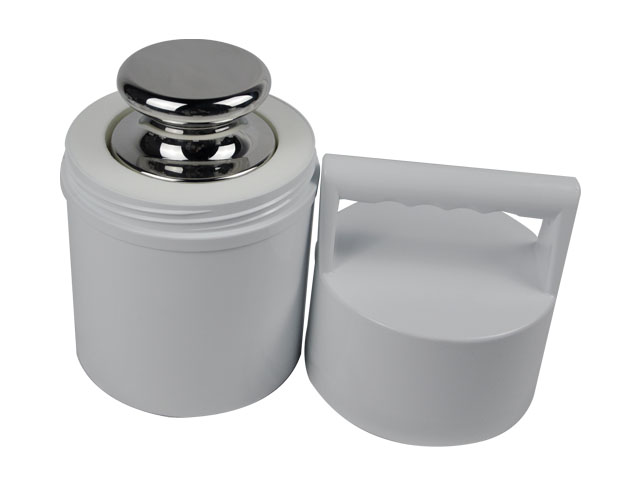
Laboratory Metrology Standard Calibration Weight
Laboratory metrology standard calibration weights are fundamental physical measuring tools designed for mass value replication, transmission, and instrument calibration in precision measurement environments. Unlike ordinary weighting masses used for daily weighing or industrial rough measurement, these standard weights are manufactured and processed under strict metrological specifications, with precisely defined mass values, stable physical properties, and standardized geometric structures. They act as critical reference benchmarks in the entire mass measurement system, undertaking the core function of unifying mass measurement data in laboratory testing, scientific research, and industrial quality control scenarios. The essence of their application lies in providing a reliable physical reference for verifying and calibrating various weighing instruments, eliminating systematic errors of detection equipment, and ensuring the consistency and credibility of all mass-related measurement results.
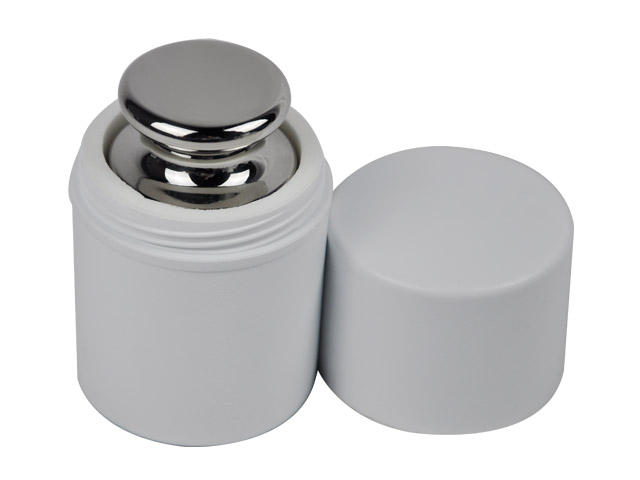
The working principle of laboratory standard calibration weights is based on the basic laws of gravitational balance and mass comparison. In a stable and consistent gravitational field, the gravitational force generated by an object is positively correlated with its mass. When conducting instrument calibration and verification, staff place standard calibration weights with known accurate mass values on the weighing platform of analytical balances, electronic scales, and other measuring equipment, and compare the feedback reading of the instrument with the nominal mass of the weights. Through the balance comparison method, the error range of the measuring instrument can be judged intuitively, providing a basis for subsequent parameter adjustment and error correction. In high-precision laboratory metrology work, the common ABBA comparison method is widely adopted, which alternately tests standard weights and tested weights to offset the influence of subtle changes in the instrument’s operating state and environmental interference, further improving the accuracy of comparison results. This relatively basic but rigorous physical principle lays a solid foundation for the standardized application of calibration weights in various precision measurement scenarios.
Material selection is a core factor that determines the performance and service life of laboratory metrology standard calibration weights. Excellent manufacturing materials need to meet multiple comprehensive requirements, including stable density, low thermal expansion coefficient, strong corrosion resistance, and good surface finish stability. Common manufacturing materials include high-density stainless steel alloy, brass alloy with surface anti-oxidation treatment, and cast iron materials for general precision scenarios. High-grade stainless steel alloy materials are widely used in high-precision calibration scenarios due to their compact internal structure, uniform density, and minimal mass attenuation under long-term storage and use. The surface of qualified calibration weights will undergo fine polishing and sealing treatment to reduce surface roughness, prevent adhesion of dust, moisture, and chemical contaminants, and avoid mass changes caused by surface oxidation, corrosion, or wear. Materials with poor stability are prone to subtle mass fluctuations due to temperature changes, air oxidation, and environmental humidity erosion, which will directly affect the accuracy of calibration results and cannot meet the long-term stable use requirements of laboratory metrology.
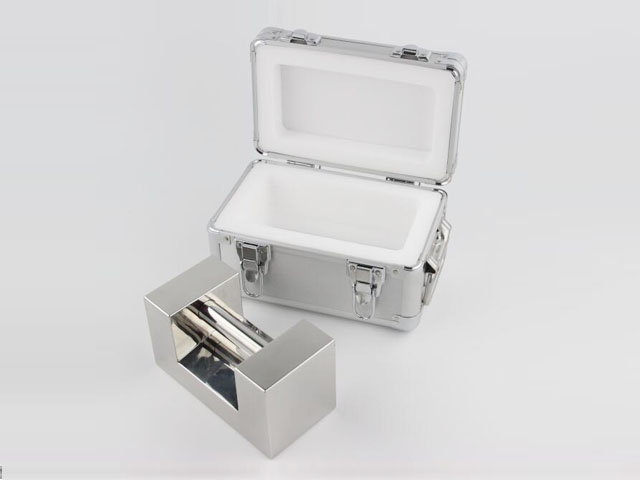
Geometric structure and dimensional precision control are also key links in the production of standard calibration weights. Regular structural design helps reduce the contact area between the weight and the external environment, lowers the risk of contamination and wear, and facilitates standardized operation during use. Most laboratory calibration weights adopt regular cylindrical or block structures with smooth and flat surfaces and uniform overall thickness. The dimensional tolerance of each weight is strictly controlled in the production process to ensure the consistency of stress distribution during placement and avoid local mass deviation caused by structural asymmetry. Meanwhile, the overall gravity center of the weight is designed to be stable, which can prevent tilting and sliding during weighing comparison, ensure stable contact with the weighing instrument’s bearing surface, and reduce accidental measurement errors caused by placement problems. For small-specification calibration weights used for micro-mass measurement, the structural design is more refined, with stricter control over edge burrs and surface flatness to adapt to the high-sensitivity detection requirements of micro-analytical instruments.
The application scenarios of laboratory metrology standard calibration weights cover almost all fields that require precise mass measurement and instrument calibration. In scientific research laboratories, they are used for daily verification and regular calibration of analytical balances, precision electronic balances, and micro-weighing instruments, ensuring the accuracy of experimental data in chemical component analysis, material density testing, and pharmaceutical ingredient ratio measurement. In industrial quality control laboratories, calibration weights assist in detecting the accuracy of online weighing equipment and finished product testing instruments, providing standardized measurement benchmarks for product quality inspection, raw material proportioning, and production process parameter control. In environmental monitoring, food testing, and biological research fields, standardized mass calibration is also an indispensable part of experimental work, and stable calibration weight performance is the basic guarantee for reliable detection data. In addition, these standard weights also undertake the important task of mass value transmission, realizing the gradual transmission of standard mass values from high-precision benchmark equipment to various working measuring instruments, and maintaining the unity and accuracy of the entire measurement system.
Standardized use specifications are crucial to maintain the accuracy and stability of laboratory calibration weights. Before each use, staff need to check the surface state of the weights to confirm that there is no visible dust, stains, scratches, or corrosion. Fine dust attached to the surface can be gently removed with soft, clean professional wiping tools, and stubborn stains should be treated with neutral cleaning reagents to avoid residual impurities affecting mass accuracy. During the use process, weights must be held with professional tools such as tweezers and weight forks, and direct contact with hands is strictly prohibited. Sweat, grease, and fine dirt on human skin will adhere to the weight surface, causing subtle mass increase and long-term oxidation and corrosion of the surface. When placing weights on the weighing instrument, the operation should be gentle and steady to prevent collision, drop, and friction with hard objects, so as to avoid structural deformation and surface wear that cause mass deviation. At the same time, weights of different specifications should be used in a matching manner according to the measuring range of the instrument, avoiding over-range use that may affect the stability of both the instrument and the weights.
Environmental control is an important external condition to ensure the normal performance of standard calibration weights. Laboratory temperature, humidity, and air cleanliness will all have an impact on calibration accuracy and weight stability. Long-term high humidity environment will cause oxidation and mildew on the surface of metal weights, while excessive temperature fluctuation will lead to thermal expansion and contraction of the weight structure, resulting in temporary mass and dimensional changes. Therefore, the laboratory space for storing and using calibration weights needs to maintain constant temperature and humidity conditions within a reasonable range, with good air circulation and low dust concentration. It is necessary to avoid placing calibration weights in environments with corrosive gas, volatile chemical reagents, and strong vibration interference. Strong vibration will cause subtle internal structural changes of the weights and uneven surface wear, while corrosive gas will slowly erode the metal surface, affecting the long-term stability of mass values. In high-precision calibration work, it is also necessary to avoid air convection interference in the experimental space, so as to prevent airflow from affecting the static placement state of weights and instrument weighing results.
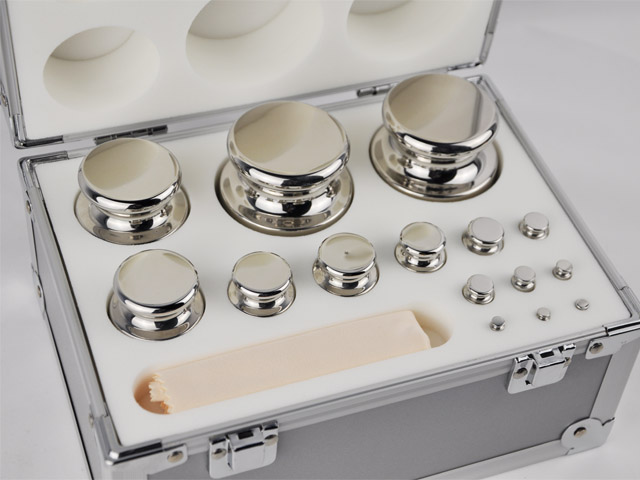
Scientific daily maintenance and standardized storage methods can effectively extend the service life of laboratory standard calibration weights and maintain long-term measurement stability. After each use, the weights should be cleaned in time and placed in a special sealed storage box with a shockproof and dustproof structure. The storage box is usually equipped with independent fixed grooves to avoid mutual collision and friction between weights of different specifications during storage and handling. Weights of different precision levels and different materials should be stored separately to prevent cross-contamination and accidental scratch damage. Regular maintenance inspection is also essential. Staff need to conduct regular appearance inspection and performance verification of stored weights, record the surface state and calibration stability of the weights, and screen out individual weights with abnormal mass deviation or surface damage in a timely manner. It is necessary to avoid long-term idle storage of weights, and regular cyclic use and verification can effectively maintain the stability of their physical properties. In addition, the storage location should be kept away from heat sources, moisture sources, and strong magnetic field interference, as magnetic field influence may cause subtle structural changes in metal materials and affect measurement accuracy.
The value of laboratory metrology standard calibration weights is reflected in the standardization and traceability of measurement work. All precision measurement activities rely on unified and stable reference benchmarks, and calibration weights are the most intuitive and direct physical carrier of mass benchmarks. In daily laboratory testing, slight errors of weighing instruments will gradually accumulate with long-term use, environmental changes, and frequent operation. Regular calibration and verification with standard weights can timely discover and correct instrument errors, ensure that each measurement data is within the allowable error range, and improve the repeatability and comparability of experimental and detection data. In the field of metrology transmission, standard calibration weights realize the vertical transmission of mass measurement values, connecting high-precision benchmark measurement equipment and on-site working measurement tools, forming a complete and effective measurement value transmission chain, and providing a reliable technical guarantee for standardized production, scientific research innovation, and quality supervision in various industries.
In practical metrological work, the matching selection of calibration weights needs to be combined with the precision level and measuring range of the tested instrument. Different weighing instruments have different resolution and error tolerance standards, and matching weights with appropriate precision and specification can ensure the effectiveness of calibration work. For high-sensitivity micro-analytical balances used for trace detection, small-specification high-precision calibration weights are required for segmented calibration of the full measuring range. For conventional industrial weighing detection equipment, medium-precision standard weights can meet the daily verification and calibration needs. Reasonable selection and graded use can not only ensure the accuracy of calibration results but also avoid excessive use of high-precision weights, reduce unnecessary wear and loss of high-precision measuring tools, and realize the reasonable allocation and efficient use of metrological resources.
With the continuous improvement of modern measurement technology and the continuous upgrading of laboratory precision detection requirements, the manufacturing process and performance standards of laboratory metrology standard calibration weights are also constantly optimized. The application of new alloy materials and fine processing technology makes the mass stability of calibration weights higher and the environmental adaptability stronger. More refined surface treatment processes effectively resist the erosion of external environmental factors, further reducing the subtle mass change rate of weights during long-term use. At the same time, the standardized use and maintenance system of calibration weights is gradually improved, forming a complete set of operational specifications from selection, use, calibration to storage and maintenance, which further guarantees the reliability of mass measurement work. As an indispensable basic measuring tool in the field of metrology, laboratory standard calibration weights will always play a core supporting role in ensuring measurement accuracy, unifying measurement standards, and promoting the standardized development of various precision measurement fields.
Laboratory Metrology Standard Calibration Weight
https://www.veidtweighing.com/laboratory-weights.html
Post Date: Jun 7, 2026

![Small Gram Size Laboratory Standard Test Weight]()
Small Gram Size Laboratory Standard Test Weight
Small gram size laboratory standard test weights are essential precision tools designed to deliver accurate mass reference values for microscopic and fine-scale weighing o…![Laboratory Traceable Calibration Weight For Analytical Lab]()
Laboratory Traceable Calibration Weight For Analytical Lab
In modern analytical laboratories, the accuracy and reliability of quantitative experimental data serve as the fundamental foundation for all scientific research, material…![Standard Weight For Precision Scales]()
Standard Weight For Precision Scales
In the realm of precision measurement, standard weights stand as the foundational benchmark that upholds the accuracy, reliability, and traceability of all precision scale…![Precision Calibration Weight For Weighing Scale]()
Precision Calibration Weight For Weighing Scale
In every industry and laboratory setting that relies on accurate mass measurement, precision calibration weights serve as foundational tools to sustain the functional reli…![Calibration Weight For Electric Forklift Weighing Calibration Use]()
Calibration Weight For Electric Forklift Weighing Calibration Use
In modern industrial material handling scenarios, electric forklifts have become indispensable equipment for warehouse storage, cargo handling, and logistics distribution …