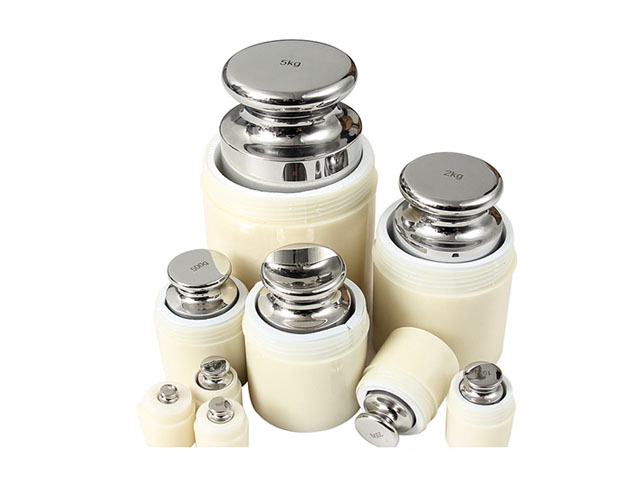
Industrial Standard Weight
In every corner of modern industrial production and commercial operation, accurate mass measurement stands as an indispensable foundational condition for maintaining orderly production processes, stable product quality, and smooth commercial circulation. All kinds of weighing equipment, whether small electronic balances used in workshop production links or large floor scales and truck scales deployed in logistics hubs and port terminals, rely on a reliable and consistent reference basis to ensure long-term stable and accurate measurement performance. Industrial standard weight serves as this core reference medium, undertaking the important task of calibrating, verifying and adjusting various weighing instruments throughout the industrial chain. It is not merely a simple heavy object with fixed mass, but a key basic measuring carrier that connects production links, quality control management, commercial transaction settlement and mechanical equipment debugging. Without the reliable support of industrial standard weight, all weighing data generated in industrial production and circulation links will lose credible basis, and subsequent production parameter adjustment, product quality judgment and cargo handover confirmation will face hidden risks of deviation and confusion, affecting the overall operational efficiency and development stability of the entire industrial system.

The core essence of industrial standard weight lies in its stable and consistent mass attribute and standardized manufacturing and processing specifications. Different from ordinary counterweights and common heavy objects used in daily scenarios, industrial standard weight is manufactured through strict production processes and precise processing technologies, with stable physical properties and accurate mass values that remain consistent for a long time. In the whole industrial measurement system, all weighing work follows a unified mass tracing logic, and industrial standard weight is the key physical carrier to realize this tracing link. Every weighing instrument used in industrial sites will produce certain measurement errors after long-term operation, frequent use, and influence by external environmental factors such as temperature, humidity and mechanical vibration. These errors will gradually accumulate over time, leading to inconsistent weighing data and actual mass, which will bring adverse effects to production and operation. The basic function of industrial standard weight is to provide a fixed and known mass reference. By placing it on various weighing instruments, staff can check the matching degree between instrument display data and actual standard mass, and make reasonable adjustment and correction to the equipment in time to ensure that the weighing results of the instrument are always within the reasonable error range required by industrial production and operation.
The manufacturing process and material selection of industrial standard weight directly determine its service performance, mass stability and adaptability to complex industrial environments. In actual industrial application scenarios, the use environment of standard weights varies greatly. Some are used in closed and stable laboratory and workshop environments with mild temperature and humidity and little external interference, while others are used in open-air ports, mining yards, logistics distribution centers and other places with harsh conditions, facing the erosion of wind and rain, the impact of dust and the vibration and friction caused by frequent handling and hoisting. Therefore, the selection of manufacturing materials needs to fully consider the dual demands of mass stability and environmental adaptability. Common manufacturing materials for industrial standard weight include cast iron and stainless steel, and different materials have their own applicable application scenarios and performance characteristics. Cast iron materials have mature processing technology, stable structural performance and strong compression resistance, and can maintain stable overall structure and mass state even after long-term repeated hoisting, stacking and use. This kind of material is widely used in the production of medium and large-size industrial standard weights, which are suitable for calibrating large-scale weighing equipment such as truck scales, floor scales and port bulk cargo weighing platforms. Stainless steel materials have better anti-corrosion and anti-rust performance, smooth surface and less prone to surface oxidation and damage, and are more suitable for manufacturing small and medium-size standard weights used in indoor production workshops, precision processing links and laboratory calibration work. No matter which material is adopted, the manufacturing process will strictly control the overall density uniformity of the weight, avoid internal structural pores and mass unevenness, and ensure that the mass of each part of the weight is balanced, so as to prevent mass deviation caused by long-term use and external force extrusion.
In the production and processing process of industrial standard weight, every production link is carried out in accordance with unified industrial processing norms, and fine processing and polishing are carried out on the surface and overall structure. The surface of the weight is treated with special processes to reduce the adhesion of dust and impurities, avoid chemical reaction between the material and the external humid air, and effectively slow down the problems of corrosion, rust and surface wear that may affect the mass stability. For large-scale industrial standard weights used in engineering and logistics scenarios, professional structural design is also adopted, with reserved lifting and stress-bearing parts, which is convenient for mechanical equipment such as forklifts and cranes to carry and place, avoiding mass deviation and structural deformation caused by collision and extrusion during manual or mechanical handling. For small precision industrial standard weights, the overall volume and surface flatness are precisely processed to ensure that they can be stably placed on the weighing platform of precision balances without tilting or shaking, so as to guarantee the accuracy of calibration and verification work. Every finished industrial standard weight will go through repeated mass detection and debugging before leaving the production link, and the mass state will be kept in a stable and qualified state after multiple inspections, laying a solid foundation for subsequent various industrial measurement calibration work.
Industrial standard weight has a wide range of application coverage, almost penetrating all industrial production industries and commercial circulation fields that need mass measurement and weighing work. In the machinery manufacturing industry, various production links involve the weighing and matching of parts and components, as well as the debugging and balance adjustment of mechanical equipment. Many mechanical equipment and production parts need to maintain accurate mass proportion and balance state to ensure the normal operation of subsequent equipment and the qualified rate of finished products. Production enterprises need to regularly use industrial standard weight to calibrate the weighing equipment used in parts batching and finished product inspection, ensure that the mass data of each batch of parts and finished products meet the production and manufacturing requirements, avoid equipment operation failure and product performance defects caused by unqualified mass matching, and maintain the stability of product production quality. At the same time, in the equipment assembly and commissioning stage, standard weights are also used for load testing and balance debugging of mechanical facilities, helping enterprises eliminate potential safety hazards caused by unbalanced equipment load.
In the logistics and transportation industry, the application demand of industrial standard weight is more prominent, and it is an important guarantee to standardize cargo weighing and avoid weight-related disputes. All kinds of road transportation, waterway transportation and port cargo handover need to rely on accurate weighing data to confirm cargo volume, arrange transportation plans and complete handover procedures. Overloaded transportation will not only bring safety risks to transportation vehicles and transportation routes, but also cause unnecessary losses and disputes between cargo suppliers and transporters. Logistics terminals and port hubs are equipped with a large number of large-scale weighing instruments, which need regular calibration and verification with industrial standard weight to ensure the accuracy of cargo weighing data. Accurate weighing data can not only help transportation enterprises reasonably arrange cargo loading capacity, standardize transportation operations, but also effectively avoid transaction disputes caused by inconsistent weighing data between the two sides of cargo handover, maintain the orderly development of logistics and transportation business, and improve the overall operation efficiency of the supply chain.
In the mining and building materials industry, bulk raw materials and finished products are usually traded and counted by mass, and the stability and accuracy of weighing work are directly related to the economic interests of production enterprises and purchasers. Mining raw materials, cement, sand and gravel building materials and other products have large transportation volume and frequent weighing times, and the weighing equipment used in the production and sales links is easy to have measurement deviation due to long-term load-bearing and harsh working environment. Regular use of industrial standard weight to test and calibrate weighing equipment can ensure that the weighing data of raw material incoming and finished product outgoing are true and effective, avoid economic losses caused by measurement errors in the sales and procurement process of enterprises, and maintain the stable operation of production and sales links. In addition, in the mining operation process, some mining equipment and lifting facilities also need to use standard weights for load testing to ensure that the equipment can bear the corresponding working load safely and reduce the risk of equipment failure and safety accidents.
In the food processing, chemical and pharmaceutical industries, the application of industrial standard weight is closely linked to product quality safety and production formula accuracy. The production and processing of food, chemical products and pharmaceutical products have strict requirements on the proportion of raw material ingredients, and the precise weighing of various raw materials is the core premise to ensure product quality, performance and safety. Slight deviation in raw material weighing will lead to unqualified product formula ratio, affect product quality and even cause potential safety risks. The weighing instruments used in the batching workshop of these enterprises need frequent calibration and daily verification with industrial standard weight to ensure that the weighing accuracy of raw materials is always within the required range, ensure that each batch of products is produced in accordance with the standard formula specifications, and maintain the stability of product quality and production safety. At the same time, in the finished product quality inspection link, standard weights are also used to verify the accuracy of product net content weighing, ensuring that the product net content meets the unified industry requirements and protecting the legitimate rights and interests of consumers.
In addition to the core calibration and verification work, industrial standard weight also plays an important role in equipment performance testing, teaching and training, and industrial measurement management. In the elevator, crane and other lifting equipment manufacturing and testing links, standard weights are used for load-bearing performance testing of equipment to detect the load-bearing capacity and operation stability of lifting equipment under different weight loads, ensuring that the equipment meets the safe operation standards and avoiding safety accidents during use. In vocational teaching and industrial skill training institutions, industrial standard weight is used as a practical teaching tool to help trainees understand the working principle of weighing equipment and the basic methods of measurement calibration, cultivate professional operation skills of industrial measurement and weighing management, and transport professional talents for various industrial production fields. In the daily measurement management work of industrial enterprises, standard weights are important basic tools for enterprises to establish internal measurement management systems, helping enterprises standardize weighing operation processes, unify measurement standards, and realize standardized management of production and operation links.
The daily maintenance and scientific management of industrial standard weight are crucial to maintaining its long-term mass stability and extending its service life. Although industrial standard weight is made of durable materials and has strong structural stability, long-term external environmental influence, improper handling and irregular storage will still cause subtle changes in its mass and structure, affecting the accuracy of subsequent calibration work. In the daily use process, staff need to avoid violent collision, extrusion and falling of standard weights, prevent structural deformation and surface damage caused by external forces, and avoid mass deviation. After each use, the surface of the weight should be cleaned in time to remove surface dust, sundries and residual stains, prevent long-term adhesion of pollutants from causing surface corrosion and material changes, and keep the surface of the weight clean and dry. Different specifications and types of industrial standard weights need to be stored in a dry, ventilated and stable storage environment, classified and placed according to specifications, avoiding long-term stacking and extrusion between weights, and reducing the impact of environmental humidity and temperature changes on the mass state of weights.
Regular re-inspection and mass debugging of industrial standard weight are also essential management links. After a period of use and storage, affected by subtle changes in external environment and material aging, the mass value of standard weights may have tiny deviations. Regular professional mass detection and calibration can timely find subtle mass changes, carry out appropriate debugging and correction work, ensure that the mass value of each standard weight is always kept in a stable and qualified state, and avoid calibration errors caused by mass deviation of the weight itself, which affect the normal use of weighing equipment. For standard weights used in harsh environments and with frequent use, the frequency of regular re-inspection can be appropriately increased to ensure the reliability and stability of their performance in complex industrial scenarios.
With the continuous progress of industrial production technology and the continuous improvement of industrial measurement management requirements, the development and application of industrial standard weight are also constantly optimized and upgraded. Modern industrial production is developing towards refined management and precise production, and all links have higher and higher requirements for the accuracy and stability of mass measurement. This promotes the continuous optimization of the manufacturing process of industrial standard weight, the continuous upgrading of material performance, and the more refined and standardized structural design and performance indicators. At the same time, with the popularization of intelligent industrial management systems, industrial standard weight is gradually matched with intelligent weighing and detection equipment, realizing more efficient and convenient calibration and verification work, improving the overall efficiency of industrial measurement management. In the future, with the continuous development of industrialization and the continuous improvement of unified measurement specifications in various industries, industrial standard weight will continue to play an irreplaceable basic role, providing solid and reliable measurement support for the stable operation of industrial production, the improvement of product quality and the standardized development of commercial circulation in various fields.
Industrial Standard Weight
https://www.veidtweighing.com/standard-weights.html
Post Date: May 5, 2026
https://www.supplier-manufacturer.com/standard-weight/industrial-standard-weight.html

![10kg Calibration Weight]()
10kg Calibration Weight
In the entire system of mass measurement and weighing verification, the 10kg calibration weight stands as a fundamental and indispensable physical reference medium that br…![Small Gram Size Laboratory Standard Test Weight]()
Small Gram Size Laboratory Standard Test Weight
Small gram size laboratory standard test weights are essential precision tools designed to deliver accurate mass reference values for microscopic and fine-scale weighing o…![Laboratory Traceable Calibration Weight For Analytical Lab]()
Laboratory Traceable Calibration Weight For Analytical Lab
In modern analytical laboratories, the accuracy and reliability of quantitative experimental data serve as the fundamental foundation for all scientific research, material…![Standard Weight For Precision Scales]()
Standard Weight For Precision Scales
In the realm of precision measurement, standard weights stand as the foundational benchmark that upholds the accuracy, reliability, and traceability of all precision scale…![Precision Calibration Weight For Weighing Scale]()
Precision Calibration Weight For Weighing Scale
In every industry and laboratory setting that relies on accurate mass measurement, precision calibration weights serve as foundational tools to sustain the functional reli…