Digital Scale Standard Weight
Digital scales have become indispensable measuring tools in daily life, commercial transactions, industrial production, and scientific research, relying on precise electronic sensing and signal processing technology to deliver intuitive and consistent weight readouts. To maintain the stable performance and reliable measuring capability of digital scales over long-term use, standard weights serve as an essential auxiliary tool that cannot be replaced. These standardized mass objects act as a unified reference benchmark for weight detection and calibration, ensuring that digital scale measurements stay consistent with physical mass standards and eliminating systematic errors caused by equipment aging, environmental changes, or frequent operational wear. Understanding the functional logic, application methods, and maintenance norms of standard weights is fundamental to maximizing the measuring accuracy of digital scales and standardizing weighing operations in all scenarios.
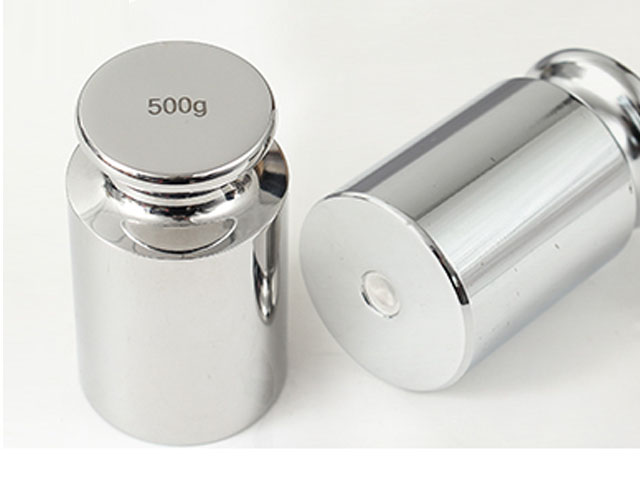
The core value of standard weights lies in providing a fixed, repeatable mass reference for digital scale calibration and verification. Unlike ordinary objects with unstable mass, standard weights are manufactured with strict control over material density, structural uniformity, and surface stability, with mass values fixed within a reasonable tolerance range. Digital scales operate based on the force sensing principle: the load cell inside the equipment converts the pressure generated by the measured object into a weak electrical signal, which is amplified, converted from analog to digital, and processed by a microprocessor to output numerical weight data. After prolonged use, the internal sensing components of digital scales may experience slight elastic fatigue, circuit parameters may drift, and external factors such as temperature changes, vibration, and dust accumulation can all interfere with signal conversion accuracy, leading to gradual deviation between displayed values and actual mass. Standard weights precisely offset this deviation by providing a known accurate mass reference, allowing users to adjust scale parameters to restore measurement consistency.
The working coordination between standard weights and digital scales follows a rigorous physical measurement logic. All weight measurement systems rely on unified gravitational field reference conditions, and standard weights are designed based on conventional gravitational acceleration parameters to ensure mass stability in conventional working environments. When calibrating a digital scale, placing a qualified standard weight on the center of the scale’s weighing platform triggers the load cell to generate a corresponding electrical signal. The scale’s internal system compares the converted digital reading with the fixed mass value of the standard weight. If a numerical difference exists, it indicates the presence of measurement error in the scale. Through fine adjustment of internal calibration parameters, the system corrects signal conversion coefficients, enabling the scale’s output data to match the standard mass value. This calibration process essentially unifies the scale’s sensing benchmark with the universal mass reference, ensuring that all subsequent measurements of unknown objects maintain consistent accuracy.
Standard weights are applicable to almost all scenarios where digital scales are used for quantitative measurement, covering household, commercial, industrial, and laboratory fields. In daily household scenarios, small precision standard weights are used for calibrating portable digital scales, kitchen weighing tools, and personal body scales. Frequent use and frequent movement of household digital scales easily cause slight displacement of internal components and parameter drift, leading to inaccurate measurement of food ingredients or body weight. Regular calibration with standard weights can maintain the basic accuracy of household weighing tools, supporting daily quantitative life management. In commercial retail environments, digital scales for ingredient weighing, commodity pricing, and parcel weighing require higher measurement stability. Regular verification with standard weights ensures fair transaction measurement, avoids numerical deviation that may affect transaction fairness, and maintains standardized operational order in commercial weighing.
In industrial production and processing, the application value of standard weights is more prominent. Many industrial production links rely on digital scales for batching, ingredient proportioning, and finished product weighing. Slight measurement errors may lead to unqualified product proportions, unstable product quality, or increased production costs. Industrial digital scales usually bear frequent and heavy load impacts, and internal sensing components are more prone to performance attenuation. Timely calibration and detection with matching standard weights can effectively monitor the working state of industrial scales, correct accumulated measurement errors in a timely manner, and ensure the consistency of material proportioning and product weight in each production batch. In laboratory scientific research and precision testing scenarios, the requirement for measurement accuracy of digital scales is further improved. Experimental data repeatability and reliability depend entirely on accurate weighing results. High-precision standard weights provide ultra-stable reference conditions for laboratory scale calibration, eliminating measurement interference caused by equipment subtle changes and ensuring the authenticity and validity of experimental data.
The rational selection of standard weights directly affects the calibration effect of digital scales, and the core selection principle is matching the scale’s measuring range and precision level. Each digital scale has a fixed optimal measurement interval, and the calibration effect is best when the standard weight mass is within the middle and upper range of the scale’s measuring range. Using an excessively light standard weight cannot effectively trigger the full working state of the scale’s load cell, making it impossible to detect subtle errors in heavy-load measurement; using an excessively heavy standard weight may cause overload pressure on the scale, damage internal sensing components, and even cause permanent equipment performance degradation. For high-precision digital scales used in laboratories and fine processing, it is necessary to select high-stability standard weights with smaller tolerance ranges to match the equipment’s high-resolution measurement capability. For ordinary household and commercial digital scales, conventional standard weights with moderate precision can meet daily calibration and verification needs.
Standardized operation steps are key to exerting the calibration effect of standard weights, and non-standard operation is an important cause of ineffective calibration. Before calibration, it is necessary to place the digital scale on a horizontal, stable working surface to avoid measurement errors caused by tilting and vibration. The weighing platform should be cleaned thoroughly to remove surface dust, stains, and residual sundries, ensuring no external impurities affect the contact between the standard weight and the scale surface. Before formal calibration, the scale needs to be preheated and zeroed to eliminate zero drift errors generated by equipment standby and environmental changes. When placing the standard weight, it should be stably positioned at the center of the weighing platform, avoiding contact with the scale edge or external objects, so that the gravity of the standard weight can fully act on the internal sensing area of the scale.
During the calibration process, multiple sets of repeated measurements are required rather than a single detection. Multiple placement and reading tests of standard weights can eliminate accidental errors caused by manual operation and temporary environmental fluctuations. If the reading deviation is consistent for multiple times, formal parameter calibration and adjustment can be carried out; if the reading data fluctuates randomly, it is necessary to recheck the placement state of the scale, the stability of the environment, and the surface cleanliness of the standard weight, and perform calibration again after troubleshooting. After calibration is completed, it is necessary to retain the standard weight for static detection for a period of time to observe whether the scale’s reading remains stable, confirming that the calibration effect is durable and effective.
Daily maintenance and preservation of standard weights are crucial to maintaining their long-term reference accuracy. The mass stability of standard weights is easily affected by external environmental factors. Long-term exposure to humid air may cause surface oxidation and corrosion, changing the surface quality and overall mass of the weights; adhesion of dust, oil stains, and chemical residues will also cause subtle mass changes and reduce calibration accuracy. Therefore, standard weights need to be placed in a dry, clean, and constant-temperature storage environment when not in use, avoiding contact with corrosive substances and sharp hard objects to prevent surface scratches and structural damage. It is not allowed to arbitrarily stack, drop, or violently collide standard weights, as external impact will cause internal structural changes and mass deviation, losing standard reference value.
Regular cleaning and performance verification of standard weights are also essential daily management measures. For standard weights used in conventional environments, surface dust and stains should be cleaned regularly with soft cleaning tools to keep the surface smooth and clean. For standard weights used in humid, dusty, or chemically contacted industrial environments, more frequent maintenance is required to prevent residual substances from eroding the material surface. Meanwhile, standard weights themselves need regular precision detection to confirm whether their mass value remains within the standard tolerance range. Long-term use and environmental erosion may cause subtle mass changes in standard weights. Timely detection and screening of unqualified weights can avoid using deviated reference tools for calibration, which would lead to overall inaccurate measurement of digital scales.
The coordination between standard weights and digital scales forms a complete closed-loop system for weight measurement error control. In the whole life cycle of digital scales, initial factory debugging, daily use detection, regular cycle calibration, and post-maintenance verification all require the support of standard weights. Many users ignore the importance of regular calibration in the process of using digital scales, mistakenly believing that electronic measuring equipment can maintain long-term accuracy without manual adjustment. In fact, the performance of all electronic sensing equipment will gradually attenuate with the increase of service time and the change of working environment. Without regular calibration with standard weights, measurement errors will continue to accumulate, gradually affecting the accuracy of daily measurement, transaction settlement, production processing, and experimental research.
In different application scenarios, the calibration cycle of digital scales with standard weights needs to be adjusted according to the frequency of use and working conditions. Household digital scales with low use frequency and stable working environment can be calibrated every few months to maintain basic accuracy. Commercial scales with high daily use frequency and continuous load working state need shorter calibration cycles to ensure long-term stable measurement performance. Industrial scales working in harsh environments such as high dust, high humidity, and frequent heavy-load impact have the fastest performance attenuation and the most obvious error accumulation, requiring more frequent calibration and detection with standard weights. Laboratory precision scales used for scientific research experiments need to be calibrated before each key experiment to ensure the absolute credibility of experimental data.
In addition to correcting measurement errors, standard weights can also help users judge the working state of digital scales in advance. In the process of regular calibration, if the scale has small and adjustable reading deviation, it indicates that the equipment is in normal aging state and can continue to work after calibration. If the reading deviation is too large, or the data fluctuates violently and cannot be corrected effectively, it indicates that the internal load cell, circuit system or structural parts of the digital scale may have failed. At this time, users can stop using the equipment in a timely manner and carry out maintenance and replacement, avoiding continuous use of faulty scales to produce a large number of invalid or wrong measurement data.
With the continuous upgrading of digital scale technology, the types and precision levels of supporting standard weights are also constantly optimized and enriched. Modern standard weights adopt more stable composite materials and fine processing technology, with better anti-corrosion, anti-wear and anti-impact performance, adapting to more complex working environments. At the same time, the matching degree between standard weights and intelligent digital scales is continuously improved, which can better adapt to the high-precision and intelligent measurement needs of modern weighing equipment. No matter how the equipment technology iterates, the core logic of relying on standard weights to unify measurement benchmarks and correct errors remains unchanged, which is the basic guarantee for the standardized development of weight measurement work.
In conclusion, standard weights are the core reference guarantee for the accurate operation of digital scales, running through the whole process of equipment use and maintenance. Correct selection, standardized use, and scientific maintenance of standard weights can effectively maintain the measurement accuracy and stability of digital scales, reduce systematic and accidental measurement errors, and ensure the authenticity and reliability of weighing results in life, commerce, industry, and scientific research. For all users who rely on digital scales for quantitative measurement, attaching importance to the calibration work with standard weights and forming a regular detection and maintenance habit is an essential prerequisite to ensure the standardized and efficient operation of weighing work. Only by taking stable standard mass as the benchmark can digital scales always maintain good working performance and provide accurate and consistent measurement services for various application scenarios.
Digital Scale Standard Weight
https://www.veidtweighing.com/standard-weights.html
Post Date: Jun 7, 2026
https://www.supplier-manufacturer.com/standard-weight/digital-scale-standard-weight.html

![Stainless Steel Standard Weight For Weighing Instrument Verification]()
Stainless Steel Standard Weight For Weighing Instrument Verification
Stainless steel standard weights serve as fundamental precision tools for the verification and calibration of all types of weighing instruments, laying a solid foundation …![Standard Weight For Hanging Scales]()
Standard Weight For Hanging Scales
Standard weights for hanging scales are fundamental metrological reference tools that underpin the accuracy, consistency, and reliability of suspended weighing operations …![Standard Weight For Analytical Balances]()
Standard Weight For Analytical Balances
In precision laboratory measurement, analytical balances stand as foundational instruments that deliver highly accurate mass readings for chemical analysis, pharmaceutical…![Oiml F2 Calibration Standard Weight]()
Oiml F2 Calibration Standard Weight
Mass measurement forms the foundational backbone of all quantitative scientific research, industrial production, and commercial transaction activities. Every data result o…![Analytical Balance Calibration Weight]()
Analytical Balance Calibration Weight
Analytical balance calibration weights serve as fundamental reference tools in precision weighing operations, forming the core foundation for maintaining the accuracy and …