Small Gram Size Laboratory Standard Test Weight
Small gram size laboratory standard test weights are essential precision tools designed to deliver accurate mass reference values for microscopic and fine-scale weighing operations in diverse laboratory environments. Tailored for ultra-light mass verification, these miniature weights serve as the foundational benchmark for calibrating high-sensitivity analytical balances, micro-scales, and precision weighing instruments that handle milligram and gram-level sample measurements. Unlike conventional large-scale test weights, their compact gram-scale specification caters exclusively to fine laboratory testing scenarios where even minor mass deviations can compromise experimental validity and data accuracy. These precision mass references underpin the reliability of quantitative experiments across scientific research, chemical analysis, pharmaceutical formulation, and material testing fields. By providing stable, consistent, and verifiable mass references, they eliminate systematic errors in weighing equipment, ensure repeatable experimental results, and support the rigorous precision demands of modern laboratory quantitative analysis work throughout all testing procedures.
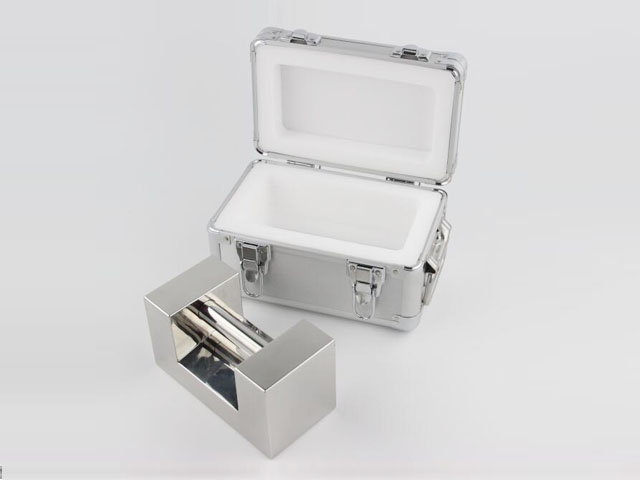
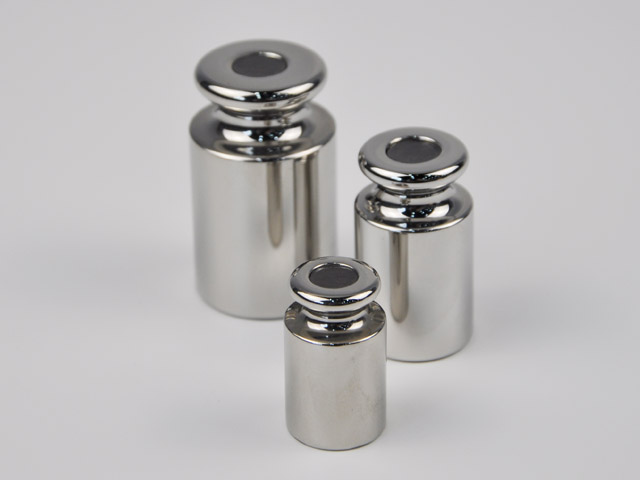
The core design and structural characteristics of small gram size laboratory standard test weights are optimized to meet the rigorous precision requirements of fine laboratory weighing scenarios. Crafted from high-density, corrosion-resistant materials, these miniature weights feature uniform density distribution and smooth, polished surface finishes that prevent dust adhesion, oxidation, and surface abrasion, all of which could alter their precise mass values over time. Their compact gram-scale dimensions are engineered with meticulous dimensional accuracy, ensuring consistent geometric symmetry that avoids uneven stress distribution during weighing contact. Each weight undergoes refined manufacturing processes to eliminate internal defects and surface irregularities, maintaining stable mass performance in long-term laboratory use. The streamlined structural design also facilitates easy handling with specialized laboratory tweezers, avoiding direct manual contact that may leave fingerprints, oil stains, or tiny scratches affecting measurement precision. Additionally, the surface treatment process enhances environmental adaptability, enabling these small gram weights to resist subtle mass changes caused by temperature fluctuations, humidity variations, and minor atmospheric interference in conventional laboratory conditions.
Routine calibration verification is the primary application scenario of small gram size laboratory standard test weights, forming the core guarantee for accurate daily laboratory weighing work. High-precision micro and analytical balances, which are widely used in fine sample weighing, are prone to subtle performance drift due to long-term operation, environmental changes, and frequent use. These small gram test weights provide fixed and reliable mass references for regular instrument inspection and calibration adjustment. Laboratory operators can conduct quick daily checks and periodic comprehensive calibrations by placing the standard weights on weighing platforms, comparing instrument display readings with the inherent standard mass, and identifying tiny measurement deviations in a timely manner. This routine verification work effectively corrects systematic errors of weighing equipment, ensures the instruments maintain optimal precision status for long-term operation, and avoids inaccurate experimental data caused by uncalibrated weighing devices. Regular calibration with gram-scale standard weights also extends the service life of precision weighing instruments and reduces the frequency of professional maintenance and overhaul.
Small gram size laboratory standard test weights play an irreplaceable role in chemical and biochemical laboratory experimental research. In quantitative chemical analysis experiments such as solution preparation, reagent titration, and trace component detection, the accurate weighing of gram-level and milligram-level chemical reagents directly determines the accuracy of experimental formulas and final analytical results. Trace biochemical experiments involving enzyme activity detection, microbial culture medium preparation, and biomaterial sampling also require ultra-precise mass control of tiny samples. These standard test weights calibrate high-sensitivity weighing instruments before each batch of experiments, ensuring that the mass of reagents and samples used in experiments is completely consistent with theoretical settings. Even minimal mass errors in fine chemical experiments may lead to failed reaction ratios, distorted experimental phenomena, and invalid data conclusions. The stable and accurate mass reference provided by small gram test weights effectively eliminates weighing interference factors, guarantees the repeatability and comparability of chemical and biochemical experimental data, and supports reliable experimental conclusion derivation.
In pharmaceutical and biomedical laboratory applications, small gram size laboratory standard test weights ensure the precision and safety of drug research and sample testing processes. Pharmaceutical laboratory work involves fine operations such as raw material weighing for new drug development, trace auxiliary material proportioning, and pharmaceutical sample purity testing, all of which put forward extremely strict requirements on weighing accuracy. Tiny deviations in the weighing of pharmaceutical raw materials may affect drug formulation stability, efficacy consistency, and even drug safety. These gram-scale standard weights are used for daily calibration of pharmaceutical laboratory precision weighing equipment, ensuring accurate measurement of trace drug samples and raw materials. In biomedical testing, they support the precise weighing of biological samples, pathological specimens, and experimental reagents, providing reliable mass data basis for disease detection, drug efficacy verification, and biomedical research. The excellent stability and precision of the test weights avoid measurement errors that may affect experimental safety and result authenticity, complying with the rigorous precision norms of pharmaceutical and biomedical laboratory research.
Material science and micro-industry testing laboratories also rely heavily on small gram size laboratory standard test weights for precision mass detection and performance evaluation. In the research of new lightweight materials, nano-materials, and thin-film materials, sample quality is often limited to gram-level or even sub-gram ranges, and subtle mass changes can reflect important material performance characteristics such as density, porosity, and structural stability. Researchers use calibrated weighing instruments verified by small gram standard test weights to accurately measure tiny material samples, record mass changes before and after material processing, environmental aging, and performance testing, and analyze material structural changes and performance variations. In micro-industry precision testing, these test weights support the quality inspection of miniature electronic components, fine chemical products, and small precision parts, ensuring that product mass indicators meet experimental and production design requirements. The high-precision mass reference capability of the weights provides accurate data support for material performance analysis, product quality evaluation, and new material development innovation.
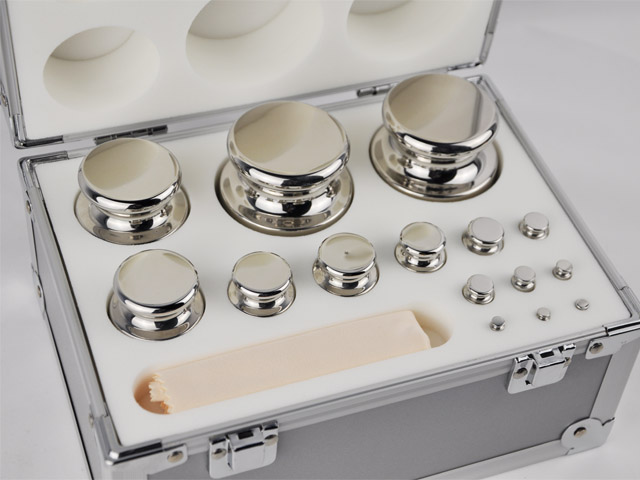
Standardized use and scientific maintenance are key to maintaining the long-term precision performance of small gram size laboratory standard test weights. In terms of use specifications, operators must adopt standardized operation methods, using professional tweezers for handling instead of direct hand contact to prevent surface contamination and mass deviation caused by human factors. The test weights should be placed stably on the center of the weighing platform during calibration and testing to avoid eccentric placement affecting measurement accuracy, and they need to be used in a clean, stable laboratory environment away from vibration, strong wind, and corrosive gas interference. In daily maintenance, the weights need regular cleaning with professional dust-free cleaning tools to remove surface dust and tiny impurities, and be stored in sealed, dry, and shockproof special storage boxes when not in use. Long-term exposure to humid and dusty environments will cause subtle oxidation and adhesion pollution on the weight surface, gradually reducing measurement accuracy. Scientific maintenance can effectively lock the precision performance of the test weights, extend their service cycle, and ensure stable and reliable reference effects in long-term laboratory testing work.
With the continuous improvement of laboratory precision testing requirements, the application value and technical requirements of small gram size laboratory standard test weights are constantly upgraded and expanded. Modern laboratory scientific research is developing toward micro-quantification and high-precision quantification, and the demand for ultra-fine mass reference standards in various professional fields is increasing day by day. These small gram test weights, as basic precision measuring tools, are gradually adapting to more refined experimental scenarios through optimized material formulas and refined manufacturing technologies, achieving higher mass stability and environmental adaptability. In interdisciplinary research involving physics, chemistry, biology, and environmental science, they provide unified and accurate mass reference standards for cross-domain experimental data, improving the consistency and credibility of scientific research results. As the core guarantee for fine weighing accuracy in laboratories, small gram size standard test weights will continue to support the steady development of high-precision scientific research, experimental testing, and quality inspection work in various industries.
Small Gram Size Laboratory Standard Test Weight
https://www.veidtweighing.com/laboratory-weights.html
Post Date: Aug 14, 2026

![F1 Class Calibration Weight]()
F1 Class Calibration Weight
Precision mass measurement forms the foundational pillar of modern scientific research, industrial manufacturing, quality control, and material testing, where even minor d…![25kg Oiml Standard Calibration Weight Crane Scale Test]()
25kg Oiml Standard Calibration Weight Crane Scale Test
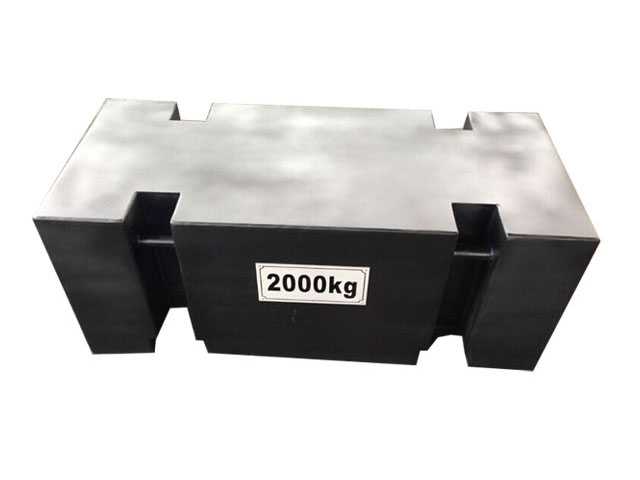
Industrial weighing operations rely heavily on the stable and consistent performance of crane scales, which undertake weight measurement tasks for suspended loads in manuf…![2000kg Industrial Calibration Weight Heavy Industry Scale]()
2000kg Industrial Calibration Weight Heavy Industry Scale
In modern heavy industrial production and commercial measurement operations, consistent and accurate weighing data serves as a fundamental foundation for standardized prod…![Standard Weight Wholesale]()
Standard Weight Wholesale
Standard weight wholesale stands as a foundational pillar within the broader B2B distribution ecosystem, serving as the critical connecting link between product producers,…![High Precision Weight]()
High Precision Weight
High precision weight serves as a fundamental foundational component in modern industrial manufacturing, scientific research, experimental testing, and precision mechanica…