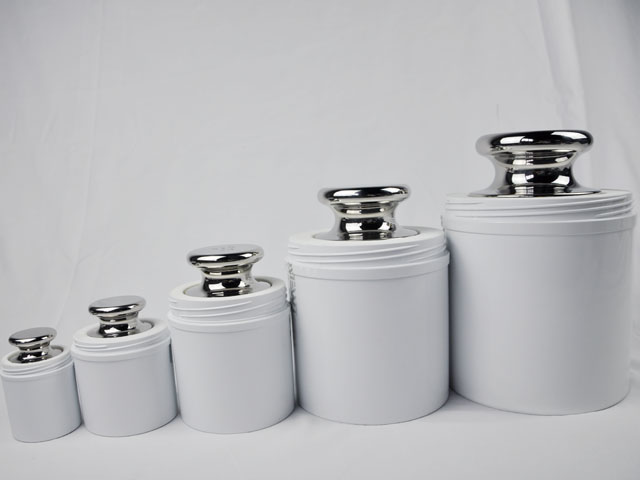
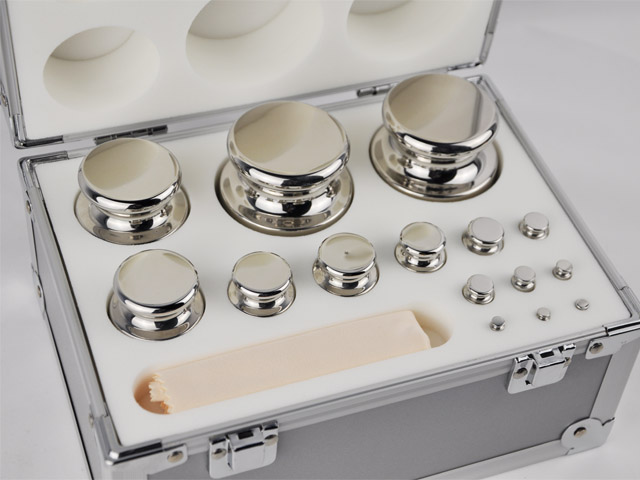
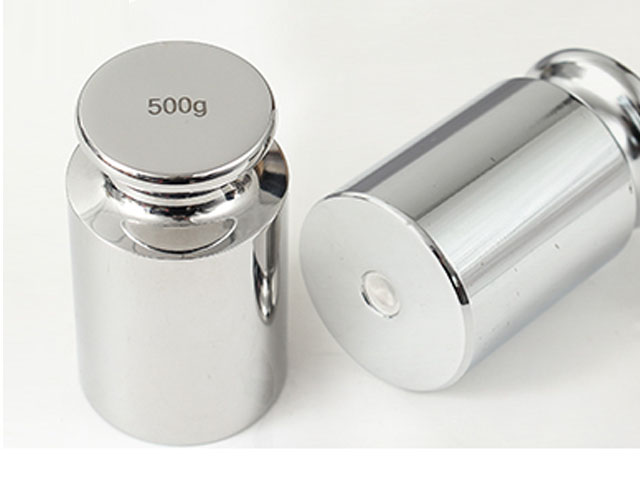
Types of Laboratory Weight
Laboratory weights are fundamental mass standard tools applied across scientific research, chemical analysis, pharmaceutical testing, material experimentation, and industrial quality inspection. Serving as the core reference for mass measurement, these standardized weights ensure the consistency, traceability, and reliability of all weighing data obtained from laboratory balance equipment. The classification of laboratory weights follows multiple dimensional criteria, including accuracy grading, manufacturing materials, structural design, and practical application scenarios. Each category possesses unique physical properties, functional characteristics, and applicable environments, forming a complete system to meet diversified weighing and calibration demands in laboratory operations. Understanding the distinctions and matching principles of different laboratory weights is essential for standardizing experimental operations, reducing measurement errors, and improving the accuracy of experimental results.
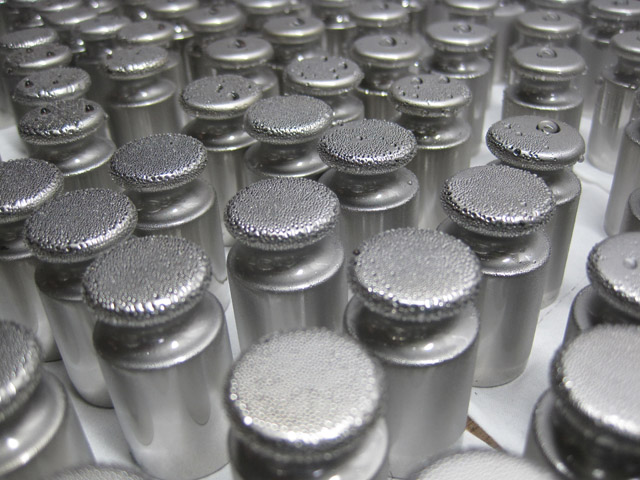
Accuracy grade classification is the most widely adopted and core classification method for laboratory weights in daily laboratory applications. This classification mode divides weights into multiple gradients based on allowable measurement deviation, surface finish, dimensional tolerance, and environmental adaptability, forming a hierarchical standard system for mass calibration and verification. High-grade laboratory weights feature extremely low tolerance ranges, stable physical properties, and strict production precision, mainly undertaking the transmission and calibration of mass standards in laboratories. Medium and low-grade weights focus more on practical applicability, suitable for routine calibration and daily weighing verification of conventional laboratory equipment. The hierarchical setting of accuracy grades forms a mutually supportive and complementary usage system, avoiding the waste of high-precision resources and preventing insufficient accuracy of low-grade tools affecting experimental data.
High-precision laboratory weights represent the upper tier of accuracy-grade weighing tools, designed for ultra-precise mass calibration in high-end scientific research and precision analysis scenarios. These weights are manufactured with rigorous processing techniques, with minimal mass deviation within an extremely narrow range, and their physical dimensions and surface flatness are strictly controlled. Their production and use require stable laboratory environments with constant temperature, constant humidity, and isolation from vibration and dust interference. In practical applications, these high-precision weights are mainly used for calibrating ultra-micro balances, analytical balances, and other high-sensitivity weighing equipment, and also serve as standard reference objects for value traceability of other lower-grade weights in laboratories. They are widely involved in nanomaterial research, pharmaceutical ingredient analysis, trace chemical detection, and precision physical experiments, where tiny mass changes will directly affect experimental conclusions, making the high stability and accuracy of these weights indispensable.
Medium-precision laboratory weights are the most commonly used type in conventional laboratory daily operations, striking a reasonable balance between accuracy performance and practical usability. With moderate tolerance ranges, they can meet the calibration needs of most conventional analytical balances, precision electronic scales, and experimental weighing equipment used in routine chemical and biological experiments. The environmental adaptability of medium-precision weights is better than that of high-precision types, allowing normal use in standard laboratory environments without overly strict extreme environmental control. These weights undertake the main daily calibration work of laboratory weighing equipment, including regular verification of balance accuracy before experiments, correction of weighing deviation caused by long-term equipment operation, and auxiliary calibration of conventional quantitative weighing operations. They cover most basic experimental scenarios in chemistry, biology, environmental detection, and food testing laboratories, and are the most widely applied mass standard tools in general scientific research and teaching laboratories.
General-purpose laboratory weights belong to low-tolerance standard weights, mainly oriented to low-precision weighing verification and teaching experimental scenarios. Their manufacturing precision is relatively loose, with a wider allowable mass deviation range, which can meet the basic weighing standard requirements of rough weighing equipment and teaching experimental instruments. Such weights are often used in student teaching experiments, routine inspection of low-precision electronic scales, and qualitative and semi-quantitative experimental weighing scenarios that do not require ultra-high data accuracy. Although their precision is limited, their stable physical properties and low maintenance requirements make them suitable for frequent use and simple operation scenarios, effectively supporting basic laboratory teaching and conventional auxiliary detection work.
In addition to accuracy grading, laboratory weights can be clearly classified according to manufacturing materials, and different materials determine the weight’s density, surface stability, corrosion resistance, wear resistance, and environmental adaptability, thus matching different application scenarios and service life cycles. Stainless steel is one of the most mainstream manufacturing materials for modern laboratory weights. Stainless steel weights feature uniform density, smooth and flat surface, strong oxidation resistance, and good corrosion resistance, and are not easily affected by common laboratory chemical reagents, humid air, and dust pollution. The surface of stainless steel weights is not prone to wear and peeling during long-term use, maintaining stable mass consistency for a long time. Such material characteristics make stainless steel weights suitable for most conventional laboratory environments, covering high, medium, and partial low-precision grade specifications, and becoming the preferred type for most professional laboratories.
Cast iron is a traditional manufacturing material for laboratory weights, mostly used for the production of large-specification and general-purpose low-precision weights. Cast iron materials have high overall density and low production cost, and can be made into weights with large single mass specifications, meeting the calibration needs of large-range weighing equipment. To improve surface stability, cast iron weights are usually treated with anti-rust coating on the surface to isolate air and moisture and reduce oxidation and rust problems. However, compared with stainless steel, cast iron materials have poorer surface finish, weaker corrosion resistance, and are more susceptible to environmental humidity and chemical gas erosion, which may cause slight mass changes after long-term use. Therefore, cast iron weights are mostly used in industrial auxiliary laboratories, teaching laboratories, and other scenarios with low precision requirements, and are rarely used in high-precision scientific research and analytical detection experiments.
Aluminum alloy and brass are special materials applied to partial high-precision and small-specification laboratory weights. Aluminum alloy has low density and light weight, making it suitable for manufacturing ultra-small mass weights in milligram and microgram levels. Such small-specification aluminum alloy weights are easy to handle and not prone to accidental mass loss caused by excessive gravity, and are often used for calibration of ultra-micro precision balances. Brass materials have stable chemical properties, good surface finish, and strong wear resistance, with mass stability slightly better than ordinary stainless steel in some extreme dry environments. Brass weights are mostly made into medium and small precision specifications, suitable for professional laboratories with high requirements for material stability and surface finish, and are often used as auxiliary standard weights for fine calibration operations.
Structural design is another important basis for classifying laboratory weights, and different structural forms adapt to different weighing operation habits and equipment matching requirements. Solid integral weights are the most common structural type, formed by one-piece processing of integral materials without internal gaps or adjustable structures. The overall structure of solid weights is compact, with extremely stable mass, no hidden danger of mass change caused by internal structural loosening, and strong compression and wear resistance. They are suitable for long-term fixed use and high-precision calibration scenarios, and are the mainstream structural form of high and medium-precision laboratory weights of various specifications. The one-piece processing technology ensures uniform internal material density, effectively avoiding measurement deviation caused by uneven material distribution, and providing stable mass reference for precise experimental weighing.
Adjustable laboratory weights have a special composite structure, with adjustable internal mass components, allowing fine tuning of the overall mass within a small range. This structural design enables the weights to compensate for tiny mass deviations generated after long-term use, extending their service life and maintaining continuous usability. Adjustable weights are mostly medium and low-precision specifications, commonly used in teaching laboratories and conventional industrial detection scenarios. Their structural characteristics make them flexible in use, but the internal adjustable structure leads to relatively lower overall stability than integral solid weights, requiring regular inspection and calibration of internal fastening conditions to avoid mass deviation caused by structural loosening.
Wire weights and sheet weights are special structural laboratory weights, designed for ultra-small mass calibration scenarios. Wire weights are made of fine metal wires with precise cutting length to control mass, featuring ultra-light weight and high precision, mainly covering microgram and milligram ultra-small specifications. Sheet weights are processed into thin sheet structures with uniform thickness, with flat surfaces and stable placement, suitable for calibration of flat weighing platforms and micro-weighing equipment. These two special structural weights fill the gap of ultra-small mass standard tools in laboratories, meeting the precision calibration needs of high-sensitivity micro-weighing instruments in advanced scientific research experiments.
From the perspective of application scenarios, laboratory weights can be divided into standard calibration weights and daily working weights, with clear functional division. Standard calibration weights are dedicated mass reference tools, used for value traceability and accuracy verification of laboratory weighing equipment and other working weights. They are stored in constant-temperature and dry special storage environments, with low use frequency and strict use and maintenance specifications, ensuring long-term mass stability and serving as the benchmark for laboratory mass measurement accuracy. Daily working weights are conventional tools for daily experimental calibration and weighing correction, with high use frequency, adapting to frequent operation scenarios, and focusing on practicality and durability on the basis of meeting basic accuracy requirements.
Different types of laboratory weights have distinct maintenance and use requirements, which are important factors to ensure their measurement accuracy and service life. High-precision stainless steel and special alloy weights need to avoid direct contact with hands during use, as sweat and grease on the skin will cause surface contamination and tiny mass changes. They also need to be stored in sealed and dust-proof special boxes, avoiding long-term exposure to humid, high-temperature or corrosive gas environments. General-purpose cast iron weights need regular surface anti-rust maintenance to prevent rust layer from affecting mass accuracy. Adjustable structural weights require regular inspection of internal structural tightness to prevent loosening and mass deviation. Standard calibration weights need regular professional calibration to ensure the traceability of mass values, while daily working weights can be verified by matching standard weights regularly to maintain stable use performance.
In practical laboratory work, the reasonable selection of weight types directly affects the accuracy of experimental data and the standardization of experimental operations. It is necessary to match the corresponding accuracy grade, material and structural weight according to the precision level of weighing equipment, experimental purpose and environmental conditions. High-precision analytical experiments and scientific research projects need to adopt high-grade integral stainless steel or special alloy weights; conventional basic experiments and equipment daily calibration can select medium-precision stainless steel weights; teaching experiments and low-precision auxiliary detection can adopt general-purpose cast iron or adjustable weights. Scientific selection and standardized use of different types of laboratory weights can effectively reduce system measurement errors, ensure the authenticity and repeatability of experimental data, and provide reliable basic support for all laboratory scientific research and detection work.
Types of Laboratory Weight
https://www.veidtweighing.com/laboratory-weights.html
Post Date: Jun 7, 2026
https://www.supplier-manufacturer.com/laboratory-weight/types-of-laboratory-weight.html

![Specifications of Laboratory Weight]()
Specifications of Laboratory Weight
Laboratory weights are fundamental mass reference objects widely applied in experimental testing, instrument verification, and quantitative analysis across scientific rese…![What is Stainless Steel Weight]()
What is Stainless Steel Weight
Stainless steel weights serve as essential foundational tools for routine weighing adjustment and daily precision checking across various laboratory, industrial and educat…![Laboratory Weight Set]()
Laboratory Weight Set
In every laboratory environment dedicated to scientific research, experimental analysis, quality inspection, and academic teaching, consistent and dependable mass measurem…![500g Stainless Steel Weight]()
500g Stainless Steel Weight
A 500g stainless steel weight stands as one of the most fundamental and widely utilized weighing auxiliary tools across countless professional sectors, daily operational s…![Stainless Steel Cylindrical Calibration Weight All Sizes]()
Stainless Steel Cylindrical Calibration Weight All Sizes
Stainless steel cylindrical calibration weights serve as fundamental metrological tools across laboratory research, industrial production, commercial measurement, and qual…