Balance Standard Weight
In every field that relies on quantitative measurement, the coordination between balance equipment and standard weight serves as the fundamental foundation of accurate data acquisition, supporting the orderly operation of scientific research, industrial production, experimental analysis and daily measurement work. The core value of balance standard weight lies in providing a unified, stable and reliable reference benchmark for mass measurement, eliminating the errors caused by environmental changes, equipment differences and manual operation, and maintaining the consistency and credibility of measurement results in different time and space scenarios. Unlike intuitive weight detection tools that simply sense gravity, the combination of balance and standard weight realizes mass comparison based on the principle of force equilibrium, which makes measurement results more stable and adaptable to complex application environments.
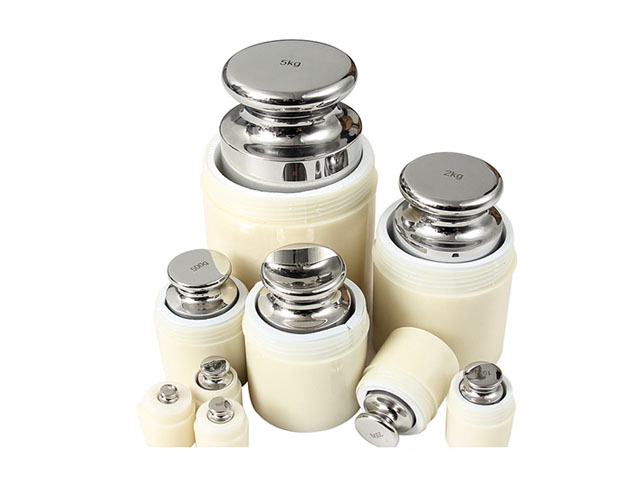
The working logic of balance standard weight originates from the basic physical principle of torque balance and gravitational equilibrium. A typical balance structure consists of a horizontally suspended beam, symmetric weighing platforms and a central pivot point. When the equipment is in a horizontal and stable state, the gravitational torque generated by the objects placed on the two ends of the beam keeps the whole system in a balanced state. Standard weights, as prefabricated reference objects with stable and uniform mass attributes, are placed on one side of the balance platform, while the measured objects with unknown mass are placed on the other side. By increasing or decreasing the number and combination of standard weights and fine-tuning the balance state, the beam can return to a horizontal equilibrium position. At this moment, the mass of the measured object matches the total mass of the combined standard weights, completing the accurate quantification of the unknown mass.
It is crucial to distinguish the essential difference between mass and weight in the application of balance standard weight. Weight is a variable force affected by local gravitational acceleration, which will change with the difference of geographical location and altitude. In contrast, mass is an inherent attribute of an object, maintaining constant under all conventional environmental conditions. The balance measurement method based on standard weights realizes mutual offset of gravitational influence on both sides of the equipment. Whether in plain areas, high-altitude areas or different indoor and outdoor environments, the equilibrium comparison mode can always obtain accurate mass data of the measured object. This unique advantage makes balance standard weight an irreplaceable tool in precise measurement scenarios that require long-term stability and cross-environment consistency.
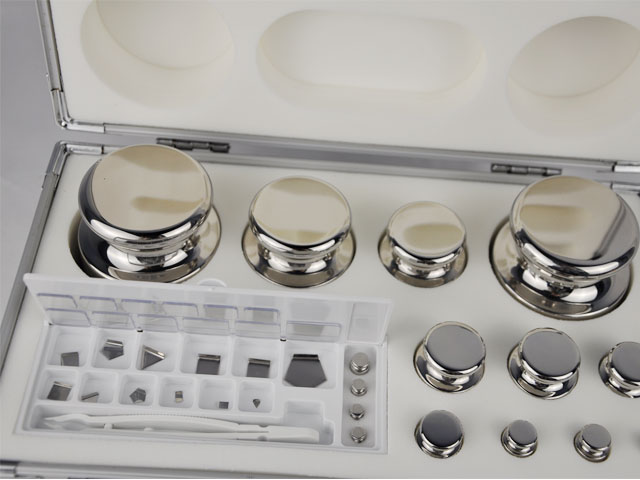
The production and design of standard weights follow unified dimensional norms and physical attribute requirements, focusing on ensuring the uniformity, stability and anti-interference of mass attributes. In the production process, raw materials with low density deviation, strong oxidation resistance and stable physical properties are selected to avoid mass loss or attribute change caused by long-term placement, temperature change and humidity erosion. The surface of standard weights is treated with fine processing to reduce surface roughness, prevent the adhesion of dust, moisture and impurities, and avoid extra mass interference caused by external attachments. Meanwhile, the overall structure of standard weights is designed to be compact and regular, ensuring uniform force bearing during placement, preventing tilt and offset, and providing stable reference conditions for balance equilibrium judgment.
The matching use of balance and standard weight runs through multiple core fields of social production and scientific exploration. In basic scientific research laboratories, a large number of precision experiments require accurate mass data as the support of experimental conclusions. Chemical component analysis, physical density measurement, material proportioning experiments and other research work all need to rely on balance standard weight to obtain accurate sample mass, ensuring the repeatability and verifiability of experimental data. Slight mass deviations may lead to the deviation of experimental results and even affect the derivation of scientific laws and experimental conclusions. Therefore, standardized weighing operation with standard weights has become a basic operating norm in all scientific experiment processes involving mass measurement.
In industrial manufacturing and processing links, balance standard weight provides unified measurement standards for product quality control and production proportioning. In the processing of fine chemical raw materials, pharmaceutical ingredients, food additives and precision electronic materials, the accurate proportion of raw materials directly determines the quality, performance and safety of finished products. Workers use balanced weighing equipment matched with standard weights to calibrate weighing tools in real time and detect the mass of raw materials and semi-finished products in each production link, so as to ensure the consistency of product batch attributes and avoid product performance differences caused by inaccurate proportioning. In addition, in the quality inspection of hardware parts, mechanical accessories and precision molds, the mass detection based on standard weights can screen out unqualified products with substandard specifications, effectively controlling the overall quality level of production products.
Metrological detection and daily measurement verification are also important application scenarios of balance standard weight. All kinds of weighing equipment used in production, life and detection work will produce slight measurement errors after long-term use, vibration and environmental erosion. Regular calibration with qualified standard weights can correct the error deviation of weighing equipment, restore the measurement accuracy of the equipment, and ensure the normal and reliable operation of the whole measurement system. This standardized calibration and verification mode maintains the unified measurement standard of the whole industry, avoids measurement chaos caused by inconsistent equipment accuracy, and provides a basic guarantee for fair transaction, standardized production and accurate detection in all walks of life.
The accuracy of balance standard weight measurement results is affected by multiple subtle environmental and operational factors, so standardized operation and environmental control are essential in the application process. Temperature change will cause slight thermal expansion and contraction of balance components and standard weights, leading to tiny changes in volume and mass distribution, thus interfering with the equilibrium state. Excessively high or low air humidity will cause moisture adsorption or surface corrosion of standard weights and balance platforms, producing extra mass interference. In addition, external air flow, ground vibration and uneven placement of equipment will also affect the horizontal balance state of the beam, resulting in measurement deviations.
To reduce measurement errors, the use environment of balance and standard weights needs to maintain stable temperature and humidity, avoid direct air flow and mechanical vibration interference, and keep the placement platform flat and solid. In terms of operation, staff need to keep the surface of standard weights and balance platforms clean and dry, and handle standard weights gently to avoid collision, friction and scratch. Long-term friction and impact will damage the surface structure of standard weights, cause local material loss, and change the original standard mass attributes. At the same time, standard weights of different specifications need to be classified and stored, avoiding mixed placement and mutual extrusion, so as to maintain their long-term attribute stability.
The long-term maintenance and management of balance standard weight is the key to ensure continuous and stable measurement accuracy. Standard weights will inevitably be affected by the external environment during long-term use and storage, and subtle changes in surface state and physical attributes will occur over time. Regular manual inspection and professional calibration can timely discover tiny mass deviations and surface damage problems, and carry out maintenance and correction in time. For balance equipment, regular cleaning of rotating parts, lubrication of movable structures and correction of horizontal state can ensure the flexible operation of the beam and accurate judgment of equilibrium state, reducing systematic errors caused by equipment aging.
The popularization and standardized application of balance standard weight has laid a solid foundation for the standardized development of modern measurement systems. All accurate mass measurement work in modern society cannot be separated from the reference support of standard weights and the equilibrium comparison principle of balances. From basic scientific research and industrial production to people's daily transaction measurement and commodity detection, this set of measurement modes maintains the unity and accuracy of mass measurement standards, eliminates measurement differences caused by equipment and environmental differences, and provides fair and accurate data support for social production and life.
With the continuous progress of measurement technology, the structural design of balance equipment is constantly optimized, and the manufacturing process of standard weights is also continuously improved. Modern balance equipment is more sensitive in equilibrium induction and more stable in operation performance, while new processing technologies and materials make standard weights have stronger environmental adaptability and longer service life. Despite the continuous upgrading of equipment and technology, the core logic of balance standard weight based on force equilibrium and mass comparison has never changed. This basic measurement principle always maintains strong vitality and becomes the core cornerstone of mass measurement technology iteration and innovation.
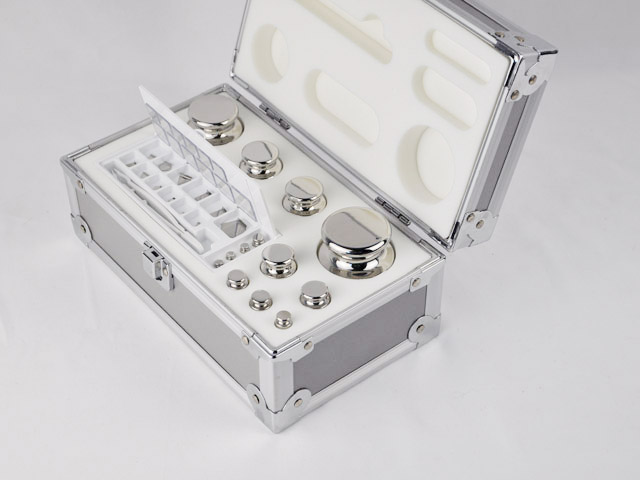
In practical application, the flexible combination of standard weights with different specifications can meet the measurement needs of various mass ranges. Small-specification standard weights are suitable for micro-precision measurement in laboratories and fine processing links, while large-specification standard weights can meet the detection and calibration needs of conventional industrial products and daily commodities. The diversified combination mode makes the application scope of balance standard weight more extensive, covering almost all scenarios that need accurate mass quantification. At the same time, the standardized use process enables different operators to obtain consistent measurement results when using the same set of balance standard weight equipment, realizing the repeatability and comparability of measurement data, which is of great significance for experimental research, production supervision and quality traceability.
To sum up, balance standard weight is not only a basic combination of measurement tools, but also an important carrier of standardized measurement concepts. It relies on stable physical principles and standardized design and production, provides accurate, consistent and reliable mass reference standards for all walks of life, and supports the stable operation of modern social measurement systems. In the future, with the continuous improvement of industrial precision and scientific research depth, the requirements for the accuracy, stability and durability of balance standard weight will be further improved. Continuous optimization of use methods, strengthening of daily maintenance and improvement of standardized operation levels will further give play to the core value of balance standard weight in accurate measurement, and provide more solid basic support for the development of scientific research innovation and industrial upgrading.
Balance Standard Weight
https://www.veidtweighing.com/standard-weights.html
Post Date: Jun 7, 2026
https://www.supplier-manufacturer.com/standard-weight/balance-standard-weight.html

![F2 Class Stainless Steel Weight]()
F2 Class Stainless Steel Weight
In the intricate and interconnected world of modern measurement technology, consistent and reliable mass reference stands as an indispensable foundation for every precise …![Stainless Steel Corrosion Proof Calibration Weight]()
Stainless Steel Corrosion Proof Calibration Weight
In the field of precision measurement and industrial weighing, maintaining consistent and accurate mass reference standards stands as a fundamental requirement for reliabl…![1kg Test Weight]()
1kg Test Weight
In the intricate and interconnected world of modern measurement, industrial production, and scientific exploration, small and unassuming tools often carry responsibilities…![Purposes of Stainless Steel Weight]()
Purposes of Stainless Steel Weight
Stainless steel weights serve as indispensable functional components across a vast spectrum of industrial, commercial, and daily application scenarios, valued primarily fo…![Maintenance of Test Weight]()
Maintenance of Test Weight
Test weights serve as foundational reference tools in every scenario that requires accurate mass measurement, forming the essential link that ensures weighing equipment de…