What is Digital Viscometer
In the entire process of modern industrial production, scientific research experiments and quality control, fluid viscosity is a core key indicator for measuring the physical and chemical properties of materials and judging the processing adaptability and finished product stability of products. Traditional mechanical viscosity testing equipment features cumbersome operation, large reading errors and inconvenient data recording, which can no longer meet the refined and intelligent testing requirements. As a new generation of intelligent fluid viscosity testing equipment, digital viscometers rely on digital sensing technology and microprocessor control systems to realize the accurate collection, intuitive display and data management of viscosity values of various liquid materials. With stable and reliable testing performance and convenient and efficient operation mode, they have become indispensable core equipment for fluid physical property testing in various industries, fully supporting production process optimization, new product research and development debugging, and standardized quality inspection of finished products.
Core Classification of Digital Viscometers to Meet Diverse Testing Requirements
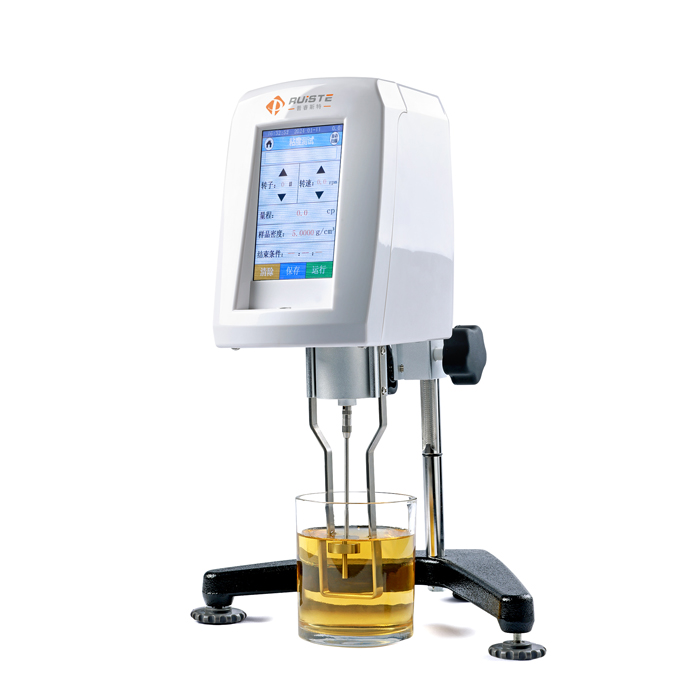
Digital viscometers are divided into various practical categories according to differences in testing principles, structural forms and application scenarios, and each type of equipment is targeted to adapt to the testing work of different viscosity ranges and material states. Divided by core testing principles, the mainstream types include rotational digital viscometers and kinematic digital viscometers. Rotational digital viscometers are the most widely used. Their core working principle is that the rotor rotates at a constant speed in the fluid medium, and the viscosity value is converted by capturing the torque resistance generated by the fluid on the rotor. They are suitable for testing non-Newtonian fluids such as pastes, emulsions and suspensions as well as conventional liquid materials. Kinematic digital viscometers rely on the self-weight flow characteristics of fluids, measure the time parameters of fluids flowing through standard pipelines, and accurately convert kinematic viscosity, mostly used for testing low-viscosity uniform Newtonian fluids such as oil products and solvents.
Divided by application form and operating scenarios, digital viscometers can be classified into desktop conventional type and portable handheld type. Desktop digital viscometers feature stable fuselage, high testing accuracy and complete supporting functions. They are fixedly placed in laboratory quality inspection stations, suitable for high-precision scientific research experiments, batch product sampling re-inspection and new product formula research and development debugging. Portable handheld digital viscometers are small in size, light in weight and equipped with a built-in battery power supply module. They do not require a fixed power supply environment and can be directly used in production workshop sites, raw material warehousing areas and outdoor operation points to complete real-time rapid detection of materials, adapting to real-time quality control on the production line and rapid screening of raw materials upon arrival. In addition, they can be divided into low-viscosity, medium-viscosity and high-viscosity special models according to measurement ranges, corresponding to the special detection of thin solvents, conventional slurries, heavy colloids and other materials with different consistencies respectively.
Core Functional Characteristics Empowering Accurate and Efficient Detection Operations
Compared with traditional pointer-type viscosity testing equipment, the core advantages of digital viscometers are concentrated in four core dimensions: digitization, intelligence, high accuracy and convenience, which comprehensively upgrade the whole process experience of viscosity detection. Firstly, they deliver excellent detection accuracy and repeatability. The equipment is built with high-precision sensing components and microprocessor chips, which can capture subtle changes in torque and flow parameters in real time, avoid visual errors caused by manual reading, ensure small fluctuations in detection data and high consistency of multiple repeated detection values, and guarantee the reliability and reference value of quality control data. Secondly, the operation process is simple and easy to operate. It abandons the complex debugging process of traditional equipment and is equipped with a visual operation interface. Parameter setting, rotor selection and speed adjustment are all one-click simple operations. New operators can quickly get started with detection work after simple training, greatly reducing manual operation thresholds and time costs.
At the same time, the equipment is equipped with perfect intelligent data management capabilities. It can synchronously display multiple key parameters such as viscosity value, detection temperature, shear rate and operating speed in real time, support local storage, real-time viewing and later retrieval of detection data. Some models can be connected to data transmission terminals to realize systematic filing and management of detection data and meet the traceability management requirements of production quality inspection data. In addition, it features outstanding adaptability and protection performance, supports multi-gear speed adjustment and adaptation of multiple specifications of accessories, and can flexibly switch detection modes according to material characteristics. The equipment is equipped with overload protection and value over-limit reminder functions, which effectively avoid equipment loss and detection errors caused by misoperation. It maintains strong stability during long-term continuous operation and adapts to high-frequency regular detection work needs.
Main Materials and Structural Composition Building a Solid Foundation for Equipment Durability
The material selection of digital viscometers always follows the core principles of corrosion resistance, wear resistance and high stability to adapt to the detection of various materials. Different functional components adopt matching materials to balance detection accuracy and equipment service life. The core parts in contact with materials such as rotors and detection probes are mostly made of corrosion-resistant stainless steel, with smooth surfaces that are not easy to adhere to materials. They resist acid, alkali and solvent corrosion, suitable for the detection of various materials in chemical, food, daily chemical and other industries. They are also easy to clean without residual impurities affecting subsequent detection accuracy. The equipment shell is made of high-strength engineering materials, with anti-static, anti-collision and anti-corrosion properties, which can effectively isolate the interference of external environmental vibration and temperature fluctuations on internal core components, adapting to the operating environment of laboratories and complex production workshops. The internal transmission and sensing core components are made of high-precision alloy materials with high hardness and low wear, which are not prone to transmission deviation during long-term operation and continuously ensure the accuracy of detection data.
The overall structure is scientifically arranged and mainly composed of five core systems that cooperate with each other to complete detection work. First, the drive transmission system, as the power core of the equipment, is responsible for stably adjusting and controlling the rotating speed, ensuring the rotor runs at a constant and stable speed and providing stable power support for viscosity detection. Second, the sensing detection system, as the core of equipment detection, accurately captures key signals such as fluid resistance, torque and temperature, and converts them into digital electrical signals in real time for transmission to the control system. Third, the intelligent control system, equipped with a microprocessor chip, is responsible for parameter calculation, program regulation, data processing and instruction issuance, and coordinates the overall operation of the equipment. Fourth, the display and operation system, centered on the visual interface, realizes human-computer interaction operations such as parameter setting, real-time data display and functional mode switching. Fifth, the auxiliary adaptation system, including lifting adjustment components, temperature control adaptation components and standard detection containers, is used to adjust the detection height, control the detection ambient temperature and adapt to the detection working conditions of different specifications of materials.
Diverse Application Scenarios Covering Industry-wide Quality Control and R&D Needs
With a wide detection range and strong adaptability, digital viscometers are widely used in many fields such as industrial production, civil manufacturing and scientific research and development, serving as core equipment for quality control and process optimization in various industries. The fine chemical, coating and ink industries are the core application fields. They are mainly used for detecting the viscosity of coatings, inks, adhesives, latex and other materials, accurately controlling material consistency, ensuring the spraying and brushing construction effect of products, avoiding problems such as uneven brushing, curing cracking and poor adhesion, and stabilizing the production quality of batch products. In the food and daily chemical industries, they are used for testing sauces, dairy products, skin care products, cosmetics, washing and care products and other goods to adjust the viscous taste and skin feel of products, conform to product production formula standards, and ensure the finished product use experience and batch consistency.
In the fields of petroleum oil products and new materials, various lubricating oils, fuel oils, polymer solutions, hot melt adhesives and other materials need to be tested for viscosity indicators by digital viscometers to determine the lubricating performance of oil products and the processing and forming adaptability of materials, providing data support for raw material blending and process parameter adjustment. In addition, scientific research university laboratories, biomedical production enterprises, pulp and textile processing industries all rely on this equipment to carry out new product formula research and development, raw material incoming inspection, production process patrol inspection and finished product factory verification. By accurately controlling the core viscosity indicators, optimizing production processes, reducing production losses, improving core product quality, and helping the production and manufacturing of various industries develop steadily towards standardization, refinement and intelligence.
What is Digital Viscometer
https://www.pruiste.com/digital-viscometer.html
Post Date: May 5, 2026
https://www.supplier-manufacturer.com/digital-viscometer/what-is-digital-viscometer.html

![Digital Viscometer For Sale]()
Digital Viscometer For Sale
Viscosity serves as one of the most fundamental physical properties of fluid substances, reflecting the internal friction and flow resistance of liquids during movement. I…![Industrial Digital Viscometer]()
Industrial Digital Viscometer
Viscosity stands as one of the most critical physical properties of fluid materials, reflecting the internal frictional resistance that occurs when a fluid undergoes flow …![Gravimetric Moisture Analyzer]()
Gravimetric Moisture Analyzer
Moisture content stands as one of the most critical physical parameters that define the quality, stability, and processing performance of diverse materials across industri…![Automatic Moisture Analyzer]()
Automatic Moisture Analyzer
Moisture content stands as one of the most critical physical indicators that determine the quality, stability and practical performance of various raw materials and finish…![Benchtop Moisture Analyzer]()
Benchtop Moisture Analyzer
Moisture content stands as one of the most critical physical parameters for a vast range of raw materials, semi-finished products, and finished goods across industrial, ag…