Analytical Precision Balance
In every modern laboratory setting where quantitative measurement forms the foundational backbone of experimental work, material research, and routine analytical procedures, the analytical precision balance stands as an indispensable foundational instrument designed to deliver consistent, repeatable, and reliable mass measurement of small substance samples with meticulous attention to subtle gravitational and environmental variables. Unlike general weighing devices built for basic bulk material estimation and casual daily weighing tasks, this type of precision weighing equipment is engineered specifically to capture extremely slight variations in mass, catering to scenarios where even the most minute deviations in recorded weight can alter final experimental conclusions, compromise data credibility, and affect the entire follow-up analytical process across diverse professional fields. The core value of the analytical precision balance lies not merely in its ability to display numerical weight readings on a digital interface, but in its sophisticated internal mechanical and electronic coordination, stable operational feedback mechanisms, and systematic resistance to external interference factors that constantly influence micro-level mass detection in conventional working environments. Every structural component and functional design of the instrument is carefully optimized to minimize inherent measurement errors, stabilize weighing status in real time, and ensure that each weighing operation reflects the true mass value of the measured sample rather than being distorted by external disturbances or internal mechanical fluctuations.
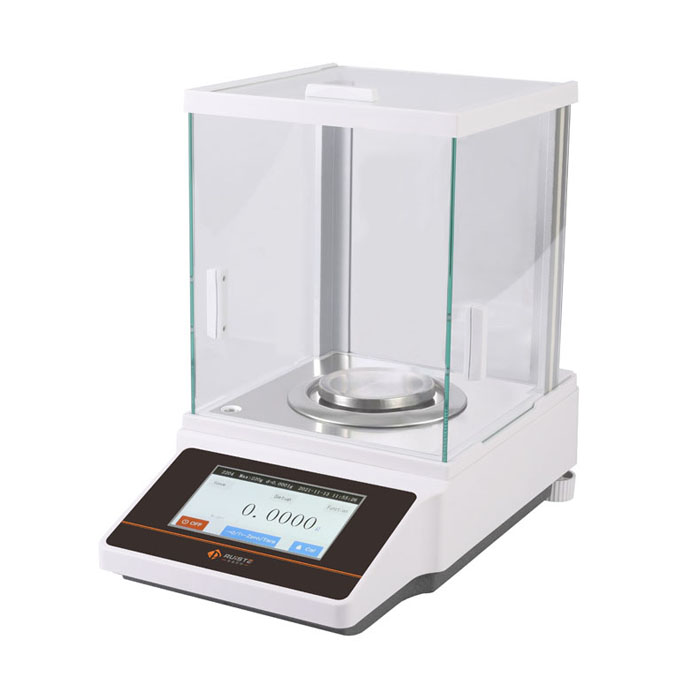
The fundamental operational logic of the analytical precision balance relies on the mature and stable electromagnetic force balance compensation principle, a technological framework that has gradually replaced traditional mechanical lever-based weighing structures due to its superior stability and convenient operability in modern precision measurement scenarios. When a sample is gently placed on the central position of the weighing pan, the load-bearing structure connected rigidly to the pan undergoes an extremely tiny downward displacement caused by the gravitational pull of the sample’s mass. This subtle movement, barely perceptible to the human eye and measured only in microscopic units, is instantly captured by high-sensitivity displacement sensing components installed inside the instrument’s sealed core structure. These sensing elements continuously monitor the positional state of the load-bearing system and transmit real-time electrical signal feedback to the internal control circuit the moment any positional deviation is detected. The control system immediately adjusts the current flowing through the built-in coil positioned within a stable magnetic field generated by permanent magnetic components, creating a precise electromagnetic force that acts in the opposite direction to the gravitational force exerted by the sample. The core operational goal of this dynamic adjustment process is to counteract the downward pull of the sample and pull the load-bearing structure back to its original calibrated zero position, maintaining a constant balanced state throughout the entire weighing process. The magnitude of the current required to maintain this balanced state maintains a steady proportional relationship with the actual mass of the placed sample, and the internal microprocessor converts this proportional electrical signal into clear, intuitive digital mass readings displayed on the instrument’s output screen after systematic signal amplification, digital conversion, and data algorithm processing.
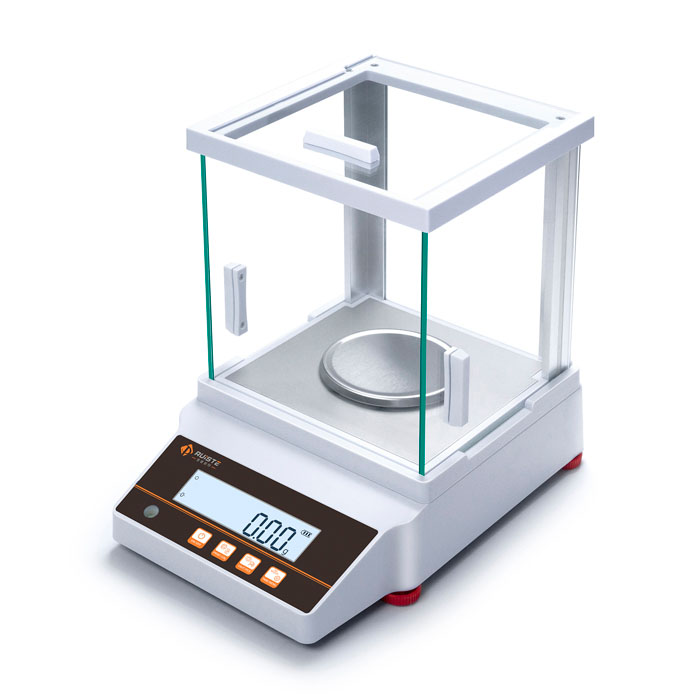
The overall structural design of the analytical precision balance is highly refined and layered, with every internal and external component tailored to support high-precision weighing and long-term stable operation. The external part of the instrument is equipped with a transparent protective windproof enclosure, a necessary structural configuration rather than an optional accessory for normal use. The reason for this design is that even subtle airflows in the surrounding environment, including natural indoor air convection, gentle wind currents from air conditioning equipment, or slight breath movement from nearby operators, can generate enough interference force on the exposed weighing pan to cause obvious fluctuations in micro-mass measurement results. The fully enclosed windproof structure effectively isolates the weighing chamber from external air flow disturbances, maintaining a stable static air environment around the weighing pan and sample during each measurement process. The weighing pan itself is made of corrosion-resistant, high-hardness alloy materials with excellent flatness and structural rigidity, ensuring that it does not produce subtle deformation or surface wear after long-term repeated placement and removal of various samples, avoiding measurement deviations caused by structural changes in the load-bearing surface. The internal core mechanical components are processed through precision cutting and heat treatment technology, with strict control over structural deformation and mechanical fatigue within extremely small ranges, ensuring that the internal force transmission and feedback structure maintains consistent sensitivity and response efficiency even after years of continuous use.
Beneath the stable external shell and core sensing system lies a highly sensitive internal calibration and signal processing module, which serves as the core guarantee for the long-term accuracy and consistency of the analytical precision balance. In the daily working environment, subtle changes in ambient temperature, slight variations in local gravitational acceleration, and minor mechanical vibrations generated by surrounding laboratory equipment operation can all cause tiny drifts in the instrument’s zero point and weighing baseline. To address this inherent characteristic of precision measurement, the instrument is equipped with automatic baseline adjustment and internal calibration functions that can be activated regularly or as needed. These functions enable the balance to automatically correct baseline deviations without the need for frequent manual calibration operations by operators, effectively reducing systematic errors accumulated during long-term continuous use. The built-in data processing algorithm further optimizes the collected original weighing signals, filtering out occasional transient signal fluctuations caused by accidental minor vibrations or instantaneous electrical interference, and stabilizing the final displayed readings to ensure that the data obtained from each weighing is stable and not prone to sudden jumps or repeated numerical changes. In addition, the instrument is equipped with convenient data transmission interfaces, allowing real-time transmission of weighing data to external computers, data storage devices, or peripheral printing equipment, facilitating automatic recording, centralized sorting, and long-term retention of experimental data, while avoiding manual recording errors that commonly occur in traditional manual data entry processes.
Environmental condition management is a crucial prerequisite for giving full play to the performance advantages of the analytical precision balance and obtaining accurate and credible weighing data, as the instrument’s high sensitivity makes it highly susceptible to various external environmental factors. Temperature stability is one of the most critical environmental indicators; drastic or frequent temperature fluctuations can cause slight thermal expansion and contraction of the instrument’s internal metal components and magnetic sensing units, altering the stress state of the force balance system and leading to slow drift of weighing results. It is ideal to place the instrument in an indoor space with relatively constant room temperature, avoiding direct exposure to sunlight, direct heat from heating equipment, or cold air blowing from air conditioning outlets. Humidity control is also equally important; excessive indoor humidity may cause slight moisture condensation on internal circuit components and metal structures, potentially affecting circuit signal transmission stability and even causing subtle corrosion of precision mechanical parts over time, while an overly dry environment may generate static electricity accumulation on the instrument surface and sample containers, resulting in static interference that affects weighing stability. The placement position of the instrument needs to be on a solid, stable horizontal workbench with strong shock resistance, keeping it away from vibrating experimental equipment, walking passages with frequent personnel movement, and areas prone to mechanical shaking. Before formal use, operators must adjust the horizontal calibration feet at the bottom of the instrument according to the horizontal bubble indicator to ensure the entire balance is in a perfect horizontal working state, as any slight tilt will directly change the direction of gravitational force bearing on the weighing structure, causing unavoidable systematic measurement deviations.
Standardized daily operating procedures are essential to maintain the measurement stability and service life of the analytical precision balance, and every step from pre-use preparation to post-use finishing requires standardized and rigorous operation by personnel. Before starting any weighing work, operators need to preheat the instrument for a certain period of time, allowing the internal electronic components and sensing system to reach a stable working temperature and operating state, eliminating signal instability caused by cold start of the equipment. After preheating, a zero-point reset operation must be performed to ensure the instrument displays a zero reading when the weighing pan is empty and no load is applied, eliminating small baseline deviations generated after the previous use or long-term standby. During sample weighing, samples should never be placed directly on the surface of the weighing pan; instead, clean, dry weighing containers or weighing paper of appropriate specifications should be used to hold samples, avoiding direct contact between chemical samples and the weighing pan surface to prevent corrosion, contamination, or residual sample adhesion affecting subsequent weighing accuracy. For samples prone to moisture absorption, volatilization, or chemical reaction with air, weighing operations should be completed quickly within the windproof enclosure, and the windproof door should be closed in a timely manner after placing the sample to reduce the contact time between the sample and the external air and avoid mass changes of the sample itself during weighing. Operators should avoid touching the weighing pan and sample container with bare hands during operation, as hand temperature, sweat, and grease will not only contaminate the equipment but also generate subtle temperature and weight interference affecting measurement results.
The application scope of the analytical precision balance covers almost all professional fields that require high-precision quantitative mass analysis, with prominent and irreplaceable practical value in experimental research, industrial production quality control, and public health testing work. In chemical laboratory analysis, the instrument is used for the precise weighing of standard reagents, raw experimental materials, and reaction products, providing accurate basic mass data for solution preparation, titration experiments, chemical reaction ratio verification, and component content detection. The accuracy of these basic weighing data directly determines the success rate of chemical experiments and the authenticity of experimental data, laying a solid foundation for the correctness of chemical principle verification and experimental result analysis. In biomedical research and pharmaceutical preparation research and development, the analytical precision balance is used for weighing biological samples, experimental drug raw materials, and trace experimental reagents, meeting the strict precision requirements of biomedical experiments and pharmaceutical formula ratio design, ensuring the stability of experimental repeatability and the safety and effectiveness of subsequent pharmaceutical products. In food safety detection and agricultural product quality analysis, the instrument is applied to the precise sampling and weighing of food and agricultural product samples, supporting the detection of additive content, nutritional component proportion, and harmful substance residues, providing accurate data support for food quality screening and safety risk assessment.
In material science research and new material development fields, the analytical precision balance plays a key role in weighing tiny samples of new functional materials, nano-materials, and composite materials. The preparation and performance testing of new materials often require precise control of the proportion of each raw material component, and subtle changes in component mass ratio will directly affect the structural characteristics, mechanical properties, and chemical stability of the final new material. Therefore, reliable high-precision weighing data provided by the balance is an important prerequisite for the smooth progress of new material research and performance optimization. In environmental monitoring and water quality and soil testing work, the instrument is used for precise weighing of environmental monitoring samples and pretreatment reagents, supporting the detection of trace pollutants in water bodies, soil, and atmospheric sedimentation samples, providing accurate basic data for environmental quality assessment and pollution control effect evaluation. In industrial production and product quality inspection links, many high-end manufacturing industries need to use analytical precision balances for sampling inspection of production raw materials and finished product component testing, ensuring that product quality meets unified production and quality control standards, maintaining the stability of industrial production quality and market product qualification rate.
Long-term daily maintenance and scientific maintenance management are important guarantees for maintaining the stable performance and long service life of the analytical precision balance, reducing equipment failure rates and avoiding frequent precision attenuation affecting normal use. After each daily use, operators need to clean the weighing chamber, weighing pan, and windproof enclosure of the balance in a timely manner, removing residual sample dust, reagent splashes, and surface stains with soft, clean cleaning tools. It is forbidden to use corrosive cleaning liquids or rough cleaning tools to wipe the equipment, so as not to scratch the surface of the weighing pan, damage the internal circuit components, or corrode the precision mechanical structure. The instrument should be placed in a dry, clean, and dust-free storage environment when not in use for a long time, with the windproof enclosure closed to prevent dust accumulation in the weighing chamber and internal precision components, avoiding dust interference affecting the sensitivity of the sensing system. Regular comprehensive inspection and calibration maintenance should be arranged periodically, checking the horizontal state of the instrument, the sensitivity of the sensing system, the stability of the zero point, and the accuracy of weighing feedback, timely correcting small deviations and dealing with potential minor faults. It is necessary to avoid overloading the instrument during all use and maintenance processes; each analytical precision balance has a reasonable weighing range, and long-term placement of heavy samples exceeding the bearing range will cause irreversible fatigue deformation of the internal force-bearing structure, permanent attenuation of weighing accuracy, and even permanent damage to the precision sensing components.
Throughout all laboratory and industrial precision measurement work, the analytical precision balance has always been a quiet and reliable basic instrument, silently providing accurate and stable mass measurement support for various professional work with its precise structural design mature working principle, and standardized operation and maintenance requirements. It is not merely a simple weighing tool, but a key link connecting microscopic mass changes and macroscopic experimental and production results. Every standardized operation, every environmental adjustment, and every maintenance work related to the instrument is aimed at maintaining the consistency and accuracy of micro-mass measurement, ensuring that every data obtained from weighing can truly reflect the essential characteristics of the measured sample. With the continuous development of scientific research technology and the continuous improvement of industrial precision production requirements, the importance of analytical precision balances in various professional fields will remain unchanged, and the continuous optimization of its internal technology and structural design will further adapt to the increasingly stringent precision measurement needs of future scientific research, production, and testing work, providing solid and reliable basic measurement support for the progress of various professional undertakings.
Analytical Precision Balance
https://www.pruiste.com/precision-balance.html
Post Date: May 5, 2026
https://www.supplier-manufacturer.com/precision-balance/analytical-precision-balance.html

![Purposes of Moisture Analyzer]()
Purposes of Moisture Analyzer
Moisture content stands as one of the most fundamental and influential physical properties of nearly all raw materials, semi-finished goods, and finished products across i…![Types of Moisture Analyzer]()
Types of Moisture Analyzer
Moisture analysis stands as a fundamental testing procedure across industrial manufacturing, laboratory research, agricultural processing, and material quality inspection.…![Portable Moisture Analyzer]()
Portable Moisture Analyzer
Moisture content stands as one of the most critical physical indicators that determine the quality, stability, and processing performance of diverse materials across indus…![Ultra-precision Laboratory Balance]()
Ultra-precision Laboratory Balance
Ultra-precision laboratory balances serve as foundational measuring instruments in modern scientific research, industrial analysis, and precision material testing, designe…![Laboratory Balance Factory]()
Laboratory Balance Factory
Laboratory balances stand as foundational analytical instruments across scientific research, industrial production, pharmaceutical development, environmental monitoring, a…