1kg Stainless Steel Weight
In the intricate and interconnected world of modern measurement operations, industrial production, laboratory research, and daily quality verification work, the 1kg stainless steel weight stands out as a fundamental and indispensable foundational tool that quietly underpins the accuracy and consistency of countless weighing and testing processes. Far more than a simple solid metal block with a fixed nominal mass, this practical weight is crafted with thoughtful material selection, meticulous manufacturing processing, and human-centered structural design, making it adaptable to a wide spectrum of usage environments ranging from precise laboratory testing rooms to busy industrial production workshops, and from routine daily weighing calibration to long-term engineering equipment debugging. Its core value lies in maintaining stable mass performance over prolonged use, resisting various external environmental interferences, and providing a consistent and reliable mass reference standard for all kinds of weighing instruments and measurement-related work, ensuring that every data obtained from weighing operations stays steady and credible without unexpected deviation caused by external factors or material aging. Unlike temporary weighing auxiliary tools that are only suitable for short-term occasional use, the 1kg stainless steel weight is engineered for long-term cyclic application, with every detail of its production and processing focused on meeting the basic and long-lasting needs of various professional and non-professional measurement scenarios, winning wide reliance in different industries and daily practical work scenarios.
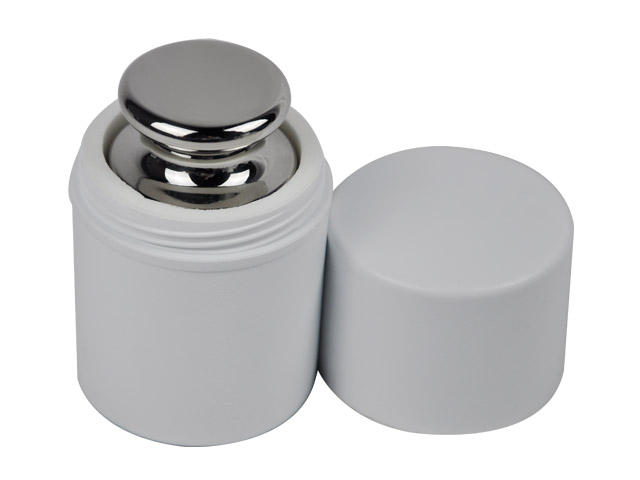
The core foundation that endows the 1kg stainless steel weight with excellent comprehensive performance lies in the high-quality stainless steel material selected for its production, a material that brings unique physical and chemical properties unmatched by many other common metal materials used for making standard weights. Stainless steel as the core raw material features outstanding corrosion resistance, a key attribute that allows the weight to maintain its complete surface integrity and stable internal mass structure even when placed in environments with moderate humidity, occasional contact with water vapor, dust, or common weak chemical substances present in industrial and laboratory spaces. In many practical working environments, metal weights made of ordinary carbon steel are prone to surface rust, oxidation, and chemical corrosion after a period of use; such damage not only ruins the smooth surface of the weight but also leads to subtle changes in its actual mass due to rust accumulation and metal loss, gradually affecting the accuracy of subsequent weighing calibration and measurement work. In contrast, the stainless steel material used for the 1kg weight effectively avoids such adverse changes, as its special metal composition forms a protective barrier on the surface that prevents oxidation reactions and resists erosion from most common external substances. Beyond corrosion resistance, this stainless steel material also boasts good hardness and wear resistance, enabling the weight to withstand frequent handling, repeated placement and stacking, and slight friction and collision inevitably generated during daily use. Regular contact with workbenches, storage containers, and weighing equipment will not easily cause surface scratches, edge wear, or structural deformation, ensuring that the overall shape and mass state of the weight remain consistent for years of continuous use. The material also exhibits stable physical properties under normal indoor and conventional industrial temperature fluctuations, with no obvious thermal expansion or contraction that could cause perceptible mass changes, further guaranteeing the stability and reliability of the weight as a long-term mass reference object.
The manufacturing process of the 1kg stainless steel weight is carried out with rigorous and refined processing steps, each link carefully controlled to ensure that the final finished product meets the consistent mass requirements and practical use standards for daily and professional measurement work. The entire production starts with the precise cutting and forging of high-quality stainless steel raw materials, a forging process that effectively compacts the internal metal structure of the material, closes tiny internal pores, and eliminates internal impurities and structural defects that may exist in the original raw materials. This solid and dense internal structure is crucial for the weight, as it avoids hidden structural gaps that could accumulate dust, moisture, or other impurities over time, which might otherwise cause slow changes to the overall mass and affect long-term use stability. After the initial forging and shaping process, the weight undergoes fine turning and surface polishing treatment, making the overall appearance smooth and neat with regular and uniform specifications. The smooth polished surface not only gives the weight a neat and orderly visual effect but also brings practical convenience to daily cleaning and maintenance; dust, stains, and other attachments on the surface can be easily wiped off with a soft cloth or conventional cleaning tools, leaving no residual dirt that could affect the mass accuracy. Meanwhile, the edge and corner parts of the weight are specially treated with rounding and smoothing procedures, avoiding sharp edges that may cause accidental scratches to operators during handling and use, and also preventing edge damage and deformation caused by accidental collisions. In the final stage of production, precise mass fine-tuning is carried out through meticulous trimming and testing, ensuring that the actual mass of each finished 1kg stainless steel weight stays within a reasonable and practical error range, fully meeting the basic requirements for various conventional calibration and weighing verification work. Every processing step focuses on balancing structural stability, surface durability, and use safety, making the finished weight both functionally reliable and user-friendly for long-term repeated operation.
The application scenarios of the 1kg stainless steel weight cover a remarkably wide range of fields, spanning professional laboratory research, industrial production and manufacturing, quality inspection and testing departments, commercial weighing verification, and even daily equipment debugging and teaching experiment scenarios, becoming a universal mass reference tool indispensable in multiple links. In professional laboratory environments, various precision balances and analytical weighing instruments need regular daily calibration and periodic accuracy verification to ensure the reliability of experimental data in scientific research, material testing, and chemical analysis work. The 1kg stainless steel weight serves as a stable and standard mass reference for these calibration tasks, helping laboratory staff quickly check whether the weighing instrument has measurement deviation after long-term use, frequent vibration, or environmental changes, and ensuring that all experimental data based on weighing measurements are accurate and repeatable. In industrial production and manufacturing workshops, many production processes involve accurate weighing of raw materials, semi-finished products, and finished products, and the weighing equipment used on production lines also requires regular routine debugging and calibration. The 1kg stainless steel weight is easy to carry and operate, allowing production line operators and quality management personnel to conduct quick accuracy checks on various platform scales, electronic weighing devices, and batching weighing equipment at any time, avoiding product quality problems and production batch errors caused by inaccurate weighing data. For the packaging and processing industry that requires fixed-weight product packaging, the weight helps verify the stability of packaging weighing equipment, ensuring that each batch of packaged products maintains uniform weight specifications and meets consistent production standards.
In quality inspection and commodity supervision work, staff often need to conduct random inspections and accuracy verification on various commercial weighing tools and industrial measuring equipment in circulation and production links. The 1kg stainless steel weight, with its stable performance and convenient carrying characteristics, becomes an ideal portable inspection tool, enabling inspectors to carry out on-site rapid testing of weighing equipment in shopping malls, markets, and production enterprises, maintaining the standardization and fairness of weighing measurement in market transactions and industrial production. In teaching and educational experiment scenarios in schools and vocational training institutions, the weight is used for physics teaching experiments related to mass measurement, balance principle demonstration, and basic weighing operation training. It helps students and trainees intuitively understand the basic concepts of mass measurement, the working principle of weighing equipment, and the importance of measurement accuracy, laying a solid practical foundation for subsequent professional skill learning and scientific knowledge understanding. In addition, in daily equipment maintenance and mechanical debugging work of many small and medium-sized enterprises and individual processing workshops, the 1kg stainless steel weight is often used for auxiliary debugging of mechanical equipment that needs weight balancing and parameter calibration, providing simple and effective mass reference support for equipment normal operation and stable performance maintenance. No matter in professional high-precision working environments or conventional daily operation scenarios, the weight can adapt to different use needs and deliver stable and reliable service effects.
Proper daily handling and scientific maintenance methods play an important role in extending the service life of the 1kg stainless steel weight and maintaining its long-term mass stability, and simple daily management work can effectively keep the weight in good working condition for many years. In daily use, operators should hold and place the weight gently and steadily, avoiding violent throwing, random dropping, and severe collision with hard objects; although the stainless steel material has good hardness and wear resistance, excessive external impact may still cause slight structural deformation or local surface damage, which could affect the long-term mass stability and appearance integrity of the weight. When placing the weight for use and storage, it is necessary to choose a flat, clean, and dry placement surface and storage environment, avoiding long-term placement in humid, dusty, or corrosive gas-containing spaces. A dry and tidy storage environment can effectively prevent unnecessary dirt accumulation and subtle chemical effects on the weight surface, keeping the surface smooth and the internal structure stable. For daily cleaning work, it is advisable to use a soft dry cloth to wipe off surface dust and conventional stains; for slight stubborn stains that are not easy to remove, a slightly damp soft cloth can be used for wiping, and the weight should be dried in time after cleaning to avoid long-term moisture retention on the surface. It is not recommended to use strong corrosive cleaning agents or hard brushing tools to clean the weight, so as to prevent damage to the polished surface and adverse effects on the material structure. When not in use for a long time, the weight should be placed in a dedicated dry storage box or fixed storage position, avoiding random stacking with other hard metal parts to prevent mutual friction and collision damage. Regular simple visual inspection can also be carried out in daily management to check whether the weight surface has obvious scratches, deformation, or abnormal corrosion; if any slight abnormal situation is found, timely cleaning and adjustment can be done to ensure that the weight is always in a good use state.
As a basic and conventional mass measurement auxiliary tool, the 1kg stainless steel weight carries the simple but core mission of maintaining measurement accuracy and standardizing weighing work in various industries and daily scenarios. It has no complex structural design or complicated use operation steps, but its stable material performance reliable manufacturing quality, and wide application adaptability make it an essential basic guarantee for all measurement and weighing related work. From ensuring the accuracy of scientific research experimental data to stabilizing the quality of industrial production products, from maintaining the fairness of market transaction weighing to assisting the smooth development of teaching and training experiments, this practical stainless steel weight silently provides stable mass reference support in every link behind the scenes. With the continuous development of modern measurement technology and the continuous improvement of industrial production and quality management requirements, the demand for stable and reliable basic weighing reference tools remains consistent and enduring. The 1kg stainless steel weight will continue to rely on its excellent material advantages, exquisite manufacturing technology, and convenient use characteristics, continuously serve various professional and daily measurement scenarios, maintain the stability and consistency of mass measurement work, and lay a solid and reliable foundation for the orderly development of production, scientific research, inspection, teaching, and various other related work fields. Its practical value lies in long-term stability and lasting reliability, becoming an indispensable basic partner for every worker and institution that needs accurate weighing and mass calibration work in daily operation and long-term development.
1kg Stainless Steel Weight
https://www.veidtweighing.com/ssweight/StainlessSteelWeight
Post Date: May 4, 2026
https://www.supplier-manufacturer.com/stainless-steel-weight/1kg-stainless-steel-weight.html

![Types of Cast Iron Weight]()
Types of Cast Iron Weight
Cast iron weights stand as foundational components across industrial production, weighing calibration, mechanical balancing, engineering construction, and marine and minin…![Kitchen Scales]()
Kitchen Scales
Cooking is often described as a blend of art and science, where creative intuition meets precise measurement to craft meals that delight the senses and nourish the body. M…![Gray Cast Iron Weight]()
Gray Cast Iron Weight
Gray cast iron weight stands as one of the most essential and widely applied weighted components across modern industrial production, mechanical operation and daily engine…![Precision Balances]()
Precision Balances
Precision balance stands as a fundamental measuring instrument in modern metrology, serving as a core tool for obtaining accurate mass data across scientific research, ind…![Cast Iron Weight Exporter]()
Cast Iron Weight Exporter
In the global industrial operation and engineering construction ecosystem, auxiliary components that maintain mechanical balance, stabilize equipment operation and ensure …