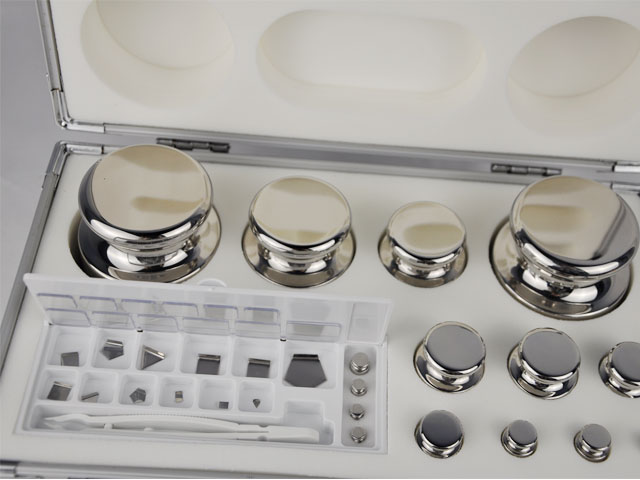
Industrial Stainless Steel Weight For Weighing Scale
In modern industrial production and material management processes, accurate weight measurement serves as one of the fundamental foundations for maintaining stable production quality, standardized material circulation, and reliable data recording. Every industrial sector involved in material batching, product finished product inspection, cargo transportation settlement, and production process parameter adjustment relies heavily on various types of weighing scales to obtain real and effective weight data. Industrial stainless steel weights for weighing scales stand as essential supporting accessories in the entire weighing system, undertaking the core task of calibrating weighing equipment, verifying weighing accuracy, and maintaining the long-term stable working condition of various mechanical and electronic weighing devices. Unlike ordinary cast iron weights or weights made of common metal materials used in simple daily weighing scenarios, stainless steel weights designed specifically for industrial working environments are developed and produced to adapt to complex on-site conditions, frequent repeated use, and long-term outdoor and workshop placement, focusing on consistent mass stability, strong environmental adaptability, and convenient daily operation and management. Their existence ensures that all weighing data generated by industrial weighing scales can stay consistent with actual material quality standards, avoiding measurement deviations caused by equipment aging, environmental changes, or long-term operational wear and tear, and providing solid basic support for the orderly progress of all industrial production and operational links.
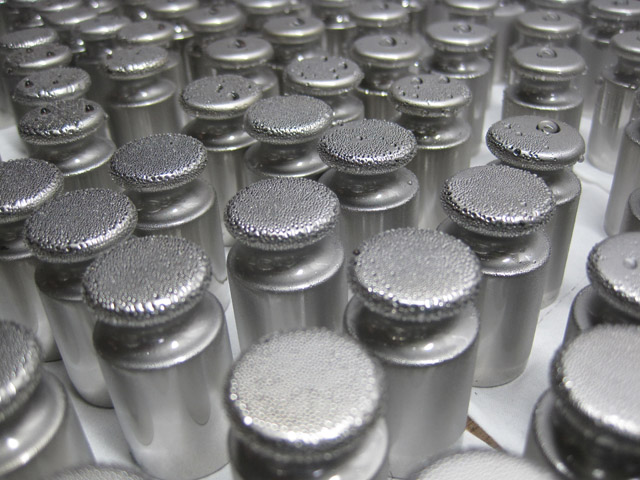
The selection of stainless steel as the core raw material for industrial weighing weights is not a random choice but a professional decision formed after long-term practical verification and comparison of multiple metal materials in industrial scenarios. Industrial production workshops and material storage areas often face diverse and harsh environmental conditions, including humid air in food processing and aquatic product processing workshops, volatile chemical gases in chemical production sites, frequent washing and disinfection operations in pharmaceutical manufacturing environments, and long-term exposure to wind, dust, and temperature changes in outdoor bulk cargo weighing areas. Ordinary metal materials are prone to oxidation, rust, surface corrosion, and structural deformation under such working conditions. Once rust or corrosion occurs on the surface of a weight, its actual mass will gradually change along with the falling off of rust layers and surface corrosion substances, and the surface flatness will also be damaged, which not only affects the accurate contact between the weight and the weighing scale bearing surface but also directly leads to inaccurate calibration results, making the weighing scale unable to reflect the real weight of measured materials. Stainless steel materials used for industrial weighing weights have excellent natural resistance to oxidation and corrosion, effectively resisting the erosion of moisture, weak acid and weak alkaline substances, and common industrial dust in the working environment. The internal structural density of the material remains uniform and stable for a long time, and the surface is not easy to produce chemical changes or physical peeling, ensuring that the basic mass of each weight can maintain a stable state during long-term use without frequent mass changes due to external environmental interference.
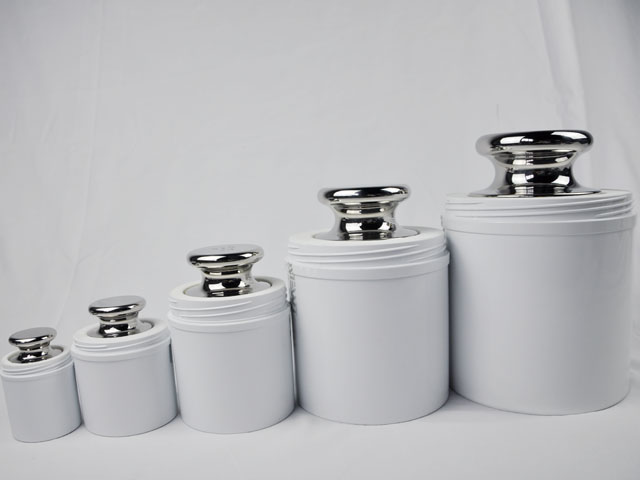
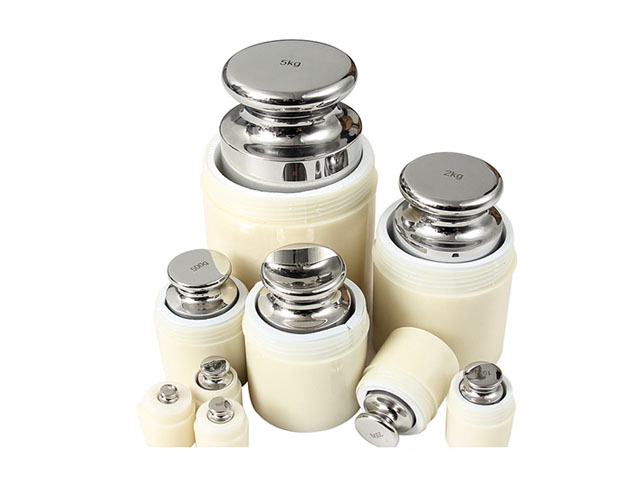
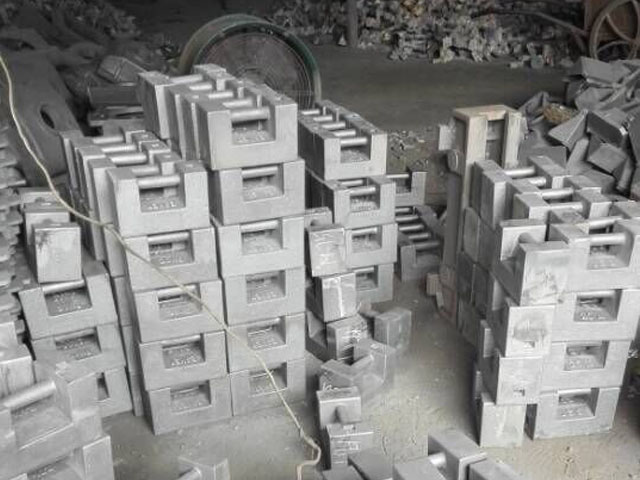
In addition to the excellent environmental resistance of the material itself, the physical properties of stainless steel also perfectly meet the basic production and use requirements of industrial weighing weights. The material has high overall density and good structural compactness, with no internal pores or loose structures that are easy to cause mass changes. This characteristic allows the weight to maintain a stable overall structure after being processed into various standard specifications, avoiding internal structural changes or local volume shrinkage and expansion caused by temperature differences in different seasons and working environments. Industrial weighing work involves weights of different mass ranges, from small-specification weights used for calibrating small precision platform scales in laboratory auxiliary workshops to large-volume heavy weights matched with large-tonnage weighbridges and industrial floor scales used for truck cargo weighing and bulk material stacking measurement. Stainless steel can be processed into various shapes and sizes according to actual industrial use needs, including cylindrical, rectangular, and block structures with different surface designs, adapting to different placement methods and stacking requirements of various weighing equipment. Whether it is a small weight that needs to be placed accurately on a precision weighing scale bearing surface or a large weight that needs to be moved and placed multiple times for overall calibration of large weighing equipment, stainless steel materials can maintain good structural hardness and pressure resistance, not easy to deform due to external extrusion, collision, and long-term stacking pressure, and the overall shape and surface flatness can always meet the basic standards for weighing calibration work.
The production and processing process of industrial stainless steel weighing weights follows rigorous processing procedures, focusing on both the accuracy of mass control and the practicability of on-site operation and use. The whole production process starts with raw material selection, where stainless steel raw materials with stable composition and uniform density are selected to ensure the consistency of material characteristics of each batch of produced weights, avoiding differences in material density that lead to inconsistent mass of finished products of the same specification. After the raw materials are cut and initially formed according to the set size and mass standards, multiple precision polishing and surface smoothing treatments are carried out on the surface of each weight. The smooth and flat surface formed after polishing not only makes the weight less prone to accumulating dust, debris, and industrial dirt during use but also facilitates daily cleaning and maintenance work for staff. In many hygienic industrial production scenarios such as food processing and pharmaceutical production, weighing equipment and calibration weights need to be cleaned and disinfected regularly to meet on-site hygiene management requirements. The smooth surface of stainless steel weights does not retain dirt or residual disinfectant, and can be quickly cleaned and dried after washing, without leaving hidden corners for bacterial growth or dirt accumulation, which is very suitable for strict hygiene control working environments. At the same time, the edge and corner parts of the weight are polished and rounded during processing, avoiding sharp edges and corners that may cause scratches to operators during handling and movement, and also preventing the weight from damaging the surface of the weighing scale bearing surface due to sharp contact during placement.
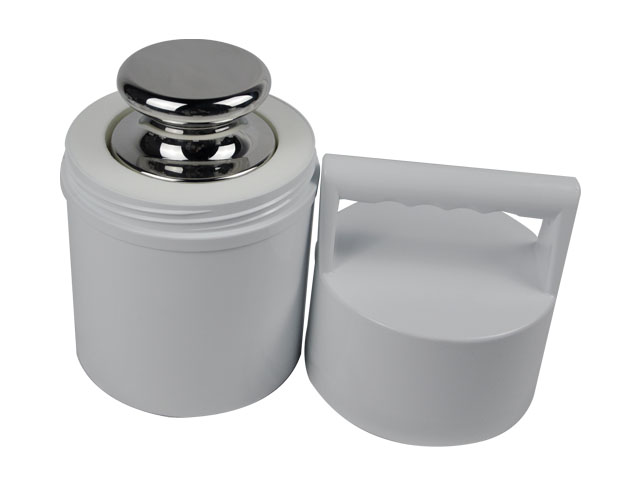
The structural design of industrial stainless steel weighing weights fully considers the actual operation habits and frequent use needs of industrial on-site staff. Different from small precision weights used in laboratory environments that focus on lightweight and single accurate placement, industrial weights need to adapt to frequent handling, repeated placement, and combined stacking use in complex on-site environments. Many conventional industrial stainless steel weights are designed with reasonable stress structures and matching handling parts according to their mass specifications. Small and medium-sized weights are designed with integrated grip structures or reserved gripping positions, allowing staff to easily take, place and move them with one hand or simple auxiliary tools, improving the efficiency of daily calibration and weighing verification work. Large-specification heavy weights are equipped with stable lifting structures, which can be matched with on-site handling tools for safe hoisting and movement, avoiding safety risks and weight collision deformation caused by manual forced handling. In addition, the bottom contact part of the weight is designed with a flat and stable contact surface, ensuring that the weight can be placed stably on the bearing surface of various weighing scales without tilting or shaking during calibration. Stable placement state is crucial for accurate calibration, as any slight tilt or unstable placement will cause uneven force on the weighing scale sensor, resulting in deviation in calibration data and affecting the normal subsequent weighing work.
The core application scenario of industrial stainless steel weighing weight is the daily calibration and regular accuracy verification of various industrial weighing scales. All mechanical and electronic weighing scales will have slight changes in internal sensing components and mechanical structures after long-term continuous use, frequent material weighing impact, and environmental temperature and humidity changes. These subtle changes will gradually lead to deviations between the weighing data displayed by the scale and the actual weight of the measured materials. If not calibrated and corrected regularly, the accumulated measurement deviations will affect production batching accuracy, resulting in unqualified product quality, inaccurate material inventory statistics, and disputes in cargo transaction settlement. Industrial stainless steel weights provide a unified and standard mass reference standard for these weighing scales. Staff can place weights of different standard masses on the weighing scale in accordance with fixed operational steps, observe the displayed data of the weighing equipment, and compare it with the standard mass of the weights to judge whether the weighing scale is in a normal working state. If data deviation is found, timely adjustment and correction can be carried out to restore the weighing accuracy of the equipment. This calibration and verification work needs to be carried out regularly in all industrial links involving weighing measurement, and stainless steel weights can maintain stable performance after repeated long-term use, avoiding frequent replacement caused by material damage or mass change, and ensuring the continuity and effectiveness of weighing equipment management work.
Different industrial fields have different differentiated use demands for industrial stainless steel weighing weights, and the adaptability of stainless steel materials enables these weights to meet the use requirements of multiple complex industries. In the food processing industry, including meat processing, seafood sorting, grain and oil production, and snack food manufacturing, the production environment requires frequent water washing and disinfection, and some production links involve grease and food residue contact. Stainless steel weights are not affected by humid environment and food residue pollution, will not rust or deteriorate due to frequent washing, and are easy to clean and keep hygienic, meeting the food safety and hygiene management standards of production sites. In the chemical industry, many production workshops have volatile chemical reagents and corrosive dust, and ordinary metal weights are easy to be corroded and damaged in such an environment, leading to mass changes. Stainless steel materials can resist the weak corrosion of most common chemical substances, ensuring that the weight mass remains stable for a long time and the calibration work of chemical raw material batching weighing scales is not affected. In the pharmaceutical manufacturing industry, the production environment has extremely high requirements for cleanliness and non-pollution, and stainless steel weights with smooth surface and no easy dust accumulation will not produce metal debris or harmful substances to pollute the production environment, suitable for calibrating precision weighing equipment for pharmaceutical raw material batching and finished product inspection.
In addition, in the logistics and transportation industry, bulk cargo storage and processing industry, and construction material production industry, large-tonnage weighing equipment such as weighbridges and floor scales need regular overall calibration with heavy stainless steel weights. These working sites are mostly located in outdoor or semi-outdoor environments, facing long-term wind and sun, dust accumulation, and seasonal temperature changes. Stainless steel heavy weights can adapt to such open-air working conditions, without oxidation and mass loss due to long-term outdoor placement, and the structural stability can withstand the extrusion and collision during frequent handling and stacking. In the mechanical processing and manufacturing industry, precision parts processing and raw material proportioning production require high-precision weighing data, and small and medium-sized stainless steel weights are used for daily calibration of precision platform scales and electronic weighing equipment in workshops, ensuring that the weight detection of mechanical parts and the proportioning accuracy of production raw materials meet production process standards. Whether it is precision production links requiring high measurement accuracy or bulk weighing links focusing on long-term stable operation, industrial stainless steel weighing weights can play a reliable basic supporting role.
Daily maintenance and scientific management are important factors to ensure the long-term service life and stable performance of industrial stainless steel weighing weights. Although stainless steel materials have good corrosion resistance and wear resistance, unreasonable use and improper storage will still affect the service effect and service life of the weights. In daily industrial work, staff should avoid violent collision and extrusion of weights during handling and use. Although stainless steel has high structural hardness, strong impact and long-term heavy extrusion may cause local structural deformation of individual weights, affecting the flatness of the contact surface and the stability of the overall mass. After each use, the surface of the weights should be cleaned in time to remove surface dust, industrial dirt, residual moisture and other attachments. Long-term retention of dirt and moisture on the surface will not affect the basic performance of stainless steel in a short time, but long-term accumulation may cause surface stains and affect the accuracy of subsequent placement and calibration work. The cleaned weights need to be placed in a dry, ventilated and clean special storage area, avoiding long-term random placement in humid, dusty or chemically polluted environments. Classified storage should be carried out according to different mass specifications to avoid mixing and confusion, which is convenient for quick access and use during subsequent calibration work.
Regular manual inspection and mass checking of industrial stainless steel weighing weights are also essential management links. Staff can regularly check the surface condition of each weight to observe whether there is obvious deformation, surface scratch damage or abnormal surface changes. For weights used for a long time, regular mass comparison and detection can be carried out to confirm whether their actual mass remains within the normal stable range. If individual weights are found to have mass deviation or structural damage during inspection, they should be sorted out in time and no longer used for calibration work, to avoid affecting the accuracy of weighing equipment measurement. Good daily maintenance and management can not only extend the service life of stainless steel weighing weights, reduce the frequency of replacement and subsequent use costs, but also ensure that each calibration work can achieve ideal results, maintain the long-term stable operation of all industrial weighing equipment, and make the weight measurement data in all production and operational links true, effective and consistent.
In the entire industrial weighing measurement system, industrial stainless steel weights for weighing scales may seem to be simple auxiliary accessories, but they undertake the important basic work of maintaining measurement accuracy and standardizing weighing management. With the continuous development of industrial production towards standardization, precision and automation, the requirements for weighing data accuracy and equipment operational stability in various industries are constantly improving, and the importance of high-quality and high-stability stainless steel weighing weights is becoming more and more prominent. Relying on excellent material characteristics, professional production and processing technology, humanized structural design and wide environmental adaptability, these weights have become an indispensable key part of industrial on-site weighing work. They not only solve the problem of accuracy calibration and daily verification of various weighing scales in complex industrial environments but also provide reliable measurement basic guarantees for stable production quality, standardized material management and smooth progress of industrial transaction settlement. Adhering to the selection of qualified stainless steel weighing weights and standardizing daily use and maintenance management is an important basic measure for every industrial enterprise to do a good job in weighing measurement management and ensure the stable and orderly operation of production and operation.
Industrial Stainless Steel Weight For Weighing Scale
https://www.veidtweighing.com/ssweight/StainlessSteelWeight
Post Date: May 4, 2026

![Standard Weight For Precision Scales]()
Standard Weight For Precision Scales
In the realm of precision measurement, standard weights stand as the foundational benchmark that upholds the accuracy, reliability, and traceability of all precision scale…![Precision Calibration Weight For Weighing Scale]()
Precision Calibration Weight For Weighing Scale
In every industry and laboratory setting that relies on accurate mass measurement, precision calibration weights serve as foundational tools to sustain the functional reli…![Calibration Weight For Electric Forklift Weighing Calibration Use]()
Calibration Weight For Electric Forklift Weighing Calibration Use
In modern industrial material handling scenarios, electric forklifts have become indispensable equipment for warehouse storage, cargo handling, and logistics distribution …![200kg Cast Iron Lock Calibration Weight Truck Scale Test]()
200kg Cast Iron Lock Calibration Weight Truck Scale Test
Truck scales serve as fundamental weighing equipment for industrial logistics, material settlement, and cargo measurement, providing core data support for daily operationa…![Kilogram Range Laboratory Weight Set]()
Kilogram Range Laboratory Weight Set
In every professional laboratory environment where mass measurement serves as the foundational basis for experimental research, quality inspection, and routine operational…