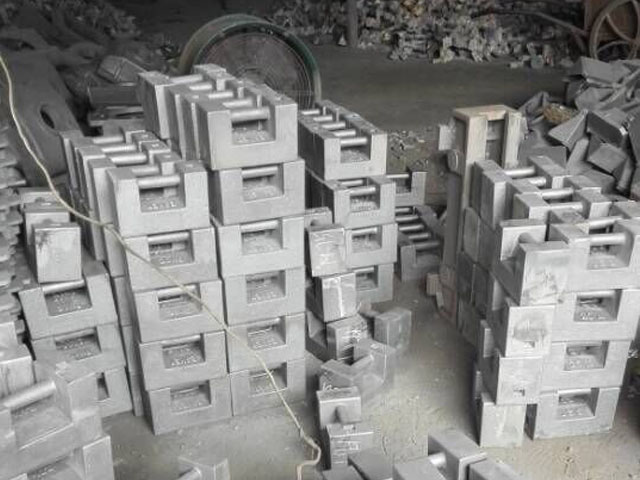
Cast Iron Calibration Weight
In the complex and interconnected world of industrial production, commercial trading, and mechanical operation, the consistency and reliability of weighing measurements stand as a foundational pillar for stable operational order and standardized quality management. Every numerical reading generated by weighing devices, from small desktop balances in processing workshops to large-scale floor scales and vehicle weighing platforms in logistics hubs, needs a reliable and stable reference benchmark to verify its stability and correctness over long-term use. Cast iron calibration weights have long served as such a fundamental and practical reference tool, gaining wide adoption across numerous sectors due to their stable physical properties, sturdy structural performance, and strong adaptability to diverse working environments. Unlike precision measuring tools that focus on ultra-fine measurement for laboratory scenarios, these cast iron calibration counterparts are designed to meet the daily and periodic calibration needs of conventional and medium-precision weighing equipment, striking a balanced combination of practicability, durability, and stable mass retention that fits perfectly with the actual operational rhythm of various industrial and commercial sites.
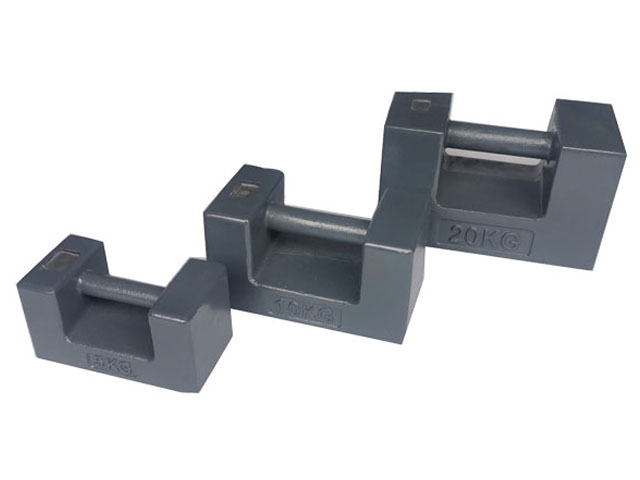
The inherent material advantages of cast iron lay a solid foundation for the core performance of calibration weights used for daily weighing verification and equipment debugging. Cast iron as a raw material boasts dense internal texture, uniform material distribution, and excellent structural compactness, which effectively avoids the mass deviation caused by internal porosity or material unevenness that often occurs in other common metal materials during long-term casting and forming processes. In the production and manufacturing process of cast iron calibration weights, strict casting and post-processing procedures are adopted to ensure that each finished weight has a stable internal structure without loose areas or hidden structural defects. This good structural stability enables the weights to maintain consistent mass status even after long-term placement, frequent handling, and repeated external contact, without obvious mass fluctuation caused by subtle structural changes inside the material. Meanwhile, cast iron material possesses good compression resistance and shock resistance, allowing the calibration weights to withstand accidental slight collisions and conventional external pressure during daily use and transportation. They will not suffer surface deformation or internal structure damage due to ordinary external force impact, which is crucial for maintaining long-term mass stability and extending the service life of the calibration tools.
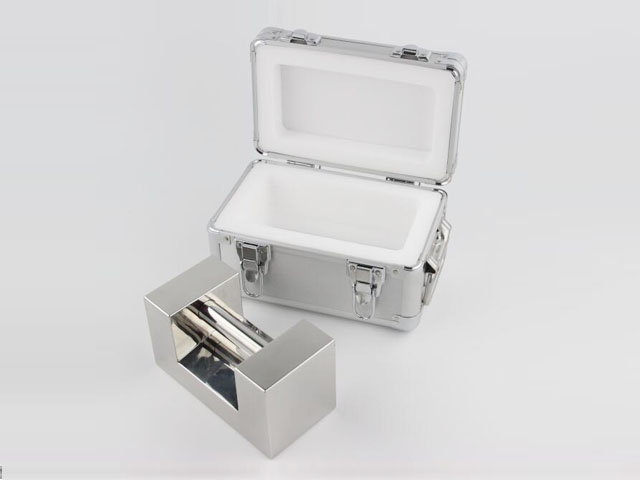
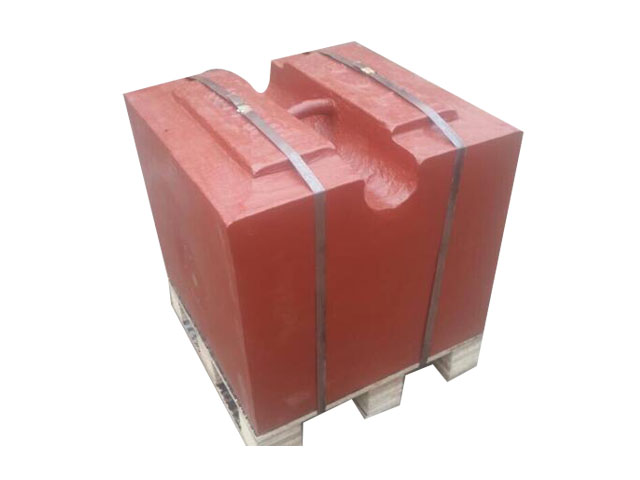
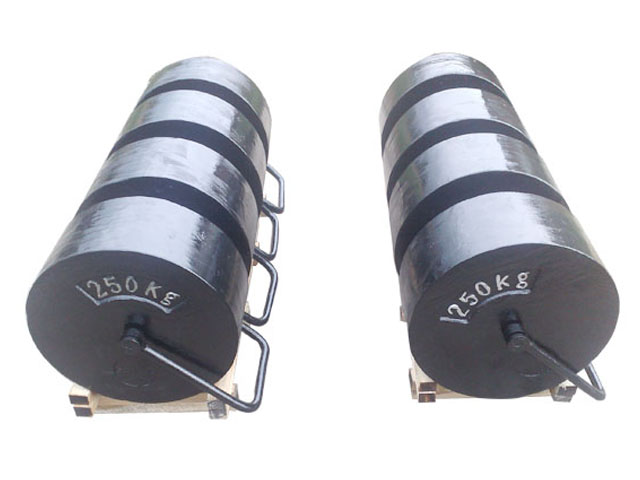
The surface treatment and overall structural design of cast iron calibration weights are carefully optimized around practical application scenarios and long-term use needs. After the initial casting forming process, each weight undergoes fine surface finishing to smooth out rough edges and uneven surfaces generated during casting, reducing surface gaps and uneven areas that may accumulate dust, moisture, and other impurities. A uniform protective coating is then applied to the outer surface of the weights, serving as a reliable barrier against external environmental erosion. This protective layer effectively isolates moisture in the air, industrial dust, and trace corrosive substances in the working environment from direct contact with the cast iron base material, slowing down the oxidation and rusting process of the metal material. Reasonable structural shapes are designed for different weight specifications and usage scenarios, with some made into solid block structures suitable for flat placement and static calibration of various platform scales and floor scales, and others equipped with integrated lifting structures or matching hanging parts to facilitate overall handling and stacking use. The overall structural design avoids overly complex shapes, ensuring convenient daily use, simple stacking and storage, and no difficulty in operation for staff during calibration work. All design details are focused on meeting the basic needs of stable mass storage, convenient operation, and environmental adaptation in actual work.
The core functional value of cast iron calibration weights lies in providing a unified and stable mass reference standard for various weighing and load-bearing testing equipment, ensuring that all measuring instruments involved in weight output and load detection can maintain consistent and accurate reading states. All weighing devices will gradually experience subtle changes in internal mechanical structures or sensing components after long-term continuous operation, frequent load bearing, and external environmental interference such as temperature changes and vibration. These subtle changes will slowly cause the displayed readings of the weighing equipment to deviate from the actual mass value, and if not corrected and adjusted in a timely manner, the deviation will gradually accumulate and expand. In industrial production links, this deviation may lead to inaccurate proportioning of raw materials in product processing, affecting the qualified rate and consistent quality of finished products. In commercial bulk material trading and logistics weighing links, inaccurate weighing data will affect the fairness of transaction settlement and normal circulation of goods. Cast iron calibration weights solve this problem effectively by providing fixed and reliable standard mass values. Staff can place calibration weights of different specifications on the corresponding weighing equipment according to regular work plans, compare the actual displayed readings of the equipment with the standard mass of the weights, and make targeted adjustments and corrections to the weighing equipment according to the comparison results to eliminate reading deviations and restore the accurate measurement performance of the equipment.
The application scope of cast iron calibration weights covers almost all scenarios that require regular verification and calibration of medium-precision weighing and load-bearing equipment, involving industrial manufacturing, logistics and transportation, port operation, mechanical debugging, and many other key fields. In industrial manufacturing plants, various production line supporting weighing equipment, batching weighing instruments, and workshop platform scales need regular calibration with cast iron calibration weights to ensure accurate raw material batching and finished product weighing detection, providing basic guarantee for standardized production and stable product quality. In logistics parks and freight stations, large floor scales and vehicle weighing platforms used for weighing goods and transport vehicles need frequent calibration to ensure accurate and reliable weighing data in cargo loading, unloading, and transaction settlement, avoiding measurement disputes caused by inaccurate weighing. In port and terminal operation sites, various container weighing equipment and cargo handling load detection equipment are in frequent working states all year round, and regular calibration with cast iron calibration weights is required to adapt to high-intensity operation needs and maintain the stability of weighing data for a long time. In mechanical equipment manufacturing and debugging links, many mechanical devices that need to bear fixed loads and maintain balanced operation also need cast iron calibration weights for load testing and balance adjustment, ensuring that the mechanical equipment meets the design operation standards and runs stably in subsequent use.
In addition to conventional weighing equipment calibration work, cast iron calibration weights also play an important role in equipment performance testing and daily operation safety inspection of special mechanical facilities. For some lifting and handling equipment that needs to bear heavy loads for a long time, regular load bearing tests using cast iron calibration weights of corresponding specifications can effectively detect the bearing performance and structural stability of the equipment, checking whether there is potential safety hazard such as structural deformation and load-bearing capacity decline after long-term use. In elevator operation and daily maintenance work, calibration weights are used for load debugging and safety performance testing to ensure that the elevator maintains stable operation and accurate load induction during lifting and lowering, avoiding operational failures caused by inaccurate load sensing data. In ship and marine equipment commissioning, cast iron calibration weights are used for equipment balance debugging and weight distribution adjustment, ensuring that various mechanical devices on the ship maintain a stable balance state during navigation and operation, adapting to the complex marine working environment. These diverse extended application scenarios fully reflect the strong practicability and wide applicability of cast iron calibration weights, making them indispensable basic tools in equipment management and safety inspection work of various industries.
Standardized handling and use methods are key factors to maintain the long-term performance stability and service life of cast iron calibration weights. In daily handling and transfer work, it is necessary to avoid dragging, throwing, and violent collision behaviors, as improper external force impact may cause damage to the surface protective coating of the weights, and even lead to slight deformation of the weight structure in severe cases, affecting the accuracy of mass state. For calibration weights with large specifications and heavy weight, special handling tools and auxiliary equipment should be used for overall transfer and handling to ensure uniform stress during the handling process and avoid local stress concentration causing structural damage. During the calibration operation, the weights should be gently and stably placed on the surface of the weighing equipment, ensuring stable placement without tilting or shaking, so as to avoid accidental falling and collision, and also ensure the accuracy of calibration comparison data. During the use replacement and stacking process, different specification weights should be placed in categories, avoiding random stacking and mutual extrusion between heavy weights, so as to prevent surface wear and coating damage caused by long-term mutual friction and extrusion. Standardized use habits can not only maintain the appearance integrity of cast iron calibration weights, but more importantly, keep their internal mass state stable and ensure consistent and reliable calibration effect in each use.
Scientific daily maintenance and regular inspection work are essential to keep cast iron calibration weights in good working condition for a long time and reduce the impact of environmental factors on their performance. Daily cleaning work should be done well after each use of the calibration weights. Dust, sundries, and surface stains on the weight surface should be wiped clean with dry and soft cleaning tools, and sharp and hard cleaning tools are prohibited from scraping the surface to prevent damage to the outer protective coating. For weights with slight surface stains that are not easy to remove, mild cleaning supplies and soft cloth can be used for gentle cleaning, and they need to be dried thoroughly after cleaning to avoid long-term moisture residue on the surface causing oxidation and rust. Regular inspection work should be carried out according to a fixed cycle, focusing on checking whether the surface protective coating of each weight is intact, whether there is peeling, rusting, or surface wear, and checking whether the connecting and lifting parts of the weights with structural accessories are firm and reliable. If slight rust spots or coating damage are found during the inspection, timely rust removal and protective coating repair should be carried out to prevent the damage from expanding and affecting the internal cast iron base material. At the same time, calibration weights should be kept away from strong magnetic field environments during storage and placement to avoid magnetic induction affecting their physical state and subsequent calibration use effect. Good maintenance and inspection mechanisms can effectively delay the aging and wear speed of cast iron calibration weights, maintain their stable working performance for many years, and reduce the replacement frequency and comprehensive use cost.
In the overall operation and management system of various industries, cast iron calibration weights belong to inconspicuous but essential basic supporting tools, silently providing stable mass reference support for all links involving weighing measurement and load testing. Although they do not belong to high-precision testing tools for professional laboratory research, they undertake the important task of maintaining the basic accuracy and long-term stability of industrial and commercial conventional weighing equipment. Every production enterprise, logistics operation station, and mechanical maintenance institution needs to attach importance to the rational use and standardized maintenance of cast iron calibration weights, regard them as an important part of equipment quality management and measurement standard management work, and formulate targeted use and maintenance management systems. Through standardized operation, scientific maintenance, and regular inspection, the stable performance of cast iron calibration weights can be maintained, the accuracy of weighing equipment calibration work can be ensured, and then the smooth progress of industrial production, commercial transactions, and mechanical operation work can be guaranteed. With the continuous development of industrialization and the continuous improvement of standardized management requirements in various industries, the basic role of cast iron calibration weights in measurement calibration and equipment debugging work will become more prominent, always providing solid and reliable basic guarantee for the stable and orderly operation of various social production and operation links.
Cast Iron Calibration Weight
https://www.veidtweighing.com/cast-iron-weights.html
Post Date: May 4, 2026
https://www.supplier-manufacturer.com/cast-iron-weight/cast-iron-calibration-weight.html

![Material of Calibration Weight]()
Material of Calibration Weight
The material selection for calibration weights stands as one of the most foundational and impactful decisions in the entire design, production, and long-term application p…![Calibration Weight Vender In China]()
Calibration Weight Vender In China
The global ecosystem of precision measurement relies heavily on stable and reliable mass reference tools, among which calibration weights stand as the most fundamental and…![200kg Test Weight]()
200kg Test Weight
In the complex and interconnected system of modern industrial production, logistics transportation, engineering construction and experimental testing, the stability and re…![250kg Test Weight]()
250kg Test Weight
In the vast and intricate landscape of industrial production, mechanical operation, and metrological verification, the 250kg test weight stands as an indispensable foundat…![E1 Class Test Weight]()
E1 Class Test Weight
In the intricate and interconnected world of modern metrology, the pursuit of reliable and consistent mass measurement forms the foundational backbone of countless profess…