Structure of Calibration Weight
The structural design of calibration weights serves as the foundational guarantee for stable mass reference and consistent weighing calibration performance across laboratory testing, industrial production quality control, and daily weighing instrument verification work. Every structural component of a calibration weight is carefully engineered and precisely manufactured to maintain long-term mass stability, resist external environmental interference, and adapt to repeated handling and regular use in diverse working scenarios. Unlike ordinary counterweights used for simple mechanical balancing, calibration weights focus on structural rationality, dimensional uniformity, surface integrity, and internal structural stability in their overall construction, with each part closely coordinated to avoid any structural defects that might cause mass deviation, surface contamination accumulation, or physical damage during long-term service. The core purpose of the entire structural system is to ensure that the actual mass of each weight remains consistent with its nominal mass for an extended period, providing a reliable and uniform mass reference standard for all types of electronic balances, mechanical weighing scales, and precision weighing equipment in different application environments.

The main body structure forms the core carrier of the entire calibration weight, bearing the basic mass setting and primary mechanical stability of the product. This main body is usually integrally formed through casting, forging, or precision machining processes, adopting a compact and symmetrical geometric outline to ensure uniform internal stress distribution and avoid local structural deformation caused by long-term placement or minor external pressure. Symmetrical structural design is essential for calibration weights, as asymmetric shapes may lead to uneven force bearing during placement on weighing equipment, subtle tilting during calibration operations, and even inconsistent contact areas with the weighing platform, all of which can introduce subtle weighing errors that affect calibration accuracy. The overall outline of the main body follows regular geometric design rules, with flat and parallel upper and lower end surfaces and smooth vertical side walls, ensuring stable stacking when multiple weights need to be combined for calibration work and preventing sliding or tilting during placement. The internal part of the main body maintains a dense and uniform material texture without internal pores, cracks, or loose structural areas, as such internal defects can lead to slow material oxidation, moisture absorption, or structural shrinkage over time, gradually changing the actual mass of the weight and reducing its calibration effectiveness. The thickness and overall volume of the main body are matched according to the basic mass requirements, maintaining a reasonable proportion between volume and surface area to balance the need for sufficient structural firmness and minimal contact with external air and moisture.
Material base structure is the fundamental structural foundation that determines the durability and environmental adaptability of calibration weights, directly affecting the long-term structural stability and mass retention ability of the entire weight. Different application scenarios correspond to different material base structures, all selected for their stable physical and chemical properties, good wear resistance, and low magnetism to avoid mass changes caused by chemical reactions or physical adsorption. Common material base structures include dense metal alloy substrates and cast iron substrates, each processed to form a solid integrated structure without composite splicing or assembled connections in the main bearing part. The internal structure of the material base is refined and uniform after professional processing, eliminating impurity segregation and structural looseness that may occur during raw material smelting and forming. This uniform internal structural state ensures that the weight will not produce local chemical corrosion or physical wear differences during long-term use, keeping the overall mass in a stable state. The surface of the material base is processed into a compact structural layer through polishing, grinding, and smoothing treatments, reducing surface roughness to prevent fine dust, oil stains, moisture, and other foreign substances from adhering and accumulating on the surface. Excessive surface roughness will create tiny gaps that easily trap pollutants, which are difficult to clean thoroughly and will gradually increase the weight’s effective mass over time, interfering with the accuracy of calibration work. Therefore, the material base structure not only needs to meet basic mass bearing requirements but also must form a smooth, dense, and structurally stable overall state through precise processing to resist external environmental erosion and daily use wear.
The adjusting cavity structure is one of the most critical functional parts inside the calibration weight, specially designed for fine mass trimming and later mass maintenance without damaging the overall main body structure. This cavity is arranged in a reserved fixed position inside the weight main body, either on the upper part of the weight body or the bottom area, adopting an independent closed structural space that does not communicate with the external environment in daily use. The internal space of the adjusting cavity is designed with a reasonable depth and capacity, providing enough space for adding or removing tiny adjusting materials during initial mass calibration and subsequent regular maintenance. The core structural advantage of the independent adjusting cavity is that it concentrates all mass adjustment operations in a dedicated area, avoiding damage to the overall external shape and surface integrity of the weight during mass trimming. When the actual mass of the weight has a slight deviation from the nominal standard, workers can add fine auxiliary filling materials or remove a small amount of internal materials through the adjusting cavity to fine-tune the mass to the required standard range, ensuring the weight meets calibration use requirements. The outer part of the adjusting cavity is equipped with a matching sealing structure, which can completely seal the cavity after the mass adjustment work is completed. The sealing structure fits closely with the cavity opening to prevent external dust, moisture, and corrosive substances from entering the internal cavity space, avoiding mass changes caused by internal material moisture absorption or corrosion. The structural design of the adjusting cavity takes into account both adjustment convenience and long-term sealing stability, ensuring that the mass adjustment function is available for repeated use during the service life of the calibration weight while maintaining the overall structural tightness of the weight.
Sealing and capping structure supporting the adjusting cavity plays a vital role in maintaining the internal structural stability and long-term mass consistency of calibration weights. This structure is composed of a flat sealing plate and a matching embedded plug body, processed with precise dimensional accuracy to achieve a tight embedded fit with the cavity opening of the adjusting cavity. After the fine mass adjustment work is completed, the sealing plate and plug body are installed in the cavity opening position through pressing and embedding processes, forming a flat and seamless connection with the outer surface of the weight main body. The surface of the sealing capping structure is kept flush with the outer contour of the weight, avoiding raised or sunken parts that may cause dust accumulation or uneven placement. The structural hardness and corrosion resistance of the sealing accessories are consistent with the main body material of the calibration weight, ensuring synchronous wear resistance and anti-corrosion performance during long-term use, without local rusting, deformation, or falling off. The tight fit of the sealing structure isolates the internal adjusting cavity from the external air and humid environment, preventing the adjusting materials inside the cavity from absorbing moisture, oxidizing, or deteriorating, and avoiding subtle mass fluctuations caused by internal structural changes. At the same time, the disassembly and assembly structure of the sealing cap is designed to be simple and convenient, facilitating quick opening for mass re-adjustment during later regular maintenance and re-sealing after adjustment, realizing the recyclable maintenance function of the calibration weight and extending its overall service cycle.
Outer surface protective structure is an essential structural barrier for calibration weights to resist external environmental damage and maintain surface cleanliness and integrity. This structure is formed through fine surface processing and surface treatment processes on the basis of the main body and material base, without adding any additional thick protective coating that may affect mass stability. The core of the outer surface structure is a smooth, flat, and dense surface layer, which eliminates all tiny gaps, burrs, and uneven areas on the surface of the weight main body. The smooth surface structure not only effectively reduces the adhesion of dust, oil, and other pollutants but also makes daily cleaning work more convenient, allowing the weight to quickly restore a clean surface state after simple wiping. The surface protective structure also enhances the oxidation resistance and corrosion resistance of the calibration weight, preventing chemical reactions such as oxidation and rust on the metal surface when the weight is placed in conventional laboratory and industrial environments for a long time. Long-term surface oxidation and corrosion will not only damage the appearance structure of the weight but also cause continuous mass changes due to metal oxide generation, affecting the accuracy of calibration work. Therefore, the outer surface protective structure focuses on maintaining surface structural stability and chemical inertness, ensuring that the surface state of the weight does not change significantly with the passage of use time and external environmental changes.
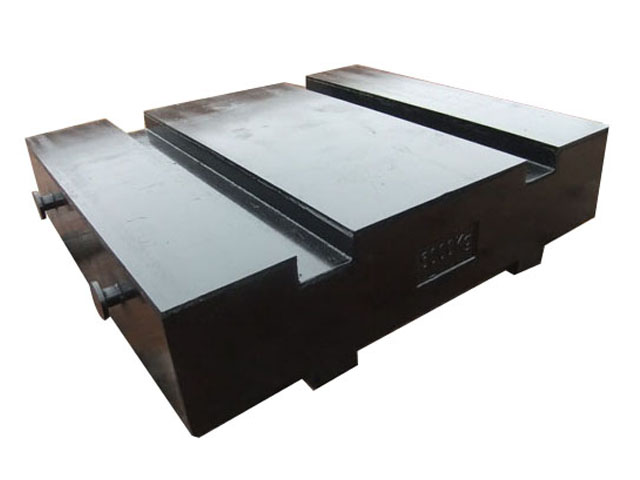
Handheld and carrying auxiliary structure is designed to meet the convenient and safe handling needs of calibration weights during use, transportation, and storage, adapting to different weight specifications and usage habits. For small-specification calibration weights with light mass, the auxiliary structure is integrated into the upper outline of the weight main body through structural rounding and anti-slip design, forming a smooth and easy-to-grab contour radian without additional protruding handles. This integrated structural design avoids additional assembled parts that may become loose or fall off, maintaining the overall structural integrity and mass stability of the weight. For large-specification calibration weights with heavy mass, the auxiliary carrying structure adopts embedded hidden design, with symmetrical embedded grooves arranged on both sides or the upper part of the weight main body. The grooves are processed smoothly without sharp edges and corners, facilitating workers to use matching tools for stable lifting and carrying. The embedded structure does not affect the flatness of the outer surface and the stability of stacking placement, ensuring that the calibration work is not interfered with while meeting the handling needs. All handheld and carrying auxiliary structures are integrally processed with the weight main body, with consistent structural firmness and no weak connection parts, avoiding structural deformation or local damage caused by frequent handling. The design of the auxiliary structure also takes into account the protection of the weight main body, preventing surface wear and collision damage during handling and moving, and protecting the overall structural integrity of the calibration weight.
Bottom contact supporting structure is a key structural part that ensures stable placement and accurate calibration contact of calibration weights, directly affecting the contact state between the weight and the weighing platform during calibration operations. The bottom of each calibration weight is designed with a flat, horizontal, and smooth supporting surface, processed by precision grinding to ensure high flatness and parallelism with the upper end surface. The flat bottom structure enables the weight to be placed stably on the weighing platform without tilting, shaking, or unstable contact, ensuring that the gravity of the weight acts vertically and evenly on the weighing sensing area of the equipment. Any unevenness or deformation of the bottom contact structure will lead to uneven stress on the weighing platform, resulting in inaccurate weighing data and affecting the calibration effect. The edge of the bottom supporting structure is processed with rounding treatment to eliminate sharp corners, preventing scratches on the surface of the weighing equipment during placement and movement, and also avoiding local edge wear and deformation caused by long-term friction and collision. The thickness of the bottom contact part is appropriately strengthened in structural design, improving compression resistance and wear resistance, reducing structural deformation and surface wear caused by long-term repeated placement and pressure bearing. The stable bottom supporting structure ensures that each calibration operation maintains a consistent contact state, providing a reliable structural foundation for accurate and repeatable calibration results.
Overall structural coordination and matching design run through the entire production and processing process of calibration weights, ensuring that all independent components form a unified, stable, and coordinated whole without structural conflicts or performance mutual interference. The main body structure, adjusting cavity, sealing structure, surface protective layer, auxiliary handling structure, and bottom supporting structure are mutually matched in size, position, and structural performance, forming a complete structural system centered on mass stability and calibration accuracy. All structural parts follow the principle of minimal structural interference, avoiding complex assembled connections and additional accessories that may affect mass stability, and prioritizing integrated forming and integrated processing to maintain the overall structural compactness and stability. The structural design also takes into account the adaptability of long-term storage and repeated use, ensuring that no structural loosening, deformation, or aging occurs during long-term placement and frequent use, and the mass state and structural state of the weight remain stable. Whether in high-precision laboratory calibration work or conventional industrial weighing equipment detection, the scientific and reasonable structural design of calibration weights can always maintain stable working performance, provide accurate mass reference standards, and ensure the uniformity and accuracy of various weighing measurement work. The continuous optimization of calibration weight structure always focuses on practical use needs and long-term stability, continuously balancing structural firmness, functional practicality, and environmental adaptability, making calibration weights a reliable basic tool for weighing measurement work in various fields.
Structure of Calibration Weight
https://www.veidtweighing.com/calibration-weights.html
Post Date: May 3, 2026
https://www.supplier-manufacturer.com/calibration-weight/structure-of-calibration-weight.html

![Mechanical Body Scales]()
Mechanical Body Scales
In an era dominated by various electronic smart devices for daily health monitoring, mechanical body scales remain a steady and essential presence in households, fitness s…![Types of Cast Iron Weight]()
Types of Cast Iron Weight
Cast iron weights stand as foundational components across industrial production, weighing calibration, mechanical balancing, engineering construction, and marine and minin…![Kitchen Scales]()
Kitchen Scales
Cooking is often described as a blend of art and science, where creative intuition meets precise measurement to craft meals that delight the senses and nourish the body. M…![Gray Cast Iron Weight]()
Gray Cast Iron Weight
Gray cast iron weight stands as one of the most essential and widely applied weighted components across modern industrial production, mechanical operation and daily engine…![Precision Balances]()
Precision Balances
Precision balance stands as a fundamental measuring instrument in modern metrology, serving as a core tool for obtaining accurate mass data across scientific research, ind…