What is Test Weight
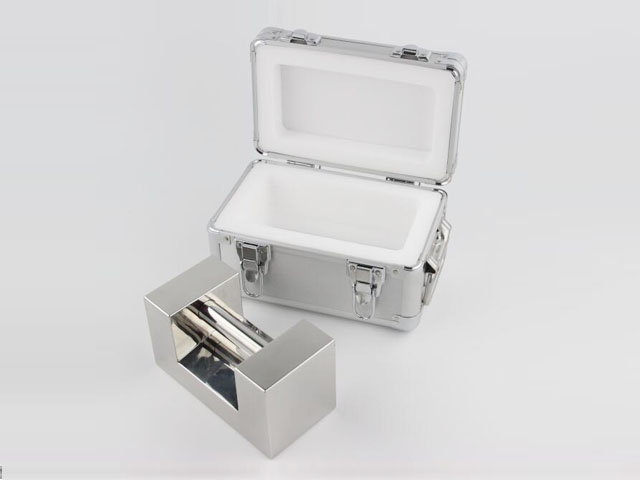
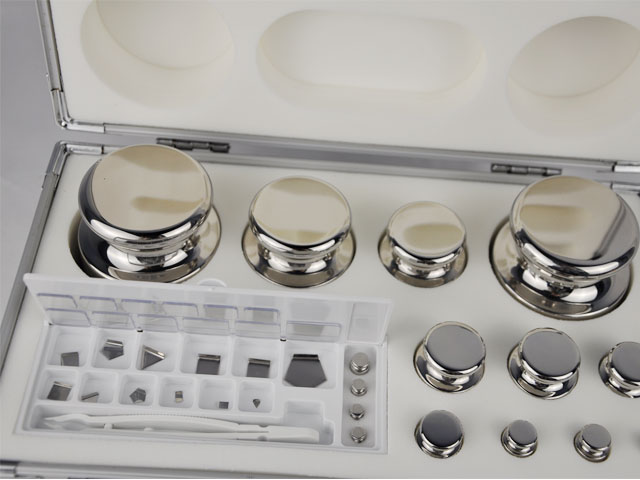
Test weights serve as essential foundational tools in the field of mass measurement, acting as reliable reference objects to maintain the stability and precision of all kinds of weighing devices used in daily production, laboratory research and routine quality checking work. Crafted from dense, sturdy and corrosion-resistant materials, these weights are carefully processed to maintain consistent mass stability over long-term use, avoiding subtle mass changes caused by daily contact, environmental temperature shifts or regular handling that could affect measurement outcomes. They are widely applied to check and adjust various weighing equipment, from small precision balances used in experimental rooms to large weighing devices deployed in industrial production workshops and daily commodity detection scenarios. Every regular check with test weights helps align the reading data of weighing tools with unified measurement standards, effectively preventing inaccurate measurement results that may arise from long-term equipment operation, subtle component wear or external environmental interference. Consistent and proper use of these test weights not only keeps weighing data steady and reliable for every measurement task, but also lays a solid foundation for standardized production, precise experimental research and fair and standardized commodity circulation in all walks of life. Simple daily maintenance, including gentle placement and proper storage in dry and clean environments, can further extend their service life and keep their reference performance stable, ensuring every weighing work follows unified and accurate measurement rules and meets the basic needs of various professional and daily measurement scenarios all the time.
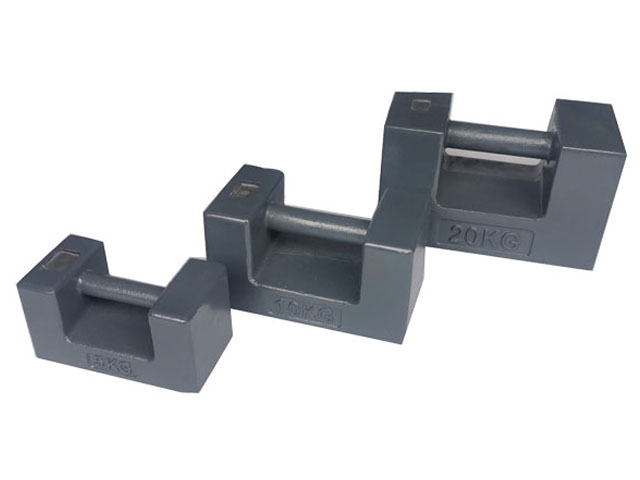
Core Adaptation and Application Analysis of Test Weight Grades and Specifications
Test weights are core basic measuring tools for the calibration, numerical verification and precision commissioning of various weighing and measuring equipment, as well as key carriers to ensure the accuracy and unification of weighing data in all walks of life. The scientific matching of their grades and specifications directly determines the reliability and standardization of weighing detection results. Unlike ordinary counterweight items, the core value of test weights lies not in simple weight addition, but in providing standardized mass reference for various weighing instruments, experimental instruments and industrial weighing devices relying on accurate mass setting and strict error control. They run through the whole process application scenarios such as measurement value transmission, daily equipment calibration and product quality inspection and testing, serving as an indispensable basic supporting part for measurement work.
Test weights are mainly classified into a core grade sequence by precision gradient, following the precision arrangement rule from high to low as a whole. Different grades correspond to differentiated error control standards and application positioning. The higher the grade precision, the smaller the allowable mass deviation range of the weight itself and the stricter the accuracy of mass setting. Weights of the highest precision grade mainly undertake the core function of reference value transmission, and do not directly participate in on-site daily testing operations. They are only used for progressive verification and numerical alignment of weights within the higher-level measurement system, laying a solid foundation for the accuracy of the overall measurement work. They have extremely high requirements for production technology, storage environment and operation specifications, and need to be properly stored and used in a professional environment with constant temperature and humidity, isolated from vibration and dust interference, so as to prevent subtle external environmental factors from affecting their reference mass setting.
Test weights of medium precision grade are the core transition category connecting reference measurement and practical application, balancing precision and practical operability. On the one hand, they can undertake the value transmission of high-grade weights and complete the routine verification and calibration of ordinary high-precision weights. On the other hand, they are widely suitable for the daily precision debugging and regular calibration of various laboratory precision balances, scientific research testing instruments and refined quality inspection equipment. These weights balance error control standards and application adaptability, which can not only meet the high-precision requirements for weighing data in scientific research experiments, physical and chemical testing, precision processing and other fields, but also adapt to the standardized operation scenarios of conventional laboratories. With high use frequency and wide application coverage, they are essential core testing measuring tools permanently equipped by scientific research institutions, quality inspection departments and precision processing enterprises.
Test weights of basic precision grade are more suitable for conventional scenarios such as industrial production, commercial weighing and ordinary equipment commissioning. Their error control standards adapt to the verification requirements of daily ordinary weighing equipment, focusing on the core characteristics of practicality and durability. Such weights are mostly used for the daily calibration and operation testing of workshop industrial weighing instruments, commercial weighing equipment and ordinary material weighing devices. They do not require harsh storage and use conditions, and are adaptable to various complex practical scenarios including workshop production, outdoor operation and commercial operation. They can quickly complete the numerical verification of basic weighing equipment, ensure the stability and compliance of data in conventional weighing operations, and meet the basic measurement needs of daily production and operation.
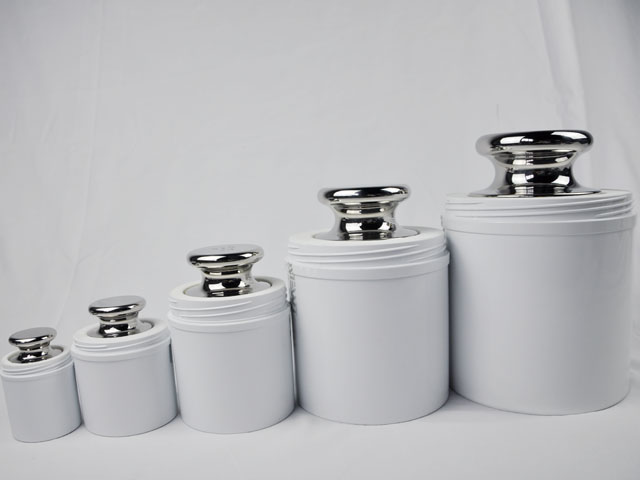
In addition to the core precision grades, the specifications of test weights are mainly divided according to the nominal mass, covering a complete gradient from micro milligram level to heavy kilogram level, which can adapt to the testing and calibration needs of weighing equipment with different ranges. Small micro-specification weights are used for the fine calibration of precision micro-detection instruments and laboratory micro-analysis equipment, with extremely small individual mass values, and can be combined to debug subtle weighing errors accurately. Conventional medium and small specification weights have the strongest versatility, suitable for the basic testing of most laboratory balances, conventional commercial weighing instruments and small and medium-sized industrial weighing equipment. They can be used individually or in combination to flexibly adapt to the calibration needs of different weighing ranges. Heavy-duty large-specification weights are mainly used for full-load and partial-load testing of large industrial weighbridges, heavy-duty material weighing equipment and large weighing instruments, ensuring the operational accuracy and stability of large weighing equipment under heavy-load working conditions.
The selection of test weight grades and specifications follows the core principle of matching and adaptation. There is no need to blindly pursue high grades or large specifications. It is only necessary to make scientific selection according to the precision requirements of actual application scenarios, the range of weighing equipment and the frequency of testing and verification. The accurately matched grades and specifications can not only ensure the accuracy and reliability of various weighing test data and avoid measurement deviation caused by mismatched weight precision and specifications, but also effectively extend the service life of weights and improve the overall efficiency of measurement and calibration work. They enable every weighing test to have a standardized basis, and build a solid accurate measurement defense line for production and operation, scientific research and testing, and quality control in all industries.
Analysis on Core Characteristics and Adaptive Design of Materials and Structures for Test Weights
As core supporting components for the calibration of various weighing equipment, mass comparison and metrological verification, test weights have their long-term service stability, weighing accuracy and environmental adaptability directly determined by material selection and structural configuration, which also serve as the basic prerequisite to ensure reliable data for all kinds of weighing and testing work. Different from ordinary counterweights, the material selection of test weights is not merely about choosing hard metals. It is essential to take into account density uniformity, corrosion resistance, low magnetic susceptibility and internal material compactness, with each material property deeply bound to the accuracy requirements of actual testing work. The structural design is optimized and formed based on material characteristics, taking into account multiple needs such as weight adjustment, protection and sealing, and practical operation and handling. Only the coordination of material and structure can produce qualified test weights suitable for multi-scenario testing operations.
The selection of core base materials for test weights follows two core principles of density adaptation and material stability. Test weights used for high-precision refined testing scenarios are mostly made of smelted and purified stainless steel base materials. Treated with special smelting processes to remove internal impurities and dissolved gases, such materials feature a compact internal structure without pores, avoiding mass deviation caused by moisture absorption and dirt contamination during long-term storage. Meanwhile, the magnetic susceptibility is controlled at an extremely low level to effectively prevent magnetic field interference from affecting weighing data. The density of the base material is precisely regulated to fit the adaptive requirements of conventional metrological testing, minimizing the interference of air buoyancy on the weighing and calibration process and maintaining constant mass even in indoor testing environments with fluctuating temperature and humidity. Cast iron base materials with solid texture and appropriate toughness are adopted for test weights used in conventional industrial batch calibration and outdoor simple testing scenarios. The optimized base material ratio ensures sufficient structural hardness and good deformation resistance, enabling the weights to withstand harsh working conditions such as outdoor collision and stacking. Their basic mass attributes remain stable for a long time, meeting the basic needs of conventional precision testing.
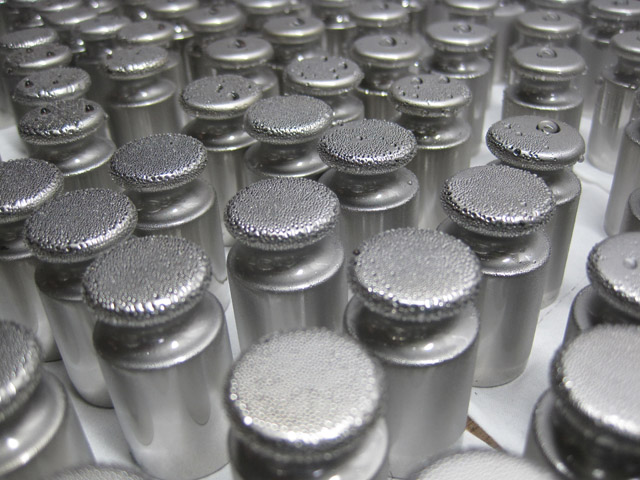
Surface treatment of materials is an indispensable key part of the material and structure of test weights. Regardless of the type of core base material, the surface requires refined polishing and protective treatment instead of rough processing, ensuring the overall surface, edges and bottom of the weights are smooth and flat without burrs or concave and convex defects. Stainless steel test weights undergo multi-stage fine polishing to optimize surface smoothness and enhance the inherent rust and chemical corrosion resistance of the material. Dust and stains accumulated during daily use can be easily cleaned, and no mass loss will occur due to surface wear and oxidation. The surface of cast iron test weights is treated with special protective coatings to isolate erosion from air, rainwater and various outdoor corrosive media, preventing weight deviation caused by base material rusting and peeling. It consolidates the foundation of stable weight quality through surface protection and extends the long-term cyclic service life of the test weights.
In terms of overall structural configuration, test weights adopt a combined design of integrated main body forming and adjustable built-in cavity. The main body is integrally forged or cast with uniform overall stress and stable load-bearing structure, free from cracking and deformation after long-term pressure bearing and repeated use, ensuring the basic weight benchmark of the test weights remains unchanged. The built-in adjusting cavity serves as the core functional structure with a tight sealing design and matched sealing components to prevent external moisture and dust from entering and avoid the impact of internal component corrosion on the overall weight. The adjusting cavity is filled with appropriate metal fillers, which can be finely adjusted according to the subtle precision requirements of actual test calibration to correct weight values, balancing overall structural stability and flexibility of weight fine-tuning. The external shape of the test weights is designed to fit practical handling and stacking needs, with a regular outline and reasonable gripping force, facilitating manual handling and hoisting. The weights bear uniform force during stacking and are not prone to toppling and deformation.
The coordinated adaptation of materials and structures is the core key for test weights to achieve accurate metrological testing. High-quality base materials lay a solid foundation for stable mass quality, refined surface treatment enhances durability and protection performance, and scientific internal structure balances precision adjustment and practical adaptation. Whether for high-precision weighing calibration in laboratories or conventional equipment testing and verification on industrial sites, test weights with appropriate materials and reasonable structures can always maintain a constant mass state, avoid interference from various external factors, continuously provide reliable mass benchmark support for all kinds of weighing testing work, and ensure the authenticity, effectiveness and controllability of all metrological testing data.
Purposes and Selection of Test Weights
In the whole process of quality measurement, industrial production and experimental testing, test weights are the core basic appliances to ensure the accurate operation of various weighing and measuring equipment, as well as the key carrier to maintain the accuracy and consistency of all quality measurement data. Although they appear to be simple in shape and regular in specification, these metal counterweight components serve as an important link between measurement standards and actual weighing operations. They are indispensable for precision laboratory testing, routine quality inspection in production workshops, daily verification of large weighing instruments, and mechanical load testing of materials. Their standardized application and scientific selection are directly related to the reliability of measurement data, the stability of product quality and the normativity of production operations, making them essential basic supporting facilities for all weighing-related work. The most fundamental core purpose of test weights is the daily calibration and error verification of various weighing and measuring equipment. High-frequency long-term use will cause sensor loss and mechanical micro-offset in laboratory analytical balances, conventional electronic precision scales, as well as platform scales and floor weighing instruments on industrial production sites, resulting in deviations in weighing values. Regular calibration with test weights of standard mass can timely detect measurement deviations of equipment and quickly adjust numerical values, ensuring that the data of each weighing operation conforms to actual quality standards and avoiding detection errors or production batching deviations caused by inaccurate equipment. In addition, test weights are widely used in product quality control and material performance load testing. Many industrial products and packaged finished products need to be verified for weighing compliance, and various new materials and protective components require pressure stability tests under constant load. Test weights can provide constant and controllable standard load to simulate the stress state under actual working conditions and accurately verify the structural strength and service safety of products, providing reliable data support for product factory quality inspection and process optimization.
The selection of test weights does not require blindly pursuing ultra-high configuration, but should follow the core principles of adaptive matching, working condition suitability and long-term durability to avoid hidden dangers caused by redundant precision or inconsistent specifications. First of all, it is necessary to accurately match the measurement accuracy requirements, which is the core key of selection. Different application scenarios correspond to test weights of different precision levels. Micro-precision weighing equipment in laboratories needs to be equipped with high-precision test weights with minimal errors to ensure accurate micro-weighing data; conventional laboratory testing weighing equipment only requires medium-precision test weights to meet daily calibration needs; large weighing instruments in factory workshops and ordinary finished product weighing verification are suitable for basic industrial-grade test weights. The core selection logic is to ensure that the allowable error of the test weight is far lower than the error standard of the supporting weighing equipment, so as to prevent insufficient weight precision from affecting the overall measurement effect and avoid resource waste caused by excessive selection of high-precision test weights. Secondly, attention should be paid to the suitability of the weight material. For weights used in a dry and constant-temperature laboratory environment, high-quality stainless steel with anti-magnetization, corrosion resistance and uniform density is preferred, which is not easily affected by ambient temperature and humidity and keeps long-term stable quality parameters. For industrial production outdoor or workshop scenarios with high humidity, heavy dust and slight corrosive media, materials with stronger protection and better wear resistance can be selected to prevent rust, wear and mass loss of weights during long-term use, extend service life and continuously ensure the accuracy of weighing calibration. Finally, the selection should be refined according to the actual operating range and application scenarios. Weights suitable for the common range of weighing equipment should be selected for daily calibration to meet the equipment precision detection under different loads; conventional solid weights with regular structure and anti-slip and anti-collision performance are preferred for working conditions with frequent handling, while combined counterweight weights can be selected for long-term static testing at fixed points to flexibly meet the superposition testing requirements of different loads. Clarifying the diverse purposes of test weights and selecting them accurately according to actual application scenarios can not only give full play to the core functions of weights in measurement calibration and load testing, but also balance practicality and cost performance, and ensure the orderly and accurate development of various measurement detection and production quality inspection work in the long run.
What is Test Weight
https://www.veidtweighing.com/test-weight.html
Post Date: May 4, 2026
https://www.supplier-manufacturer.com/test-weight/what-is-test-weight.html

![Standard Weight For Industrial Scales]()
Standard Weight For Industrial Scales
In modern industrial production, commercial trade, and quality inspection systems, the accuracy and stability of weighing measurements serve as the fundamental guarantee f…![Oiml Calibration Weight Set]()
Oiml Calibration Weight Set
In the field of precision measurement and industrial metrology, accurate mass reference serves as the fundamental foundation for all quantitative weighing operations, and …![Calibration Weight For Laboratory Balance]()
Calibration Weight For Laboratory Balance
In every modern laboratory that relies on quantitative measurement, consistent and reliable weighing data forms the foundation of credible experimental results, industrial…![20g Stainless Steel Calibration Weight School Experiment]()
20g Stainless Steel Calibration Weight School Experiment
In school science laboratories, accurate mass measurement serves as the fundamental foundation for countless physics and chemistry experiments, laying the groundwork for s…![Laboratory Weight Supplier]()
Laboratory Weight Supplier
In every modern laboratory setting, whether engaged in scientific research, industrial material testing, educational teaching experiments, or daily routine sample analysis…