20kg Test Weight
In the modern industrial production system, daily measurement verification and routine equipment performance testing work run through every link of manufacturing, logistics processing, laboratory research and on-site engineering operation, and a stable and reliable mass reference carrier is always an indispensable basic condition to ensure the consistency and credibility of all measurement data. The 20kg test weight stands out among various mass reference tools for its moderate mass specification, strong scene adaptability and excellent structural stability, becoming a commonly used auxiliary tool in conventional weighing equipment debugging, load-bearing performance inspection of mechanical facilities, daily measurement calibration of on-site working conditions and repeated functional testing of industrial supporting equipment. Unlike temporary weight-bearing accessories or simple heavy objects used for casual stacking and pressing, this kind of test weight is designed and manufactured with a single core goal of maintaining stable mass output and consistent external structural state in long-term repeated use, and every detail from raw material selection, forming processing to surface treatment and structural optimization is formulated around the basic demand of adapting to complex on-site working environments and long-cycle regular use. Whether in closed and stable laboratory spaces, busy and noisy industrial production workshops, open-air logistics transfer yards with changing weather conditions, or engineering construction sites with harsh operation conditions, the 20kg test weight can maintain good working performance, provide stable and uniform mass reference standards for various testing and calibration work, and effectively avoid measurement deviation and test result distortion caused by unstable reference quality or easy damage of auxiliary tools.
The raw material selection of the 20kg test weight is the fundamental premise to determine its overall performance and long-term service effect, and most conventional products in the market adopt high-density metal materials with stable physical and chemical properties and good overall forming performance. Common material options include gray cast iron with strong pressure resistance and low comprehensive maintenance cost and stainless steel with excellent corrosion resistance and surface texture stability, and different materials can be selected according to the actual use environment and use frequency of different scenarios to meet the differentiated use needs of various industries. Gray cast iron materials are widely used in conventional industrial on-site testing and daily weighing calibration work because of their good overall rigidity, strong impact resistance and not easy to deform under conventional external force extrusion and collision. In the actual casting and forming process, the internal structure of gray cast iron is uniform and dense, with no obvious internal pores or structural gaps, which ensures that the overall mass of the test weight will not have subtle changes due to internal structural looseness after long-term placement and repeated handling. For working environments with high air humidity, frequent contact with water vapor, trace chemical substances or long-term outdoor open-air placement, stainless steel materials are more suitable for manufacturing 20kg test weights. This kind of material has natural anti-rust and anti-corrosion characteristics, will not produce surface oxidation rust, corrosion peeling and other phenomena due to environmental humidity and subtle chemical erosion, can keep the surface smooth and the overall mass stable for a long time, and reduce the frequent maintenance and replacement work caused by material corrosion and structural damage in the later stage. No matter which kind of mainstream material is selected, the core principle of raw material screening is to ensure that the material itself has stable density, uniform texture and no easy-to-change physical characteristics, so as to lay a solid foundation for the long-term stability of the overall mass of the test weight.
The manufacturing and forming process of the 20kg test weight directly affects its structural uniformity, surface flatness and overall mass balance, and mature and standardized processing technology is adopted in the whole production process to ensure that each finished product can meet the basic use requirements of on-site testing and calibration. The mainstream forming process adopted by most manufacturers is coated sand casting process for cast iron test weights, which can make the molten metal raw material fill the mold cavity evenly and stably in the casting process, avoid local structural shrinkage, uneven thickness and irregular outline deformation, and ensure that the overall shape of the formed test weight is regular and the wall thickness of each part is uniform. After the initial casting and forming of the test weight, it will go through multiple stages of natural cooling and stress relief treatment. The internal structural stress generated during casting is gradually released through slow cooling, which prevents the test weight from subtle structural deformation and mass deviation caused by internal stress release after being put into use. After cooling and shaping, the surface of the test weight will be polished and trimmed repeatedly, all sharp edges and corners on the surface will be smoothed, and irregular burrs and protrusions generated during casting will be removed. This polishing and trimming treatment not only makes the overall appearance of the test weight neat and standardized, but more importantly, avoids sharp edges and corners from scratching operators during handling and use, and also prevents local stress concentration caused by protrusions and sharp corners from affecting the overall structural stability of the test weight. For some test weights that need higher surface finish and cleaner use environment, additional surface coating treatment will be carried out on the basis of polishing and trimming. The surface protective layer formed by coating can further isolate the contact between the internal metal material and the external air and humid environment, enhance the surface anti-oxidation and anti-wear ability, and make the test weight not easy to wear and peel during long-term handling, stacking and repeated placement.
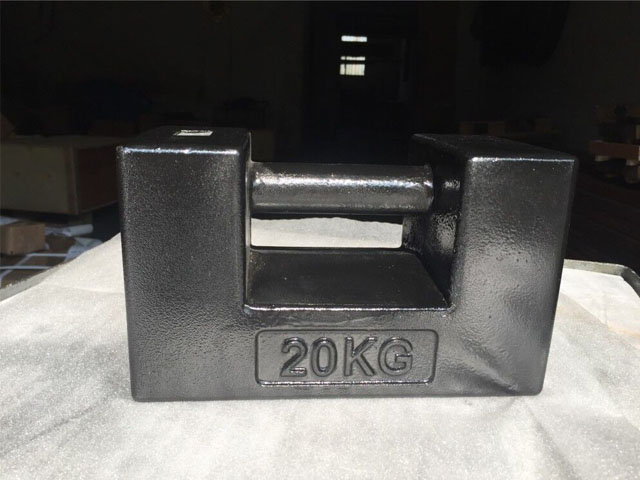
The structural design of the 20kg test weight fully considers the dual core demands of convenient daily handling and stable placement and use, and the overall shape and accessory configuration are optimized according to the actual operation habits of on-site personnel and the requirements of testing and calibration work. Most of the conventional 20kg test weights adopt an integrated solid structure design, with no detachable scattered parts in the main body, which effectively avoids mass changes and structural looseness caused by the loss of small parts in long-term repeated use. The overall outline is mostly regular rectangular or square block structure, with a flat and smooth bottom contact surface. The flat bottom design can make the test weight fit closely with the surface of weighing equipment, load-bearing test tables and mechanical equipment bearing points when placed for use, avoid tilting and shaking during placement, ensure that the mass pressure is evenly distributed on the contact surface, and thus guarantee the accuracy and stability of test and calibration data. In order to facilitate the daily handling, carrying and position adjustment of operators, a reasonable integrated handle structure is reserved on the upper part or both sides of the test weight. The handle is formed integrally with the main body of the test weight without subsequent welding and assembly, which ensures that the connection between the handle and the main body is firm and reliable, and no fracture or separation will occur during lifting and handling. The radian and size of the handle are designed according to ergonomic principles, which can adapt to the holding posture of a single adult operator, reduce the grip pressure and handling strain during long-time carrying and repeated moving, and improve the convenience and safety of daily operation. In addition, some test weights are designed with reserved adjustment cavities inside the structure. The internal adjustment space can be filled with appropriate filling materials in the later stage according to the subtle mass deviation generated in the production and processing process, so as to fine-tune the overall mass of the test weight, ensure that the actual mass of each finished product is within the reasonable range required for use, and meet the basic precision requirements for daily measurement calibration and load testing work.
The core functional value of the 20kg test weight is to provide a stable and unified mass reference standard for various measurement and testing work, and its application scope covers almost all industrial links that require weighing verification and load-bearing performance detection. In industrial manufacturing workshops, various electronic platform scales, mechanical floor scales, hanging scales and other conventional weighing equipment need regular daily calibration and periodic performance inspection. After long-term use, frequent vibration and environmental temperature and humidity changes, the internal sensing components and mechanical transmission structures of these weighing equipment are prone to subtle performance drift, resulting in inaccurate weighing data and inconsistent measurement results. By placing the 20kg test weight on the weighing equipment for repeated weighing tests, operators can intuitively judge whether the weighing data of the equipment is consistent with the standard reference mass, timely find the subtle deviation of the equipment, and carry out subsequent debugging and correction work to ensure that the weighing data of the production workshop in raw material proportioning, product weighing, finished product counting and other links is accurate and reliable, and avoid production quality problems and material waste caused by measurement errors.
In the logistics warehousing and freight transportation industry, the accurate measurement of goods weight is related to the standardized settlement of freight, reasonable distribution of warehouse storage space and safe loading and transportation of goods. Various weighing devices used in warehouse incoming and outgoing inspection, freight terminal weighing and cargo load statistics need to maintain stable and accurate working performance all the time. The 20kg test weight is often used for daily spot check and regular calibration of these logistics weighing equipment. The staff can randomly place the test weight on different positions of the weighing equipment to test the weighing accuracy of each area of the equipment, ensure that there is no regional weighing deviation of the equipment, guarantee the fairness and accuracy of goods weight measurement in the logistics link, and effectively avoid economic disputes and cargo loading safety hazards caused by inaccurate weighing data. At the same time, in the process of logistics handling equipment performance testing, the 20kg test weight can also be used as a fixed load reference to test the lifting stability and load-bearing operation performance of small handling vehicles and simple lifting equipment, helping enterprises check the operating status of logistics handling equipment in advance and eliminate potential safety hazards in equipment operation.
In engineering construction and mechanical equipment testing scenarios, the 20kg test weight plays an important role in load-bearing performance detection and mechanical structure stability testing. Cranes, hoists, winches and other lifting mechanical equipment used in construction sites and engineering operation links need regular load-bearing simulation tests to verify the structural bearing capacity and operation safety of the equipment. The 20kg test weight can be used as a basic unit of load combination, and multiple test weights can be stacked and matched according to the test requirements to form different load values, so as to simulate the actual load-bearing state of the lifting equipment in actual work. Through long-term load placement and repeated lifting tests, operators can detect whether the mechanical structure of the equipment is deformed, whether the operation transmission is stable, and whether the safety protection device responds normally under the set load state, so as to ensure that the lifting mechanical equipment will not have structural failure and safety accidents due to insufficient bearing capacity in actual engineering operation. In addition, in the installation and debugging of building curtain walls, supporting structures and small engineering facilities, the test weight can also be used for pressure resistance test and structural stability detection of auxiliary facilities, providing reliable data support for engineering construction safety inspection and acceptance work.
In scientific research laboratories and teaching and experimental institutions, the 20kg test weight provides a basic and stable mass reference for various precision experimental measurements and teaching demonstration experiments. Many physical measurement experiments, mechanical performance research experiments and material stress tests in the laboratory need accurate and stable mass load application, and the test weight, as a standardized mass reference tool, can ensure the consistency and repeatability of experimental conditions. In the process of material tensile test, compression test and fatigue resistance test, researchers can use the 20kg test weight to apply fixed and stable load to the experimental samples, observe the structural changes and performance changes of the materials under specific load conditions, and obtain accurate experimental research data. In the daily teaching and experimental demonstration work of schools and vocational training institutions, the test weight is used to demonstrate the basic principles of mass measurement, mechanical balance and force transmission, helping students and trainees intuitively understand the basic knowledge of measurement and mechanical principles, and improving the practical teaching effect of professional courses. The stable mass and reliable structural performance of the test weight ensure that the experimental demonstration effect is not affected by external factors, and the experimental data and teaching demonstration process are always standardized and effective.
Daily maintenance and scientific storage management are key factors to ensure the long-term stable performance and extended service life of the 20kg test weight. Although the test weight is made of high-strength metal materials and has good structural durability, unreasonable storage environment and irregular use and maintenance operations will still lead to surface damage, structural deformation and mass deviation of the test weight after long-term accumulation, affecting its normal use effect. In terms of daily storage, the test weight should be placed in a dry, ventilated and clean storage space as far as possible, avoiding long-term placement in a humid environment with excessive water vapor, corrosive gas and dust accumulation. Humid environment will accelerate the surface oxidation and rust of ordinary cast iron test weights, and corrosive gas will cause subtle corrosion damage to the surface and internal structure of the test weight, resulting in surface peeling and mass changes. Excessive dust accumulation on the surface will affect the flatness of the contact surface of the test weight, leading to unstable placement and inaccurate calibration test results in use. The storage area should be equipped with special flat storage racks or storage platforms to avoid random stacking of test weights on uneven ground or direct overlapping and extrusion with other heavy mechanical parts. Random stacking is easy to cause collision and friction between test weights, resulting in surface wear and edge damage, and long-term overlapping extrusion will also cause subtle compression deformation of the test weight structure, affecting the stability of mass and structure.
In terms of daily use maintenance, operators need to carry out simple cleaning and inspection work on the 20kg test weight regularly. Before each use, simply wipe the surface of the test weight with a clean dry cloth to remove surface dust, sundries and residual stains, ensure that the bottom contact surface and handle surface are clean and smooth, and avoid sundries affecting the placement stability and weighing calibration accuracy. After each use, timely wipe off the water stains, oil stains and residual impurities on the surface of the test weight, and place it back in the designated storage position in time, instead of leaving it on the production workshop equipment or outdoor construction site for a long time. Regularly check the surface condition and structural integrity of the test weight every month, check whether there are obvious bumps, cracks, deformation and surface corrosion peeling on the main body and handle of the test weight, and check whether the internal adjustment structure is loose or damaged. If subtle surface rust or wear is found, timely carry out simple rust removal and surface protection treatment; if serious structural deformation, crack damage and obvious mass deviation are found, stop using it in time and carry out mass re-calibration or replacement treatment, so as to avoid using unqualified test weights for calibration and testing work and affecting the accuracy of measurement and test results.
The standardized operation specification in the use process is also an important link to maintain the performance stability of the 20kg test weight and ensure the personal safety of operators. In the process of handling and carrying the test weight, operators need to hold the integrated handle stably with both hands, adopt a stable carrying posture, avoid single-handled violent shaking and random throwing and dropping, and prevent the test weight from colliding with the ground, equipment and other heavy objects. Violent collision and dropping will not only cause surface damage and edge deformation of the test weight, but also may lead to internal structural changes and mass deviation, and even bring safety risks such as crushing injury to operators. When placing the test weight for calibration and testing work, it should be placed gently and stably at the designated position of the weighing equipment or test table, avoiding sudden heavy pressing and tilting placement, so as to ensure that the test weight is placed smoothly and the mass pressure is evenly distributed. In the process of stacking multiple test weights for combined load testing, the stacking position should be aligned up and down, placed stably layer by layer, avoiding uneven stacking and tilting shaking, so as to prevent the test weight from falling and collapsing during the test process, affecting the test progress and causing safety accidents. After the completion of the test and calibration work, the test weight should be handled and placed back to the storage position in time, and should not be left on the working equipment for a long time to avoid long-term pressure on the equipment and accidental collision damage.
20kg Test Weight
https://www.veidtweighing.com/test-weight.html
Post Date: Apr 29, 2026
https://www.supplier-manufacturer.com/test-weight/20kg-test-weight.html

![Astm Standard Calibration Weight]()
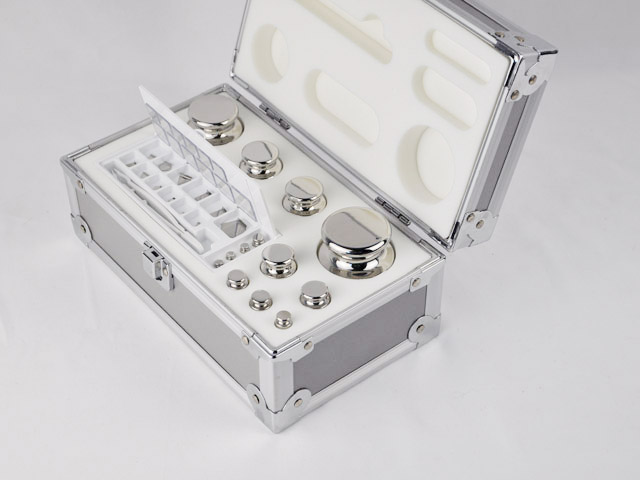
Astm Standard Calibration Weight
Precision mass measurement serves as a foundational pillar across scientific research, industrial production, pharmaceutical manufacturing, and material testing industries…![1000kg Large Calibration Weight Port Weighbridge Use]()
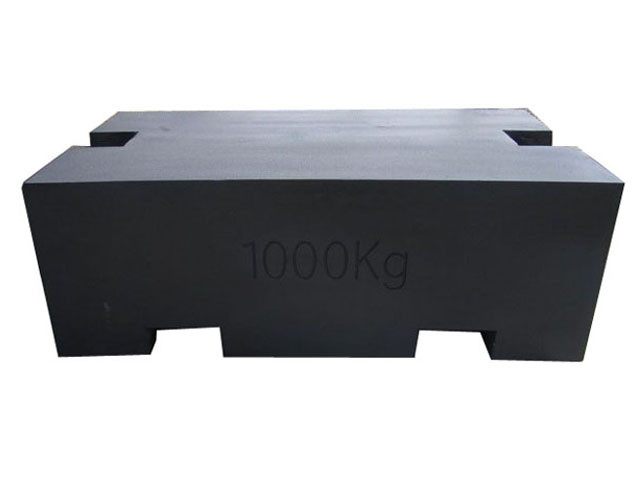
1000kg Large Calibration Weight Port Weighbridge Use
In modern port logistics and cargo management, accurate weight measurement serves as the fundamental foundation for efficient cargo circulation, safe shipping operation, a…![Types of Standard Weight]()
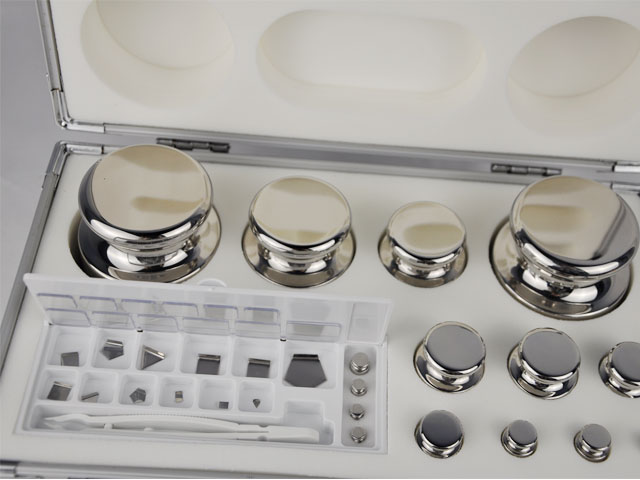
Types of Standard Weight
Standard weights serve as the foundational physical reference tools for all mass measurement activities across industrial production, laboratory research, commercial trade…![Hooked Standard Weight]()
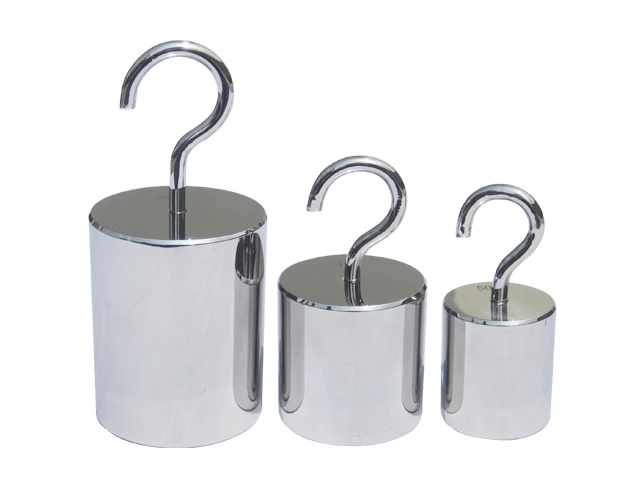
Hooked Standard Weight
Hooked standard weights are essential foundational tools widely utilized in experimental research, teaching demonstrations, and routine mechanical calibration scenarios. D…![10g Standard Weight]()
10g Standard Weight
In the quiet and intricate world of measurement, every small unit of mass carries profound significance that connects human daily life, professional production, and scient…