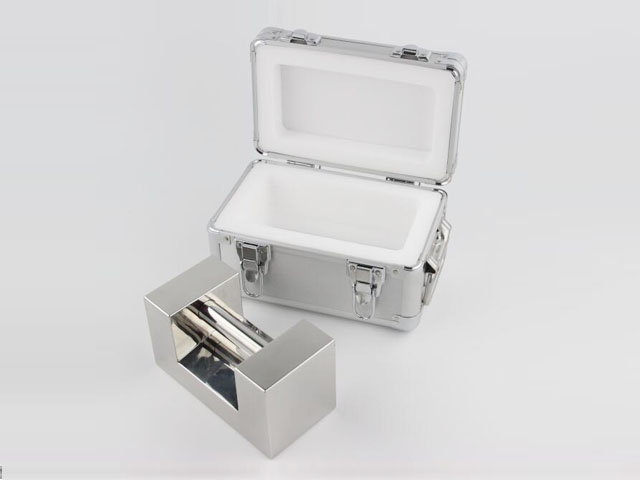
Laboratory Standard Weight
In every scientific laboratory that engages in experimental research, material analysis, chemical formulation, physical property testing, and industrial precision testing, the consistency and credibility of all experimental data hinge entirely on the stability and accuracy of basic measuring equipment. Among all the essential measuring auxiliary tools in laboratory environments, the laboratory standard weight stands as an indispensable and core fundamental component, serving as the physical reference benchmark for all mass-related measurement work. Unlike ordinary daily weighing objects or common industrial weighing accessories, laboratory standard weights are meticulously crafted physical carriers with fixed mass values, stable structural performance, and uniform physical attributes, designed exclusively for long-term repeated use in professional laboratory scenarios. Every link from material selection, structural shaping, mechanical processing, surface treatment to later fine adjustment and daily maintenance is carried out under rigorous professional requirements, ensuring that each standard weight can maintain stable mass performance and reliable physical state for a long time, and provide consistent and traceable mass reference support for various precision weighing operations and experimental testing activities inside the laboratory. Without the reliable support of laboratory standard weights, even the most sophisticated electronic balances, mechanical weighing instruments, and precision testing scales cannot exert their due measurement functions, and all experimental data, test results and research conclusions related to mass measurement will lose their basic authenticity and reference significance, making it impossible to carry out effective scientific research, experimental verification and data comparison work.
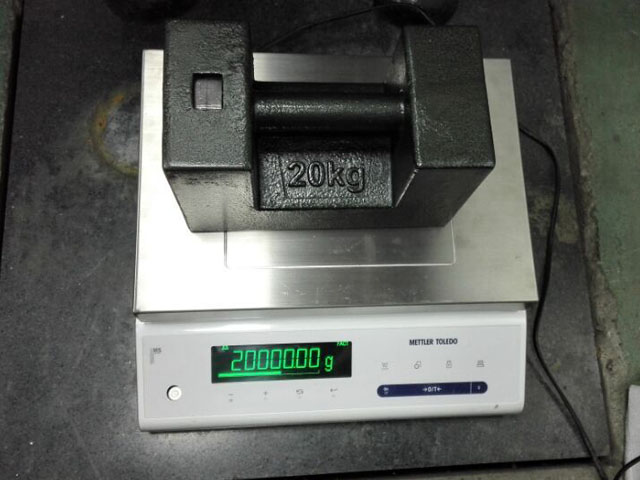
The core essence of laboratory standard weight application lies in establishing a unified and stable mass measurement reference inside the laboratory, realizing the regular inspection, daily verification and periodic debugging of various weighing and measuring instruments, and eliminating measurement errors caused by long-term use, environmental changes, mechanical wear and electronic component aging of weighing equipment. In the daily operation of the laboratory, various precision weighing instruments will gradually produce subtle measurement deviations after long-term continuous use, frequent start-stop operation and repeated bearing weighing. These tiny deviations are difficult to be directly perceived by laboratory operators in daily use, but they will gradually accumulate and expand with the increase of use times and service time, eventually leading to inaccurate weighing data, distorted experimental results, and even affecting the entire experimental cycle and research progress. Laboratory standard weights play a vital balancing and correction role in this process. By placing standard weights with known stable mass on the weighing platform of various balances and scales, laboratory staff can intuitively judge whether the weighing instrument is in a normal working state, timely find subtle measurement deviations existing in the equipment, and complete fine debugging and parameter correction of the weighing instrument according to the actual comparison results, so that all subsequent weighing and experimental testing work can always be carried out within a reasonable and accurate measurement range. This basic calibration and verification work is not only a conventional daily operation in laboratory management, but also a key prerequisite to ensure the repeatability and comparability of all experimental data.
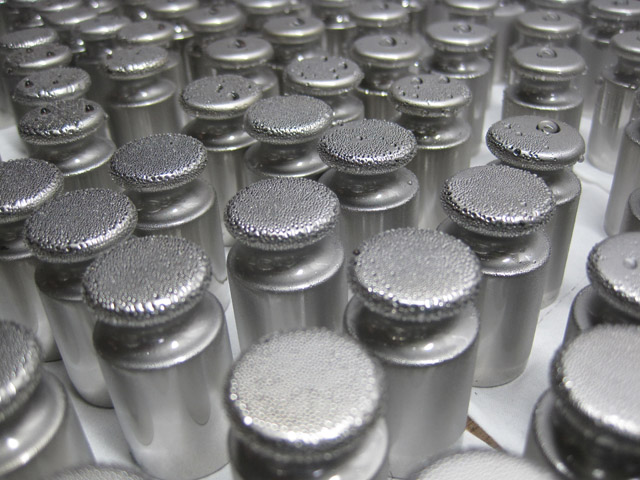
The selection of manufacturing materials is the primary factor determining the service performance and long-term stability of laboratory standard weights, and all material selection work focuses on two core goals: maintaining long-term mass stability and adapting to complex laboratory internal environments. Common manufacturing materials for laboratory standard weights are carefully screened according to different use scenarios and precision use needs, including high-quality stainless steel, polished brass, lightweight aluminum alloy and other metal materials with excellent comprehensive performance. Each kind of material has its own unique physical characteristics and applicable scope, and the professional laboratory will select the most suitable manufacturing material according to the actual measurement precision requirements, long-term use frequency and internal environmental conditions of the laboratory. Stainless steel materials are widely used in the production of most conventional and high-precision laboratory standard weights because of their outstanding corrosion resistance, strong anti-oxidation ability, low magnetism and stable internal structural density. This material will not easily produce chemical reaction and surface corrosion when exposed to conventional laboratory air, common chemical volatile gases and humid environment for a long time, and will not cause mass change and surface damage due to oxidation, rust or chemical erosion, which can ensure that the mass value of the standard weight remains stable for a long time in the process of long-term repeated use and storage. Polished brass materials are often used in the production of medium-precision standard weights suitable for general experimental teaching and conventional industrial testing laboratories. After professional polishing and surface protection treatment, brass has good surface finish and moderate density, with stable physical properties and convenient subsequent mass fine adjustment operation, which can fully meet the daily weighing verification and conventional calibration needs of most ordinary laboratory weighing equipment. Aluminum alloy materials are mostly used to make small-specification lightweight standard weights with low nominal mass, which have the advantages of light overall weight, easy handling and carrying, and stable surface performance, and are very suitable for fine weighing calibration and small-range experimental mass comparison work in micro-experiments and small sample testing links.
In addition to the basic corrosion resistance and oxidation resistance, the material selection of laboratory standard weights also strictly controls the magnetic property and density uniformity of the materials, two key indicators that have a direct impact on measurement accuracy. In the precision weighing environment of the laboratory, subtle magnetic interference will have an invisible impact on the internal sensing components of electronic balances and precision mechanical scales, resulting in subtle fluctuations in weighing data and affecting the accuracy of measurement results. Therefore, all raw materials used to produce high-precision laboratory standard weights need to undergo strict magnetic detection and screening to ensure low magnetic or non-magnetic characteristics, effectively avoid magnetic interference between standard weights and weighing equipment, and ensure that each weighing calibration and verification work is not affected by external magnetic factors. At the same time, the internal density of the selected materials must be uniform and consistent without internal pores, density differences and structural defects. Uniform density distribution ensures that the standard weight will not have mass deviation caused by internal structural changes during long-term use, extrusion and handling, and the overall stress is uniform during placement and use, avoiding subtle deformation and mass change caused by uneven internal structure. These strict material selection and detection requirements lay a solid physical foundation for the long-term stable use of laboratory standard weights, and also ensure that each standard weight can maintain consistent mass performance in different use cycles and experimental environments.
The production and processing process of laboratory standard weights follows refined and standardized processing procedures, and every production link is carefully operated and strictly inspected to ensure that the finished standard weights meet the basic requirements of laboratory precision use. The whole production process starts from raw material cutting and preliminary shaping, and the raw materials are cut into preliminary blanks of corresponding specifications and sizes according to the designed nominal mass and structural size requirements of standard weights. Then, professional CNC mechanical processing equipment is used for fine cutting, shaping and dimensional finishing of the blanks, so that the overall shape, outer diameter size, height specification and internal structural layout of each standard weight reach the preset design standards. The structural design of laboratory standard weights is mostly regular cylindrical or disc-shaped, with smooth and flat outer surface and uniform edge radian. This simple and reasonable structural design not only facilitates laboratory staff to take, place and operate the standard weights stably, avoids tilting and unstable placement during weighing calibration, but also effectively reduces the surface contact area with the external environment, reduces the adhesion of dust, experimental residues and humid substances, and simplifies the daily cleaning and maintenance work in the later stage. For some standard weights that need long-term high-precision use, a hidden fine adjustment cavity will be reserved inside during the processing and shaping process. The internal fine adjustment structure is sealed with professional protective parts after fine debugging, which can effectively prevent external dust and moisture from entering, and facilitate the subtle mass compensation and fine adjustment of the standard weight after long-term use and slight wear, so as to ensure that the mass value can always be maintained within the required stable range.
Surface treatment is an indispensable key process in the production of laboratory standard weights, which directly affects the surface durability, pollution resistance and long-term mass stability of the weights. After the completion of mechanical processing and shaping, all standard weights will go through multiple surface polishing and finishing processes, including mechanical fine polishing and surface smoothing treatment, to make the surface of the weights present a smooth and flat state without burrs, scratches, depressions and other surface defects. Smooth surface can effectively reduce the adhesion of dust, experimental chemical residues and tiny particulate impurities in the laboratory environment, avoid the accumulation of dirt on the surface leading to subtle mass changes, and also reduce the surface friction and wear during frequent handling and placement. For standard weights used in special experimental environments such as high humidity and volatile chemical gases, additional professional surface protection treatment will be carried out on the basis of polishing, forming a stable protective film on the surface of the weights, further enhancing the corrosion resistance and oxidation resistance of the surface, and preventing the surface from being eroded by external environmental factors to cause structural damage and mass deviation. After the completion of surface treatment, each standard weight will be thoroughly cleaned and dedusted to remove all processing residues, polishing debris and surface stains generated in the production process, ensuring that the surface of the finished weight is clean and free of impurities, and avoiding the impact of residual sundries on the initial mass accuracy and subsequent use stability.
Laboratory standard weights are widely used in various professional laboratory scenarios, covering scientific research laboratories, chemical analysis laboratories, biological experimental laboratories, educational teaching laboratories and industrial quality inspection laboratories, and playing an irreplaceable core role in different experimental and testing links. In chemical analysis laboratories, all kinds of reagent preparation, sample proportioning, solute concentration configuration and chemical reaction experiments require precise mass weighing of raw materials and samples. Slight errors in the weighing link will directly affect the chemical reaction process, experimental product yield and final component analysis results. Laboratory standard weights are used for daily calibration and regular verification of analytical balances and precision chemical weighing scales in the laboratory, ensuring that the weighing data of chemical reagents and experimental samples is accurate and reliable, and providing accurate basic data support for chemical formula research, component analysis and experimental result verification. In biological experimental laboratories, microbial culture, sample dilution, biological reagent preparation and biological sample detection all need high-precision mass measurement support. The stability of weighing equipment directly affects the activity of biological samples, the accuracy of experimental culture ratio and the authenticity of biological detection data. The regular calibration of weighing equipment by standard weights ensures that all biological experiments are carried out under accurate measurement conditions, avoiding experimental failure and data deviation caused by inaccurate weighing.
In educational teaching laboratories used for school teaching and student experimental training, laboratory standard weights are not only used for the daily calibration of teaching weighing equipment, but also used as intuitive teaching aids to help students understand the basic principles of mass measurement and the importance of measurement accuracy. Through the practical operation of using standard weights to calibrate balances and carry out simple mass comparison experiments, students can intuitively recognize the impact of measurement reference standards on experimental results, cultivate students' rigorous experimental operation habits and accurate data awareness, and lay a solid foundation for students' subsequent professional experimental learning and scientific research practice. In industrial quality inspection and product performance testing laboratories, standard weights are used for the regular debugging and accuracy verification of various testing scales and detection and weighing equipment, ensuring that the product quality testing, component proportion detection and product performance evaluation work carried out by the laboratory can meet unified measurement requirements, maintaining the consistency and stability of industrial product quality testing standards, and providing reliable measurement basis for industrial product quality control and performance optimization.
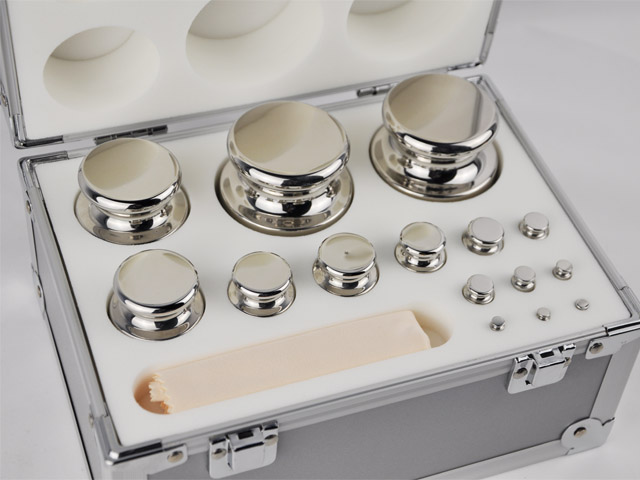
The daily storage and scientific maintenance of laboratory standard weights are crucial to prolong their service life and maintain long-term mass stability, and standardized management and operation must be carried out in strict accordance with laboratory professional management specifications. After each use, the standard weights need to be gently wiped with a clean, soft and non-wiping professional cleaning cloth to remove tiny dust, experimental residues and surface moisture attached to the surface, ensuring that the surface of the weights is clean and dry without any attachments affecting the mass. It is not allowed to wipe the standard weights with corrosive chemical solvents, rough cleaning tools and hard objects, so as to prevent surface scratches, protective layer damage and chemical corrosion, which will affect the surface finish and structural stability of the weights. After cleaning, the standard weights need to be placed in a special sealed storage box for classified storage. The interior of the storage box is equipped with a soft protective lining, which can avoid collision, friction and extrusion between different standard weights during storage and handling, prevent surface wear and structural deformation, and effectively isolate external dust, humid air and corrosive gases, creating a dry, clean and stable storage environment for the standard weights.
In the process of daily use, laboratory staff need to take and place standard weights in a standardized manner, and it is not allowed to take the weights directly by hand. The sweat, grease and tiny impurities on the human hand will adhere to the surface of the weights, causing subtle mass changes and surface corrosion over time. Professional tweezers and special handling tools should be used to take and place the standard weights gently, avoiding throwing, dropping, collision and violent handling, so as to prevent structural deformation, surface damage and internal structural changes of the weights caused by external force impact, which will affect the mass accuracy. In addition, laboratory standard weights need to be kept away from high-temperature heat sources, strong magnetic equipment and chemical reagent storage areas during use and storage. Long-term high-temperature environment will cause thermal expansion and subtle structural changes of the weight materials, strong magnetic equipment will produce magnetic interference and affect the internal physical state of the weights, and volatile chemical reagents will cause chemical corrosion on the surface of the weights. Keeping a safe use and storage distance can effectively avoid the adverse effects of external environmental factors on the standard weights.
With the continuous progress of scientific research technology and the continuous improvement of laboratory experimental precision requirements, the importance of laboratory standard weights in mass measurement work has become more prominent, and the performance requirements for standard weights in various professional laboratories are also constantly refined and optimized. Modern laboratory experimental research and industrial precision testing work put forward higher requirements for the long-term stability, environmental adaptability and use durability of mass reference standards. Laboratory standard weights are constantly optimized in material selection, structural design, production technology and surface treatment according to the actual development needs of the laboratory, adapting to more diversified experimental scenarios and higher-precision measurement work requirements. No matter how the laboratory equipment is updated and the experimental technology is iterated, the core positioning of laboratory standard weights as the basic reference benchmark for mass measurement will never change. All scientific research exploration, experimental data research and industrial testing and quality control work in the laboratory are inseparable from the accurate and stable support of laboratory standard weights.
In the entire laboratory measurement system, all precision measuring equipment and experimental operating links are interconnected and mutually restricted, and laboratory standard weights are the most basic and crucial link connecting all mass measurement work. It is not only a simple physical measuring auxiliary tool, but also an important guarantee to maintain the accuracy, consistency and traceability of laboratory measurement data, and the basic cornerstone for the smooth development of scientific research experiments and testing work. Only by attaching importance to the scientific selection, standardized use, careful maintenance and reasonable management of laboratory standard weights, can we ensure that every mass measurement work in the laboratory is carried out in an accurate and standardized state, ensure that all experimental data and test results are true, reliable and repeatable, and provide solid and powerful basic measurement support for scientific research innovation, technological progress, experimental teaching and industrial quality upgrading.
Laboratory Standard Weight
https://www.veidtweighing.com/standard-weights.html
Post Date: May 5, 2026
https://www.supplier-manufacturer.com/standard-weight/laboratory-standard-weight.html

![High Accuracy Test Weight]()
High Accuracy Test Weight
High accuracy test weight stands as a foundational physical reference tool embedded deep within the core of modern measurement and industrial production systems, serving a…![Cast Iron Test Weight]()
Cast Iron Test Weight
Cast iron test weights stand as foundational physical measuring artifacts that underpin the entire operational logic of modern weighing and metrological systems across all…![Hanging Calibration Weight]()
Hanging Calibration Weight
In the intricate and interconnected world of industrial measurement, laboratory experimentation, and mechanical performance verification, the consistency and reliability o…![Stainless Steel Test Weight]()
Stainless Steel Test Weight
In the vast and intricate landscape of modern industrial production, laboratory scientific research, commercial weighing operations, and quality inspection management, the…![5kg Calibration Weight]()
5kg Calibration Weight
Within the comprehensive framework of modern measurement operations across all industrial, laboratory, commercial, and daily operational fields, the stability and reliabil…