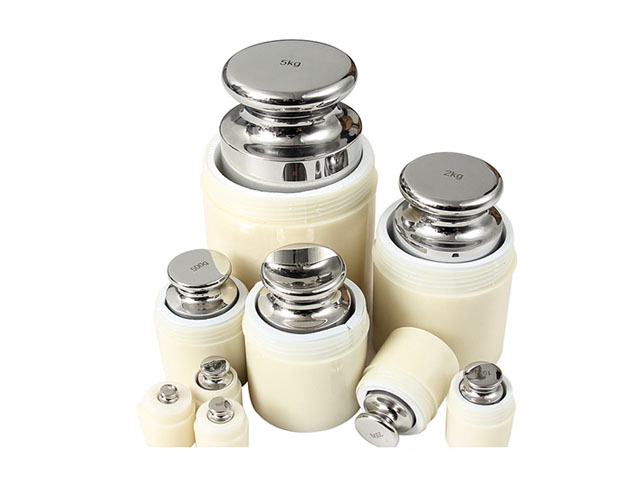
Cylindrical Standard Weight
Cylindrical standard weights are fundamental mass measurement tools widely adopted in metrology laboratories, industrial production lines, quality inspection procedures, and daily weighing calibration scenarios. Featuring a regular cylindrical geometric structure and smooth, rounded edge design, these weights deliver stable physical performance and convenient operational experience, laying a solid foundation for consistent and reliable mass measurement across diverse fields. Unlike irregular weight structures, the uniform cylindrical shape effectively optimizes contact stress distribution during placement and handling, reducing mechanical wear and deformation caused by uneven force, which helps maintain stable mass performance during long-term repeated use.
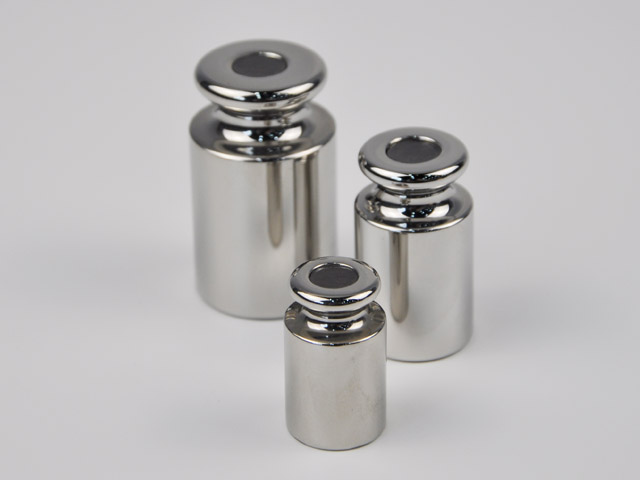
The structural design of cylindrical standard weights follows rigorous geometric and physical principles. The symmetrical cylinder body ensures uniform density distribution of the entire weight, eliminating mass deviation caused by asymmetric structure. The rounded edge treatment avoids sharp corners that are prone to collision damage and accidental scratching during transportation and application. This thoughtful structural optimization not only improves the overall durability of the weights but also simplifies daily cleaning and maintenance work. Dust, fine particles, and other external impurities are less likely to adhere to the smooth cylindrical surface, preventing foreign substances from affecting the effective mass of the weights and ensuring the stability of measurement states in different working environments.
Material selection is a core factor that determines the performance and service life of cylindrical standard weights. Common manufacturing materials include high-purity iron alloys, refined steel, and specialized metallic composite materials, all of which are processed through precise smelting, forging, and finishing procedures. These materials share excellent physical properties such as stable density, low thermal expansion coefficient, and strong oxidation resistance. Stable material density ensures that the actual mass of the weight matches the theoretical design value accurately, while the low thermal expansion property reduces mass and volume changes induced by ambient temperature fluctuations. Good oxidation and corrosion resistance prevents surface rust, peeling, and structural deterioration caused by long-term exposure to air, humid environments, or mild chemical contact, maintaining consistent measurement performance over extended service cycles.
The production process of cylindrical standard weights involves multiple refined working procedures, from raw material inspection and rough machining to fine grinding, surface polishing, and mass fine tuning. After the initial forming of the cylindrical body, repeated precision grinding is carried out on the outer surface, end faces, and edges to ensure the flatness and smoothness of all contact surfaces. Subsequent fine mass adjustment is conducted through micro-processing of the weight body, eliminating tiny mass errors generated during machining. Each processing link is controlled within strict dimensional and mass tolerance ranges, ensuring that every finished weight maintains uniform specifications and stable mass accuracy. The whole production process focuses on minimizing internal structural stress of the weight body, avoiding latent deformation problems that may occur in subsequent use.
Cylindrical standard weights serve a core function in the calibration and verification of various weighing equipment. In industrial manufacturing, numerous production processes rely on accurate weighing data for quality control and process adjustment. Conventional weighing instruments, including platform scales, analytical balances, and industrial weighing sensors, will produce subtle measurement deviations after long-term operation, mechanical vibration, and environmental changes. Regular calibration with cylindrical standard weights can correct these deviations, restore the measurement accuracy of weighing equipment, and ensure that product weighing indicators meet unified production standards. This standardized calibration method maintains the consistency of product quality in batch production and reduces quality fluctuations caused by inaccurate measurement data.
In laboratory metrology research, cylindrical standard weights act as important mass reference benchmarks for scientific experiments and data verification. Many physical experiments, material performance tests, and precision measurement studies require accurate mass parameters as the basic data support. The stable mass characteristics and high structural stability of cylindrical standard weights enable them to provide reliable reference values for experimental measurement, effectively reducing systematic errors in experimental data. Meanwhile, their uniform cylindrical structure is conducive to standardized placement and fixed-point use in laboratory environments, facilitating standardized operation and repeated verification of experimental processes.
The application scope of cylindrical standard weights also covers equipment performance testing in engineering and construction fields. Lifting machinery, load-bearing testing equipment, and mechanical stress testing devices need regular load verification and performance detection to ensure operational safety and working stability. Cylindrical standard weights can be used as stable load sources to simulate standard load states, detect the bearing capacity, measurement sensitivity, and operational stability of mechanical equipment, and identify potential performance abnormalities of equipment in advance. This regular load detection and calibration work effectively improves the safety and reliability of engineering equipment operation and reduces operational risks caused by equipment performance attenuation.
In addition to professional industrial and laboratory scenarios, cylindrical standard weights also play an indispensable role in commodity detection and trade measurement supervision. In commodity circulation and trade links, accurate weighing is an important guarantee for fair transaction order. Regulatory institutions use cylindrical standard weights to spot-check and verify the weighing accuracy of commercial weighing equipment, standardize the use of measuring tools in the market, and avoid measurement deviations that affect transaction fairness. This standardized measurement supervision mode maintains the orderly development of market trade and protects the legitimate rights and interests of market participants.
The environmental adaptability of cylindrical standard weights endows them with broader application conditions. Reasonable material matching and surface treatment processes enable the weights to maintain stable performance in conventional temperature and humidity ranges. They can adapt to dry indoor laboratory environments, normal-temperature industrial production workshops, and well-ventilated commodity detection sites. Although extreme high temperature, low temperature, and highly corrosive environments will still affect their service state, conventional working environments in most industries will not cause obvious damage to their structural stability and mass accuracy. This excellent environmental adaptability reduces the limitation of use scenarios and improves the practical value of the weights.
Standardized storage and scientific maintenance are key to maintaining the long-term performance of cylindrical standard weights. When not in use for a long time, the weights need to be placed in dry, dust-proof, and stable storage spaces to avoid long-term contact with humid air, corrosive gases, and sharp hard objects. Regular surface cleaning is required to remove surface dust and tiny attachments, preventing foreign matter accumulation from affecting mass accuracy. In the handling process, violent collision, extrusion, and falling should be avoided, as external impact may cause tiny deformation of the cylindrical structure or surface damage, leading to mass deviation. For weights used frequently in high-intensity working scenarios, periodic mass inspection and performance verification are necessary to ensure continuous and effective working performance.
Compared with other types of standard weights, the cylindrical structure has unique practical advantages. Irregular weights or square weights often have uneven stress points and dead corners that are difficult to clean, while cylindrical standard weights have no structural dead corners, achieving more thorough daily maintenance. The symmetrical structure also makes the force state more uniform during stacking and placement, avoiding local stress concentration and structural fatigue damage. In addition, the regular cylindrical shape is convenient for standardized sorting, counting, and management, which is conducive to improving the efficiency of equipment management and daily operation in factories, laboratories, and regulatory institutions.
With the continuous upgrading of industrial manufacturing technology and metrology standards, the processing precision and performance stability of cylindrical standard weights have been continuously improved. Modern machining and precision calibration technologies further reduce the tiny mass errors of finished products, while optimized material formulas enhance the corrosion resistance and structural stability of the weights. The continuous progress of manufacturing technology enables cylindrical standard weights to adapt to increasingly stringent measurement requirements in precision manufacturing, scientific research, and high-standard quality detection fields, providing more accurate and stable reference support for industrial upgrading and technological research and development.
In the entire metrology system, cylindrical standard weights occupy a basic and important position. All links from product production, quality detection, scientific research experiments to market transaction supervision are inseparable from accurate mass measurement, and cylindrical standard weights are the key tools to ensure the unity and accuracy of mass measurement standards. They connect the theoretical standard of mass measurement with practical application scenarios, realizing the effective implementation of standardized measurement in various industries. Stable and reliable mass reference provided by cylindrical standard weights helps reduce measurement errors in industrial production and scientific research, improve the overall standardization level of industrial production, and promote the standardized development of various industry measurement systems.
In practical application, the matching use of cylindrical standard weights of different specifications can meet the measurement and calibration needs of diverse scenarios. Small-specification cylindrical weights are suitable for precision calibration of laboratory analytical balances and small precision weighing instruments, while large-specification products are applied to calibration and load testing of industrial large-scale weighing equipment and engineering load-bearing devices. The diversified specification system and unified structural standard enable cylindrical standard weights to form a complete mass measurement auxiliary system, flexibly adapting to the calibration requirements of different precision levels and different measuring ranges, and improving the comprehensiveness and flexibility of measurement work.
To sum up, cylindrical standard weights rely on their reasonable structural design, stable material performance, precise manufacturing technology, and wide environmental adaptability to become essential basic measuring tools in modern industrial production, scientific research, and market supervision fields. Their excellent structural stability and accurate mass reference performance provide reliable guarantee for standardized mass measurement in various industries. With the continuous development of industry and metrology technology, cylindrical standard weights will continue to optimize in performance and application, playing a more important role in supporting standardized production, precise scientific research, and fair market transactions, and continuously promoting the standardized and high-quality development of various industries.
Cylindrical Standard Weight
https://www.veidtweighing.com/standard-weights.html
Post Date: Jun 7, 2026
https://www.supplier-manufacturer.com/standard-weight/cylindrical-standard-weight.html

![100kg Stainless Steel Calibration Weight Logistics Scale]()
100kg Stainless Steel Calibration Weight Logistics Scale
In modern logistics and industrial operation systems, accurate weight measurement serves as a fundamental foundation for standardized operation, cost accounting, inventory…![Standard Weight For Sale]()
Standard Weight For Sale
In every sector that relies on accurate mass measurement to maintain operational consistency and reliable operational outcomes, standard weights stand as foundational tool…![Heavy Duty Standard Weight]()
Heavy Duty Standard Weight
In industrial production, daily operational work, and various professional application scenarios, the definition and application of heavy duty standard weight have always …![2kg Standard Weight]()
2kg Standard Weight
In the intricate and interconnected world of modern measurement science and industrial production, the consistency and reliability of every numerical data point form the i…![Precision Balance Test Weight]()
Precision Balance Test Weight
Precision balance test weights serve as fundamental reference tools in the field of mass measurement, forming the cornerstone of accurate and consistent weighing operation…