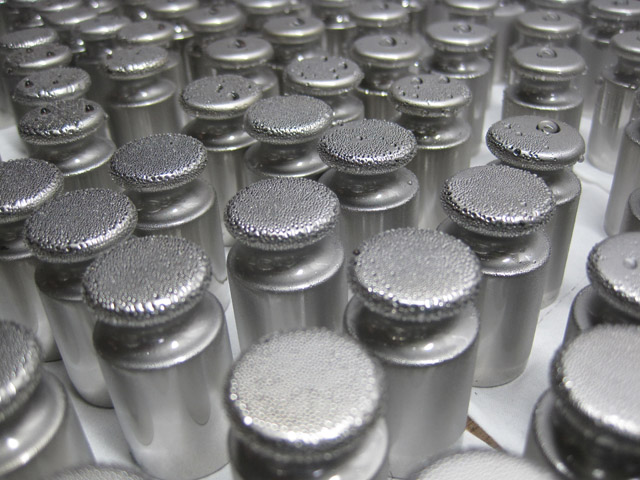
Cylindrical Test Weight
Cylindrical test weight stands as one of the most fundamental and widely adopted auxiliary tools in the entire field of weighing measurement and equipment calibration, serving as a reliable physical reference that bridges the gap between theoretical weight standards and practical weighing operations across diverse industrial, laboratory, and commercial environments. Its simple and streamlined cylindrical silhouette is not a random design choice but a carefully optimized structural form developed through long-term practical verification and mechanical rationality testing, perfectly balancing the needs of stable placement, convenient manual operation, uniform force bearing, and long-term structural stability during repeated use. Unlike other shaped test weights that feature complex protrusions, irregular edges, or additional auxiliary structures, the basic cylindrical configuration maintains a smooth and symmetrical outer surface, a unified vertical sidewall, and a flat top and bottom surface, all of which work together to ensure that the physical mass of the weight can be accurately transmitted to various weighing instruments without interference from structural irregularities or unbalanced stress distribution. Every detail of its design and production revolves around maintaining consistent mass stability, reliable contact performance with weighing equipment, and adaptability to different use environments, making it an indispensable basic component for ensuring the accuracy and reliability of all kinds of weighing work in daily production and scientific research activities.
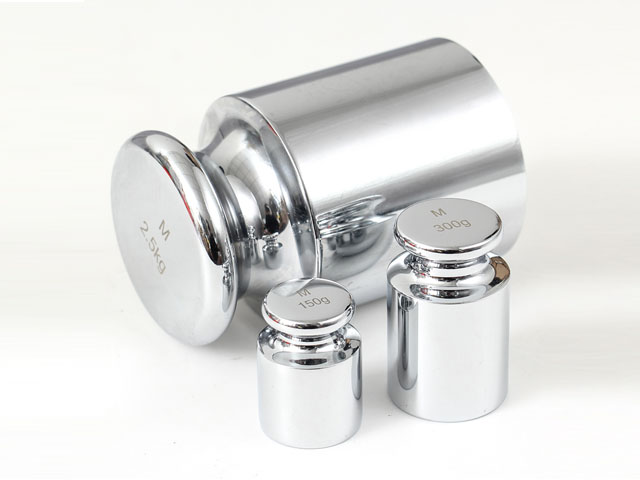
The structural design logic behind cylindrical test weight originates from the basic principles of physical mechanics and practical operational ergonomics, which makes it far more adaptable to daily calibration and testing work than many other special-shaped test weights. The symmetrical cylindrical shape allows the weight to naturally maintain a stable center of gravity at the geometric center of the entire object, so when placed on the weighing pan, platform, or sensing surface of any weighing device, it will not produce tilting, shaking, or partial stress concentration caused by eccentric placement. This balanced stress state is critical for accurate weighing testing, as any slight unbalanced force applied to the sensing element of weighing equipment may lead to subtle reading deviations, which can accumulate and affect the overall credibility of measurement results in long-term continuous use. The flat top and bottom surfaces of the cylindrical test weight are processed with fine flatness treatment, ensuring full and close contact with the bearing surface of weighing instruments without gaps or virtual contact points. Such a contact state effectively avoids measurement errors caused by local pressure fluctuations or unstable contact, ensuring that the actual mass of the test weight can be fully and accurately reflected in the data displayed by the weighing equipment. Meanwhile, the smooth outer curved surface of the cylinder eliminates sharp corners and protruding parts, reducing the risk of accidental scratches during handling, stacking, and storage, and also preventing surface damage caused by collision and friction during frequent movement between different workstations.
Material selection is a core factor that determines the service life, mass stability, and environmental adaptability of cylindrical test weight, and different application scenarios correspond to different material formulations and processing techniques to meet differentiated use demands. Common materials used for manufacturing cylindrical test weights are all selected for their good density uniformity, stable physical properties, and strong resistance to external environmental interference, ensuring that the mass of the weight does not undergo obvious changes due to temperature fluctuations, humidity changes, or long-term natural oxidation. Stainless steel is one of the most commonly used materials for high-precision cylindrical test weights, featuring excellent corrosion resistance, low magnetic susceptibility, and stable density control, which can maintain long-term mass consistency even in humid laboratory environments, pharmaceutical production workshops, and chemical processing sites with slight corrosive substances in the air. This material is processed through precise smelting and forming processes, with internal structure uniform and free of internal pores or impurity gaps, avoiding mass deviation caused by internal structural changes after long-term use. For conventional industrial field use and general commercial weighing equipment testing, cast iron materials are often adopted for cylindrical test weights, which have high overall rigidity, good pressure resistance, and strong impact resistance, able to adapt to harsh working environments such as factories, logistics warehouses, and construction sites where frequent handling and rough use are inevitable. After surface anti-rust treatment, cast iron cylindrical test weights can effectively resist oxidation and rust caused by long-term exposure to open air, maintaining stable basic performance for a long time. Brass materials are also used in some medium-precision weighing scenarios, with moderate hardness, good wear resistance, and stable surface performance, suitable for small-range weighing testing in daily commercial and light industrial production links.
The production and processing process of cylindrical test weight follows strict dimensional control and mass adjustment procedures, ensuring that each finished product can meet the basic requirements of standard weighing reference objects. The whole production process starts with raw material cutting and preliminary forming, where raw materials are cut into preliminary cylindrical blanks according to preset dimensional specifications, and then processed through multiple steps such as turning, grinding, and polishing to fine-tune the outer diameter, height, flatness of the upper and lower end faces, and surface smoothness of the cylinder. After the preliminary mechanical processing is completed, the core mass adjustment work is carried out, where technicians fine-tune the actual mass of each cylindrical test weight through precise micro-processing to make it match the preset nominal mass value within a reasonable and controllable range. Some cylindrical test weights adopt integrated single-piece overall structure processing, with no assembled parts inside, which fundamentally avoids mass changes or structural loosening caused by loose assembly gaps and part falling off during long-term use, suitable for high-precision laboratory calibration and scientific research measurement work. Other cylindrical test weights with larger specifications adopt two-piece structural design, with a main cylindrical body and a matching upper adjustment part, facilitating later micro-mass fine-tuning and daily maintenance without affecting the overall structural stability and use effect. No matter which structural form is adopted, the final finished cylindrical test weight will undergo repeated mass detection and surface inspection to ensure that there are no surface defects, dimensional deviations, or mass fluctuations that may affect normal use.
Cylindrical test weight has a wide range of application coverage, penetrating almost all scenarios that require weighing equipment debugging, regular calibration, and daily performance testing, with obvious practical advantages in both laboratory high-precision measurement and on-site industrial conventional weighing work. In professional laboratory environments, various precision analytical balances, electronic weighing instruments, and micro-measurement equipment need regular calibration with cylindrical test weights to eliminate measurement deviations caused by long-term equipment operation, component aging, and external environmental interference. The stable structure and accurate mass of cylindrical test weights can provide reliable reference standards for laboratory weighing work, ensuring that experimental data, sample detection data, and scientific research measurement results maintain high accuracy and repeatability, which is the basic guarantee for the smooth progress of chemical analysis, biological research, material testing, and laboratory sample preparation work. In pharmaceutical and food production industries, where weighing accuracy and production safety are highly valued, cylindrical test weights are used to regularly test and calibrate production line weighing equipment, ingredient proportioning weighing devices, and finished product packaging weighing instruments, ensuring that raw material proportioning in the production process meets production requirements and finished product weighing specifications are consistent, effectively maintaining standardized production order and stable product quality.
In industrial production and manufacturing fields such as machinery processing, electronic production, and hardware manufacturing, cylindrical test weights are widely used for debugging and daily inspection of various industrial platform scales, electronic bench scales, and conveyor belt weighing equipment. Industrial production involves a large number of raw material incoming weighing, semi-finished product processing weighing, and finished product outgoing weighing links, and the accuracy of weighing data is directly related to production cost control, production process coordination, and product quality inspection. Regular use of cylindrical test weights to detect the operating state of weighing equipment can timely discover subtle measurement deviations caused by equipment component wear, long-term load bearing, and on-site environmental vibration, and carry out timely debugging and correction to avoid production losses and quality problems caused by inaccurate weighing data. In logistics transportation, warehousing management, and commodity circulation links, cylindrical test weights are used for regular inspection and calibration of commercial weighing scales and logistics weighing equipment, ensuring fair transaction measurement in commodity sales and accurate weight statistics in goods transportation and warehousing management, maintaining standardized and orderly operation of commercial circulation and logistics transportation links.
The daily maintenance and scientific storage of cylindrical test weight are crucial to maintaining its long-term mass stability and extending its service life, and standardized management habits can effectively avoid unnecessary mass changes and surface damage caused by improper use and storage. During daily use, cylindrical test weight should be handled gently to avoid violent collision, falling, and severe friction with hard and sharp objects, so as to prevent surface deformation, edge wear, and structural damage that may cause mass deviation. When placing the test weight on weighing equipment, it should be placed slowly and steadily in the center of the weighing bearing surface to avoid eccentric placement and repeated dragging and rubbing on the weighing surface, which can not only protect the surface flatness of the test weight itself but also avoid damage to the sensing parts of weighing equipment. After each use, the surface of the cylindrical test weight should be cleaned in time to remove surface dust, oil stains, water stains, and other attachments, because long-term attachment of dirt may cause surface corrosion and material deterioration, affecting the long-term stability of mass. For cylindrical test weights used in humid or corrosive environments, regular surface maintenance and anti-corrosion protection should be done to reduce the impact of external environmental factors on material performance.
In terms of storage, cylindrical test weights should be placed in a dry, ventilated, and temperature-stable special storage area, avoiding long-term placement in high humidity, high temperature, or strong corrosive gas environments, and also avoiding stacking heavy objects on the test weights to prevent structural deformation caused by long-term pressure. Different specifications of cylindrical test weights should be stored in classified and placed separately, avoiding mutual collision and friction between weights of different sizes during stacking and handling. Regular regular inspection and mass recheck of stored cylindrical test weights are also essential work content. Through periodic inspection, potential problems such as surface corrosion, structural deformation, and mass fluctuation can be found in a timely manner, and corresponding maintenance, adjustment, or replacement measures can be taken to ensure that each cylindrical test weight is always in a qualified usable state when put into use. Good maintenance and storage management not only ensure the consistent and reliable performance of cylindrical test weights in long-term repeated use but also reduce the frequency of replacement and comprehensive use cost, bringing stable and lasting measurement guarantee for various weighing work.
With the continuous progress of industrial production technology and the continuous improvement of measurement accuracy requirements in various industries, the role of cylindrical test weight in the entire weighing and measurement system has become more prominent, and its structural design and material processing technology are also constantly optimized and upgraded with the development of the times. Although the basic cylindrical shape has remained unchanged for a long time, the internal material ratio, surface processing technology, and mass adjustment precision of modern cylindrical test weights have been greatly improved compared with early products, adapting to the increasingly stringent weighing accuracy requirements of emerging industries and high-precision measurement scenarios. Whether it is basic conventional weighing testing work or professional high-precision laboratory calibration work, cylindrical test weight always relies on its simple and practical structure, stable and reliable performance, and wide environmental adaptability to become a trusted basic measurement auxiliary tool. It does not have complex functional design and redundant structural accessories, but it undertakes the most basic and core weight reference work, supporting the normal operation of all links related to weighing measurement in the whole society. In the future, as all walks of life pay more attention to measurement standardization and data accuracy, cylindrical test weight will continue to play an irreplaceable basic role, constantly adapting to new use scenarios and new measurement requirements through continuous technological optimization, and providing solid and reliable basic guarantee for the standardized development of weighing measurement work in various fields.
Cylindrical Test Weight
https://www.veidtweighing.com/test-weight.html
Post Date: May 4, 2026
https://www.supplier-manufacturer.com/test-weight/cylindrical-test-weight.html

![20kg Test Weight]()
20kg Test Weight
In the modern industrial production system, daily measurement verification and routine equipment performance testing work run through every link of manufacturing, logistic…![Digital Balance Calibration Standard Laboratory Weight]()
Digital Balance Calibration Standard Laboratory Weight
In every modern laboratory setting that relies on quantitative measurement data to support experimental research, material formulation, quality verification, and scientifi…![High Accuracy Test Weight]()
High Accuracy Test Weight
High accuracy test weight stands as a foundational physical reference tool embedded deep within the core of modern measurement and industrial production systems, serving a…![Cast Iron Test Weight]()
Cast Iron Test Weight
Cast iron test weights stand as foundational physical measuring artifacts that underpin the entire operational logic of modern weighing and metrological systems across all…![Hanging Calibration Weight]()
Hanging Calibration Weight
In the intricate and interconnected world of industrial measurement, laboratory experimentation, and mechanical performance verification, the consistency and reliability o…