Specifications of Calibration Weight
Calibration weights serve as fundamental physical references for all types of weighing and measuring equipment, forming the foundational basis for maintaining consistent and reliable mass measurement results across laboratory research, industrial production, commercial metering, and quality inspection processes. The comprehensive set of specifications for calibration weights covers every core design and manufacturing dimension that directly impacts their performance, service life, and practical applicability, with each technical parameter carefully formulated to match diverse weighing scenarios, equipment precision requirements, and long-term usage environmental conditions. Every detail embedded in the specifications is designed to minimize external interference, maintain stable mass attribution over extended periods, and ensure that each calibration operation can effectively correct the deviation of weighing instruments, thereby unifying mass measurement standards in different usage scenarios and avoiding measurement discrepancies that may affect experimental data accuracy, product quality control, and standardized operational procedures. Understanding and adhering to the complete specifications of calibration weights is essential for selecting suitable weight products, conducting standard calibration work, and maintaining the long-term stability and reliability of weighing equipment in daily use.
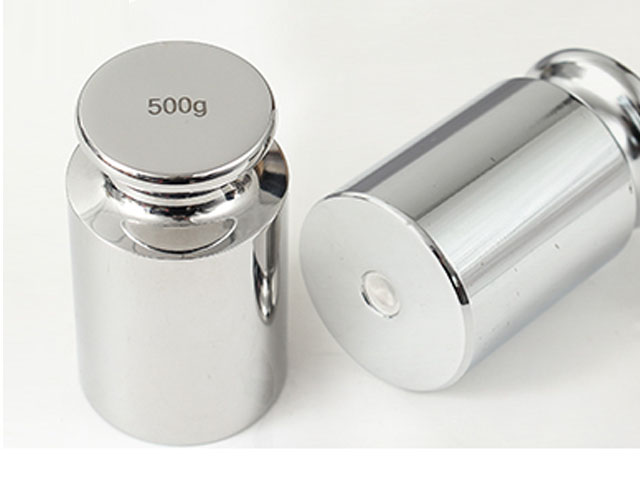
Material composition stands as one of the most foundational and critical specifications for calibration weights, as the inherent physical and chemical properties of the raw materials directly determine the weight’s resistance to external environmental erosion, long-term mass stability, magnetic susceptibility, and surface durability. Common material options included in standard specifications cover multiple metal and alloy types tailored to different precision levels and application environments, each with fixed compositional ratios and inherent performance attributes defined to meet basic measurement stability needs. High-grade stainless steel materials are widely specified for precision-grade calibration weights, featuring controlled density uniformity, low magnetic permeability, and strong natural resistance to oxidation and chemical corrosion. This type of material is processed to maintain consistent internal structural density without internal porosity or impurity segregation, preventing subtle mass changes caused by internal material aging or structural deformation over time. For general industrial and routine commercial calibration scenarios, cast iron and polished brass materials are commonly specified alternatives, offering balanced structural rigidity and cost-effective durability while meeting the basic stability requirements for conventional weighing calibration work. All material-related specifications strictly require uniform material texture throughout the entire weight body, with no mixed heterogeneous materials, internal cracks, or structural defects that could cause uneven mass distribution or gradual quality loss during long-term repeated use. Additionally, material surface activity is clearly regulated in specifications to reduce the likelihood of surface adsorption of moisture, dust, oil stains, and other foreign substances, ensuring that the actual effective mass of the weight remains consistent with its nominal mass without frequent offset caused by external surface attachment.
Density control specifications are closely linked to material selection and play a vital role in ensuring accurate mass presentation under different atmospheric and environmental conditions. The density of calibration weight materials is required to maintain a stable and fixed numerical range with small deviation margins, as consistent density helps reduce the impact of air buoyancy on actual weighing results during calibration operations. When calibration weights with stable and standardized density are used in different temperature and humidity environments, the buoyancy correction generated by air contact can be calculated and controlled within a reasonable and stable range, avoiding excessive measurement errors caused by large density fluctuations of the weight itself. Specifications also regulate density uniformity across different parts of a single calibration weight, requiring no significant density difference between the surface layer and the inner core of the weight body. Uniform density distribution ensures that the overall mass of the weight is evenly distributed, preventing tilting or unbalanced stress placement when the weight is placed on weighing instrument pans, which could lead to unstable weighing readings and inaccurate calibration effects. For ultra-precision calibration weights used in high-sensitivity analytical weighing scenarios, density control specifications are more refined, with stricter deviation limits to adapt to the extremely high measurement sensitivity of precision analytical balances and micro-weighing equipment, ensuring that even tiny environmental changes do not affect the core mass reference performance of the weights.
Magnetic property specifications are an indispensable technical indicator for modern calibration weights, especially for weights used with electronic weighing equipment and high-precision magnetic-sensitive measuring instruments. All calibration weights are required to have low magnetic susceptibility and low residual magnetism as core specification requirements, effectively avoiding magnetic interaction between the weight body and the internal magnetic components of electronic balances and weighing sensors. Magnetic attraction or repulsion between calibration weights and weighing equipment can cause subtle but persistent deviations in weighing data, leading to inaccurate calibration results and long-term measurement drift of weighing instruments. The magnetic property specifications define clear limits for magnetic permeability and residual magnetism values, ensuring that the weight itself does not generate magnetic interference during contact or placement on weighing equipment. Materials selected for precision calibration weights undergo special smelting and processing procedures in accordance with these specifications to reduce magnetic impurities and avoid magnetization during mechanical processing, polishing, and long-term storage. Even for general-purpose calibration weights for low-precision weighing scenarios, basic magnetic performance requirements are still included in specifications to prevent unnecessary magnetic interference that could affect the stability of daily calibration and weighing work.
Surface processing and finish specifications cover surface smoothness, flatness, polishing degree, and surface protection treatment of calibration weights, all of which are key to maintaining long-term mass stability and convenient daily maintenance. Surface smoothness requirements are clearly defined to reduce surface roughness, preventing dust, moisture, grease, and other fine impurities from adhering to the surface and accumulating over time, which would otherwise increase the actual mass of the weight and cause calibration inaccuracies. High-precision calibration weights adopt fine polishing processing standards specified to achieve a smooth and non-porous surface state, making daily cleaning and simple maintenance convenient without damaging the surface structure or affecting the weight mass. The surface finish specifications also require uniform surface treatment without obvious scratches, dents, oxidation spots, or corrosion traces, as surface damage not only affects the appearance but may also lead to local oxidation and material loss, gradually changing the actual mass of the weight over time. Some calibration weights are equipped with anti-corrosion surface treatment layers in accordance with specification requirements, enhancing resistance to harsh environments such as high humidity, corrosive gas, and industrial dust, extending the service life of the weights and maintaining stable performance in complex working conditions. All surface processing standards are formulated to balance anti-attachment performance, anti-corrosion ability, and structural integrity, ensuring that surface treatment does not cause any change to the core effective mass of the calibration weight.
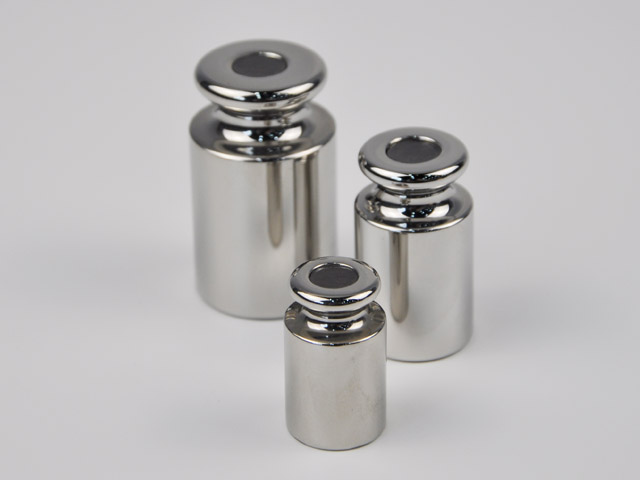
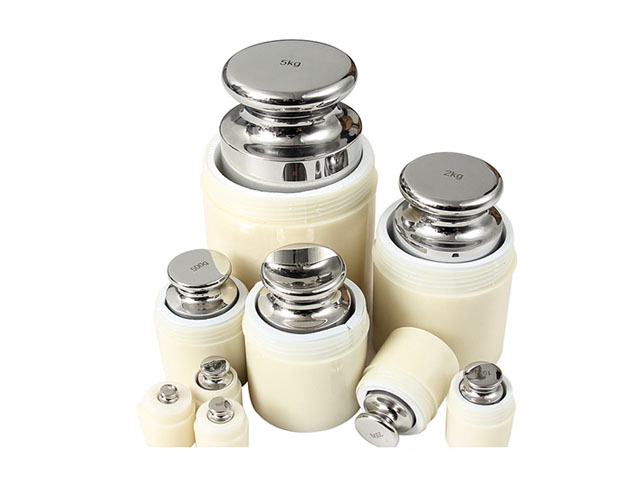
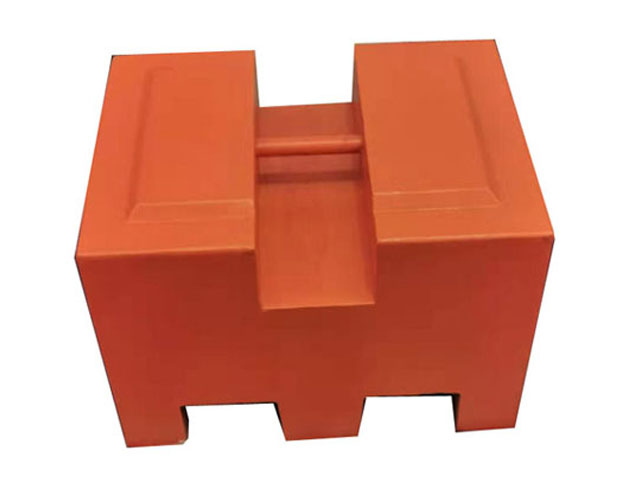
Shape and structural design specifications determine the placement stability, adjustability, and handling safety of calibration weights during use, with different structural designs formulated to adapt to different nominal mass ranges and usage habits. Most calibration weights adopt regular geometric shapes such as cylindrical, rectangular block, and knob-shaped structures, with overall dimensional ratios and bottom flatness strictly regulated in specifications to ensure stable placement on various weighing pan surfaces without shaking, tilting, or rolling during calibration. The bottom structure of many calibration weights is designed with a hidden adjusting cavity in accordance with standard specifications, reserved for fine mass adjustment during initial production and subsequent long-term use. The adjusting cavity is sealed tightly after mass calibration to prevent external dust and moisture from entering the interior, ensuring that the internal adjusting materials do not shift or leak to cause mass changes. For calibration weights with larger nominal mass, integrated handle structures or anti-slip grip designs are included in structural specifications to facilitate safe and convenient manual handling and placement, avoiding accidental slipping and collision that may damage the weight structure or affect mass accuracy. Miniature calibration weights with small nominal mass adopt compact integrated structural designs without additional accessories, ensuring overall structural simplicity and mass concentration to meet the calibration needs of micro-weighing equipment. All structural design specifications avoid complex protruding structures that are easy to wear and deform, focusing on overall structural firmness, deformation resistance, and placement stability to adapt to frequent repeated use in long-term calibration work.
Nominal mass and permissible deviation specifications are the core numerical indicators that directly correspond to the calibration accuracy level of each calibration weight, dividing weights into different application grades according to fixed deviation ranges for different nominal mass values. Each calibration weight is marked with a clear nominal mass value in accordance with specification requirements, representing the standard reference mass it is supposed to provide. The permissible deviation range is scientifically set based on the matching precision of the weighing equipment to be calibrated, with smaller deviation ranges for weights used for high-precision analytical calibration and relatively reasonable deviation ranges for weights used for conventional industrial and commercial calibration. These deviation specifications define the allowable difference between the actual measured mass and the nominal mass of each weight, ensuring that the error generated by the weight itself is far lower than the measurement error of the weighing equipment being calibrated, thus guaranteeing the effectiveness of calibration work. The deviation specifications also cover long-term mass drift limits, requiring that the mass change of the calibration weight after long-term storage and repeated use remains within the specified range, avoiding excessive mass attenuation or increase that would render the weight unable to meet basic calibration requirements. Each batch of calibration weights is manufactured and screened strictly in accordance with deviation specifications to ensure that every single weight meets the corresponding accuracy matching requirements before leaving the production processing link.
Temperature and humidity adaptability specifications define the suitable working and storage environmental conditions for calibration weights, clarifying the temperature and humidity range that will not cause material deformation, oxidation, or mass change of the weights. Different material calibration weights have different temperature and humidity adaptation ranges specified according to their material thermal expansion and chemical stability characteristics. Within the specified environmental range, the thermal expansion and contraction coefficient of the weight material is controlled at a low level, avoiding structural deformation and volume change caused by temperature fluctuations, which would otherwise affect mass measurement accuracy. The humidity adaptability specifications prevent the weight surface from absorbing moisture or undergoing chemical oxidation reaction in high-humidity environments, avoiding mass changes caused by surface rust, moisture attachment, or material deterioration. For calibration weights used in laboratory environments with constant temperature and humidity, the environmental adaptability specifications are more precise, while those used in general industrial environments have a wider adaptation range to cope with complex and variable on-site environmental conditions. These specifications also include requirements for environmental temperature and humidity change resistance, ensuring that short-term environmental fluctuations do not cause irreversible mass changes or structural damage to calibration weights, maintaining stable performance in long-term use and storage.
Anti-collision and wear resistance specifications focus on the structural durability and long-term performance stability of calibration weights during transportation, storage, and frequent use. Calibration weights inevitably encounter minor collisions, friction, and contact wear during handling, placement, and daily storage management, so relevant specifications require the weight body to have good structural rigidity and surface wear resistance. The overall structure of the weight is required to be integrally formed without fragile weak parts, ensuring that no deformation, cracking, or local material falling off occurs under normal minor collision and friction conditions. Surface wear resistance specifications ensure that the surface polishing state and structural integrity remain unchanged after long-term repeated contact and placement, avoiding surface roughness changes caused by wear that would increase impurity adhesion and affect mass stability. These specifications also cover the matching protection requirements for weight storage, requiring supporting protective containers and storage environments to reduce external collision and extrusion damage during long-term idle storage. Good anti-collision and wear resistance performance ensured by specifications effectively extends the service cycle of calibration weights, reduces the frequency of regular re-calibration and replacement, and maintains consistent calibration performance throughout the use cycle.
Cleaning and maintenance compatibility specifications are formulated to facilitate daily routine maintenance and regular cleaning of calibration weights without damaging their performance or changing their mass characteristics. The surface material and structural design of calibration weights comply with maintenance specifications, allowing conventional physical cleaning methods such as soft cloth wiping and dry dust removal to remove surface dust and stains without leaving scratches or causing surface corrosion. The specifications avoid using special complex maintenance procedures, ensuring that daily maintenance work can be completed with simple and convenient operations, reducing the impact of improper maintenance on weight accuracy. The structural sealing design of calibration weights ensures that no cleaning liquid or dust penetrates into the internal adjusting cavity during cleaning, preventing internal component displacement or mass change caused by external liquid and impurities. The maintenance compatibility specifications also clarify the avoidance of harsh chemical cleaning agents that may corrode the weight surface, matching the material characteristics of the weights to ensure that long-term regular cleaning and maintenance can keep the weights in good working condition and stable mass state, always meeting the basic requirements of calibration work.
In practical application scenarios, all the above specifications of calibration weights are interrelated and mutually restrictive, forming a complete technical system that jointly guarantees the overall performance of calibration weights. Material foundation provides stable physical and chemical attributes, density and magnetic specifications eliminate external measurement interference, surface and structural design ensure stable placement and convenient use, deviation and environmental adaptation meet different calibration precision and scene needs, and wear resistance and maintenance compatibility ensure long-term stable service performance. Reasonable selection and use of calibration weights must be based on a comprehensive reference to all relevant specifications, matching the actual precision requirements of weighing equipment and the environmental conditions of the use site. Only by strictly complying with the full set of specifications in the production, selection, use, storage, and maintenance links can calibration weights maintain accurate and reliable mass reference performance for a long time, provide solid technical support for all mass measurement work, and ensure the standardization, consistency, and accuracy of weighing and measurement results in various production, scientific research, and testing fields.
Specifications of Calibration Weight
https://www.veidtweighing.com/calibration-weights.html
Post Date: May 3, 2026
https://www.supplier-manufacturer.com/calibration-weight/specifications-of-calibration-weight.html

![Standard Weight For Counting Scales]()
Standard Weight For Counting Scales
In modern industrial production, inventory management, and precision manufacturing, counting scales have become indispensable tools for quantifying bulk small parts, compo…![Standard Weight For Laboratory Balances]()
Standard Weight For Laboratory Balances
In modern laboratory scientific research, industrial detection, and analytical testing, the accuracy and reliability of weighing data serve as the fundamental guarantee fo…![Forklift Scale Calibration Standard Weight]()
Forklift Scale Calibration Standard Weight
Forklift scale calibration with standard weights serves as a core operational practice in industrial logistics, manufacturing, and warehouse management, ensuring that onbo…![500g Calibration Weight For Balance Scale]()
500g Calibration Weight For Balance Scale
In every industry and research field that relies on accurate mass measurement, maintaining the reliability of balance scales is a fundamental prerequisite for consistent a…![100kg Stainless Steel Calibration Weight Logistics Scale]()
100kg Stainless Steel Calibration Weight Logistics Scale
In modern logistics and industrial operation systems, accurate weight measurement serves as a fundamental foundation for standardized operation, cost accounting, inventory…