Structure of Test Weight
The structural design of test weights stands as a foundational discipline within the fields of metrology, industrial calibration, and mechanical load testing, focusing on the rational arrangement of material volume, geometric form, and auxiliary functional components to achieve consistent mass performance and stable physical application in diverse working scenarios. Every detail incorporated into the structure of a test weight is developed around two core practical goals: maintaining steady mass attributes over extended time and adapting to the mechanical and environmental demands of daily handling, placement, and operational use. Unlike ordinary weighted objects produced for simple gravitational pressure or basic balancing purposes, test weights are engineered with rigorous structural logic that unifies material characteristics, geometric rationality, and functional practicability, ensuring that their effective mass remains stable and their overall form conforms to the standardized operational requirements of various testing and calibration processes. The structural composition of these weights is not a random combination of materials and shapes but a systematic design system formed through long-term practical verification and structural optimization, covering basic mass-bearing main bodies, auxiliary functional accessory parts, surface protective layers, and adaptive structural details tailored to different application environments and usage frequencies.
At the core of any test weight structure lies the main mass-bearing body, which undertakes the fundamental task of bearing and presenting the preset mass value and constitutes the primary volume and weight proportion of the entire test weight. The structural design of this core component first needs to match the inherent physical properties of the selected material, as different raw materials bring distinct structural shaping limitations and performance advantages that directly shape the basic form of the main body. Common materials used for manufacturing the main mass-bearing body include high-density metallic materials and stable non-metallic materials, each requiring targeted structural adjustment to give full play to their material characteristics and avoid structural defects that may affect mass stability or structural durability. For metallic main bodies, the structural design prioritizes overall compactness and internal uniformity, eliminating hollow gaps or uneven internal density distribution that could cause mass deviation or structural deformation under long-term placement and external force contact. The internal structure of such main bodies is designed to be homogeneous and solid, with no internal cavities or loose areas, ensuring that the mass per unit volume remains consistent throughout the entire component and that external mechanical pressure or minor impact during use does not lead to localized structural shrinkage or volume change. For non-metallic main bodies, the structural design adds internal dense filling frameworks inside the main body to enhance overall structural compactness and prevent internal material loosening or mass loss caused by long-term environmental erosion or frequent handling.
The geometric configuration of the main mass-bearing body is a key part of the overall structural design, directly affecting the stability of placement, the convenience of stacking storage, and the uniformity of force bearing during testing and calibration work. The external geometric structure of test weights is designed based on the dual considerations of space utilization and contact stability, avoiding irregular protrusions or recessed structures that may cause tilting during placement, inconvenient stacking, or localized stress concentration during load application. Most conventional test weight main bodies adopt regular and symmetrical geometric structures, a design choice that helps achieve even distribution of mass and balanced stress bearing in all directions. Symmetrical structural design also effectively reduces the impact of external gravitational deviation and minor ground unevenness on the overall placement state, keeping the test weight in a stable horizontal state during use and ensuring the accuracy and reliability of subsequent testing and calibration data. The bottom contact surface of the main body is designed with a flat and smooth structural form, with a reasonable contact area reserved to balance the need for placement stability and contact uniformity. An overly small contact area would lead to excessive local pressure and potential surface wear or slight sinking on the bearing surface, while an excessively large contact area would increase the difficulty of handling and reduce the flexibility of use in compact working spaces. The side and top structures of the main body are designed with smooth transition radian or straight edge structures, avoiding sharp corners that are prone to wear, collision damage, or accidental scratching during handling and stacking.
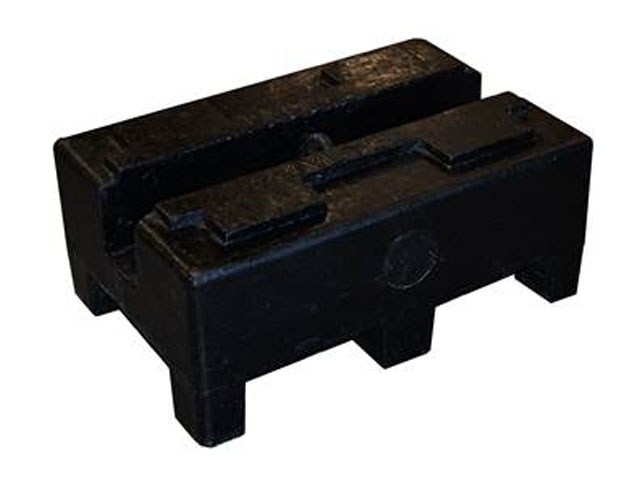
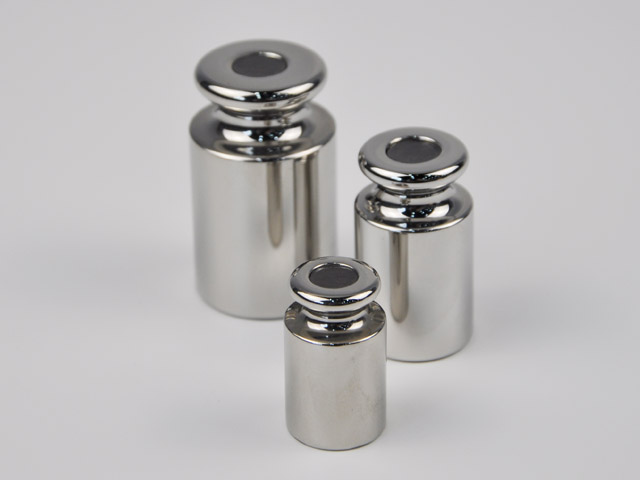
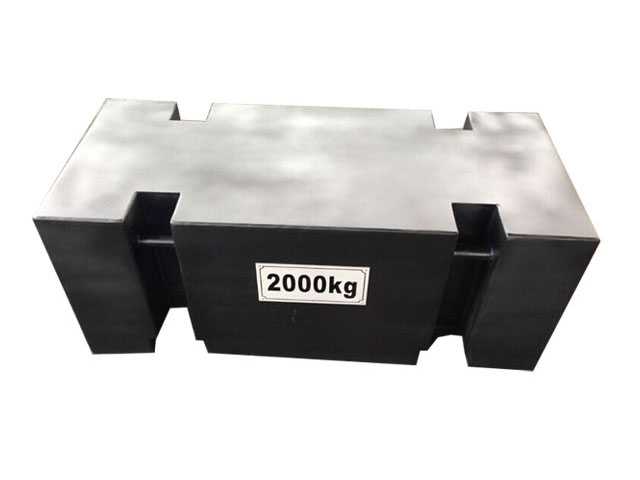
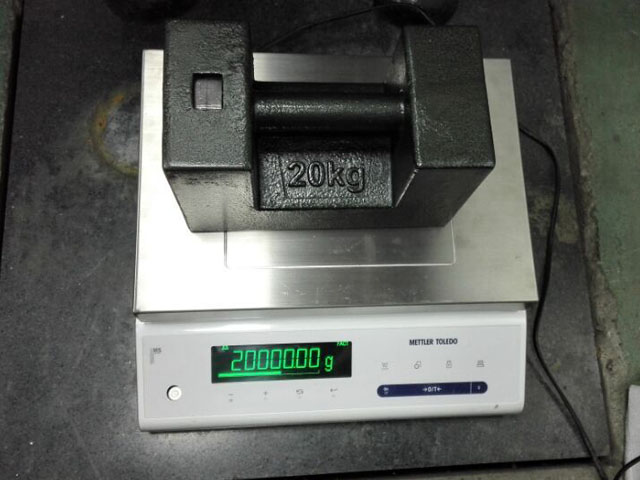
Complementing the main mass-bearing body are auxiliary functional structural parts, which are integrated into the overall structure of the test weight to meet the practical operational needs of transportation, handling, stacking, and accurate position adjustment, without changing the core mass attributes and basic structural stability of the main body. These auxiliary structures are designed with the principle of light weight and minimal impact on the overall mass balance, ensuring that their own mass is fully calculated and incorporated into the overall preset mass value during the design and manufacturing stage, so they do not cause any deviation in the effective mass of the test weight. Handling auxiliary structures are the most common type of functional accessories, designed in various embedded or external integrated forms according to the overall volume and weight of the test weight. For test weights with small overall volume and light mass, the handling structure is usually designed as an embedded hidden groove on the side or top of the main body, which does not occupy extra external space, does not affect stacking flatness, and facilitates manual gripping and moving during use. For test weights with large overall volume and heavy mass, the handling structure adopts integrated fixed lifting lugs or reserved force-bearing connecting structures, which are seamlessly connected with the main mass-bearing body through integrated forming or stable welding and fixing processes. The structural strength of these lifting parts is fully matched with the overall weight of the test weight, ensuring no structural fracture, deformation, or loosening during mechanical lifting and long-term repeated handling.
Stacking adaptive structures are another important part of the auxiliary structural system, designed to realize stable stacking and safe storage of multiple test weights without sliding, tilting, or structural damage between adjacent weights. This part of the structure usually adopts a matching concave and convex fit design between the top and bottom of the test weight main body, forming a mutually embedded limiting structure when multiple weights are stacked. The limiting structure does not affect the independent placement and use of a single test weight, but can play a good positioning and anti-slip role during stacking, ensuring that each test weight remains in a relatively fixed position during long-term storage and handling, avoiding mutual collision and friction caused by displacement. The size and depth of the concave and convex matching parts are designed reasonably to avoid excessive matching resistance that makes separation difficult and insufficient matching depth that fails to achieve effective limiting effect. This stacking adaptive structure effectively improves the space utilization rate of test weight storage and reduces the risk of structural wear and surface damage caused by mutual friction and collision during storage and transportation.
Surface protective structural layers are indispensable structural components designed to resist external environmental erosion and long-term use wear, protecting the internal main mass-bearing body from mass change and structural damage caused by external factors. The surface structure of test weights needs to cope with various complex environmental conditions, including temperature changes, humidity erosion, dust adhesion, and minor friction and collision in daily use, so the protective layer structure must have good adhesion, wear resistance, and environmental stability. The protective structure is closely attached to the outer surface of the main mass-bearing body, forming a continuous and complete protective film with uniform thickness and no local peeling or thinning. The structural thickness of the protective layer is strictly controlled within a reasonable range, ensuring that it can provide effective protection without causing excessive additional mass or affecting the geometric dimensional accuracy of the test weight surface. For test weights used in conventional indoor environments, the surface protective structure focuses on anti-rust and anti-corrosion functions, preventing oxidation and rust on the surface of metallic main bodies and avoiding surface mildew or aging of non-metallic main bodies. For test weights used in outdoor or harsh industrial environments, the surface protective structure is enhanced with anti-aging, anti-corrosion, and anti-scratch performance, with a thicker and more durable structural design to resist long-term exposure to wind, sun, moisture, and chemical gas erosion.
Fine adjustment structural details are subtle but critical parts of the overall test weight structure, reserved to achieve precise fine-tuning of mass values and ensure that the actual mass of the test weight meets the required use standards. No matter how precise the main body manufacturing process is, there will inevitably be tiny mass deviations in the initial forming process, so a closed and adjustable fine adjustment structure needs to be reserved in the overall structural design. This fine adjustment structure is usually designed as a hidden closed cavity inside the top or bottom of the main mass-bearing body, which can be filled with or removed tiny mass adjustment materials according to the actual mass detection data. After the mass fine-tuning is completed, the cavity is sealed with a matching structural plug to ensure that the internal adjustment materials do not leak out, and the external overall geometric structure of the test weight remains complete and flat. The fine adjustment structure is designed to be small in size and hidden in position, which does not affect the overall structural strength, placement stability, and stacking effect of the test weight, and can realize accurate micro-calibration of mass without changing the external shape and main structural state.
Structural durability and long-term stability design run through all links of test weight structural planning, as the core use value of test weights lies in long-term repeated use and stable mass maintenance, and any structural aging or deformation will directly affect their use effect. The overall structural design follows the principle of uniform stress and stable force transmission, avoiding local structural weak points that are prone to deformation or damage under long-term static pressure and repeated external force action. The connection parts between the main body and auxiliary accessories adopt integrated forming or firm fixed connection methods, avoiding loose connection gaps that may cause structural displacement and mass change over time. The internal structural density is kept uniform and stable, preventing internal material settlement or structural shrinkage caused by long-term static placement, which would lead to slow changes in the overall mass and geometric size. The structural design also takes into account the impact of long-term temperature cycle changes, ensuring that the thermal expansion and contraction coefficients of all structural components are matched, avoiding structural cracking, peeling of the protective layer, or loosening of connecting parts caused by temperature differences.
In practical application scenarios, the structural design of test weights will be appropriately optimized and adjusted according to specific use frequency, application environment, and testing purposes, but the core structural composition including the main mass-bearing body, auxiliary functional parts, surface protective layers, and fine adjustment details remains consistent. Low-frequency use test weights can appropriately simplify part of the auxiliary handling and stacking structures on the premise of ensuring mass stability and basic placement stability, focusing on meeting the core mass calibration needs. High-frequency use test weights need to strengthen the structural strength of handling parts and surface protective layers, optimize the anti-wear and anti-collision structural design, and adapt to frequent handling, repeated placement, and long-term continuous use. Test weights used in special industrial environments need to adjust the material matching and structural thickness of the protective layer, enhance the structural ability to resist special environmental erosion, and maintain long-term structural integrity and mass stability.
In conclusion, the structure of a test weight is a comprehensive and systematic engineering design system that integrates mass stability, geometric rationality, functional practicality, and environmental adaptability. Every structural component and design detail is closely linked to the core use performance of the test weight, from the core main body bearing basic mass to the auxiliary structures realizing handling and stacking functions, from the surface protective structure resisting external erosion to the fine adjustment structure ensuring mass accuracy. The scientific and reasonable structural design not only ensures that the test weight maintains accurate and stable mass attributes in various use scenarios but also extends its service life, improves operational convenience, and meets the diverse calibration and load testing needs of different industrial and metrological fields. The continuous optimization of test weight structural design always focuses on balancing structural performance and practical application, constantly adapting to the evolving industrial testing requirements, and providing reliable basic structural support for accurate measurement and standardized load testing work.
Structure of Test Weight
https://www.veidtweighing.com/test-weight.html
Post Date: May 4, 2026
https://www.supplier-manufacturer.com/test-weight/structure-of-test-weight.html

![Stackable Cast Iron Weight]()
Stackable Cast Iron Weight
Stackable cast iron weights stand as a foundational and versatile tool across industrial, commercial, and residential functional scenarios, earning long-standing popularit…![F1 Class Calibration Weight]()
F1 Class Calibration Weight
Precision mass measurement forms the foundational pillar of modern scientific research, industrial manufacturing, quality control, and material testing, where even minor d…![25kg Oiml Standard Calibration Weight Crane Scale Test]()
25kg Oiml Standard Calibration Weight Crane Scale Test
Industrial weighing operations rely heavily on the stable and consistent performance of crane scales, which undertake weight measurement tasks for suspended loads in manuf…![2000kg Industrial Calibration Weight Heavy Industry Scale]()
2000kg Industrial Calibration Weight Heavy Industry Scale
In modern heavy industrial production and commercial measurement operations, consistent and accurate weighing data serves as a fundamental foundation for standardized prod…![Standard Weight Wholesale]()
Standard Weight Wholesale
Standard weight wholesale stands as a foundational pillar within the broader B2B distribution ecosystem, serving as the critical connecting link between product producers,…