Precision Test Weight
In every corner of modern industrial production, scientific research exploration, laboratory analysis, and daily quality inspection work, accurate weighing measurement has always been an indispensable basic link that underpins the stability of product quality, the validity of experimental data, and the standardization of production processes. All weighing instruments, whether high-sensitivity analytical balances used in scientific research laboratories, large-scale platform weighing equipment deployed in industrial production lines, or portable weighing tools applied in daily quality sampling and inspection work, rely on a stable and consistent reference standard to maintain long-term measurement stability and data consistency. Precision test weight stands as this core reference foundation, serving as a silent and reliable benchmark that connects theoretical mass values with actual weighing practices, and bridging the gap between instrument performance and measurement accuracy requirements in various application scenarios. Unlike ordinary heavy objects or common weighing accessories, precision test weight is crafted with rigorous production processes, strict dimensional control, and stable material characteristics, designed specifically for the calibration, verification, and performance debugging of various weighing and measuring devices. Its core significance never lies in its simple physical form or basic mass attribute, but in the stable and repeatable mass reference it provides, enabling every weighing operation in different fields to be based on a unified and reliable standard, avoiding measurement deviations caused by instrument aging, environmental changes, or frequent use, and ensuring that all data derived from weighing work can truly reflect the actual mass state of measured objects.
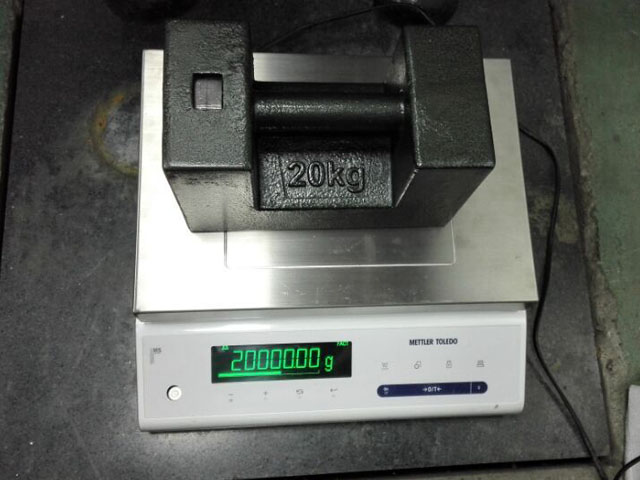
To deeply understand the essential role and application value of precision test weight, it is necessary to start with the basic logic of weighing measurement itself and the working principle of various weighing instruments. All weighing activities follow the basic physical principle of mass balance or force balance, whether it is the traditional mechanical balance that achieves balance by comparing the mass of measured objects and reference weights, or the modern electronic weighing equipment that converts gravity signals into digital data through sensor induction and internal circuit processing. No matter how advanced the internal structure and digital technology of weighing equipment are, the final accurate output of measurement data must rely on a known and stable mass reference for regular correction and confirmation. During the long-term use of weighing instruments, various internal and external factors will gradually affect their measurement performance. Internal factors include the aging of internal sensing components, the slight wear of mechanical transmission structures, the drift of electronic circuit parameters, and the fatigue loss of stress-bearing parts after long-term load bearing. External factors cover changes in ambient temperature and humidity, air buoyancy interference in different atmospheric environments, dust and dirt accumulation on the weighing contact surface, and slight vibration and impact generated by on-site production operations. These subtle changes, which are difficult to detect by naked eyes, will slowly cause the weighing data output by the instrument to deviate from the true value. If there is no regular calibration and verification with precision test weight, this deviation will gradually accumulate and expand over time, leading to inaccurate weighing results. In industrial production, inaccurate weighing will cause unstable raw material ratio configuration, unqualified finished product quality parameters, and inconsistent batch production standards; in scientific research experiments, it will lead to distorted experimental data, repeated experimental failures, and inaccurate research conclusion derivation; in quality inspection and commodity detection work, it will cause misjudgment of product qualification status and affect the fairness and rigor of inspection work. It is in these practical application scenarios that precision test weight exerts its irreplaceable core function, becoming a key guarantee to curb measurement deviation and maintain the long-term reliable operation of weighing equipment.
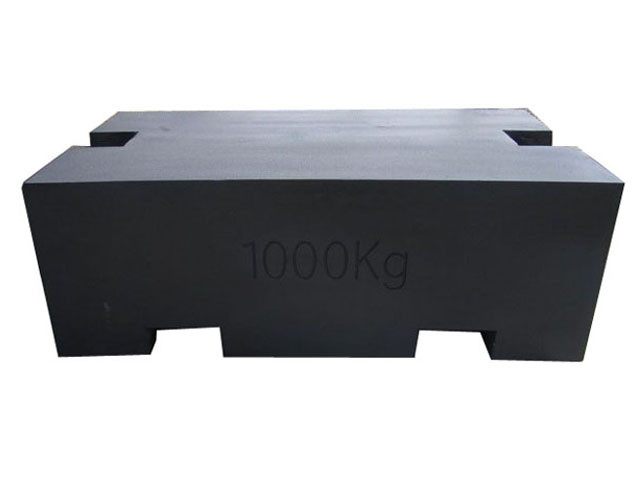
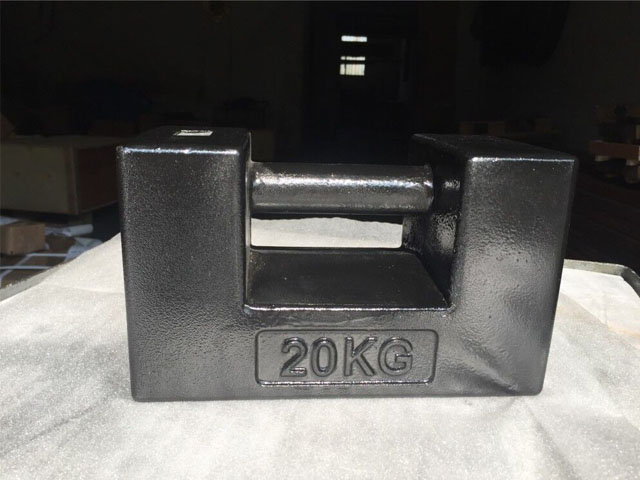
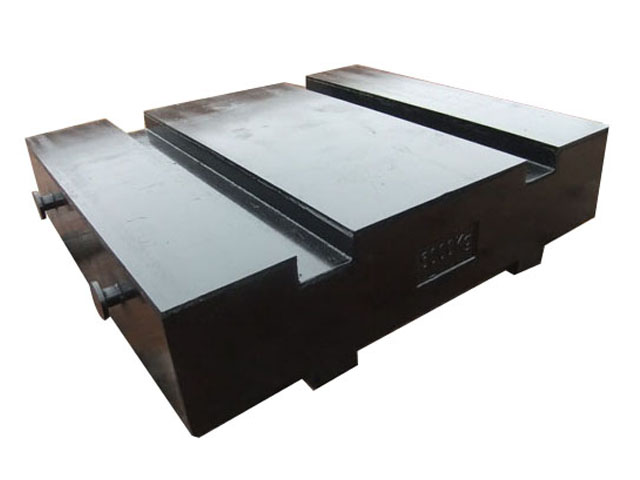
The production and manufacturing process of precision test weight follows extremely strict process specifications and dimensional control standards, and every link from raw material selection to finished product finishing and surface treatment is carefully polished and precisely processed to ensure the long-term stability of its mass value and the consistency of structural state. The selection of manufacturing materials is the primary foundation for determining the performance of precision test weight, as different materials have distinct characteristics in terms of density uniformity, thermal expansion coefficient, corrosion resistance, oxidation resistance, and surface wear resistance. Materials selected for making precision test weight need to meet multiple core conditions at the same time: stable internal chemical structure, no chemical decomposition or qualitative change under conventional storage and use environments, uniform internal density distribution to avoid local mass deviation caused by material internal defects, low thermal expansion degree to reduce mass and volume changes caused by ambient temperature fluctuations, and strong corrosion and oxidation resistance to prevent mass loss or surface damage caused by contact with air, moisture, or trace chemical substances in the use process. In the actual production and processing process, different material combinations and processing methods will be adopted for precision test weight used in different precision levels and application scenarios. For test weight applied to conventional industrial weighing instrument verification and general production line calibration, materials with moderate density and good comprehensive stability are mostly selected, which can meet daily measurement reference needs while adapting to complex on-site production environments. For test weight used in high-precision laboratory analytical instrument calibration and scientific research precision measurement work, higher-purity and more stable raw materials are used, and more refined smelting and forging processes are adopted to eliminate internal material impurities and structural gaps, ensuring that the mass of each test weight remains extremely stable for a long time, and the surface will not produce oxidation shedding or fine wear affecting mass value even after long-term repeated use.
The processing and forming stage of precision test weight focuses on precise dimensional control and mass fine adjustment, and every processing step is carried out under stable environmental conditions to avoid processing errors caused by environmental fluctuations. After the initial forming of the weight body through cutting, forging, and grinding processes, the initial mass fine adjustment work will be carried out by professional processing equipment, and the excess part of the weight body will be removed through micro-processing to make the initial mass close to the set standard value. Subsequently, through multiple rounds of repeated measurement and fine correction, the mass of the test weight is gradually adjusted to the required reference range, and the surface of the weight body is polished and polished to remove burrs, sharp corners, and surface uneven parts. Smooth and flat surface treatment not only facilitates the stable placement of the test weight on the weighing instrument contact surface and avoids placement tilt affecting calibration accuracy, but also reduces the adhesion of dust, moisture, and other impurities on the surface, effectively preventing mass changes caused by surface attachment or wear. After the completion of surface processing and mass fine adjustment, precision test weight will go through a stable placement stage for a certain period of time, placing the processed weight in a constant temperature and dry environment to eliminate internal processing stress, stabilize the internal structural state of the material, and avoid mass value drift caused by structural stress release after formal use. Only after passing multiple rounds of repeated mass detection and stability inspection can the finished precision test weight be put into subsequent storage and use links, ensuring that each finished product has stable performance and accurate mass value.
The application scenarios of precision test weight cover almost all fields that require quantitative weighing measurement, and different industries and use environments have different application requirements and operation norms for the use of test weight, but the core purpose is always to maintain the accuracy and stability of weighing measurement data. In industrial manufacturing fields such as chemical production, food processing, pharmaceutical manufacturing, and new material processing, weighing measurement runs through the entire production process from raw material feeding, formula ratio configuration, semi-finished product processing to finished product packaging and delivery. The accurate ratio of various raw materials is directly related to the chemical properties, physical quality, and use effect of final products. Taking chemical production as an example, the mixing ratio of various chemical raw materials needs to be accurately controlled within a fixed range, and slight weighing errors may lead to changes in chemical reaction degree, resulting in unqualified product performance, reduced production efficiency, and even potential safety hazards in the production process. Regular calibration of production line weighing equipment with precision test weight can timely discover and correct measurement deviations of weighing instruments, ensure that the weighing data of each raw material feeding link is accurate and reliable, maintain the stability of production formula ratio, and ensure the consistent quality of batch products. In food processing and pharmaceutical production industries, which have stricter requirements for product safety and ingredient proportion stability, the application of precision test weight is more frequent and standardized. Accurate weighing of food additives, pharmaceutical raw materials, and auxiliary materials is not only related to product quality and taste, but also directly related to consumer health and safety. Long-term stable calibration of weighing equipment with precision test weight can effectively avoid excessive or insufficient addition of raw materials caused by inaccurate weighing, ensure that products meet production and quality requirements, and maintain the standardized and orderly development of production work.
In scientific research laboratories, inspection and testing institutions, and academic research institutions, precision test weight plays a more critical role in supporting experimental research and data analysis work. Various physical property experiments, chemical composition analysis, material performance testing, and forensic identification testing work all require high-precision weighing data as the basic support for experimental research and result analysis. The accuracy of laboratory analytical balances and precision weighing scales directly determines the authenticity and repeatability of experimental data. If the weighing instrument has measurement deviation and is not corrected in time, all experimental data based on weighing results will have systematic errors, leading to wrong experimental conclusions, affecting the progress of scientific research projects, and even causing waste of scientific research resources and time. Researchers and laboratory management personnel need to regularly use matching precision test weight to calibrate and verify various laboratory weighing instruments before daily experimental work and after the completion of batch experimental tasks. By comparing the standard mass value of the test weight with the display data of the weighing instrument, the performance state of the instrument is judged, and slight parameter adjustments are made according to the deviation situation to ensure that the weighing instrument is always in the best working state. In many long-term tracking experiments and comparative research projects, the consistency of weighing measurement standards in different experimental stages is particularly important. Precision test weight provides a unified measurement benchmark for long-term experimental research, ensuring that the weighing data obtained in different time periods and different experimental batches has comparability and effectiveness, and providing reliable data support for the derivation of scientific research conclusions and the summary of experimental laws.
In commercial circulation, commodity quality inspection, and metrological supervision work, precision test weight is an important basic tool to maintain market order and ensure fair trading behavior. In the daily trading process of bulk commodities, retail goods, and packaged products, weighing measurement is an important basis for commodity pricing and transaction settlement. Whether it is large-scale bulk cargo weighing in logistics and transportation links or small commodity weighing in retail sales links, the accuracy of weighing equipment is directly related to the legitimate rights and interests of both buyers and sellers. Regular verification and calibration of various commercial weighing devices with precision test weight can effectively prevent measurement errors caused by equipment failure or human modification, avoid unfair trading problems such as insufficient weight of commodities, and maintain the fair and orderly development of the commodity trading market. At the same time, metrological supervision and inspection departments need to carry out regular spot checks and performance verification on weighing equipment used in various commercial places and production enterprises. Precision test weight provides a standard measurement reference for supervision and inspection work, enabling inspectors to quickly and accurately judge whether the weighing performance of the equipment meets basic use requirements, timely discover and rectify unqualified weighing equipment, and standardize the use and management of weighing measurement tools in various industries.
The correct use and scientific daily maintenance of precision test weight are crucial to maintaining its long-term mass stability and service life, and improper operation and random storage will easily cause subtle changes in the mass value and structural performance of the test weight, affecting the calibration effect and measurement reference accuracy. In the process of using precision test weight for calibration and verification work, the first thing to pay attention to is the matching between the test weight and the weighing instrument. Different weighing instruments have different measuring ranges, precision levels, and bearing capacities, and it is necessary to select test weight with appropriate mass specifications and precision levels according to the actual parameters of the weighing equipment. Using test weight with excessive mass may cause overload damage to the weighing instrument and affect the service life of the equipment; using test weight with insufficient mass cannot effectively detect the measurement deviation of the instrument in the full measuring range, and cannot achieve comprehensive calibration and verification effects. Before the formal calibration operation, it is necessary to place both the precision test weight and the weighing instrument in the same working environment for a period of time to make the temperature of the test weight and the instrument consistent with the ambient temperature, avoiding temporary mass changes and measurement errors caused by temperature difference. At the same time, the surface of the test weight and the weighing contact surface of the instrument need to be carefully cleaned with soft and clean cleaning tools to remove surface dust, moisture, oil stains, and other attachments, ensuring that the placement state of the test weight is stable and the contact is flat, without tilting or shaking.
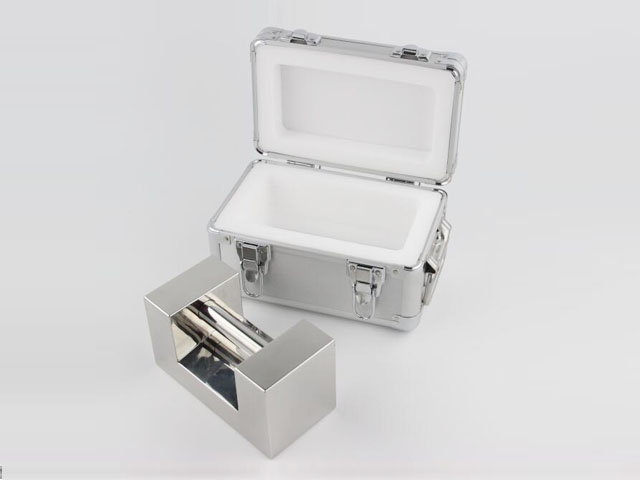
In the process of placing and operating precision test weight, it is necessary to handle it gently and standardly, avoiding random throwing, collision, and friction. Although precision test weight has good structural stability and surface wear resistance, severe collision and friction will cause subtle damage and shedding on the surface of the weight body, resulting in slight changes in mass value, and affecting the accuracy of subsequent calibration work. It is not allowed to directly touch the surface of the precision test weight with hands during operation, as the sweat, oil stains, and fine impurities on human hands will adhere to the surface of the weight, causing surface corrosion and mass change after long-term accumulation. Special clamping tools and handling equipment should be used to take and place the test weight, ensuring that the operation process is safe and standardized. After the completion of each calibration and verification work, the precision test weight should be cleaned again in time to remove possible attachments generated during use, and then placed in a special dry and sealed storage container for storage. The storage environment of the test weight needs to be kept dry, constant temperature, away from corrosive gases, strong vibration sources, and high-temperature and humid environments, to prevent the test weight from being affected by moisture, corrosion, and structural deformation during long-term storage.
Regular performance inspection and mass recheck of precision test weight are also important links to ensure its long-term and stable use. After the test weight is used for a certain period of time or after frequent use and long-term storage, slight mass drift and surface wear may occur due to environmental influence and operational wear. It is necessary to regularly send the test weight for professional mass detection and performance recheck, compare the current mass value with the original standard value, judge whether the performance of the test weight is still within the normal use range, and carry out fine correction and maintenance for individual test weight with slight deviation. For test weight with serious performance degradation and excessive mass deviation beyond the usable range, it should be stopped in time to avoid affecting the accuracy of weighing calibration work. This regular inspection and maintenance mechanism can effectively extend the service life of precision test weight, maintain the stability of its reference performance, and ensure that every calibration and verification work can achieve ideal results.
From the perspective of long-term measurement quality management and industrial standardized operation, precision test weight is not only a simple measurement auxiliary tool, but also an important part of the entire metrological guarantee system and industrial quality control system. All industrial production enterprises, scientific research institutions, and inspection departments that rely on weighing measurement data need to establish a complete use and management system for precision test weight, clarify the use specifications, storage requirements, inspection cycles, and management responsibilities, and incorporate the use and maintenance of test weight into the daily quality management work. Many quality management work and production standardization work in various industries are based on accurate and consistent measurement data, and reliable weighing measurement is inseparable from the reference guarantee of precision test weight. Only by attaching importance to the selection, use, maintenance, and regular inspection of precision test weight can we lay a solid foundation for the accuracy of weighing measurement work, ensure that all production, scientific research, and inspection work based on weighing data can be carried out in an orderly manner in accordance with standard requirements, and promote the continuous improvement of product quality, the continuous progress of scientific research work, and the standardized and stable operation of the industry market.
With the continuous progress of industrial production technology and scientific research level, the requirements for weighing measurement accuracy in various fields are constantly improving, and the performance requirements for precision test weight are also gradually upgrading. More refined manufacturing processes, more stable material formulas, and more scientific use and management methods are constantly applied to the production and use of precision test weight, making its reference performance more stable and its application scope more extensive. No matter how the weighing instrument technology innovates and how the production and research scenarios change, the core status of precision test weight as the basic reference benchmark for weighing measurement will never change. It has been silently guarding the accuracy and consistency of weighing measurement work in various fields, supporting the stable development of all walks of life related to mass measurement, and becoming an indispensable and important basic guarantee for modern social production, scientific research, and quality supervision work.
Precision Test Weight
https://www.veidtweighing.com/test-weight.html
Post Date: Apr 27, 2026
https://www.supplier-manufacturer.com/test-weight/precision-test-weight.html

![1000kg Test Weight]()
1000kg Test Weight
In the complex and interconnected framework of modern industrial production, material circulation, engineering operation, and scientific measurement, the consistency and r…![20kg Test Weight]()
20kg Test Weight
In the modern industrial production system, daily measurement verification and routine equipment performance testing work run through every link of manufacturing, logistic…![Digital Balance Calibration Standard Laboratory Weight]()
Digital Balance Calibration Standard Laboratory Weight
In every modern laboratory setting that relies on quantitative measurement data to support experimental research, material formulation, quality verification, and scientifi…![High Accuracy Test Weight]()
High Accuracy Test Weight
High accuracy test weight stands as a foundational physical reference tool embedded deep within the core of modern measurement and industrial production systems, serving a…![Cast Iron Test Weight]()
Cast Iron Test Weight
Cast iron test weights stand as foundational physical measuring artifacts that underpin the entire operational logic of modern weighing and metrological systems across all…