Electronic Weighing Scale
Electronic weighing scales have become an indispensable measuring device in modern daily life and industrial production, gradually replacing traditional mechanical weighing equipment with stable performance and convenient operation. These devices rely on electronic sensing technology to complete weight detection, breaking the limitations of mechanical structures that are prone to wear and tedious reading. From daily household weight measurement to raw material detection in industrial production, from portion control in food processing to weighing management in commercial transactions, electronic weighing scales can be seen in numerous scenarios, providing reliable data support for people’s production and life. The continuous optimization of internal electronic components and algorithms has also enabled such weighing devices to maintain steady working conditions in diverse usage environments, meeting the weighing needs of different industries and individual users.
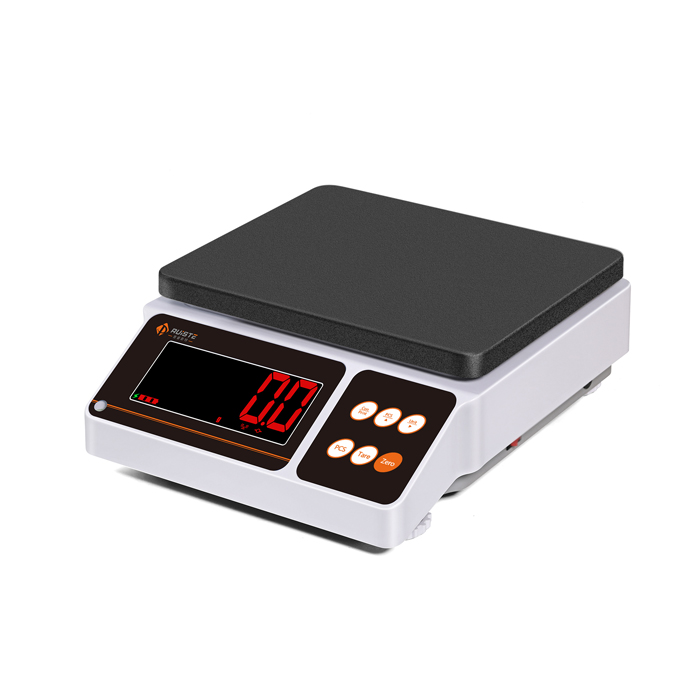
The basic working principle of electronic weighing scales follows the physical characteristics of force conversion and electrical signal transmission. The core components include sensing elements, signal processing circuits, microprocessors and digital display modules. When an object is placed on the bearing surface of the scale, the gravity of the object acts on the internal sensors, causing slight physical deformation of the sensitive components inside the sensors. Common sensor types include strain gauge sensors, capacitive sensors and electromagnetic balance sensors, each adapting to different weighing ranges and precision requirements. The tiny deformation generated by pressure will be converted into weak electrical signals, and these original signals often have fluctuations caused by external interference. After being filtered, amplified and stabilized by the signal processing circuit, the signals are transmitted to the built-in microprocessor. The microprocessor calculates and converts the electrical data according to the preset program, and finally presents the intuitive weight value on the digital display screen, completing the entire weighing process. Compared with mechanical scales that rely on spring deformation and gear transmission, the electronic transmission mode effectively reduces data errors caused by mechanical friction and structural aging.
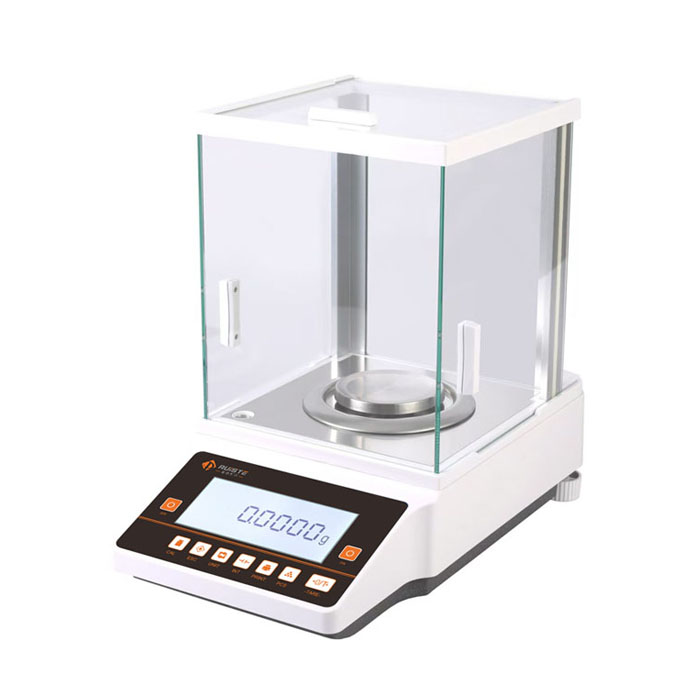
The internal structural design of electronic weighing scale focuses on compact layout and stable operation. The external bearing platform is usually made of smooth and wear-resistant materials, which can bear the pressure of measured objects while avoiding residue accumulation, and it is also convenient for daily cleaning. The internal fixed bracket plays a role in stabilizing the sensor and circuit components, preventing component displacement caused by accidental collision or vibration during use. In order to adapt to different usage environments, many electronic weighing scales are equipped with temperature compensation structures. Changes in ambient temperature will affect the electrical conductivity of internal electronic components and the physical stability of sensors, and the temperature compensation system can adjust signal parameters in real time to reduce measurement deviations caused by temperature fluctuations. In addition, the power supply module supports multiple power supply modes, including built-in rechargeable batteries and external direct current power supply, which ensures the flexibility of the equipment in different usage scenarios and avoids usage restrictions due to power supply conditions.
There are many inherent advantages of electronic weighing scales that make them widely accepted by users. In terms of measurement performance, such equipment can maintain stable detection accuracy within a reasonable weighing range, and the digital display mode avoids visual errors caused by manual observation of pointer scales. In terms of operation experience, the equipment usually has a simple interactive design. Most models can complete zero calibration with one key, which eliminates the trouble of manual debugging before use. The response speed of data display is fast, and the weight value can be locked within a short time after the object is placed, improving weighing efficiency. In terms of portability and applicability, electronic weighing scales have diversified volume designs. Miniaturized models are easy to carry and store, suitable for household and personal use, while large-scale heavy-duty models can bear heavier loads and meet the weighing requirements of industrial bulk goods. Moreover, some improved versions are embedded with data storage and transmission modules, which can record multiple groups of weighing data and transmit the data to external terminal equipment for statistical analysis, facilitating users to sort out and track measurement information.
The application scope of electronic weighing scales covers multiple fields of society, showing strong practical value. In household scenarios, small electronic scales are used for body weight monitoring, helping users grasp physical changes through regular detection; kitchen electronic scales assist in accurate ingredient proportioning during food production, making the production of baked food and homemade meals more standardized. In the commercial retail industry, such equipment is used for weighing bulk commodities, realizing rapid weighing and data display to complete transaction measurement, and optimizing the smoothness of the sales process. In the food processing industry, electronic weighing scales with high precision are used to detect raw material dosage and finished product weight, ensuring that the product specifications meet the unified production standards and maintaining the consistency of product quality. In industrial production and logistics transportation, large electronic weighing equipment is responsible for weighing raw materials, semi-finished products and bulk cargoes, providing accurate weight data for production formula deployment and cargo transportation settlement. In addition, in scientific research laboratories, high-precision electronic weighing scales are used for reagent weighing and sample detection, providing accurate basic data for experimental research.
Although electronic weighing scales have stable operating performance, daily standardized use and maintenance are essential to extend service life and maintain measurement accuracy. During the placement process, the equipment should be placed on a flat and hard horizontal surface. Inclined or soft bearing surfaces will cause uneven stress on internal sensors and affect the accuracy of detection results. It is necessary to avoid placing the equipment in a humid, high-temperature environment or a space with strong electromagnetic interference for a long time. Humidity will corrode internal circuit components, high temperature will accelerate the aging of electronic parts, and electromagnetic signals will interfere with the transmission of weighing electrical signals, resulting in data fluctuations. In daily cleaning, users need to wipe the surface with dry or slightly wet soft cloths, and avoid rinsing the equipment directly with water to prevent liquid from penetrating into the interior and causing short circuit damage. It is not allowed to place objects exceeding the rated weighing range on the equipment for a long time. Overload pressure will cause irreversible deformation of the sensor and permanently reduce the measurement performance. Regular zero calibration is also an important maintenance step; regular calibration can eliminate cumulative errors generated during long-term use and keep the weighing data in a stable and accurate state.
In the process of long-term use, electronic weighing scales may encounter minor common faults, and reasonable troubleshooting can effectively restore the working state. If the display screen cannot light up normally, it is usually caused by insufficient power supply or poor contact of the power interface. Users can replace the power supply or check the connection lines to eliminate the fault. If the displayed data keeps fluctuating without stabilization, it may be affected by external vibration, uneven placement surface or residual sundries on the bearing platform. Cleaning the platform and adjusting the placement position can solve most fluctuation problems. When the weighing data has continuous deviation, zero calibration operation can be carried out first; if the deviation still exists after calibration, it means that the internal sensor is aging or damaged, and professional inspection and replacement are required. It is worth noting that non-professional personnel should not disassemble the equipment at will, so as to avoid damage to the internal circuit structure and affect the overall working performance.
With the continuous progress of electronic information technology, the upgrading and optimization of electronic weighing scales are still in progress. The current development direction focuses on intelligent function expansion and structural performance improvement. On the one hand, intelligent interconnection functions are gradually popularized. More weighing devices can be connected with intelligent terminals to synchronize weighing data in real time, draw change curves, and realize long-term data tracking and management. On the other hand, material optimization reduces the overall energy consumption of the equipment. New lightweight and corrosion-resistant materials are used for the shell and internal brackets, which not only reduce the self-weight of the equipment but also enhance the environmental adaptability. In addition, the algorithm optimization of the microprocessor further improves the anti-interference ability of the equipment, enabling it to maintain stable measurement in complex working environments such as vibration and airflow disturbance.
As a mature electronic measuring instrument, electronic weighing scales have penetrated into every link of social production and daily life. Its simple operating logic, stable measuring performance and diverse application scenarios make it an important auxiliary tool for weight measurement. From miniature household weighing equipment to large industrial weighing devices, each type of electronic weighing scale is designed around accurate measurement and convenient use, continuously meeting the diversified weighing needs of users. With the continuous innovation of electronic technology and manufacturing processes, the comprehensive performance of electronic weighing scales will be further improved. The optimization of precision, energy consumption and intelligent functions will enable such equipment to exert greater value in more fields, and provide more convenient and accurate measuring services for social production and people’s daily life.
Electronic Weighing Scale
https://www.pruiste.com/weighing-scale.html
Post Date: May 7, 2026
https://www.supplier-manufacturer.com/weighing-scale/electronic-weighing-scale.html

![Industrial Digital Viscometer]()
Industrial Digital Viscometer
Viscosity stands as one of the most critical physical properties of fluid materials, reflecting the internal frictional resistance that occurs when a fluid undergoes flow …![Gravimetric Moisture Analyzer]()
Gravimetric Moisture Analyzer
Moisture content stands as one of the most critical physical parameters that define the quality, stability, and processing performance of diverse materials across industri…![Automatic Moisture Analyzer]()
Automatic Moisture Analyzer
Moisture content stands as one of the most critical physical indicators that determine the quality, stability and practical performance of various raw materials and finish…![Benchtop Moisture Analyzer]()
Benchtop Moisture Analyzer
Moisture content stands as one of the most critical physical parameters for a vast range of raw materials, semi-finished products, and finished goods across industrial, ag…![Compact Laboratory Balance]()
Compact Laboratory Balance
Compact laboratory balances serve as essential precision measuring instruments in modern scientific research, educational experimentation, industrial sample processing, an…