High-capacity Counting Scale
In modern industrial production, warehousing management, and batch material processing, the demand for efficient and accurate quantity statistics of bulk items continues to grow steadily. Traditional manual counting methods are constrained by human physical limits and subjective judgment deviations, making it difficult to cope with large-volume counting tasks, while ordinary weighing equipment can only complete single weight measurement without deriving accurate quantity data. Under this industry background, high-capacity counting scales have become essential auxiliary equipment for many production and storage links, balancing large-load bearing capacity, stable counting performance, and wide material adaptability to meet the standardized counting needs of various bulk parts, granular supplies, and packaged goods. Different from small-sized counting devices that are only suitable for laboratory or small-batch sampling, this type of counting scale is designed focusing on heavy-load operation and continuous working scenarios, with structural optimization and algorithm iteration to adapt to complex industrial environments, effectively reducing manual intervention and improving the overall efficiency of material quantity management.
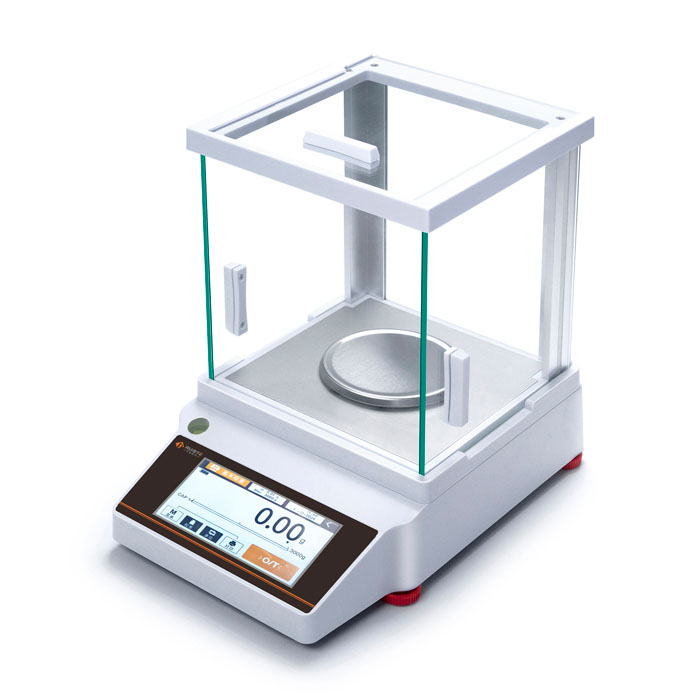
The basic working logic of a high-capacity counting scale originates from the combination of precision weight sensing and intelligent data calculation. The core operational principle remains consistent across most conventional models. Before formal counting work, the equipment completes sample weighing through a small number of pre-selected standard materials to obtain the average single weight of the measured items. This sample data serves as the basic calculation parameter for subsequent batch counting. When a large quantity of materials is placed on the bearing platform, high-sensitivity sensing components capture real-time weight changes and transmit continuous weight data to the internal processing module. The built-in operation program automatically divides the total weight by the pre-calibrated single-piece weight to calculate the total quantity of materials. To adapt to high-capacity measurement requirements, the sensing structure of the equipment is optimized with enhanced pressure resistance and signal stability, avoiding data distortion caused by instantaneous heavy pressure or material stacking impact. Moreover, the internal filtering algorithm can eliminate subtle interference generated by environmental vibration and material surface impurities, ensuring the stability of single-piece weight data and maintaining consistent counting accuracy during long-term continuous operation.
In terms of structural design, high-capacity counting scale adopt industrial-grade configurations to meet the demands of heavy-load and long-duration use. The bearing platform is usually made of thickened metal materials with anti-corrosion and anti-wear treatments, which can withstand the pressure of stacked bulk materials and avoid surface deformation after long-term heavy load bearing. The platform surface is designed with anti-slip textures to prevent small granular items from sliding during the weighing process, reducing counting errors caused by material displacement. The bottom of the equipment is equipped with adjustable supporting footpads, which can fine-tune the horizontal balance of the scale body according to different placement environments. This balance adjustment function is particularly critical in industrial workshops with uneven ground, as it ensures uniform force on internal sensors and avoids measurement deviations caused by tilting stress. The external shell adopts an integrated sealing structure to block dust, moisture, and fine debris in the production environment from entering the internal circuit and sensing components, lowering the failure rate of parts in harsh working conditions. In addition, the human-computer interaction interface is simplified and optimized, with a clear display area that can present total weight, single-piece weight, real-time quantity, and cumulative counting data. Physical buttons with simple logic are convenient for operators to complete calibration, data clearing, and parameter setting, reducing the learning cost for staff.
The applicable material range of high-capacity counting scales covers multiple types of regular and homogeneous items, showing strong inclusiveness in industrial and commercial scenarios. In the electronic manufacturing industry, the equipment is often used for counting small metal accessories, plastic fasteners, and miniature electronic components. These items have uniform specifications and stable single-piece weight, which can match the counting logic of the scale. The large bearing space allows one-time placement of thousands of parts, replacing tedious manual counting and shortening the inventory statistics cycle of accessory warehouses. In the food processing industry, it is suitable for counting individually packaged small snacks, sealed granular condiments, and standardized canned products. The dust-proof and anti-pollution structure of the equipment meets the basic hygiene requirements of food production workshops, and the efficient counting mode can support the quantity inspection link of assembly line packaging batches. For chemical and building material industries, the scale can count bagged chemical reagents, granular building materials, and standardized packaging additives. Its heavy-load bearing capacity adapts to the weight characteristics of heavy bagged materials, and the stable sensing performance can resist minor interference from dust and peculiar smells in the production environment.
Logistics and warehousing sectors are also important application scenarios for high-capacity counting scales. In large storage warehouses, regular inventory sorting of spare parts, daily necessities, and industrial consumables requires frequent quantity verification. The equipment can complete rapid counting of bulk goods stacked in turnover boxes, realizing fast inventory data update and reducing the error rate of manual inventory. In the packaging and distribution link of finished products, manufacturers use counting scales to conduct random inspections and full inspections of packaged products to ensure that the quantity of goods in each batch of packaging meets production standards and avoid quantity discrepancies caused by mechanical packaging errors. Compared with manual sampling inspection, continuous counting by mechanical equipment covers a wider range of goods with more uniform inspection standards. In addition, some intermediate processing enterprises use this type of scale to count incoming raw materials and outgoing finished products, establishing clear quantity data records for each production link to facilitate material flow tracking and cost accounting.
Compared with traditional counting methods and small-scale counting equipment, high-capacity counting scales have obvious comprehensive advantages in practical application. In terms of working efficiency, a single device can complete the counting work of dozens of batches of bulk materials within an hour, and the processing capacity per unit time is far higher than that of manual counting. It can maintain stable operation for a long time without fatigue, which is suitable for high-intensity production rhythm. In terms of counting accuracy, standardized sample calibration and intelligent filtering algorithms control the data deviation within a tiny range. Even for materials with slight individual weight differences, the overall counting result can maintain high rationality, avoiding frequent counting errors caused by human visual fatigue and subjective judgment. In terms of operation cost, although the equipment has a certain procurement investment in the early stage, it does not require a large number of manual operators for long-term use. It reduces labor expenditure in repetitive counting links, and the simple operation logic lowers the training cost for employees. The integrated and durable structure also reduces the frequency of part replacement and daily maintenance difficulty.
To maintain the long-term stable performance of high-capacity counting scales, standardized daily operation and scientific maintenance measures are essential. Before each use, operators need to check the levelness of the scale body and clean dust and residual impurities on the bearing platform to prevent foreign matters from affecting weight sensing accuracy. The sample calibration link should select multiple standard single items for repeated weighing to ensure that the average single-piece weight data is accurate, and recalibration is required when switching different types of measured materials. During the stacking placement of bulk materials, excessive high stacking should be avoided to prevent material center-of-gravity offset from causing local pressure overload on the sensor. After daily work, the equipment should be powered off in a standardized manner, and the surface should be wiped and kept dry. For the internal circuit and sensing components, regular dust removal and inspection are needed to check whether the connecting parts are loose or aging. In harsh environments with high humidity and strong corrosion, anti-corrosion protection measures should be added to the scale body to extend the service life. Reasonable use habits can effectively reduce equipment failure probability and keep counting accuracy stable for a long time.
With the continuous upgrading of industrial automation and intelligent management systems, high-capacity counting scales are also evolving in functional expansion and technical optimization. At present, many improved models are embedded with data storage modules, which can automatically record daily counting data and generate simple statistical records, facilitating enterprise data sorting and traceability. Some equipment reserves external connection interfaces to realize data transmission with production management systems, realizing synchronous updating of counting data and production system data. In terms of adaptive optimization, the upgraded algorithm can identify materials with slightly uneven specifications, dynamically adjust calculation parameters according to weight fluctuation ranges, and further expand the range of applicable materials. The human-computer interaction system is also gradually developing towards intellectualization, with touch operation and intelligent data reminding functions added to simplify complex parameter setting steps and lower the operation threshold for different groups of operators.
In the entire industrial chain and commercial circulation system, high-capacity counting scales undertake the basic work of quantity standardization management. Accurate and efficient counting data provides reliable basis for enterprise production scheduling, inventory allocation, and quality inspection. It eliminates the quantity management loopholes caused by manual counting errors, helps enterprises form standardized material management processes, and improves the overall operational refinement level. For small and medium-sized processing enterprises with limited production costs, this type of equipment with balanced performance and practicability can effectively solve the pain points of bulk material counting, realizing low-cost and high-efficiency quantity management. For large-scale industrial production enterprises, multiple devices can be used in conjunction with assembly lines to complete batch counting and sorting, matching the high-volume production rhythm and promoting the coordinated operation of various links in the production chain.
Looking at the current industry development trend, the market demand for high-capacity counting scales will continue to rise with the expansion of bulk material processing scale and the improvement of management standard requirements. The future development direction of the equipment will focus on higher environmental adaptability, smarter data processing, and more diversified functional combinations. The continuous optimization of sensor technology and intelligent algorithms will further reduce the counting deviation of special-shaped materials, and the enhanced waterproof, dust-proof and shock-resistant performance will enable the equipment to adapt to more complex extreme working environments. Combined with Internet of Things technology, the equipment will realize remote data viewing and operating state monitoring, providing more convenient management means for enterprise production supervisors. While maintaining the core advantages of high load and high stability, high-capacity counting scales will continuously expand application boundaries and become an indispensable basic intelligent weighing and counting device in modern manufacturing, warehousing, and circulation industries, providing steady technical support for the standardized and efficient operation of the material processing industry.
High-capacity Counting Scale
https://www.pruiste.com/counting-scale.html
Post Date: May 7, 2026
https://www.supplier-manufacturer.com/counting-scale/high-capacity-counting-scale.html

![Digital Viscometer Factory]()
Digital Viscometer Factory
Viscosity stands as one of the most fundamental physical properties of fluid materials, reflecting the internal friction and flow resistance that occur when fluids undergo…![Compact Digital Viscometer]()
Compact Digital Viscometer
Viscosity stands as one of the most fundamental physical properties of fluid materials, reflecting the internal friction and flow resistance that occur when a substance un…![Benchtop Digital Viscometer]()
Benchtop Digital Viscometer
Viscosity stands as one of the most fundamental physical properties of fluid substances, reflecting the internal friction and flow resistance generated during the movement…![Moisture Analyzer Exporter]()
Moisture Analyzer Exporter
Moisture content stands as one of the most critical physical indicators that determine the quality, stability, and usability of raw materials and finished products across …![Textile Moisture Analyzer]()
Textile Moisture Analyzer
Moisture content stands as one of the most fundamental and influential physical indicators in the entire textile industry chain, exerting a profound impact on the processi…