Spring Balances
The spring balance stands as one of the most practical and intuitive mechanical measuring instruments ever devised, rooted in fundamental physical principles that govern the behavior of elastic materials. Unlike comparative measuring tools that rely on balancing unknown masses against standard reference weights, this instrument operates on the direct relationship between applied force and elastic deformation, making it a straightforward device for detecting and quantifying force and weight. Its ingenious simplicity, paired with dependable functionality, has secured its place in educational laboratories, daily operational scenarios, and various industrial auxiliary measurement tasks across generations. The core logic behind its operation stems from a basic physical rule that defines the elastic properties of springs, laying a solid foundation for its consistent and repeatable measurement performance.
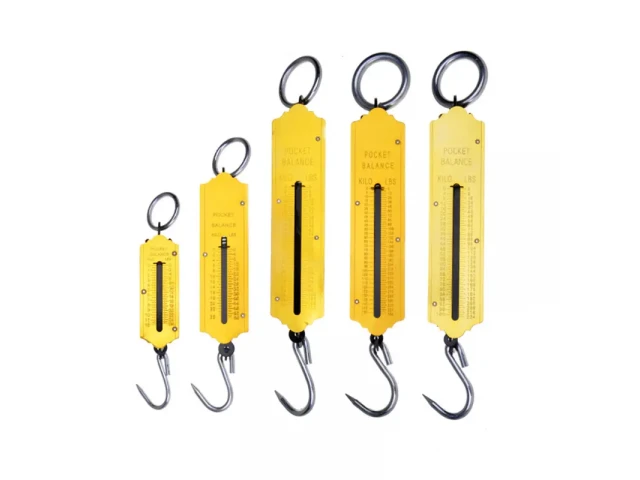
At the heart of every spring balance lies the principle of elastic deformation, commonly known as Hooke’s Law in classical physics. This principle explains that within a specific elastic limit, the extension or compression displacement of a spring maintains a steady proportional relationship with the external force applied to it. When no load acts on the instrument, the internal coiled spring remains in a natural, relaxed state, with the indicator pointer aligning perfectly with the zero position on the graduated scale. Once a load is suspended from the bottom hook or a pulling force is applied, the spring undergoes gradual tensile deformation. As the applied force increases, the stretching distance of the spring grows correspondingly in a linear pattern. This uniform linear change allows the scale of the spring balance to feature evenly spaced graduation marks, ensuring consistent interval representation of force values throughout the measuring range.
The structural design of a standard spring balance follows a minimalist and ergonomic logic, with every component serving the core purpose of accurate force transmission and clear data presentation. The outer casing, usually made of rigid lightweight materials, functions as a protective frame that fixes the top end of the spring and shields internal components from external interference such as accidental collision, dust accumulation, and minor environmental vibration. Inside the casing, a precision coiled spring acts as the core sensing element, responsible for converting mechanical force into visible linear displacement. Connected to the bottom of the spring is a movable mechanical assembly fitted with a pointer, which slides smoothly along the fixed scale board as the spring stretches or contracts. The bottom hook, crafted from sturdy ductile materials, is designed to hang measured objects or bear pulling tension, while the top hanging ring enables stable suspension of the entire instrument during measurement processes.
The internal mechanical linkage further optimizes the accuracy of data reading. Some refined spring balance models integrate rack and pinion structures to convert the linear stretching motion of the spring into stable rotational movement of the pointer. This structural design effectively reduces measurement errors caused by unbalanced force bearing and slight structural friction, enabling the pointer to move steadily and stop precisely at the corresponding scale position. The scale board is pre-calibrated according to the elastic coefficient of the matched spring, with clear and uniform graduations that support intuitive reading of numerical values. Each segment of the scale corresponds to a fixed unit of force, allowing users to quickly obtain effective measurement results after the pointer stabilizes.
It is essential to distinguish the core measurement attribute of the spring balance from traditional mass measuring tools. This instrument fundamentally measures the magnitude of force, most commonly the gravitational force exerted by an object, which is defined as weight in physical terms. Mass, as an inherent property of an object, remains constant regardless of environmental changes, while the weight value measured by a spring balance varies slightly with differences in gravitational acceleration in different spatial environments. For daily measurement and conventional experimental scenarios, this subtle variation is negligible, and the calibrated scale can directly display values that meet daily weighing and experimental data recording needs. This functional characteristic differentiates it from lever balances that compare mass and makes it uniquely suitable for tension measurement and dynamic force detection scenarios.
The application scenarios of spring balances cover multiple fields ranging from basic science education to daily production and life. In school physics laboratories, they serve as essential teaching tools to help learners intuitively understand the concepts of force, elastic deformation, and the proportional relationship between force and displacement. Through hands-on operations of hanging different loads and observing spring deformation changes, learners can establish a concrete cognition of abstract physical laws, turning theoretical knowledge into perceptual operational experience. Basic experiments such as detecting the magnitude of sliding friction, verifying the characteristics of tensile force, and exploring the relationship between gravity and object mass all rely heavily on the simple and intuitive measurement characteristics of spring balances.
In daily life and small-scale production scenarios, spring balances provide convenient portable measurement solutions. Their compact size, light weight, and easy operation make them ideal for temporary weighing and force testing work that does not require high-precision data. In outdoor field operations, small commodity transactions, and daily item weighing, users can complete effective measurement quickly without complex pre-operation or professional debugging. Compared with electronic measuring devices that rely on power supply and circuit systems, mechanical spring balances feature stronger environmental adaptability, capable of normal operation in low-temperature, high-humidity, or unstable power supply environments, with lower failure rates and longer service life under conventional use conditions.
Industrial auxiliary measurement is another important application field for spring balances. In mechanical assembly, tension detection of flexible parts such as ropes and springs, and auxiliary calibration of small mechanical equipment, spring balances can provide stable and reliable reference data. They are often used to detect the tension bearing capacity of flexible components, verify the stress balance state of mechanical structures, and assist workers in adjusting equipment operating parameters. Although they cannot meet the ultra-high precision requirements of sophisticated industrial testing instruments, their advantages of low maintenance cost, convenient carrying, and stable mechanical performance make them indispensable auxiliary tools in conventional industrial operation links.
To maintain stable measurement accuracy and extend the service life of a spring balance, standardized use and daily maintenance are crucial. The most critical operating principle is to avoid overloading the instrument. Every spring balance has a rated measurement range determined by the elastic limit of its internal spring. When the applied force exceeds this range, the spring will produce permanent plastic deformation, unable to return to its original relaxed state, which will cause irreversible deviation in subsequent measurement data and even lead to complete functional failure. Before each use, users need to check the zero position of the pointer carefully. If the pointer does not align with the zero scale when no load is applied, fine adjustment should be carried out to eliminate systematic errors and ensure the accuracy of measured data.
During the measurement process, uniform and stable force application is required to avoid sudden tension or impact loads. Sudden force changes will cause the spring to vibrate violently, leading to unstable pointer readings and easily causing fatigue damage to the internal elastic structure over time. When suspending objects or applying tension, the force direction should be kept consistent with the vertical or horizontal bearing direction of the instrument to prevent lateral force from causing friction between internal moving parts and the casing, which may affect measurement accuracy and wear structural components. After the measurement is completed, the load should be removed gently to allow the spring to slowly return to its natural state, avoiding rapid shrinkage that may damage the elastic performance of the spring.
Daily maintenance work mainly focuses on environmental protection and regular inspection. The instrument should be stored in a dry, clean, and ventilated environment to prevent long-term exposure to humid air, corrosive gases, and excessive dust. Humid environments can cause rust on the spring and metal connecting parts, while dust accumulation will increase friction between moving components, both of which will affect measurement sensitivity and accuracy. Regular visual inspection is needed to check whether the spring has deformation, fatigue, or rust, whether the pointer is bent or loose, and whether the scale is blurred or worn. Damaged parts will cause unstable instrument performance and must be stopped from use and maintained in a timely manner.
The inherent performance characteristics of spring balances also determine their applicable scope and limitations. Their measurement accuracy is susceptible to subtle factors such as ambient temperature and structural friction. Temperature changes will slightly affect the elastic coefficient of the spring, while friction between internal moving parts will produce tiny resistance, both of which will bring minor errors to measurement results. For this reason, spring balances are more suitable for conventional measurement and teaching demonstration scenarios rather than high-precision scientific research and precision measurement work. In addition, long-term continuous use will lead to inevitable fatigue aging of the spring, resulting in slow attenuation of elastic performance and gradual reduction of measurement accuracy, requiring regular calibration to ensure data validity.
Despite the emergence of various advanced electronic and digital measuring instruments in modern times, the spring balance still retains unique use value and irreplaceable significance. Its pure mechanical structure requires no energy supply, no complex program debugging, and no delayed response, achieving real-time force detection through intuitive physical deformation. For basic physics teaching, it provides the most direct and vivid carrier for explaining elastic force and force measurement principles, helping learners understand the essence of mechanical measurement. For daily and conventional industrial scenarios, its high stability and low use cost meet the basic measurement needs of most conventional scenarios.
From the perspective of technological development, the design concept of spring balances also provides important enlightenment for modern elastic force sensing technology. Many precision force sensing devices used in modern industry and scientific research still follow the basic principle of elastic deformation and force conversion, optimizing structural design and material performance on the basis of the original spring balance mechanism to achieve higher precision and wider range measurement. It can be said that the simple mechanical logic of the spring balance builds the basic cognitive framework of mechanical force measurement, and its design wisdom has been inherited and developed in modern precision measuring instruments.
In conclusion, the spring balance is a classic combination of physical principles and practical mechanical design. With its simple structure, convenient operation, stable performance, and strong adaptability, it has been serving various measurement scenarios for a long time. It not only undertakes the important task of basic science popularization and teaching practice, but also provides reliable and convenient measurement support for daily life and conventional production operations. By mastering its working principle, standardized use methods, and scientific maintenance skills, users can give full play to its measurement performance, avoid unnecessary errors and damage, and ensure long-term stable and effective operation of the instrument. Even in the era of intelligent digital measurement, this traditional mechanical measuring tool still shows unique practical value and enduring vitality.
https://www.veidtweighing.com/Balance/SpringBalance
Post Date: Jun 7, 2026
https://www.supplier-manufacturer.com/weight-balance-scale/spring-balances.html

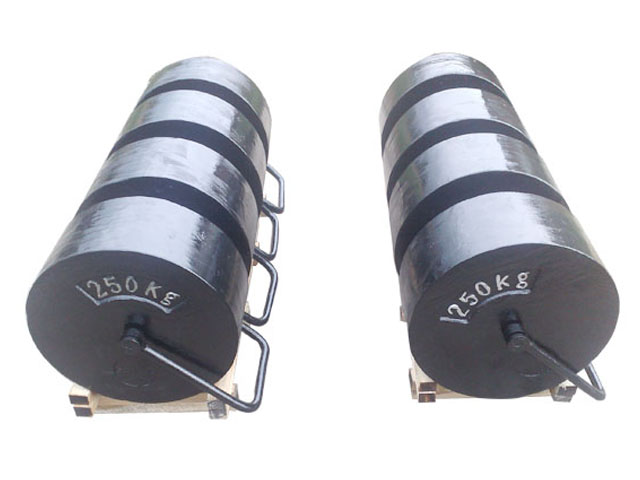
![250kg Test Weight]()
250kg Test Weight
In the vast and intricate landscape of industrial production, mechanical operation, and metrological verification, the 250kg test weight stands as an indispensable foundat…![E1 Class Test Weight]()
E1 Class Test Weight
In the intricate and interconnected world of modern metrology, the pursuit of reliable and consistent mass measurement forms the foundational backbone of countless profess…![M1 Class Cast Iron Weight]()
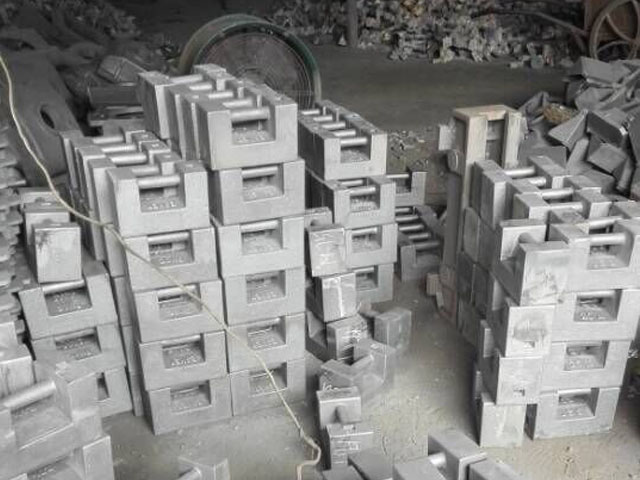
M1 Class Cast Iron Weight
In the intricate and interconnected ecosystem of industrial measurement and metrological calibration, M1 class cast iron weight stands as an indispensable foundational com…![Gram Test Weight]()
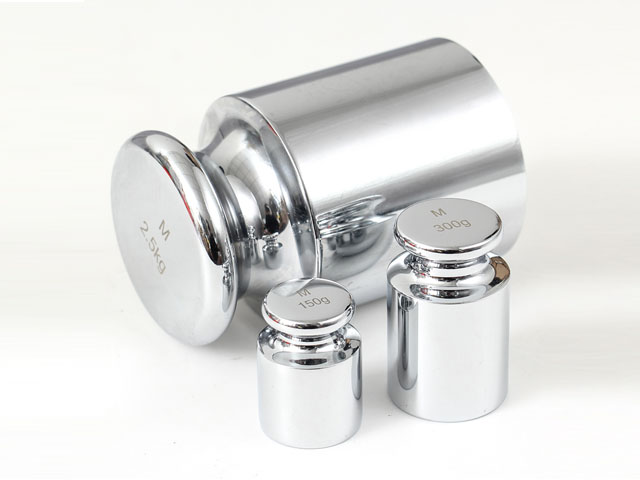
Gram Test Weight
In the intricate and interconnected world of mass measurement, few tools hold as much quiet significance and foundational importance as the gram test weight. Often overloo…![M1 Calibration Weight]()
M1 Calibration Weight
In every sector that relies on consistent and dependable mass measurement, the role of standardized calibration hardware remains irreplaceable, and M1 calibration weight s…